AB Plastic Surgery Presents Lecture on Endoscopic Forehead Lift at The Autumn Training Course of the Korean Association of Plastic Surgeons
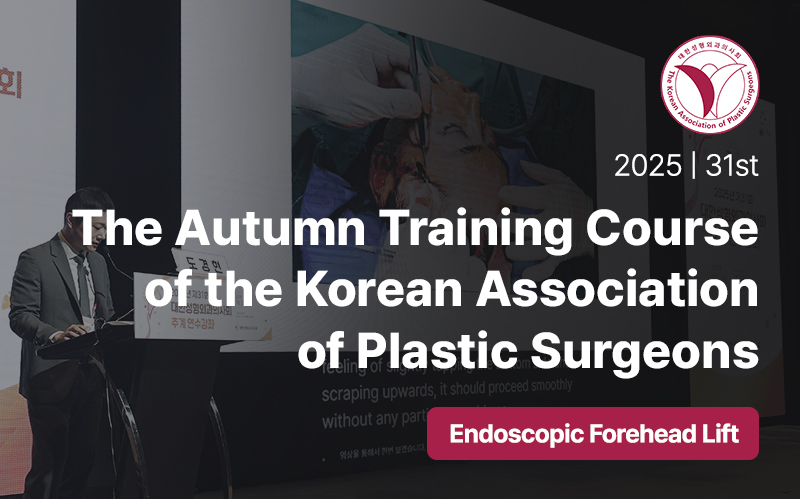
On October 26, at the “2025 31st Fall Continuing Medical Education Course of the Korean Association of Plastic Surgeons,” Dr. Doh Gyeong-Hyeon, Director of AB Plastic Surgery, was invited to deliver a lecture on endoscopic forehead lift surgery.
The Fall CME Course of the Korean Association of Plastic Surgeons is an annual academic conference held every autumn, organized to share the latest clinical knowledge and surgical techniques among plastic surgeons and to promote academic exchange.
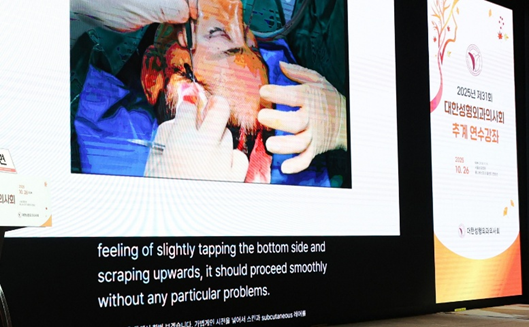
During the <Endoscopic Forehead Lift> session, Dr. Do focused on a comparative analysis of Endotine forehead lift and bone tunneling forehead lift techniques, sharing insights into the ‘importance of selecting appropriate fixation methods’ and practical surgical know-how for endoscopic forehead lifting.
He emphasized that the choice of fixation method in endoscopic forehead lift surgery is a key factor determining surgical outcomes, and that a precise evaluation of the patient’s anatomical structure, skin elasticity, and soft tissue condition is essential. He further explained that applying a patient-specific fixation method, such as Endotine or bone tunneling techniques, is crucial for achieving stable and natural-looking results.
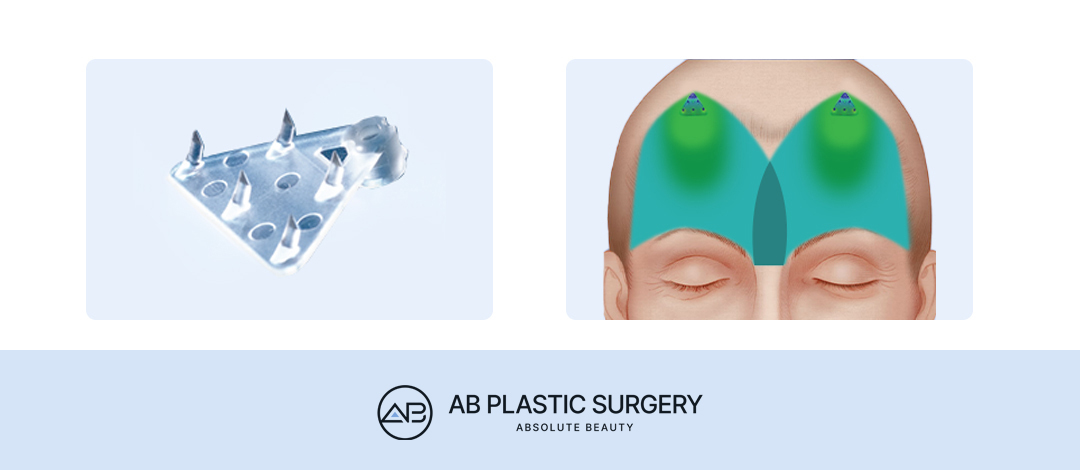
The Endotine forehead lift is a technique known for its strong lifting effect and reliable fixation strength. By using an Endotine fixation device with five tines, it allows uniform and secure fixation over a wide area, effectively improving sagging across the entire upper face. Endotine is a bioabsorbable fixation device that gradually dissolves in the body over approximately one year, helping the lifted tissues stabilize naturally. As a result, it offers excellent durability and high patient satisfaction, making it a dependable option for endoscopic forehead lift procedures.
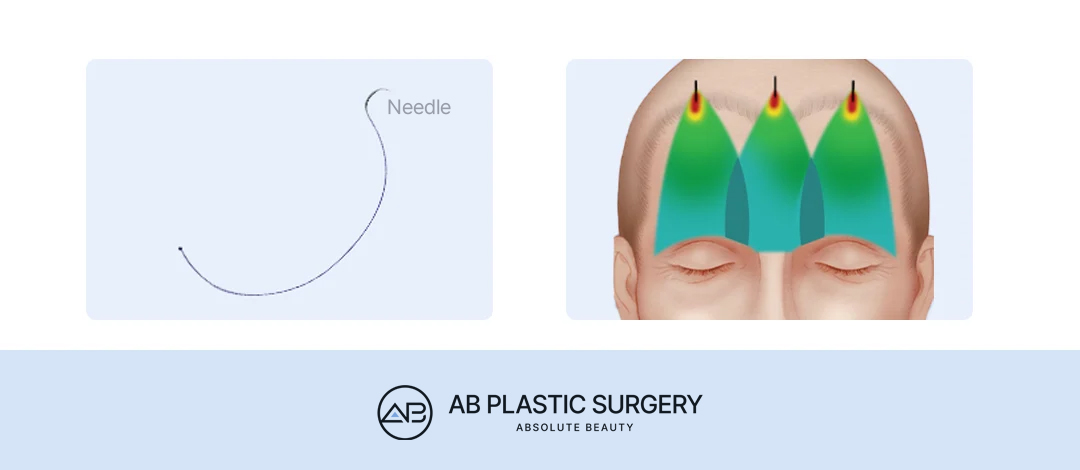
In contrast, the bone tunneling forehead lift utilizes absorbable medical sutures to achieve a more delicate and natural lift. This technique involves creating micro tunnels in the bone, passing sutures through them, and directly securing the forehead tissue to the bone. This method reduces the sensation of foreign materials, lowers the risk of fixation loosening, and enables three-point fixation, allowing simultaneous lifting of both the forehead and the glabellar area. As a result, it provides a more precise and refined improvement of upper facial sagging. However, Dr. Doh emphasized that bone tunneling requires highly advanced surgical skill and precise anatomical understanding, as accurate tunnel creation and fixation placement are critical, making it a technically demanding endoscopic forehead lift technique.
AB Plastic Surgery stated, “It was a very meaningful opportunity to exchange opinions with medical professionals who are actively engaged in research and clinical practice in Korea. We were particularly impressed by the opportunity to share experiences and expertise and to gain new perspectives in the rapidly evolving field of lifting techniques. Based on this academic exchange, we will continue ongoing research and learning to provide more complete and safer treatments in the future.”
Going forward, AB Plastic Surgery will continue to learn and conduct research tirelessly to deliver better outcomes for patients and to practice sincere, patient-centered medical care.