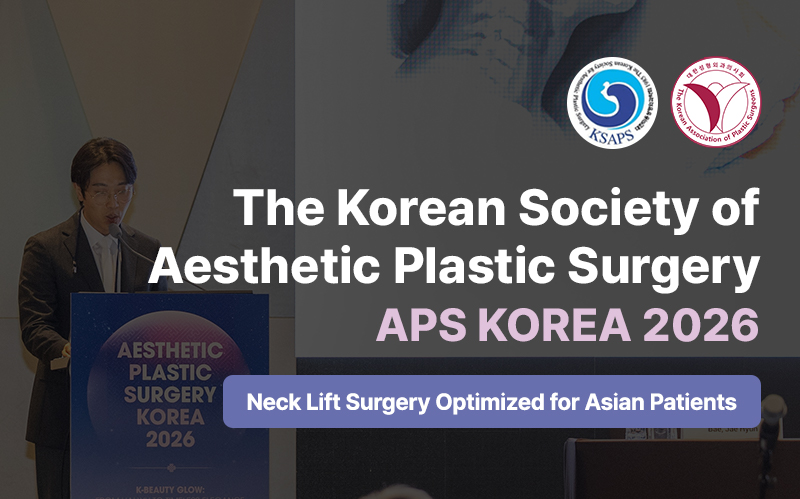
AB Plastic Surgery Delivers a lecture at APS KOREA 2026 on the theme "Neck Lift Surgery"
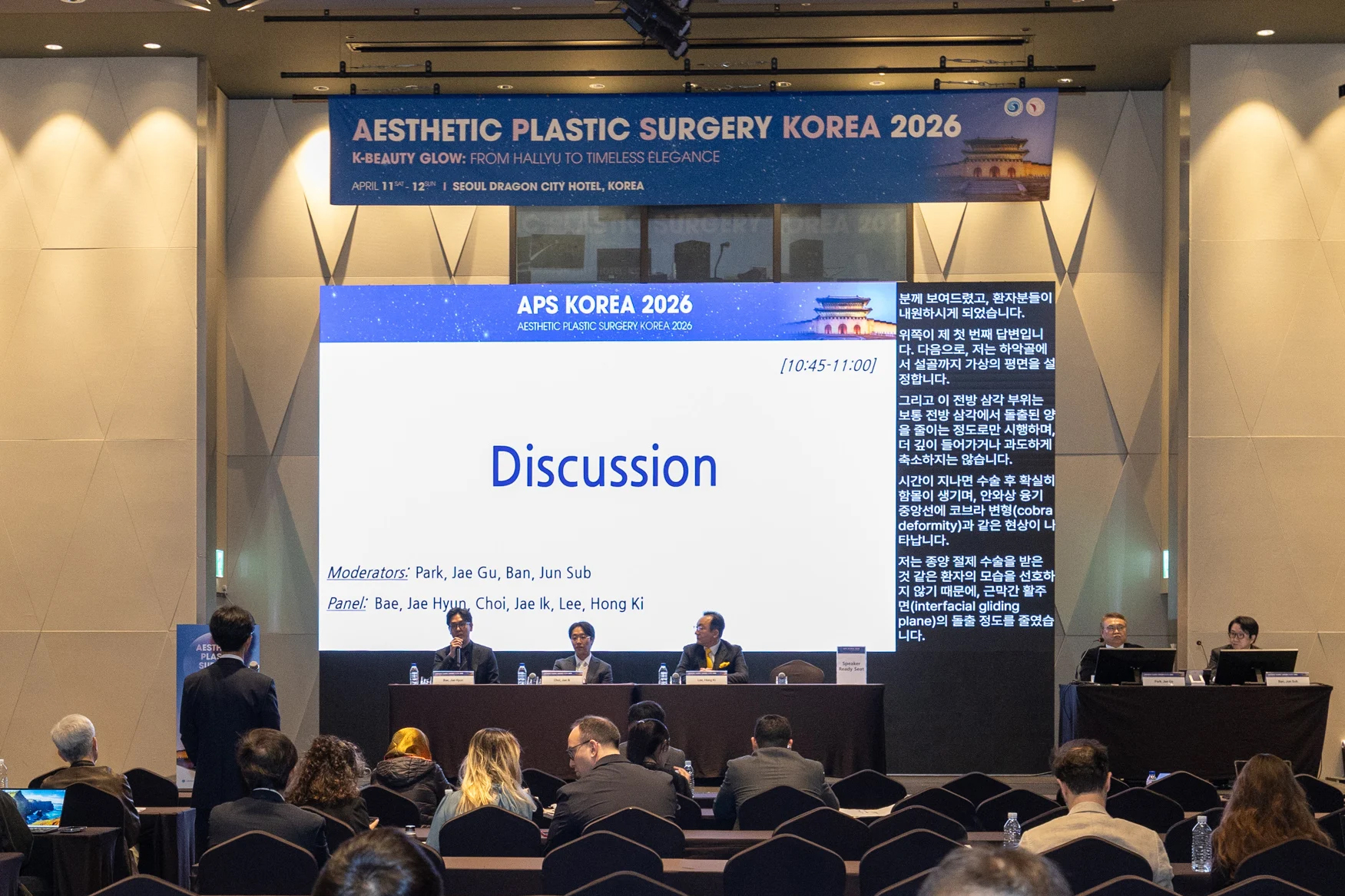
On April 11, AESTHETIC PLASTIC SURGERY KOREA 2026 (APS KOREA 2026), a prestigious international academic conference where plastic surgeons from around the world gather to share the latest surgical techniques, was successfully held.
At this conference, AB Plastic Surgery's dedicated facelift specialists were invited as speakers, where they presented the essence of neck lift surgery optimized for Asian patients and shared their distinctive surgical expertise.
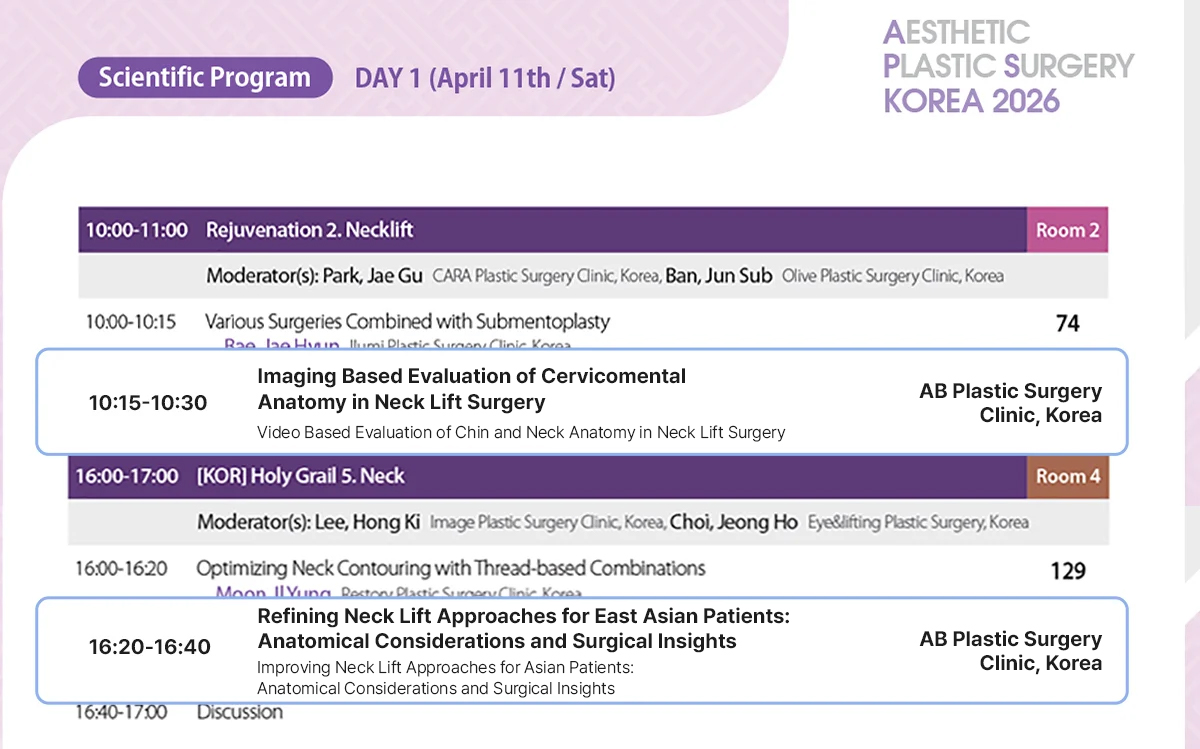
At APS KOREA 2026, AB Plastic Surgery’s dedicated facelift specialists shared their advanced surgical expertise with plastic surgeons from around the world under the themes of “Precise Evaluation of Chin and Neck Anatomy Using Video Based Diagnostics” and “Neck Lift Surgery for Asian Patients: Anatomical Considerations and Surgical Insights.”
Lecture 1. Video Based Precise Anatomical Evaluation of the Chin and Neck and Its Application to Surgical Planning
Successful neck lift surgery requires more than simply improving the appearance of the neck.
AB Plastic Surgery emphasized the importance of an integrated diagnostic system that combines ultrasound imaging with X ray analysis.
Through ultrasound imaging, surgeons can distinguish the location and distribution of fat layers in real time, even in areas that are difficult to evaluate visually.
Using X ray analysis, the position of the hyoid bone and the neck angle relative to the cervical spine can be quantified, allowing objective assessment of the skeletal framework.
The team presented a systematic process that enables surgeons to accurately identify anatomical variations through video based data and respond consistently even to complex anatomical structures.
The presentation demonstrated that this comprehensive anatomical analysis serves as the foundation for achieving the most aesthetically balanced and ideal neck contour for each patient, receiving strong recognition from attendees.
Lecture 2. Layer Based Anatomical Approach and Surgical Insights for Asian Patients
AB Plastic Surgery highlighted the limitations of conventional surgical techniques that focus solely on improving appearance and introduced a layer based analytical framework tailored specifically to Asian patients.
Considering the unique characteristics of Asian anatomy, including thicker skin and more complex soft tissue structures, the team emphasized that successful neck lift surgery requires a deeper understanding of anatomical layers rather than simple skin tightening alone.
Particularly in patients with severe platysmal fat accumulation and prominent platysmal banding, skin excision alone often has limitations.
The surgeons stressed that precise manipulation of underlying muscular structures is essential to correct the fundamental causes of neck contour irregularities.
They shared practical surgical insights demonstrating how this approach can provide a more defined jawline and a clearer transition between the lower face and neck while delivering predictable and natural outcomes.
"Neck lift surgery is far more than a simple lifting procedure. It is a highly sophisticated operation that reconstructs the deeper anatomical structures of the neck."
AB Plastic Surgery stated,
"It was a meaningful opportunity to exchange valuable insights with leading medical professionals who share a passion for advancing the field.
The combination of a layer based anatomical approach and video based diagnostic systems represents a new paradigm in neck lift surgery, and we were pleased to present these innovations as one possible direction for the future development of facial rejuvenation procedures."
The team further commented,
"Based on the diverse clinical experiences and knowledge gained through this conference, we will continue striving to deliver safer, more precise, and more personalized surgical outcomes tailored to each patient's unique anatomy.“
AB Plastic Surgery will remain committed to continuous research, innovation, and patient centered care to provide the best possible results for every patient.