Title
Bringing Prescription Medication to Korea for Plastic SurgeryDate
November 5, 2026Views
39
K-medi
Bringing Prescription Medication to Korea for Plastic Surgery
Table of Contents
1. Can You Bring Prescription Medication to Korea? The Short Answer
2. Controlled Medications: When MFDS Permission Is Required
3. Documents, Quantity, and Packing for Non-Controlled Medicines
4. Prescription Medication and Plastic Surgery: What to Tell Your Medical Team
5. Frequently Asked Questions About Bringing Prescription Medication to Korea
6. Running Out, Losing, or Needing to Replace Medication in Korea
7. Pre-Travel Medication Checklist for Plastic Surgery Patients
Bringing prescription medication to Korea is one of the easiest details to overlook when planning plastic surgery abroad. Flights, accommodation, and recovery arrangements usually come first, but your daily medicines can affect two things at once: how smoothly you pass through arrival procedures, and how well your surgical team can plan your care.
Korea’s rules depend on what a medicine contains. Many prescription medicines are treated as personal-use items, but medicines containing narcotic or psychotropic ingredients may require advance permission from the Ministry of Food and Drug Safety (MFDS), regardless of nationality. A prescription from your home doctor does not replace that permission, and a medicine that is routine in your country may be regulated differently in Korea.
This guide explains how to tell the difference between controlled and non-controlled medicines, what documents and packing habits help, and why sharing your complete medication list with your medical team before surgery matters. Entry rules can change, so please confirm the latest requirements with MFDS and the Korea Customs Service before you travel.
Can You Bring Prescription Medication to Korea? The Short Answer
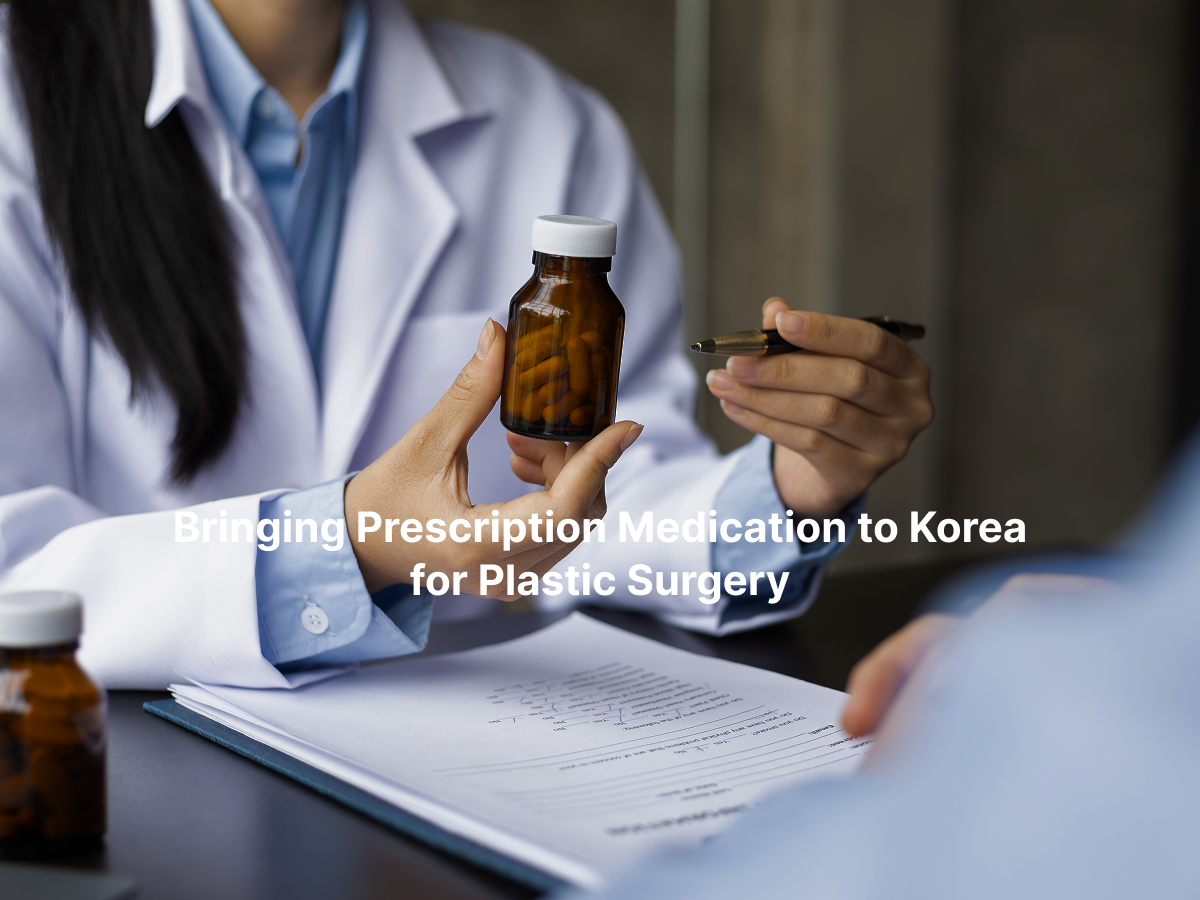
In many cases, yes. Travelers can generally bring prescription medicines for their own use, as long as the medicine is not a controlled substance and the quantity is reasonable for personal treatment. The deciding factor is not the brand name or how common the medicine is at home, but the active ingredient. In practice, medications fall into two tracks.
|
|
Non-controlled medicines |
Controlled medicines |
|---|---|---|
|
What they are |
Most routine prescriptions without narcotic or psychotropic ingredients |
Medicines containing narcotic or psychotropic substances, plus cannabis-related products |
|
Before travel |
Carry a prescription and a medication list; confirm allowed quantities with official sources |
Apply for MFDS permission in advance, regardless of nationality |
|
At arrival |
Keep medicine in labeled original containers |
Carry the approval together with your prescription and medication details |
Why “Legal at Home” Does Not Mean “Allowed in Korea”
Korea classifies some ingredients more strictly than many other countries. Even certain cough and cold products can contain ingredients that Korean law treats as psychotropic. Cannabis and CBD products are heavily restricted and should not be brought into Korea without explicit government approval, even where they are prescribed or legal in your home country.
Start With a Simple Ingredient List
The most useful first step is to write down the active ingredient, strength, daily dose, and total quantity of every medicine you take, including over-the-counter products and supplements. This list will help you check the rules, complete any application, and later share accurate information with your medical team.
Controlled Medications: When MFDS Permission Is Required
Korea requires travelers who enter with medicines containing narcotic or psychotropic substances for personal treatment to obtain permission from MFDS first. This applies to everyone, whether you are a visitor or a resident, and whether the medicine was prescribed by a licensed doctor abroad.
Medicines That May Be Affected
Medicines that people often assume are ordinary can fall into the controlled category. Examples that commonly raise questions include:
-
Stimulant medication used for ADHD
-
Benzodiazepine-type medicines for anxiety or sleep
-
Strong prescription sleep medication
-
Opioid-based pain relief
-
Appetite suppressants
-
Certain ingredients found in cough and cold products
This is not a complete list. Because classification depends on the ingredient, always check each medicine individually rather than relying on a category or brand name.
How the MFDS Permission Process Works
MFDS provides an online application for carrying controlled medicines into Korea for personal treatment, together with user manuals in several languages, including English. Applicants are typically asked for details such as the medicine’s ingredient, dosage, quantity, prescription information, and travel details. Because the application system and its requirements can be updated, follow the current MFDS instructions rather than a third-party summary, and apply well before your travel date so that any request for additional information does not delay your trip.
If You Are Unsure Whether Your Medicine Is Controlled
Contact MFDS directly and ask about the specific ingredient. Your pharmacist can help you identify the ingredient, but Korean authorities decide the entry requirements. If a medicine cannot be brought in, ask your prescribing doctor whether an alternative is appropriate for your situation, and do not switch or stop a prescribed medicine on your own.
Documents, Quantity, and Packing for Non-Controlled Medicines
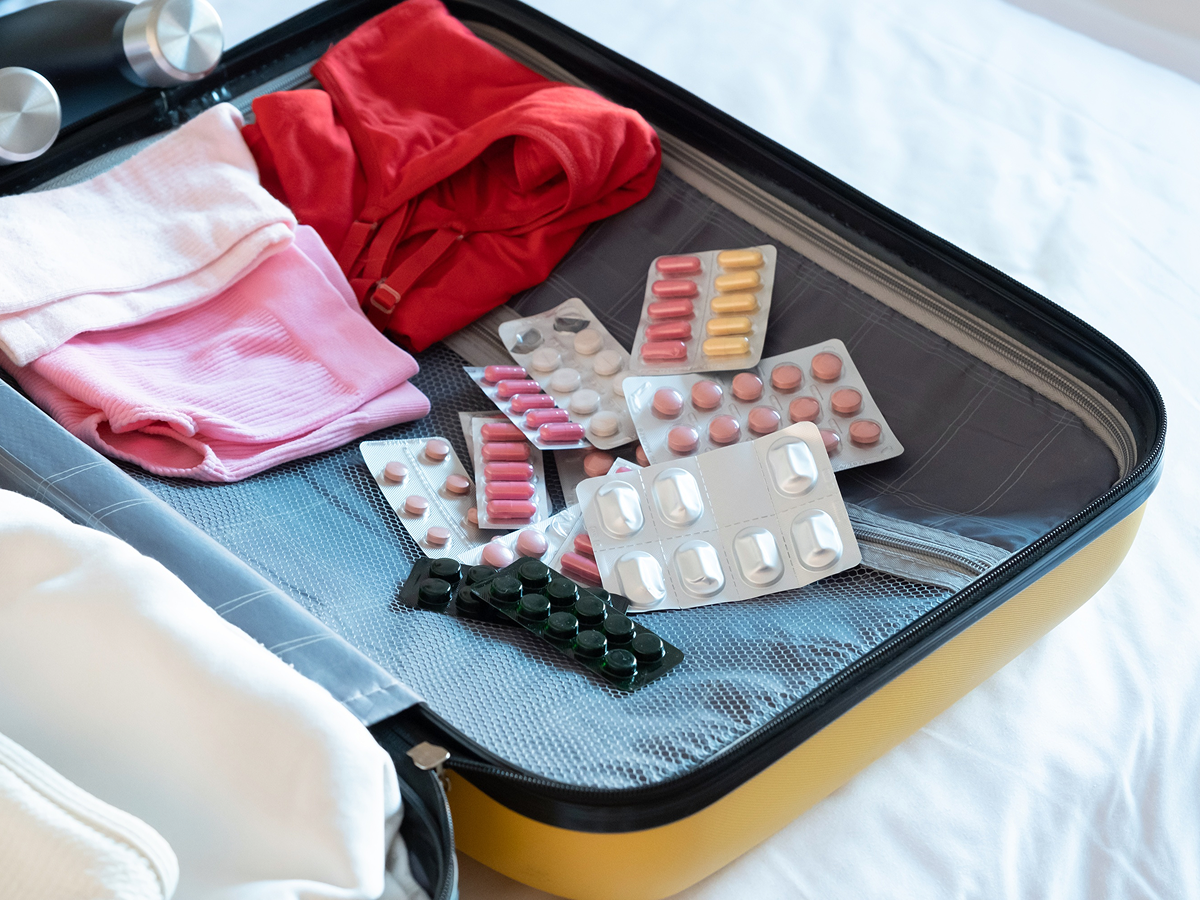
For medicines that are not controlled, preparation is mostly about showing clearly what each medicine is and why you carry it. Good documentation also makes it easier to discuss your medications with your medical team once you arrive.
Documents Worth Carrying
-
Your original prescription, ideally with a name that matches your passport
-
A doctor’s letter or an English version of your prescription if the original is in another language
-
A medication list showing generic names, strengths, daily doses, and the condition each medicine treats
-
Digital copies or photos of prescriptions and medicine labels in case the originals are lost
-
Any MFDS approval, if one of your medicines is controlled
How Much Can You Bring?
Korea limits personal-use quantities, and official guidance on the exact amount may be updated over time. For that reason, confirm the current allowance with the Korea Customs Service or MFDS before you pack. As a general approach, plan for the length of your stay, including your recovery period, and discuss the right supply with your prescribing doctor.
Packing and Arrival Tips
-
Keep medicine in your carry-on bag so it stays with you if checked luggage is delayed.
-
Use original, labeled containers. Avoid moving pills into unlabeled organizers during travel.
-
Plan for temperature-sensitive medicines such as insulin by asking your prescriber and airline about storage during the flight.
-
Ask about time-zone changes. Your prescriber can advise how to adjust timing for medicines that must be taken at regular intervals.
-
If you are unsure, declare it. When you are not certain whether an item needs to be declared at customs, it is better to ask.

Prescription Medication and Plastic Surgery: What to Tell Your Medical Team
Getting your medicine through arrival is only half of the preparation. The other half is making sure the people planning your surgery know exactly what you take. This is a medical safety step that is separate from customs rules.
Why Your Full Medication List Matters
Prescription medicines, over-the-counter products, vitamins, and herbal supplements can influence bleeding, blood pressure, blood sugar, and how your body responds to anesthesia. Your medical team uses this information to plan your procedure and your recovery, so include everything you take regularly, along with the reason and the dose.
Blood Thinners, Pain Relievers, and Supplements
Some medicines and supplements, including certain blood thinners, anti-inflammatory pain relievers, and herbal products, may need to be adjusted around surgery. Whether and when to adjust depends on the medicine, your health condition, and the procedure. Do not stop or change a prescribed medicine on your own. Discuss any adjustment with your medical team and, where needed, the doctor who prescribed it.
Medicines for Ongoing Conditions
If you take medicine for blood pressure, diabetes, thyroid conditions, or mental health, bring information about your diagnosis and current doses. Your medical team can advise which medicines to take on the day of surgery and how fasting instructions fit with your regular schedule.
If you are planning plastic surgery in Korea and want your medication questions reviewed before you travel, you can start with a consultation inquiry to AB Plastic Surgery.
Frequently Asked Questions About Bringing Prescription Medication to Korea
Do I need a permit to bring prescription medication into Korea?
It depends on the ingredient. Medicines containing narcotic or psychotropic substances require advance permission from MFDS regardless of nationality. Many other prescription medicines can be carried for personal use without a permit, but you should still confirm current rules with MFDS or the Korea Customs Service.
Can I bring my regular medication if I am coming to Korea for plastic surgery?
Having plastic surgery does not change the entry rules for your medicine. The same ingredient-based rules apply. What changes is that your medical team will also need your full medication list to plan surgery and recovery, so prepare it before you travel.
Is a prescription alone enough for controlled medicines?
No. A prescription from your home country does not authorize you to bring a controlled medicine into Korea. You need MFDS permission in advance, and it is wise to carry the prescription and medication details alongside it.
Should I tell my surgeon about vitamins and supplements too?
Yes. Vitamins, herbal products, and over-the-counter medicines can affect bleeding or interact with other medicines and anesthesia. Include everything you take regularly on the list you share with your medical team.
Can I stop my medication before surgery by myself?
You should not stop or change a prescribed medicine without medical guidance. Some medicines may need adjustment around surgery, but that decision should be made together with your medical team and, when necessary, your prescribing doctor.
What if my medication is not allowed in Korea?
Contact MFDS to confirm whether permission is possible for your situation. You can also ask your prescribing doctor whether an alternative is suitable. Do not bring a restricted product without approval, and do not substitute medicines without medical advice.
Running Out, Losing, or Needing to Replace Medication in Korea
Even careful planning cannot prevent every problem. Delayed flights, a longer recovery stay, or a lost bag can leave you without a medicine you need. Knowing your options in advance makes these situations easier to handle.
Can You Use a Foreign Prescription in Korea?
Korean pharmacies typically dispense medicine based on prescriptions issued in Korea, so a foreign prescription may not be accepted as it is. If you need a medicine during your stay, a clinician in Korea would normally need to review your situation and issue a local prescription when appropriate. Your copies of the original prescription and medication list make that review faster.
If Your Medication Is Lost or Runs Out
Keep photos of your prescriptions and medicine packaging on your phone. If something goes missing or you run short, contact your medical team and your prescribing doctor at home. Please avoid taking another person’s medicine as a replacement, since the right drug and dose depend on your own health condition.
Why Mailing Medicine Later Is a Separate Question
Permission to carry a medicine in person is not the same as permission to import it by post. If you are thinking about having a relative send medicine after you arrive, check the rules with Korean authorities first, because shipping can be treated differently from hand-carrying.
Pre-Travel Medication Checklist for Plastic Surgery Patients
Use this timeline to organize your preparation. Exact timing depends on your medicines and your travel date, so treat it as a general guide.
|
When |
What to do |
|---|---|
|
Several weeks before travel |
List the active ingredient, strength, dose, and quantity of every medicine and supplement. Check each ingredient with MFDS. Start any MFDS permit application for controlled medicines. |
|
Before your consultation |
Share your full medication list with your medical team and ask how your regular medicines fit with your surgical plan. |
|
Final days before travel |
Prepare prescriptions, an English medication list, and digital copies. Pack medicine in labeled original containers in your carry-on. |
|
Travel day |
Carry your documents and any permit. Ask or declare if you are unsure about an item. |
|
During your stay |
Follow your medical team’s instructions. Contact them if a medicine is lost, delayed, or running low. |
Bringing prescription medication to Korea becomes manageable when you identify each ingredient early, confirm the rules with official sources, and keep your medical team informed. This guide is general information and not medical advice. Your own doctor and medical team can tell you what is appropriate for your health.
If you are considering plastic surgery in Korea and would like to talk through your medications and travel plans, you can contact AB Plastic Surgery for a consultation.
Written by
AB Plastic Surgery
Updated on
November 5, 2026
This article is for informational purposes only and does not replace a personal medical consultation.