Title
Hawk Nose: Causes, Correction Options & Before-After Results | AB Plastic SurgeryDate
2025-11-26Views
6137
AB Blog
Hawk Nose: What It Is, Causes & Correction Options in Korea
Table of Contents
1. What Is a Hawk Nose?
2. What Causes a Hawk Nose?
3. Hawk Nose Surgery in Korea
4. Hawk Nose Before and After
5. Hawk Nose Cost in Korea
6. Non-Surgical Correction
7. Hawk Nose vs Roman vs Aquiline
8. Hawk Nose FAQ
A hawk nose is one of the most commonly searched nose shapes by patients considering rhinoplasty. Many people feel self-conscious about a prominent nasal bridge or downward-pointing tip, especially when it affects their side profile. This guide explains what a hawk nose is, why it develops, and how modern hawk nose surgery in Korea can achieve natural-looking results.
What Is a Hawk Nose?
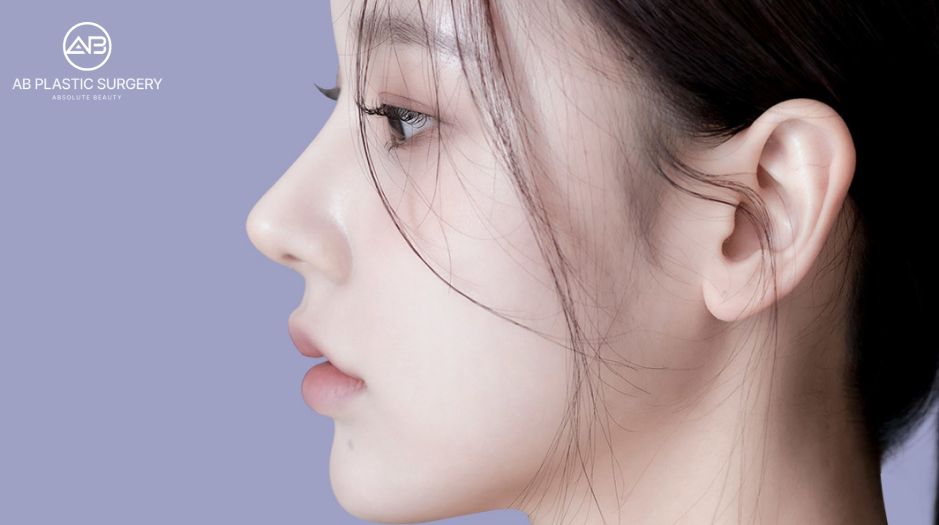
A hawk nose refers to a nose shape characterized by a prominent bridge with a noticeable curve or bump, often combined with a slightly drooping tip. This curved appearance resembles the beak of a hawk, which is where the name originates.
The defining feature of a hawk nose is the dorsal hump, a raised area along the nasal bridge made up of bone and cartilage. In some cases, the nasal tip also points downward, further emphasizing the curved profile.
-
Visible hump on the nasal bridge
-
Strong or projected nasal profile
-
Sometimes combined with a drooping tip
A hawk nose is also commonly referred to as an aquiline nose, hooked nose, or Roman nose. While these terms are often used interchangeably, subtle differences exist. An aquiline nose typically emphasizes the curved bridge, while a Roman nose may refer to a strong, straight-to-curved profile.
Culturally, perceptions of a hawk nose vary widely. In some Western cultures, it has historically been associated with strength and character. However, in many Asian aesthetic standards, a smoother and straighter nasal line is often preferred, leading more patients to consider correction.
Importantly, having a hawk nose is not a medical problem. It is a natural anatomical variation. However, for individuals who feel their nose disrupts facial balance, modern rhinoplasty offers safe and effective solutions.

What Causes a Hawk Nose?
The most common cause of a hawk nose is genetics. The shape of your nasal bones and cartilage is largely inherited, which is why this nose type often runs in families.
During development, variations in bone and cartilage growth can create a dorsal hump. In some individuals, the nasal bridge grows more prominently, while the tip may lack sufficient support, resulting in a downward angle.
Age can also influence the appearance of a hawk nose. As the skin and soft tissues lose elasticity over time, the nasal tip may droop slightly. This can make an existing hump appear more pronounced, even if the bone structure has not changed.
Ethnic background also plays a role. A hawk nose is more commonly seen in certain populations, particularly in Middle Eastern and Mediterranean regions, though it can occur in any ethnicity.
Other contributing factors include:
-
Previous nasal injury or trauma
-
Cartilage asymmetry
-
Natural aging process
Understanding the cause is important because it determines the most appropriate correction method, whether surgical or non-surgical.
Hawk Nose Surgery (Rhinoplasty) in Korea
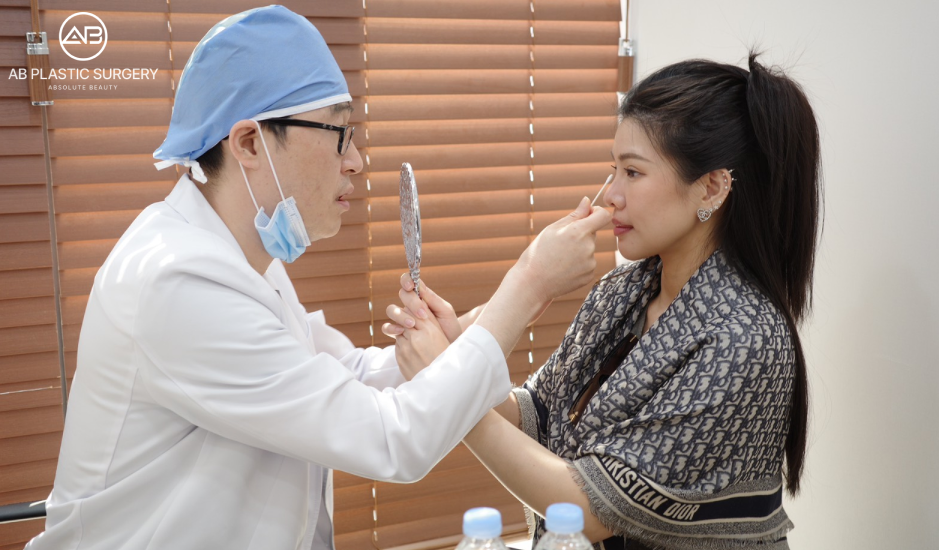
Hawk nose surgery is one of the most commonly performed rhinoplasty procedures. The goal is to smooth the nasal bridge, refine the tip, and create a balanced profile.
The key step is dorsal hump reduction. This can be performed using:
-
Rasping: shaving down small humps
-
Osteotomy: repositioning nasal bones for larger corrections
In many cases, tip refinement is also necessary. A drooping tip can be lifted and supported using cartilage grafts, often sourced from the patient’s own septum or ear.
Korean surgeons are known for their precision and focus on natural aesthetics. Rather than aggressively removing the hump, the approach emphasizes harmony with the overall face. This is particularly important for patients seeking subtle, refined changes.
Learn more about hump nose rhinoplasty techniques in Korea
Compared to Western approaches, rhinoplasty Korea techniques often prioritize:
-
Soft, natural nasal lines
-
Balanced facial proportions
-
Long-term structural stability
Both open and closed rhinoplasty techniques may be used. Open rhinoplasty provides better visibility for complex cases, while closed rhinoplasty minimizes external scarring.
At AB Plastic Surgery Korea, surgical planning is highly individualized, taking into account facial structure, skin thickness, and patient preferences.
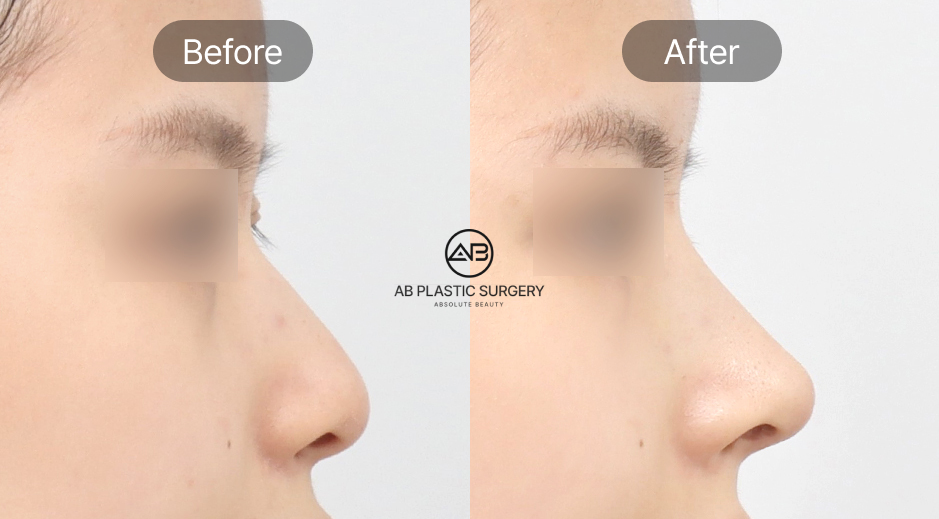
Hawk Nose Before and After: Real Results
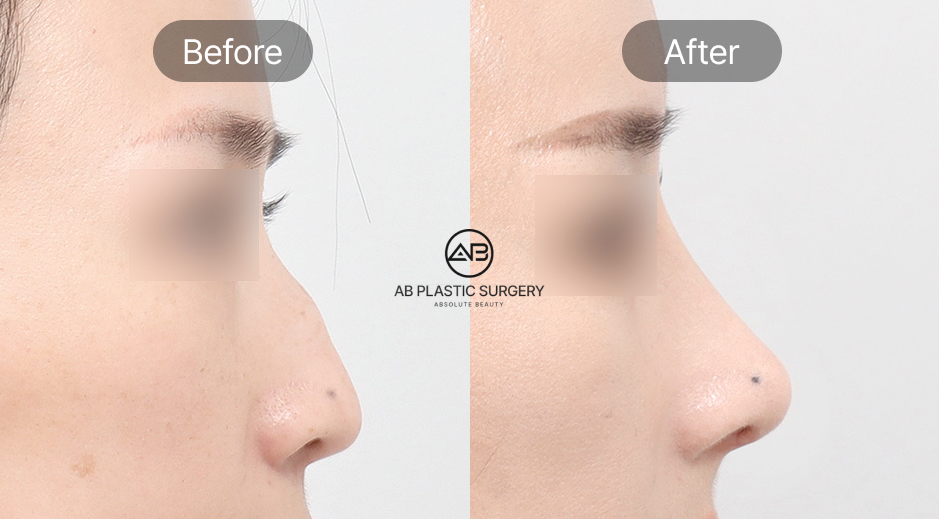
Hawk nose before and after results typically show a smoother nasal bridge and improved tip position. The goal is not to erase the natural character of the nose, but to create a more balanced and harmonious appearance.
For male patients, surgeons often maintain a slightly stronger profile, while female patients may prefer a softer, straighter line.
View real hawk nose before and after results
Recovery timeline:
-
Week 1: splint removal
-
Week 2: swelling reduces
-
Month 1: noticeable improvement
-
Month 3-6: final refinement
Swelling gradually subsides, revealing more refined results over time.
Hawk Nose Correction Cost in Korea
The cost of hawk nose surgery varies depending on complexity.
Average Hawk Nose Surgery Cost in Korea
At AB Plastic Surgery Korea, the estimated cost of hawk nose rhinoplasty varies depending on the nasal structure, hump severity, cartilage graft requirements, and whether revision surgery is required.
|
Procedure |
Estimated Cost (USD) |
|---|---|
|
Primary Hawk Nose Rhinoplasty |
$3,400+ |
|
Revision Hawk Nose Rhinoplasty |
$4,080+ |
|
Rib Cartilage Graft (if required) |
$2,240+ |
|
Alar Reduction (optional) |
$1,360+ |
|
Non-Surgical Nose Filler |
$150+ |
The final cost of hawk nose correction surgery in Korea may vary depending on individual nasal anatomy, revision history, cartilage graft requirements, surgical complexity, and the customized treatment plan recommended during consultation.
For accurate pricing and a personalized surgical plan, consultation with a rhinoplasty specialist is strongly recommended.
Get a customized hawk nose surgery quote and personalized treatment plan in Korea
|
Region |
Cost Range |
|---|---|
|
Korea |
$3,000 - $7,000 |
|
USA |
$8,000 - $15,000 |
|
Europe |
$6,000 - $12,000 |
Factors influencing cost include:
-
Severity of dorsal hump
-
Primary vs revision surgery
-
Surgeon expertise
Get a personalized hawk nose surgery cost consultation
Non-Surgical Hawk Nose Correction
For mild cases, dermal fillers can be used to camouflage a hump. Instead of removing the bump, filler is added around it to create a straighter appearance.
The cost of non-surgical hawk nose correction may vary depending on the filler type, injection volume, and overall treatment plan. At AB Plastic Surgery Korea, dissolving nose filler starts from around $150, while the final cost may vary after consultation.
However, it has limitations:
-
Cannot reduce bone
-
Temporary results
-
Not suitable for large humps
Hawk Nose vs Roman Nose vs Aquiline Nose
|
Type |
Characteristics |
|---|---|
|
Hawk Nose |
Curved bridge with drooping tip |
|
Roman Nose |
Strong profile, slight curve |
|
Aquiline Nose |
Prominent curved bridge |

Hawk Nose Surgery FAQ
What is a hawk nose?
A hawk nose is a nose shape with a prominent curved bridge, often caused by a dorsal hump made of bone and cartilage. In some cases, it may also be combined with a drooping nasal tip, creating a stronger side profile.
Can a hawk nose be corrected without surgery?
Mild hawk nose cases may be improved with non-surgical filler treatment by camouflaging the dorsal hump. However, fillers cannot remove bone or cartilage. For permanent correction, hawk nose rhinoplasty is usually required.
How much does hawk nose surgery cost in Korea?
Hawk nose rhinoplasty in Korea generally starts from around $3,400 for primary rhinoplasty. Revision rhinoplasty may start from around $4,080, while additional procedures such as rib cartilage grafting or alar reduction may increase the total cost depending on the surgical plan.
Why does hawk nose rhinoplasty pricing vary?
The cost may vary depending on the severity of the dorsal hump, nasal bone structure, tip correction needs, cartilage graft requirements, and whether the surgery is a primary or revision procedure. A personalized consultation is recommended to receive an accurate quote.
Does revision hawk nose surgery cost more than primary rhinoplasty?
Yes. Revision hawk nose rhinoplasty often costs more because it may require correction of scar tissue, previous implant issues, cartilage deficiency, asymmetry, or structural changes from earlier surgery. This makes the procedure more complex than primary rhinoplasty.
Is hawk nose rhinoplasty painful?
Most patients experience swelling, tightness, and mild discomfort rather than severe pain. Discomfort is usually managed with prescribed medication, and the recovery process is monitored through postoperative care.
How long does recovery take after hawk nose surgery?
Splint removal is usually done around the first week. Major swelling often improves within 2 to 4 weeks, while nasal refinement continues gradually over several months. Final results may become more visible between 3 and 6 months depending on the individual recovery process.
Will my nose look natural after hawk nose correction?
Modern hawk nose rhinoplasty focuses on creating a smoother nasal bridge while maintaining facial harmony. At AB Plastic Surgery Korea, the surgical plan is customized based on nasal anatomy, facial proportions, skin thickness, and the patient’s desired outcome.
Can I get a personalized hawk nose surgery quote before visiting Korea?
Yes. International patients can request a preliminary cost estimate and customized surgery plan before visiting Korea. However, the final price may change after an in-person consultation because nasal structure, surgical complexity, and recovery planning must be assessed individually.

This article is for informational purposes only and does not replace a personal medical consultation.