Title
Before and After Facelift Surgery in Korea: Improving Sagging Skin and Restoring a Defined JawlineDate
2026-10-27Views
11
Medical Column
Before and After Facelift Surgery in Korea: Improving Sagging Skin and Restoring a Defined Jawline
Facial aging is not simply a matter of developing wrinkles. As the skin gradually loses elasticity and the underlying facial tissues begin to descend, the overall shape of the face can change. The cheeks may appear heavier, nasolabial folds become more pronounced, and sagging along the jawline can create a tired or aged appearance.
These changes can become particularly noticeable around the lower face, where a loss of jawline definition may significantly affect overall facial proportions.
Facelift surgery in Korea is one surgical option for addressing these changes. Rather than focusing only on tightening loose skin, facelift surgery may involve repositioning descended facial tissues to improve the contours of the cheeks, jawline, and lower face.
In this medical column, we examine a facelift case at AB Plastic Surgery and discuss how facial aging develops, how facelift surgery addresses sagging tissues, and what changes can be observed during the early postoperative period.
Why Does Facial Sagging Become More Noticeable with Age?
Facial aging involves gradual changes across multiple anatomical layers, including the skin, subcutaneous fat, retaining ligaments, and deeper facial supporting structures.
As skin elasticity decreases and the distribution and support of facial fat change, the cheeks may gradually descend. This can make the nasolabial folds appear deeper while contributing to the formation of jowls along the lower jawline.
These changes are often interconnected. For example, sagging in the cheek area may accentuate the transition between the midface and lower face, making the overall facial contour appear less defined.
The combination of descended cheeks, prominent nasolabial folds, and jowls can contribute to an older or more fatigued appearance, even when the patient is otherwise healthy.
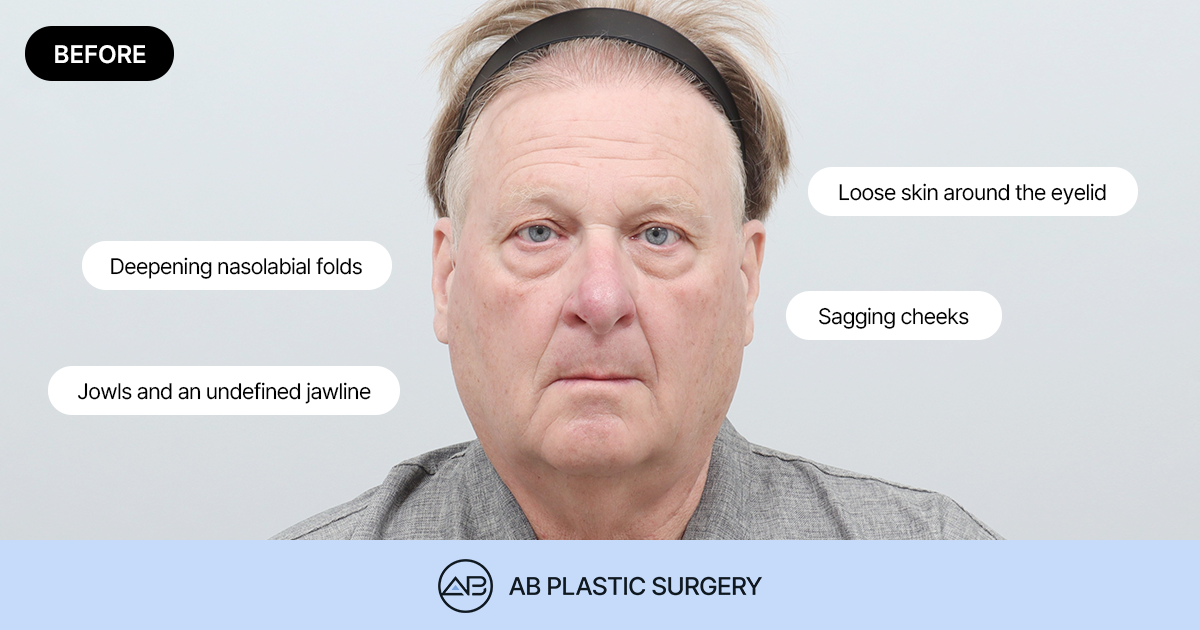
The patient presented in this case showed several visible signs of facial aging, including sagging cheeks, pronounced nasolabial folds, and reduced jawline definition. Loose skin around the eyelids was also apparent.
These concerns illustrate why facial rejuvenation requires an assessment of the overall facial structure rather than focusing on individual wrinkles alone.
How Does Facelift Surgery Address Sagging Skin?
The purpose of facelift surgery is to improve facial sagging by addressing excess skin and, depending on the technique, repositioning or supporting the underlying facial tissues.
One of the important anatomical structures involved in many facelift procedures is the superficial musculoaponeurotic system, commonly referred to as the SMAS.
The SMAS is a fibromuscular layer located beneath the subcutaneous tissue. It is connected to facial muscles and surrounding supporting structures and plays an important role in facial soft tissue anatomy.
As facial aging progresses, changes in the skin, fat compartments, and supporting structures can contribute to tissue descent.
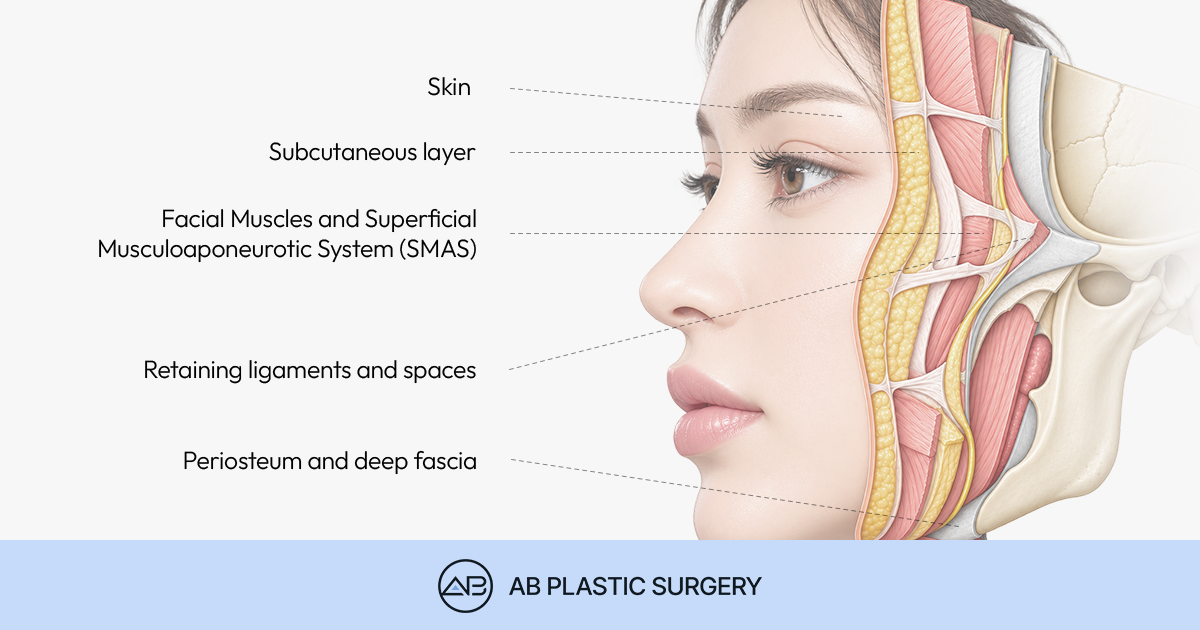
Modern facelift techniques may address the SMAS or deeper facial planes to improve the position of descended tissues. However, the extent and method of tissue repositioning differ according to the surgical technique and the patient's anatomy.
The appropriate approach depends on factors such as skin elasticity, facial fat distribution, the severity of sagging, and the condition of the jawline and neck.
For this reason, facelift surgery should not be viewed simply as a procedure that pulls the skin backward. Careful consideration of the underlying facial anatomy is important for achieving balanced facial contours.
Why Is Jawline Definition Important in Facelift Surgery?
As facial aging progresses, the jawline may gradually lose its definition due to changes in skin elasticity, fat distribution, and the supporting facial structures.
When the cheeks descend, excess tissue may accumulate along the mandibular border, creating jowls and obscuring the natural jawline.
This can make the lower face appear heavier and reduce the distinction between the cheeks, chin, and neck.
Facelift surgery may help improve these contours by repositioning descended tissues and addressing skin laxity where appropriate.
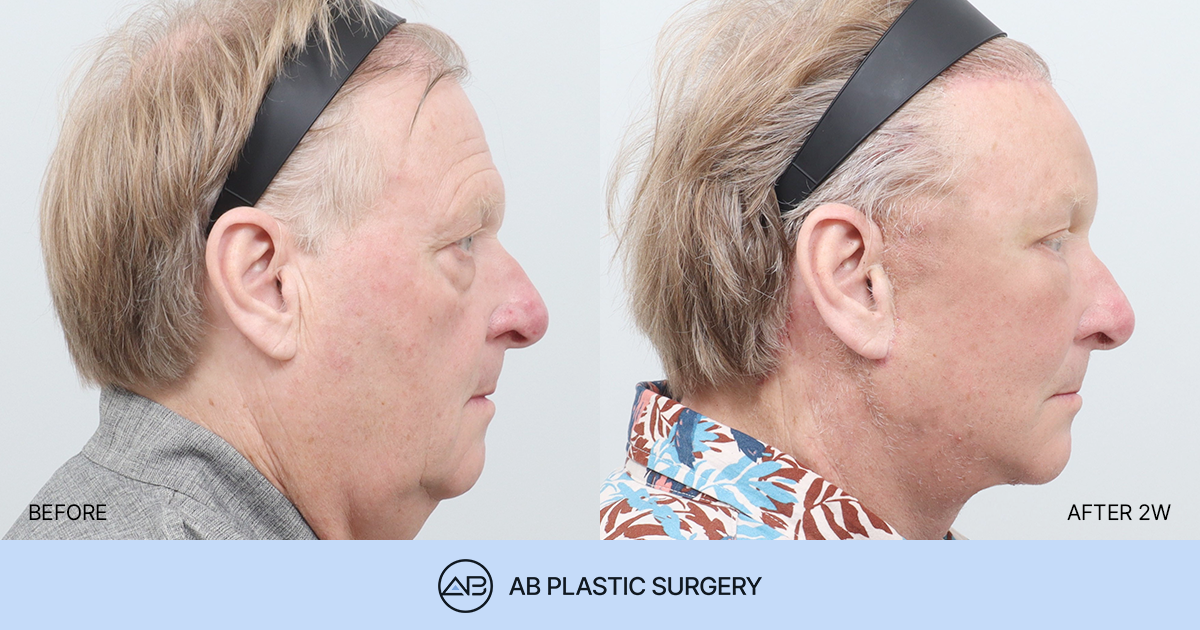
In this patient's side profile, the preoperative appearance shows visible sagging along the lower face and reduced definition around the jawline.
At two weeks after surgery, the jawline appears more distinct, and the transition between the chin and upper neck looks smoother.
The postoperative appearance also suggests a reduction in the heaviness of the lower facial contour.
These early changes demonstrate how improvement in facial sagging can influence the overall facial profile without necessarily changing the underlying skeletal structure.
Before and After Facelift Surgery: Changes in the Cheeks and Nasolabial Folds
Nasolabial folds are a natural part of facial anatomy, but they may become more prominent as facial tissues change with age.
The appearance of these folds is influenced by multiple factors, including cheek position, facial fat distribution, skin characteristics, and individual anatomy.
When the cheeks descend, the transition between the cheek and the area surrounding the mouth may become more pronounced.
Facelift surgery can improve certain aspects of this tissue descent, although it does not necessarily eliminate nasolabial folds completely.
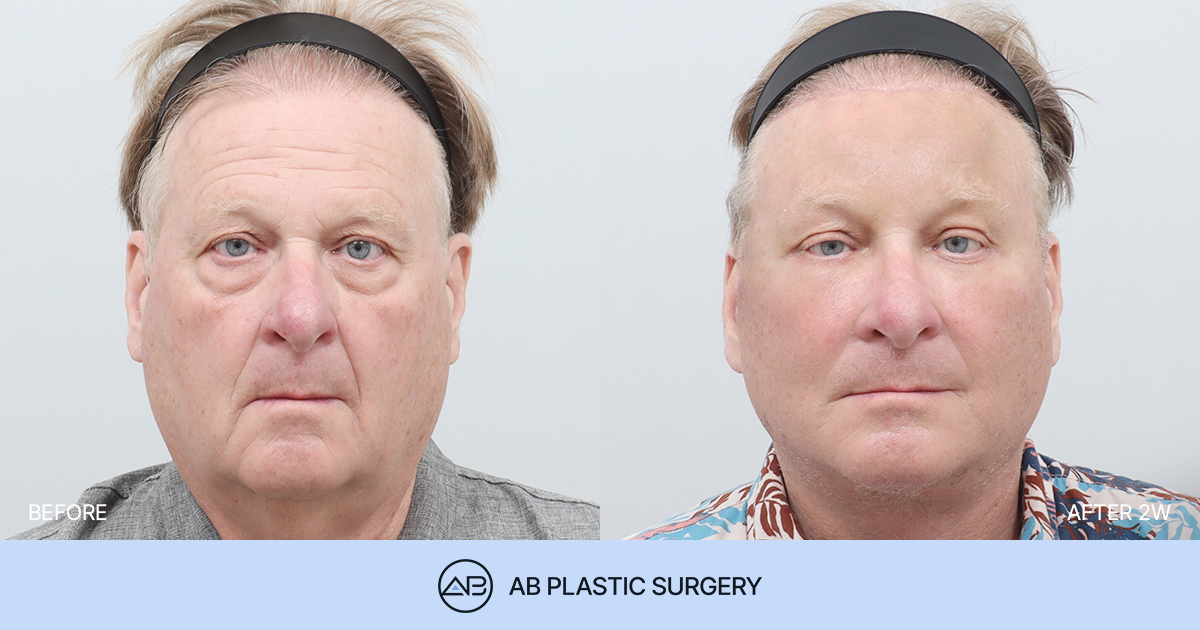
Comparing the patient's frontal photographs, the postoperative image shows a smoother transition between the cheeks and the nasolabial area.
The cheeks appear less descended, while the folds extending from the nose toward the mouth appear softer.
The lower face also shows a more continuous contour, with less visible jowling along the jawline.
Together, these changes create a more refreshed facial appearance while retaining the patient's recognizable facial characteristics.
It is important to recognize that these photographs were taken only two weeks after surgery. Residual swelling may still affect facial volume and contour, and the appearance may continue to change throughout recovery.
What Can Patients Expect Two Weeks After Facelift Surgery?
Recovery is an important consideration for anyone planning facelift surgery in Korea, particularly international patients who need to coordinate their treatment and travel schedules.
The early postoperative period may involve swelling, bruising, tightness, temporary numbness, and discomfort around the surgical areas.
The extent and duration of these symptoms vary according to the surgical technique, individual healing response, and any additional procedures performed.
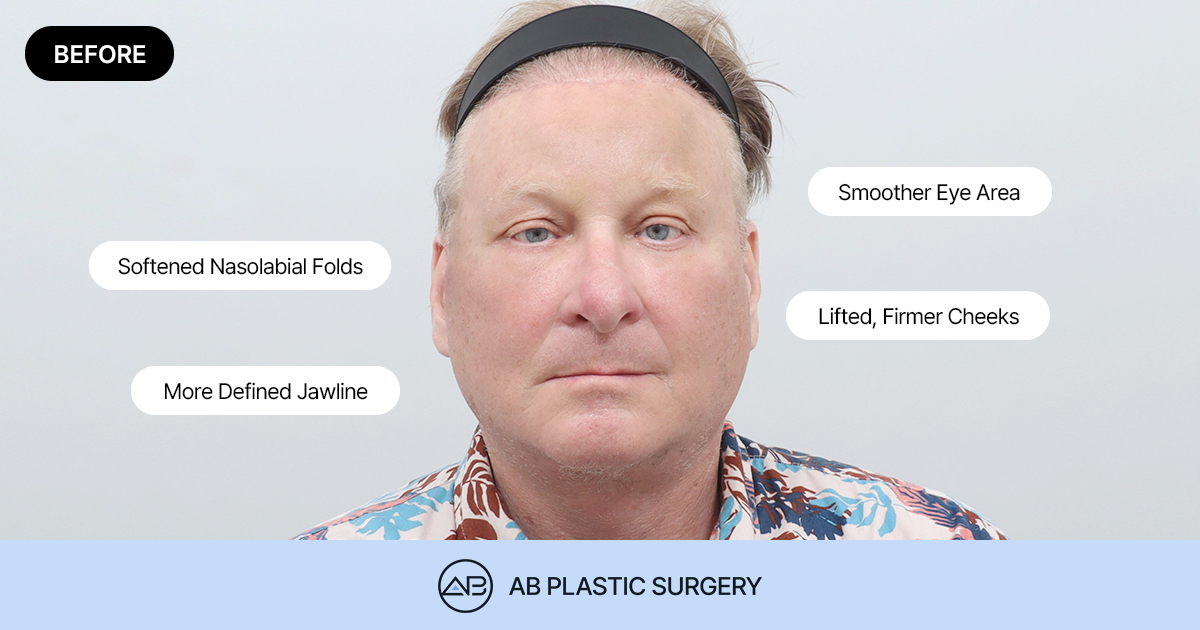
In this case, noticeable changes in the cheeks, nasolabial folds, and jawline were already visible at the two week postoperative stage.
However, two weeks is still considered an early stage of recovery.
Although visible swelling may decrease considerably during the first several weeks, residual swelling and tissue firmness can persist for months. Scars and changes in sensation may also take longer to settle.
Therefore, early postoperative photographs should be understood as a record of the recovery process rather than a representation of the final surgical outcome.
Patients should continue following their surgeon's postoperative instructions and attend scheduled follow-up appointments to monitor healing.
The Importance of Postoperative Management After Facelift Surgery
Facelift surgery involves adjustments to facial tissues, making appropriate postoperative care essential for monitoring recovery and reducing avoidable complications.
Postoperative management generally includes wound care, medication guidance, activity restrictions, and follow-up examinations.
Depending on the patient's condition, additional supportive treatments may also be considered.
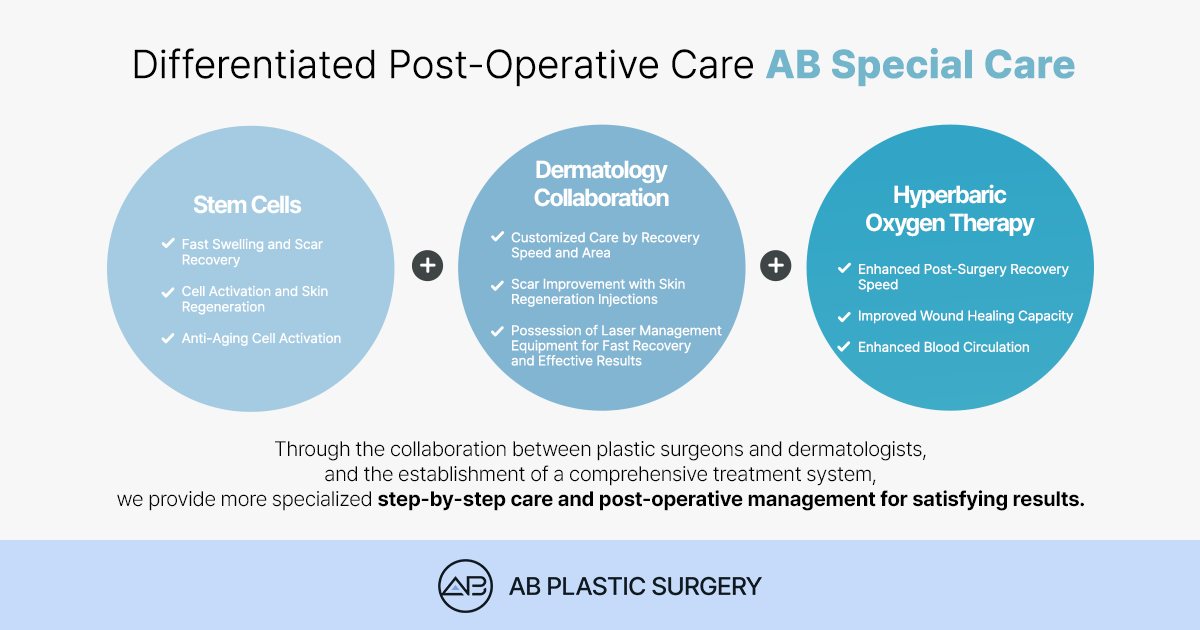
At AB Plastic Surgery, postoperative care may involve collaboration between plastic surgery and dermatology departments.
The clinic also offers additional treatment programs that may be considered according to individual medical needs and physician assessment.
However, not every postoperative treatment is appropriate for every patient, and additional therapies should not be regarded as substitutes for standard surgical follow-up and wound management.
The priority during recovery is to monitor healing, identify complications promptly, and provide appropriate care based on the patient's clinical condition.
Is Facelift Surgery Suitable for Everyone with Sagging Skin?
Not all facial sagging requires surgical treatment.
Mild skin laxity may sometimes be addressed through nonsurgical procedures, while more significant tissue descent may be better suited to surgical correction.
The decision depends on the severity of facial aging, the patient's anatomical characteristics, overall health, and expectations.
In addition, facelift surgery does not address every sign of facial aging equally.
For example, fine skin wrinkles, pigmentation, hollow areas caused by volume loss, and significant eyelid laxity may require different or additional treatment approaches.
A comprehensive facial assessment is therefore important when determining an appropriate treatment plan.
As with any surgery, facelift procedures carry potential risks, including bleeding, hematoma, infection, scarring, wound healing problems, nerve injury, asymmetry, and changes in skin sensation. These should be discussed during the preoperative consultation.
Facelift Surgery in Korea: A Personalized Approach to Facial Aging
Facial rejuvenation is not necessarily about making the face look dramatically different. For many patients, the goal is to improve the visible effects of aging while maintaining their natural facial features.
In the facelift case presented here, the two week postoperative photographs show early improvements in cheek position, nasolabial fold prominence, and jawline definition.
The patient's lower facial contour appears smoother, with less visible sagging compared with the preoperative photographs.
Nevertheless, the final outcome will depend on continued healing, and individual results may vary.
At AB Plastic Surgery, the appropriate approach to facelift surgery is determined through an assessment of facial anatomy, skin condition, tissue descent, and individual treatment goals.
For patients considering facelift surgery in Korea, please contact AB Plastic Surgery on WhatsApp at +82 10 4393 1298 for a detailed consultation.