Title
Can Implant free Rhinoplasty Really Prevent Side Effects Such as Contracture?Date
2026-03-16Views
1745
Medical Column
Can Implant free Rhinoplasty Really Prevent Side Effects Such as Contracture?

Patients considering rhinoplasty often worry about long term side effects such as inflammation, infection, visible implants, and contracture. As these concerns grow, Implant free Rhinoplasty has become an increasingly searched option among patients looking for a more natural approach to nose surgery without artificial implants.
At AB Plastic Surgery in Gangnam, a clinic known for plastic surgery in Korea, Implant free Rhinoplasty focuses on improving the nasal bridge and tip using the patient’s own tissue instead of silicone or Gore Tex. This approach is often considered by patients who want natural looking rhinoplasty results, lower foreign body concerns, and a treatment plan designed around their own nasal anatomy.
In this article, we explain what Implant free Rhinoplasty is, who it is suitable for, whether contracture can still occur, and what to know about possible contour irregularities after surgery.
1. What Is Implant free Rhinoplasty?
Implant free Rhinoplasty is a rhinoplasty technique that uses only the patient’s own tissue to reshape the nose, rather than relying on artificial implant materials. In many cases, the nasal bridge and nasal tip are reconstructed using autologous tissue to create a more natural and tissue compatible result.
The most commonly used materials include:
✔ Ear cartilage
✔ Septal cartilage
✔ Autologous rib cartilage
Because Implant free Rhinoplasty uses the patient’s own tissue, it is often chosen by patients who are concerned about foreign body reaction or who prefer rhinoplasty without silicone implants.
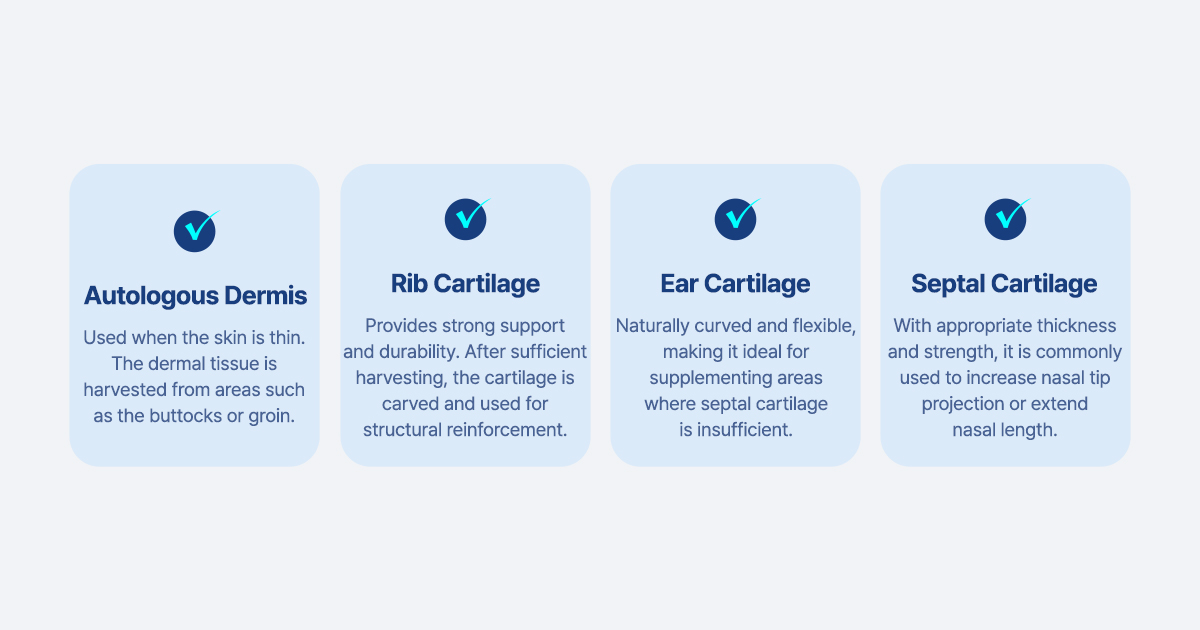
[Why many patients consider autologous tissue rhinoplasty]
One of the main advantages of autologous tissue rhinoplasty is that the likelihood of inflammation, infection, and implant related complications may be reduced compared with procedures that use artificial materials.
Key benefits may include:
✔ Reduced foreign body reaction
✔ Strong tissue compatibility
✔ More natural integration with the existing nasal structure
✔ Less risk of implant visibility in thin skin
✔ Lower concern about color changes caused by temperature sensitivity around implants
Artificial implants may carry a risk of delayed inflammation even long after surgery. By contrast, Implant free Rhinoplasty using autologous tissue is often preferred by patients seeking a more biologically compatible option. Since the tissue becomes incorporated into the nose more naturally, it may also support long term structural stability and a natural appearance
2. Who Is a Good Candidate for Implant free Rhinoplasty?
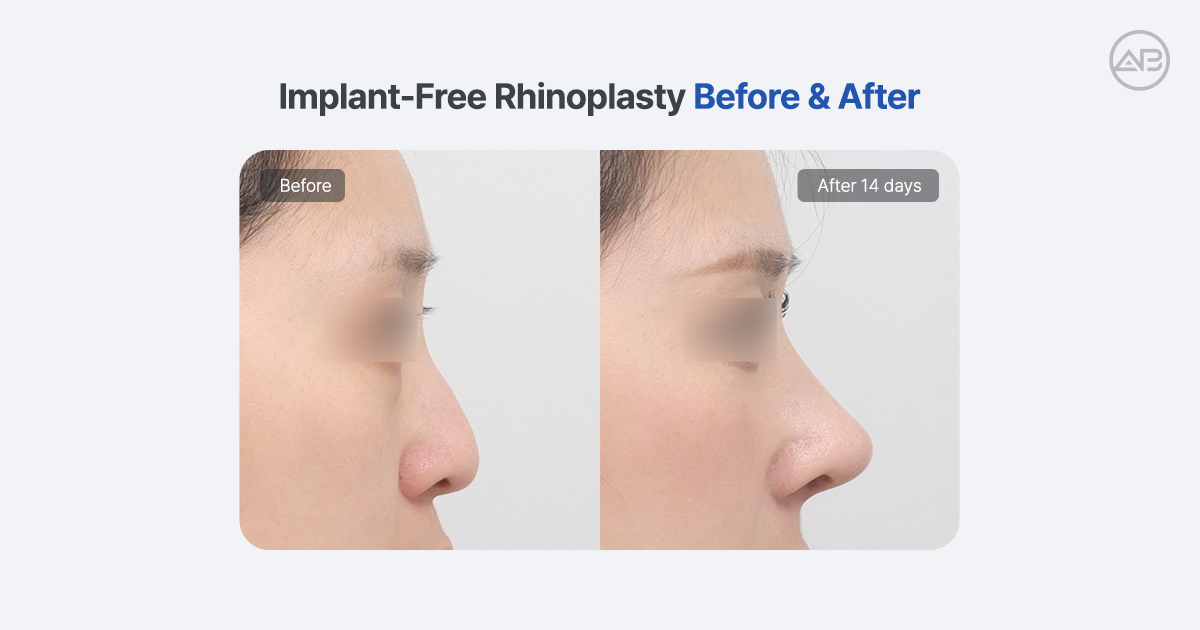
Not every patient needs the same rhinoplasty method. Implant free Rhinoplasty is generally more suitable for patients whose existing nasal structure already provides enough base height or projection to work with autologous tissue alone.
This may include patients with:
✔ A hump nose
✔ A long nose
✔ A droopy nasal tip
✔ Well developed nasal tip cartilage
In these cases, it is often possible to refine the shape of the nose using the patient’s own tissue while maintaining a balanced and natural look. This makes Implant free Rhinoplasty an attractive option for patients who prioritize safety, natural results, and a reduced reliance on artificial implants.
However, Implant free Rhinoplasty is not the ideal method for everyone. If the area between the eyebrows and the nasal bridge is significantly low, or if additional structural height is needed, an implant based plan may sometimes produce a more effective result. For this reason, a personalized surgical plan based on detailed analysis is essential.
At AB Plastic Surgery, careful preoperative evaluation including 3D CT analysis helps determine whether Implant free Rhinoplasty is appropriate and which autologous tissues are best suited for the case.
3. Can Implant free Rhinoplasty completely prevent contracture?
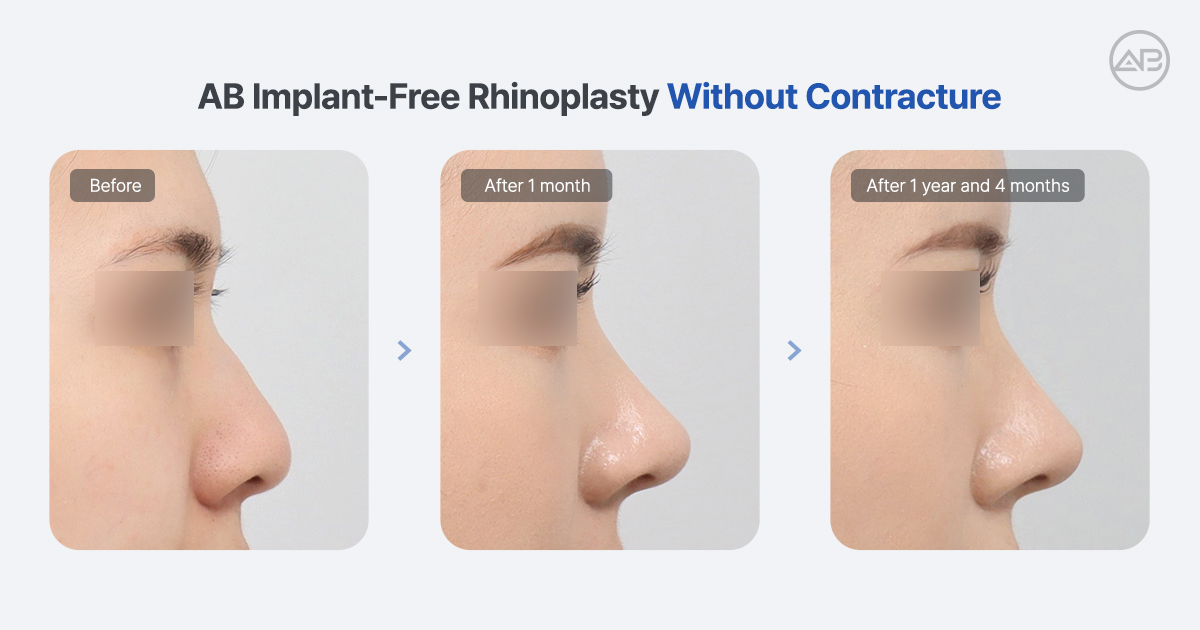
This is one of the most common questions searched by patients considering nose surgery without implants.
The honest answer is that no surgery can be said to have zero risk. While Implant free Rhinoplasty may reduce the likelihood of implant related complications, it does not mean that side effects are completely impossible.
Contracture refers to a condition in which excessive fibrotic tissue develops after inflammation, causing the nose to become tight, shortened, raised, or distorted over time. Artificial implants are one of the major causes associated with contracture, which is why many patients search for Implant free Rhinoplasty as a potentially safer alternative.
However, even when autologous tissue is used, each patient’s healing response, immune response, scar tendency, and postoperative care can influence the outcome. In other words, Implant free Rhinoplasty may lower certain risks, but it cannot guarantee the complete absence of contracture in every case.
How to reduce the risk of contracture after rhinoplasty
Risk reduction depends on more than the material used. It also depends on surgical planning, sterile technique, tissue handling, and postoperative management.
Important factors include:
✔ Thorough preoperative consultation
✔ Accurate assessment of inflammation risk
✔ Careful surgical technique
✔ Strict adherence to postoperative instructions
✔ Early clinic follow up if swelling, redness, pain, or heat develops
For patients searching terms such as contracture after rhinoplasty, rhinoplasty side effects, or safer rhinoplasty in Korea, the most important point is not simply choosing a procedure name. It is choosing a clinic that can properly evaluate your anatomy, healing pattern, and risk profile.
4. Can step off irregularities occur after Implant free Rhinoplasty?
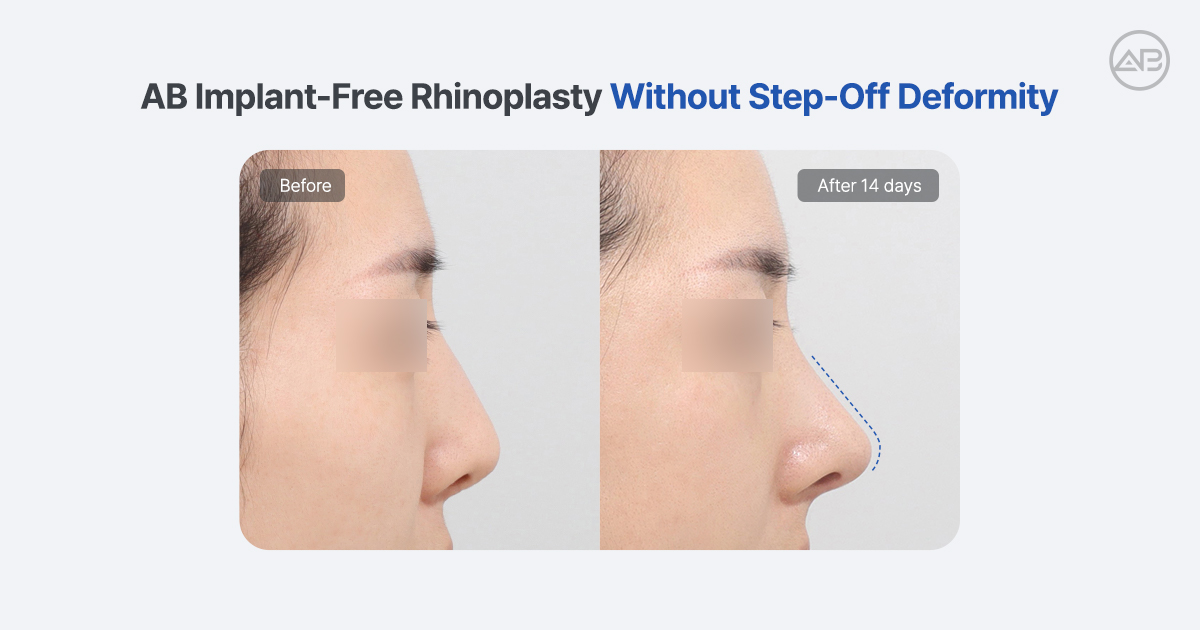
Another concern patients often have is whether Implant free Rhinoplasty can lead to visible unevenness in the nasal line.
After tip projection is adjusted, a subtle height difference can sometimes appear where the nasal bridge meets the nasal tip. This is commonly described as a step off irregularity. It may occur because of small changes in cartilage positioning, healing response, or volume changes during tissue settling.
In some patients, this can make the nasal contour appear slightly uneven from certain angles or during facial expression changes. Although this is not common in well planned cases, it is still an important topic when discussing rhinoplasty side effects and long term outcome quality.
How surgeons reduce step off irregularities
Preventing contour irregularity depends heavily on surgical precision and structural understanding.
Important technical factors include:
✔ Precise placement of autologous tissue
✔ Careful shaping of the nasal bridge to tip transition
✔ Accurate understanding of tip cartilage support
✔ A design plan that matches the overall facial balance
✔ Experience with different nasal types, including long nose, hump nose, and bulbous nose cases
Because Implant free Rhinoplasty relies on the patient’s own tissue rather than a preformed implant, the surgeon’s ability to sculpt and position tissue precisely is especially important for a smooth and natural result.
Why customized diagnosis matters in Implant free Rhinoplasty
The success of Implant free Rhinoplasty is not determined by one material alone. It depends on whether the surgical approach matches the patient’s anatomy, skin thickness, cartilage strength, and cosmetic goals.
At AB Plastic Surgery in Gangnam, rhinoplasty planning is based on a detailed evaluation of:
✔ Nasal bridge height
✔ Tip support and projection
✔ Skin thickness
✔ Cartilage quality
✔ Facial balance
✔ Structural goals and revision risk factors
This type of individualized assessment is especially important for international patients searching for rhinoplasty in Korea, Gangnam rhinoplasty, plastic surgery before and after, or natural rhinoplasty results. A customized plan helps determine whether Implant free Rhinoplasty is the right choice or whether another structural approach would produce a better long term outcome.
Is Implant free Rhinoplasty the right choice for you?
If you are concerned about silicone implants, Gore Tex, contracture, foreign body reaction, or unnatural rhinoplasty results, Implant free Rhinoplasty may be worth considering. It can be a strong option for patients who want a more natural and tissue based surgical method, especially when their existing nasal structure allows refinement without artificial implants.
At the same time, the best rhinoplasty method always depends on the individual case. The most important step is not following a trend, but receiving a precise diagnosis and a treatment plan tailored to your nasal structure.
For patients researching plastic surgery in Korea or comparing plastic surgery before and after results, please contact us at +82-2-512-1298 or via WhatsApp at AB Plastic Surgery for further inquiries about Implant free Rhinoplasty.