Title
Can Middle-Aged Eyelid Surgery Improve Aging-Looking Eyes? Is Lower Blepharoplasty Always the Answer?Date
2026-11-03Views
12
Medical Column
Can Middle-Aged Eyelid Surgery Improve Aging-Looking Eyes? Is Lower Blepharoplasty Always the Answer?
Hello, this is AB Plastic Surgery & Dermatology.
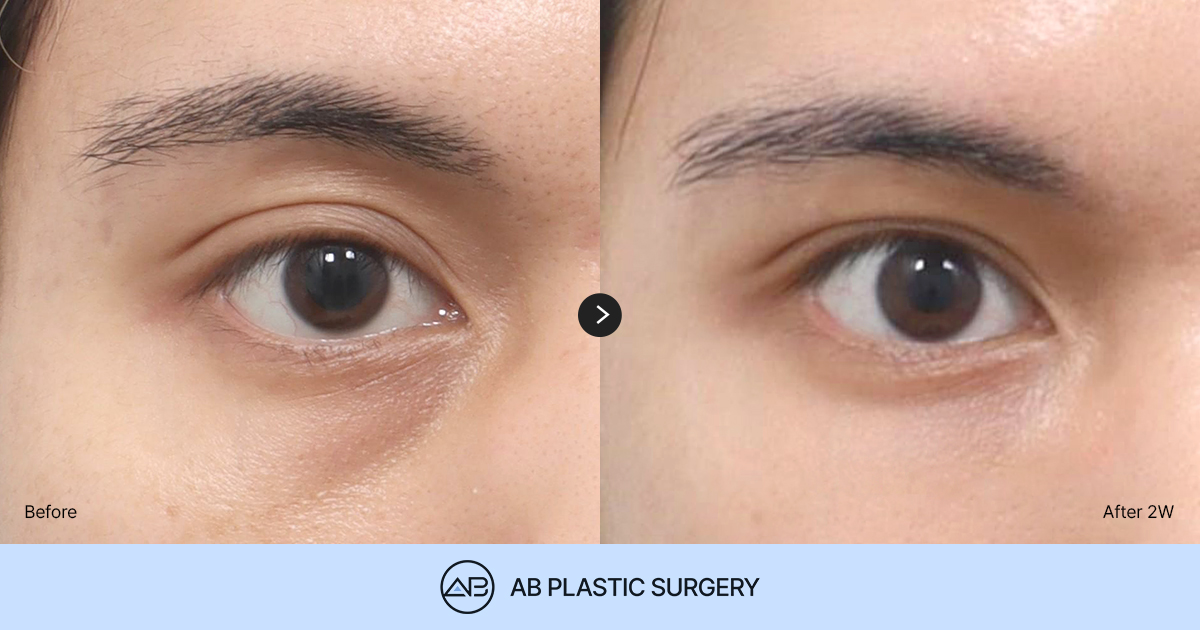
As we age, the skin around our eyes gradually loses elasticity, and our eyes may begin to look more tired or older than they actually are.
For this reason, many people consider under-eye surgery. However, not everyone requires the same surgical approach.
Under-eye aging varies depending on individual skin characteristics, the degree of fat protrusion, and the condition of the muscles surrounding the eyes.
Therefore, rather than assuming that under-eye surgery is necessary, it is important to determine which surgical approach is most appropriate for each patient's condition.
Today, we will take a closer look at the cases in which under-eye surgery may be necessary, the differences between lower blepharoplasty and under-eye fat repositioning, and the recovery process and precautions following surgery.
Q. When Is Lower Blepharoplasty Necessary?
Lower blepharoplasty is not simply a procedure that tightens the skin. It is a surgical procedure that comprehensively addresses the skin, fat, and muscle structures beneath the eyes. It may be considered in the following cases:
✅ When the skin beneath the eyes is sagging and wrinkles have become deeper
✅ When the fat beneath the eyes protrudes, creating noticeable under-eye bags
✅ When the lower eyelids appear elongated or sagging, making the eyes look tired
One of the most common signs of under-eye aging is the protrusion of fat beneath the eyes as the tissues supporting the fat weaken.
In such cases, the area beneath the eyes may appear puffy, creating a tired or older appearance.
If sagging skin and protruding fat are present together, lower blepharoplasty may help improve both concerns.
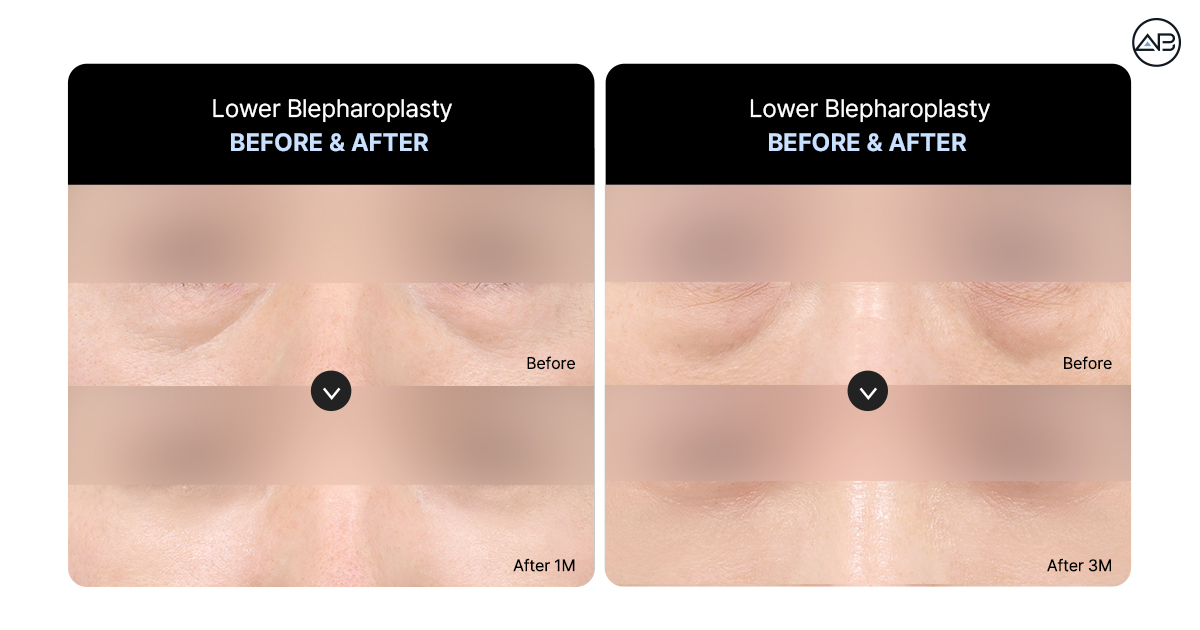
However, if the skin shows little sagging and the primary concern is protruding fat, sufficient improvement may be possible with under-eye fat repositioning alone.
Therefore, it is important to carefully assess each patient's under-eye anatomy and degree of aging before determining the appropriate surgical approach.
Q. What Is the Difference Between Lower Blepharoplasty and Under-Eye Fat Repositioning?
Both procedures share the goal of improving a tired-looking appearance, but they differ in their surgical approach and the areas they address.
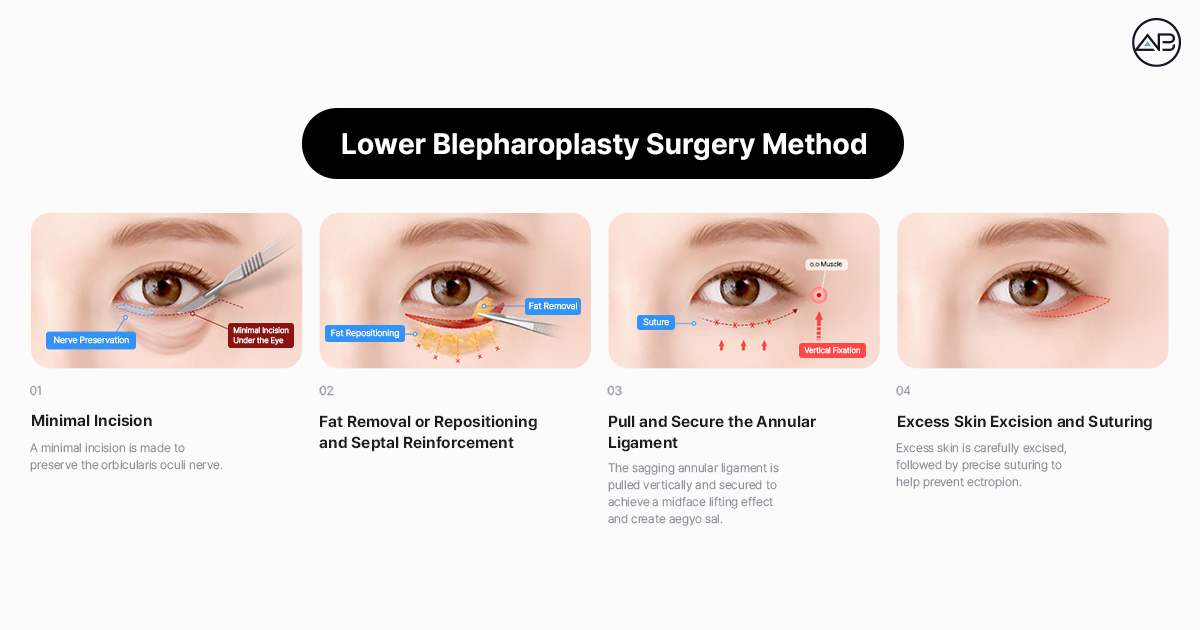
Lower blepharoplasty is a procedure that removes or repositions sagging skin and protruding fat beneath the eyes. Depending on the patient's condition, it may also involve tightening the muscles around the eyes.
Generally, the skin and fat are addressed through an incision along the lower lash line. Because the incision is positioned close to the eyelashes, the resulting scar may become less noticeable as healing progresses.
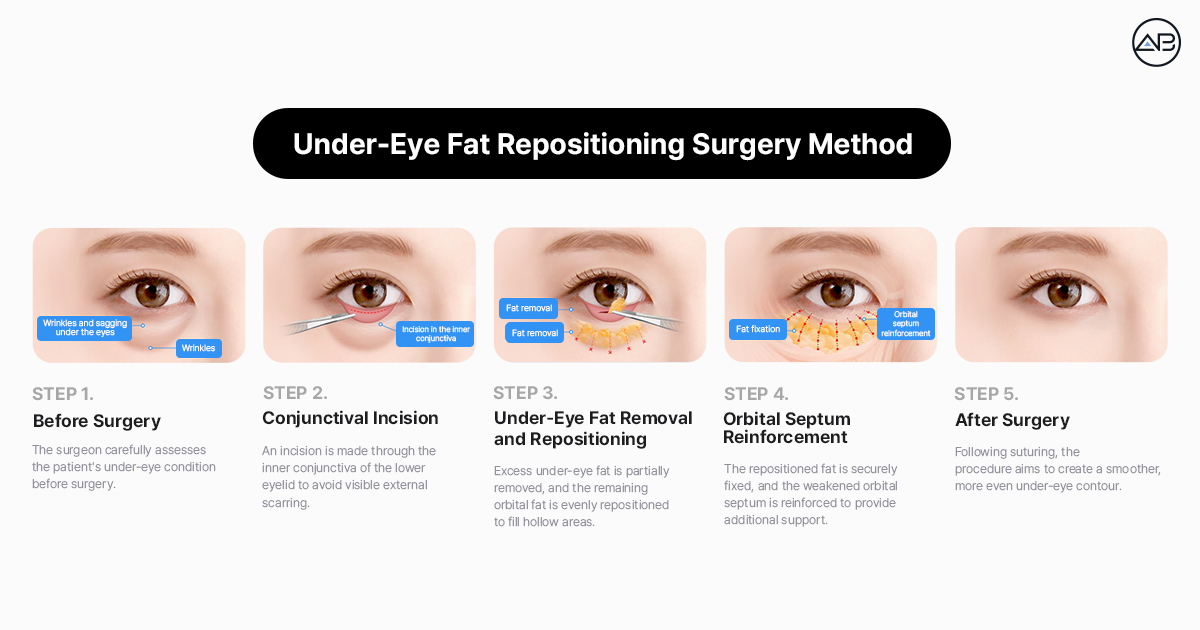
In contrast, under-eye fat repositioning is performed without removing the skin. Through an incision on the inner surface of the lower eyelid, protruding fat is repositioned toward hollow areas beneath the eyes.
Rather than simply removing protruding fat, the main objective is to redistribute it to help create a smoother under-eye contour.
Because there is no external skin incision, the procedure places less burden on the skin. It may be suitable for patients in the early stages of under-eye aging who have relatively good skin elasticity.
In other words, when both skin sagging and fat protrusion are present, lower blepharoplasty may be appropriate. However, when there is minimal skin sagging and only protruding fat is present, under-eye fat repositioning may be a more natural and effective approach.
Q. Does Everyone in Middle Age Need Lower Blepharoplasty?
Not necessarily. The degree of aging and the shape of the under-eye area vary significantly from person to person.
Even among middle-aged patients, those who maintain good skin elasticity and do not have significant sagging may achieve sufficient improvement with under-eye fat repositioning alone.
Conversely, younger patients may also require lower blepharoplasty if they have substantial skin sagging or weakened muscles around the eyes.
Ultimately, the most important consideration is not age, but the actual condition of the under-eye area.
Lower blepharoplasty is not simply a procedure that removes skin. It is a surgical procedure that comprehensively evaluates and corrects skin elasticity, fat distribution, muscle support, and the surrounding structures.
Because excessive skin removal may lead to complications, including lower eyelid retraction or ectropion, it is important to select the appropriate surgical approach based on a thorough consultation and accurate diagnosis.
Q. How Long Does Recovery Take After Lower Blepharoplasty?
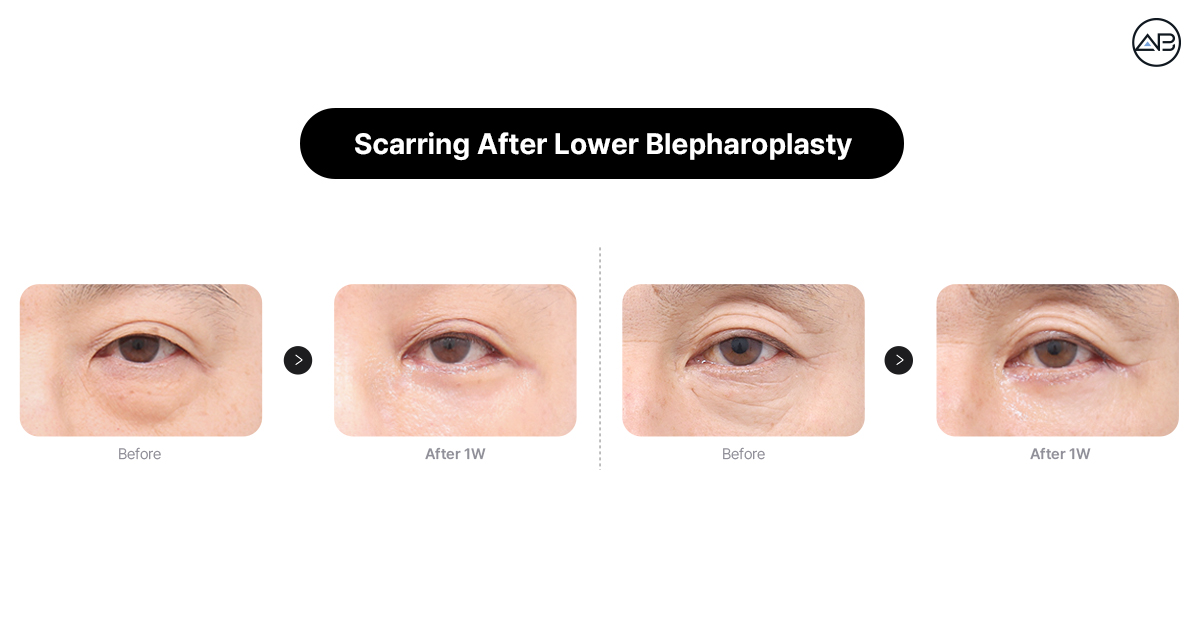
Recovery varies from person to person, but sutures are generally removed approximately one week after lower blepharoplasty.
Most swelling tends to subside within 1–2 weeks, and the surgical area gradually settles into a more natural appearance over approximately one month.
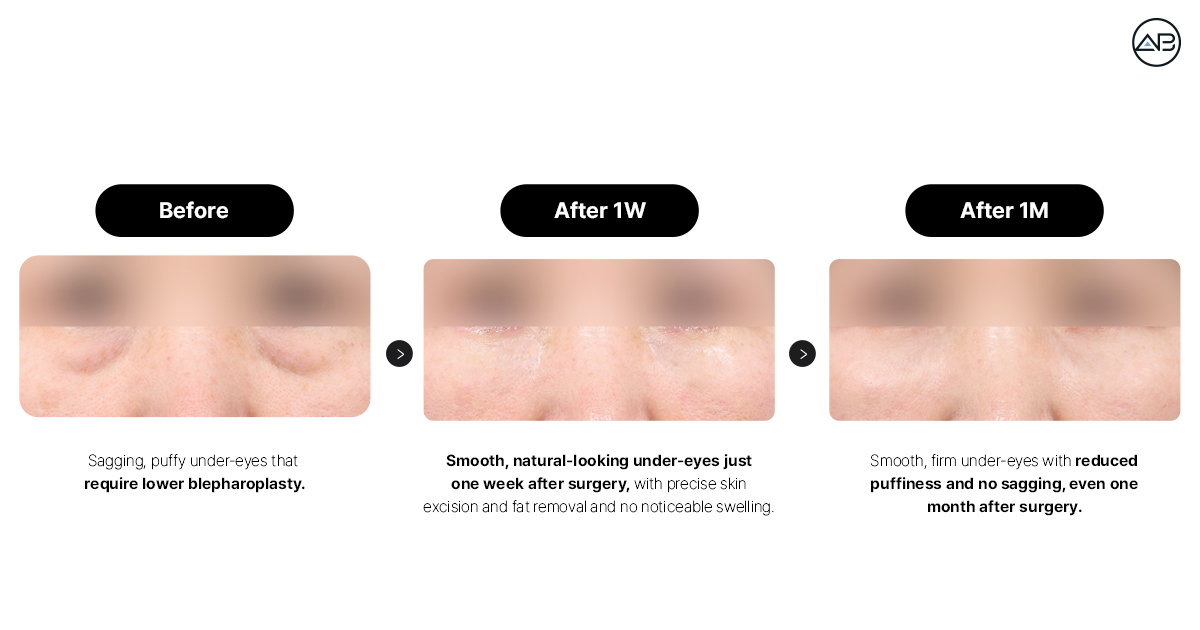
To support recovery after lower blepharoplasty, applying cold compresses for the first three days after surgery is recommended. Afterward, warm compresses may be used to help manage the surgical area.
During the recovery period, it is also recommended to avoid strenuous exercise, saunas, alcohol consumption, and smoking for approximately one month.
Although daily activities may be possible within a relatively short period, the healing process can vary depending on the individual's skin condition and the extent of surgery.
Lower blepharoplasty involves not only the skin but also the delicate tissues beneath the eyes. Therefore, the incision is generally made close to the lower lash line to help minimize visible scarring.
It is also important to carefully manage the incision area during recovery and avoid rubbing the eyes or applying excessive pressure.
Q. What Complications Should Be Considered Before Surgery?
Lower blepharoplasty is a surgical procedure that corrects the skin and fat beneath the eyes according to each patient's condition. As it involves delicate structures around the eyes, it requires a high level of precision.
If excessive skin is removed during surgery, the lower eyelid may be pulled downward, potentially causing ectropion, a condition in which the eyelid turns outward. In some cases, excessive fat removal may result in a hollow or sunken appearance beneath the eyes.
For these reasons, it is important to accurately assess skin elasticity, the degree of fat protrusion, and muscle support before surgery, and to carefully determine the amount of tissue that needs to be corrected.
After surgery, patients should also take care to avoid rubbing their eyes or applying pressure to the surgical area.
At AB Plastic Surgery & Dermatology, surgical plans are established by carefully evaluating each patient's skin elasticity, fat distribution, and degree of muscle support to determine the most appropriate approach for their individual eye condition.
Rather than simply removing protruding skin and fat, the goal is to improve the under-eye area while maintaining a natural and balanced appearance. The clinic also operates an emergency response system to prepare for various situations that may arise during surgery.
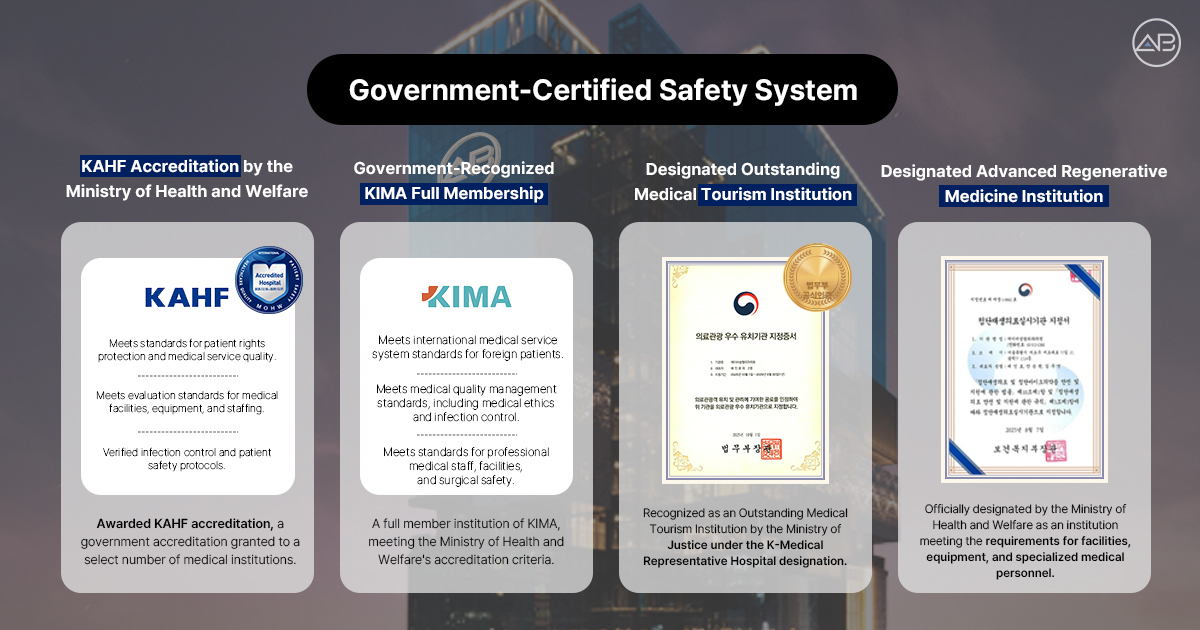
In addition, AB Plastic Surgery & Dermatology maintains a comprehensive safety management system, including systematic preoperative examinations, surgical planning, direct consultations with plastic surgery specialists, real-time patient monitoring, CCTV monitoring in surgical areas, and a postoperative recovery management system.
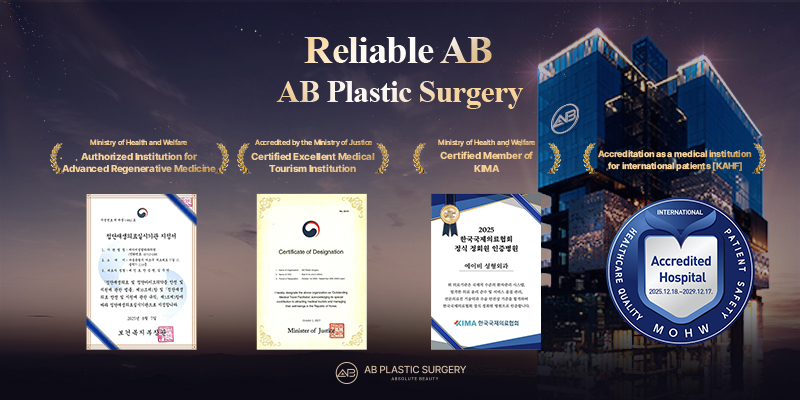
Through these safety management measures, the clinic has obtained various certifications, including those related to patient safety assessments conducted by the Korean government, and continues to maintain a medical environment that international patients can trust.
Even if a procedure is considered relatively simple, it is important to carefully verify whether the surgical process is systematic, whether an experienced medical professional will perform the procedure, and whether an appropriate safety management system is in place.
When selecting a surgical approach, understanding the differences between lower blepharoplasty and under-eye fat repositioning can help patients choose a more natural-looking and longer-lasting method of under-eye improvement.
If you have any questions about under-eye surgery, please contact AB Plastic Surgery on WhatsApp at +82 10 4393 1298 for a detailed consultation.

|
Writer, Dr. Choi Jae Ik, AB Plastic Surgery |