Title
Did the Bone Separate After Zygoma Reduction Surgery? Misconceptions and the Real Causes of Zygomatic NonunionDate
2026-10-06Views
29
Medical Column
Did the Bone Separate After Zygoma Reduction Surgery? Misconceptions and the Real Causes of Zygomatic Nonunion
Hello, I am Dr. Cho Dong Pill of AB Plastic Surgery.
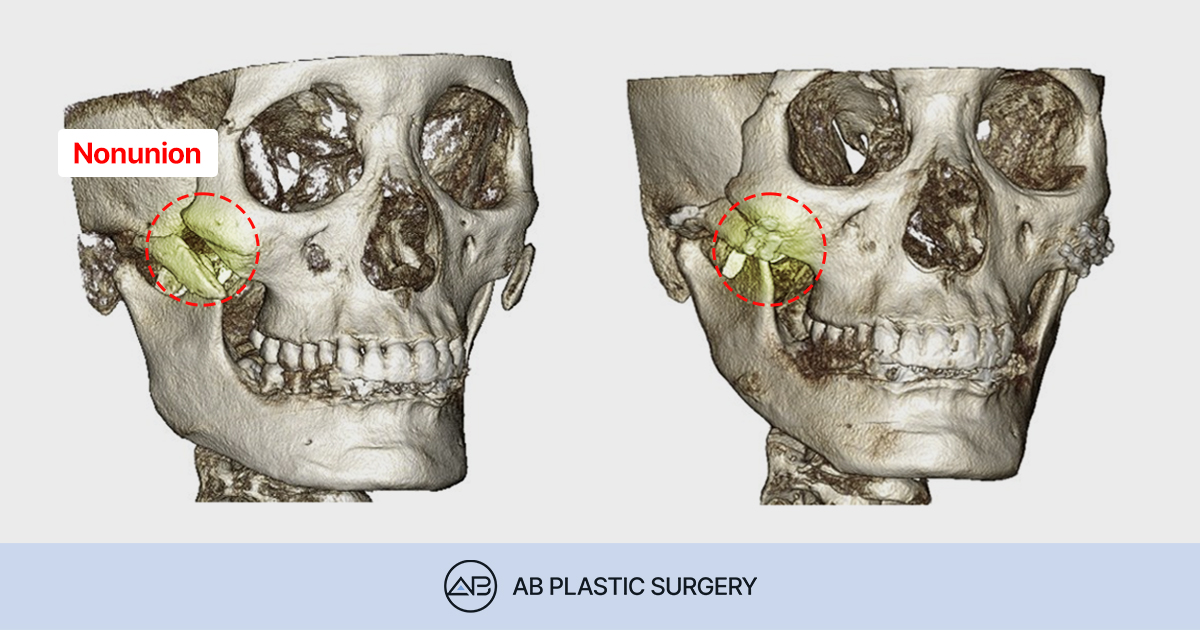
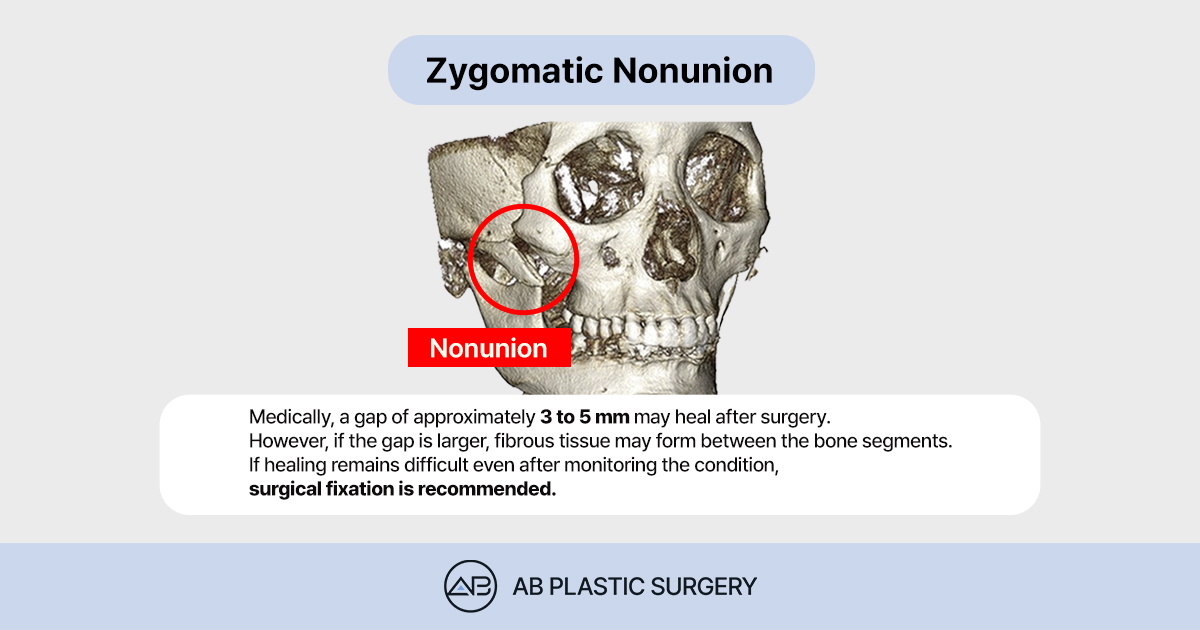
Today, I would like to discuss zygomatic nonunion, a complication of facial contouring surgery that is commonly used to describe a gap between the bone segments that may occasionally be observed on a CT scan after zygoma reduction surgery.
We will look at why this type of nonunion can occur after zygoma reduction surgery, how it develops, and whether there are ways to correct it.
Q. If There Is a Gap Between the Bones After Zygoma Reduction Surgery, Does It Always Mean Nonunion?
Facial contouring surgery can broadly be divided into mandibular angle surgery, chin surgery, and zygoma reduction surgery. In the case of mandibular angle surgery, the term “nonunion” is generally not used.
This is because the term nonunion is typically used when a gap develops in procedures such as zygoma reduction surgery or chin surgery, where separate bone segments need to be fixed together.
However, the presence of a visible gap on a CT scan does not necessarily mean that it is 100% a case of nonunion.
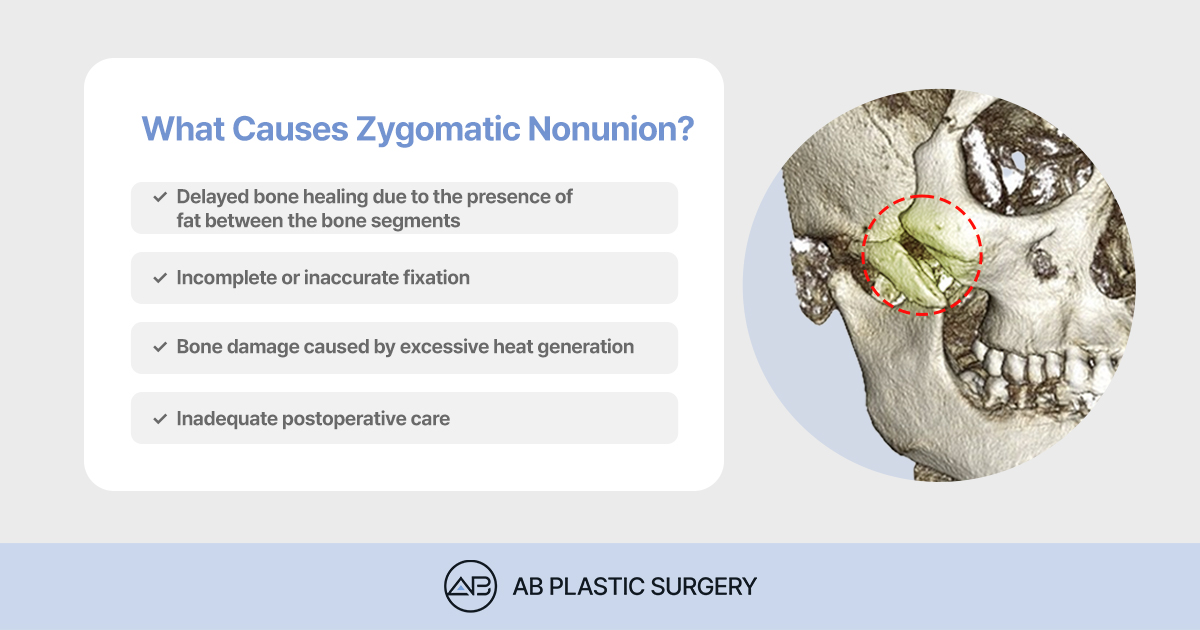
Q. What Causes Zygomatic Nonunion?
The first possible cause is delayed bone healing due to pre existing fat. In such cases, slower bone healing may contribute to the development of nonunion.
The second possible cause is incomplete or inaccurate fixation of the bone segments. Nonunion may occur if the fixation is not sufficiently secure or precise. This can happen when the pins or plates, including titanium plates, used for fixation do not provide sufficient stability or are not positioned accurately.
The third possible cause involves heat generated during bone cutting. The bone is generally cut using surgical instruments designed for facial contouring procedures. If excessive heat is generated during this process and damages the bone, nonunion may occur even when the bone segments have otherwise been properly fixed.
The fourth possible cause is inadequate postoperative care following zygoma reduction surgery.
As described above, the causes of nonunion following zygoma reduction surgery can broadly be divided into these four categories.
Q. Are There Any Symptoms of Zygomatic Nonunion?
When zygomatic nonunion occurs, the symptoms that patients may notice can differ between the early and later stages after surgery.
In the early postoperative period, patients may notice nonunion through symptoms such as a rubbing sound between the bone segments or a clicking sensation. In the later postoperative period, after the swelling has fully subsided, patients may sometimes feel a gap between the bone segments when touching the surgical area, which may indicate the presence of nonunion.
As such, the symptoms associated with zygomatic nonunion may differ depending on whether the patient is in the early or later stage of recovery after surgery.
Q. If Zygomatic Nonunion Occurs, How Can It Be Corrected?
Patients may generally find it difficult to recognize zygomatic nonunion on their own.
Medically, it is generally considered that gaps of approximately 3 to 5 mm may heal during the postoperative recovery process.
If a larger degree of nonunion has occurred, a CT scan is performed for an accurate assessment. If it is determined that the condition is unlikely to resolve without intervention, surgical correction through revision surgery may be recommended.
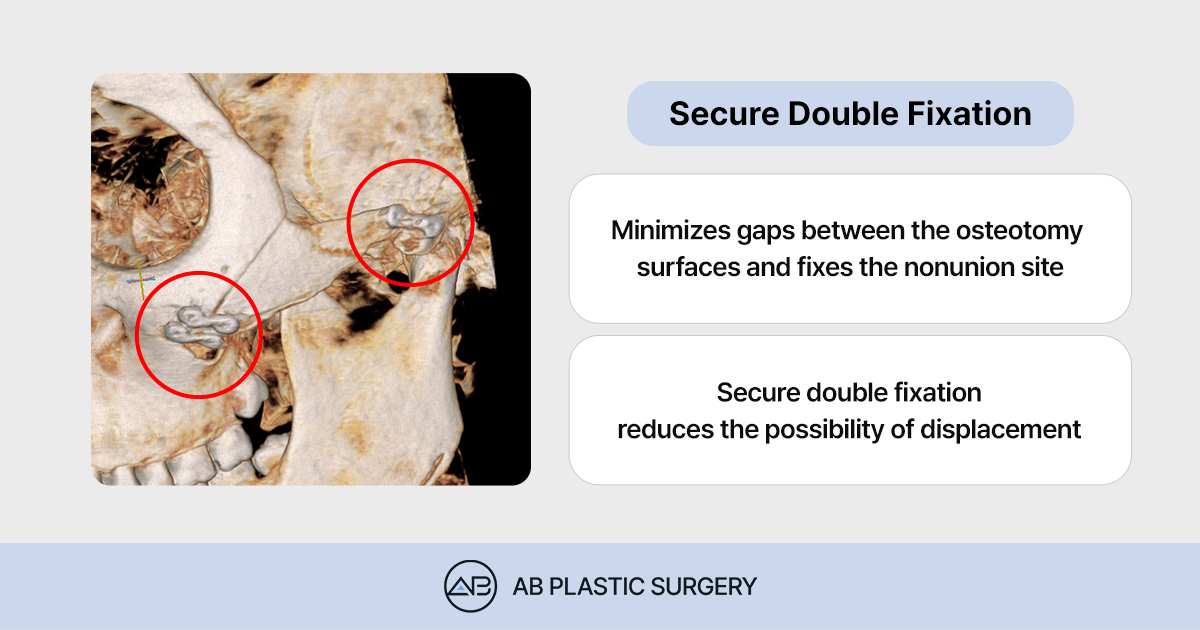
At AB Plastic Surgery, double fixation is performed during zygoma reduction surgery to minimize the risk of such complications.
To help prevent zygomatic nonunion, the gap between the cut bone surfaces is minimized, and the osteotomy and resection sites are firmly secured using double fixation. This helps prevent the bone segments from becoming unstable or separating after surgery.
In addition, this double fixation technique helps promote recovery and is also effective in reducing postoperative soft tissue sagging.
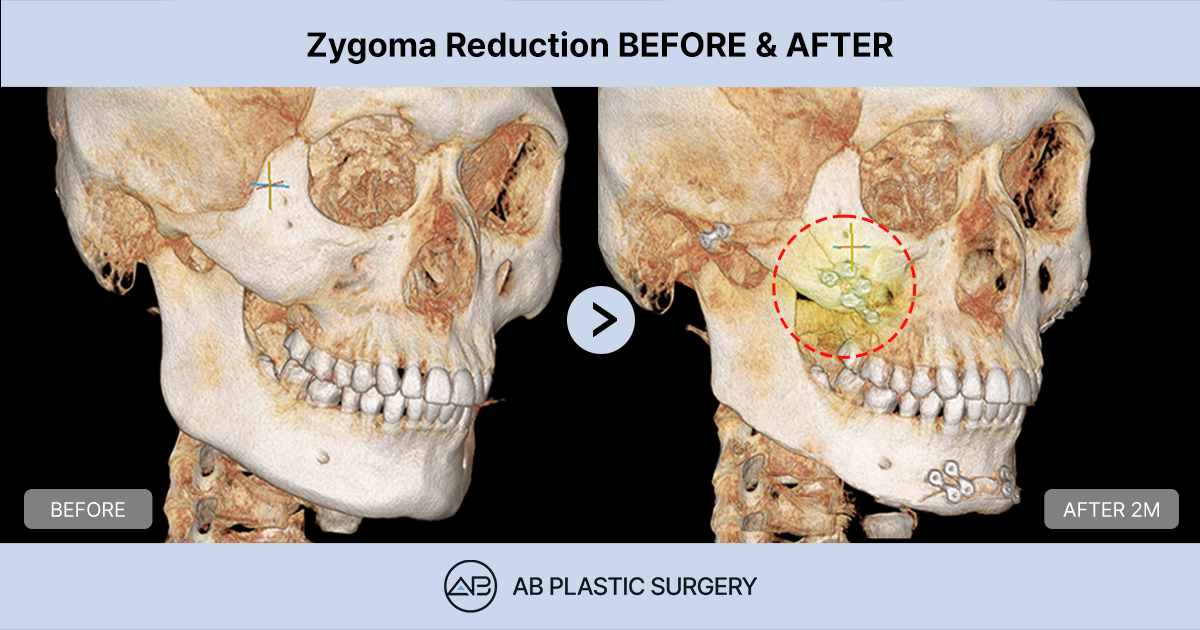
Today, we discussed zygomatic nonunion, one of the complications that may occur after zygoma reduction surgery.
Because facial contouring surgery can significantly change the overall impression of the face, it is important to have a thorough understanding of potential complications and to prepare appropriately before surgery.
At AB Plastic Surgery, we strive to minimize complications associated with facial contouring surgery through precise diagnosis and tailored surgical planning, while working toward safer and more satisfactory outcomes.
Above all, it is important to have a thorough consultation with an experienced specialist and establish a surgical plan that is appropriate for your individual condition. Please keep this in mind.
If you have any additional questions about zygoma reduction surgery, please contact AB Plastic Surgery on WhatsApp at +82 10 4393 1298 for a detailed consultation.

|
Writer, Dr. Cho Dong Pill, AB Plastic Surgery |