Title
How to Choose the Right Hospital for Revision RhinoplastyDate
2026-06-15Views
1478
Medical Column
How to Choose the Right Hospital for Revision Rhinoplasty
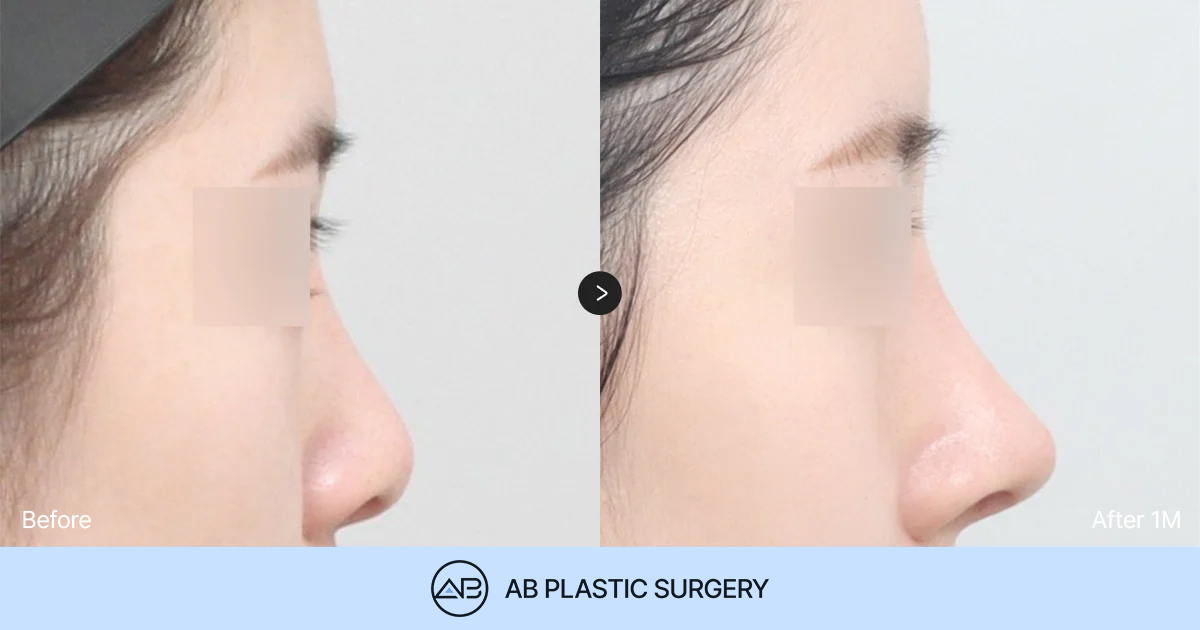
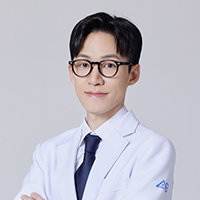
Hello, I am Dr. Lee Dong-Han of AB Plastic Surgery.
If you are looking for a hospital that specializes in revision rhinoplasty, you should first evaluate the surgeon’s expertise and whether functional aspects of the nose are properly considered, rather than relying solely on reviews.
Revision rhinoplasty is one of the most challenging procedures in cosmetic surgery. In fact, topics such as revision rhinoplasty reviews, costs, and recovery are among the most frequently searched subjects by patients considering secondary surgery.
However, choosing a hospital based only on reviews or advertisements can be more risky than many people realize. Satisfaction with revision rhinoplasty often varies greatly depending on the hospital because the procedure itself is highly complex.
Today, we will discuss practical criteria for identifying a hospital that truly excels in revision rhinoplasty.
Why Is Revision Rhinoplasty More Difficult?
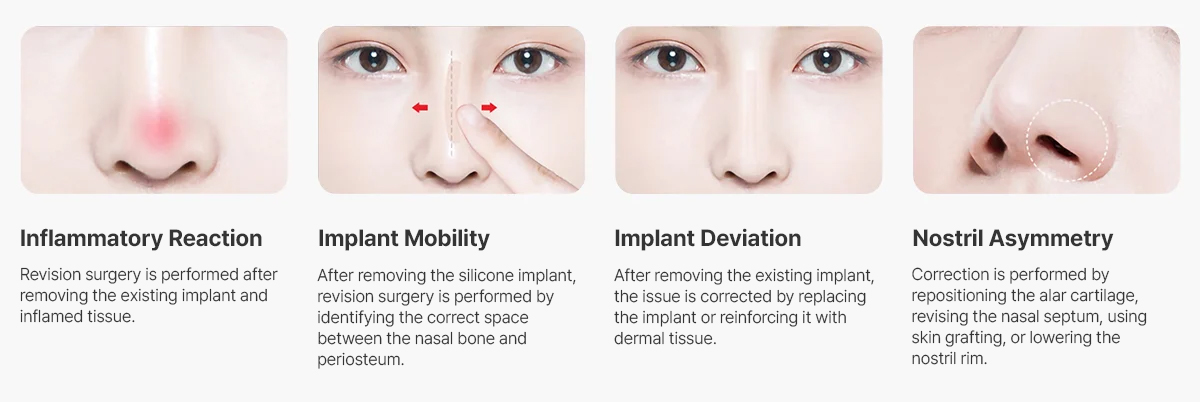
Revision rhinoplasty is not simply a procedure to reshape the nose.
Because surgery has already been performed once, the following variables often exist:
✅ Scar tissue formation
✅ Damage to cartilage and surrounding tissues
✅ Implant displacement or a history of inflammation
✅ Changes in skin thickness and blood circulation
✅ Structural alterations caused by previous surgery
Because the surgeon must redesign the nose under non ideal anatomical conditions, revision rhinoplasty requires a significantly higher level of expertise than primary rhinoplasty.
A Hospital That Accurately Determines Whether Revision Rhinoplasty Is Truly Necessary
The most important factor in revision rhinoplasty is identifying the exact cause of the current problem.
If a clinic immediately recommends revision surgery based solely on cosmetic concerns such as dissatisfaction with the appearance of the nasal line, caution is advised.
Hospitals experienced in revision rhinoplasty focus on identifying the underlying cause of the problem rather than simply addressing the final appearance.
✅ Condition of the nasal septum and internal nasal structures
✅ Previous surgical methods used, including implants and autologous cartilage grafts
✅ Presence of nasal obstruction or other functional issues
✅ Skin condition and degree of scar tissue formation
By identifying the root cause rather than focusing only on cosmetic outcomes, unnecessary revision procedures can be minimized and more stable results can be achieved.
A Hospital That Considers Nasal Function Along with Appearance
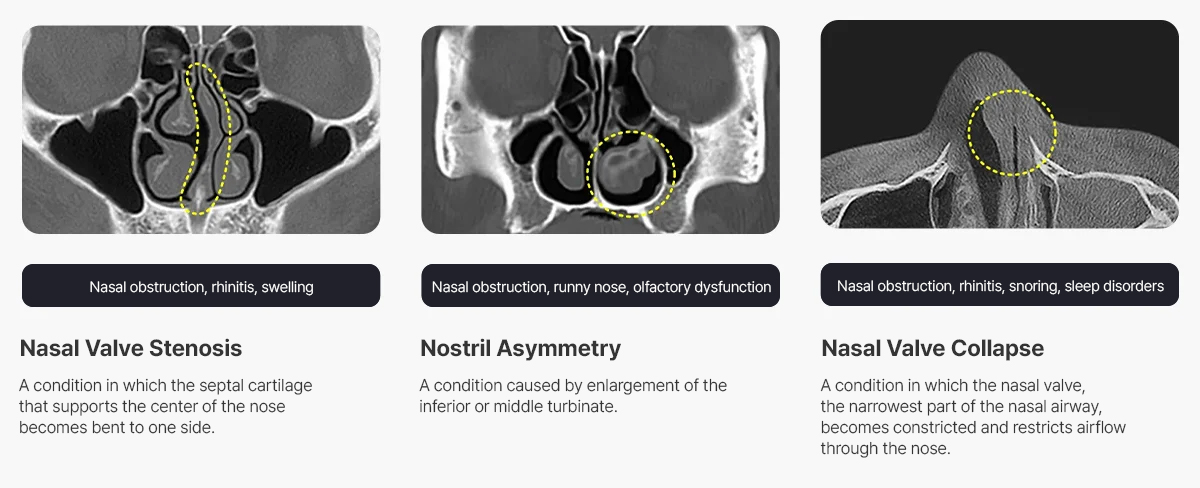
One of the most commonly overlooked aspects of revision rhinoplasty is nasal function.
After the first surgery, patients may experience problems such as:
✅ Nasal obstruction
✅ Difficulty breathing
✅ Nasal valve narrowing
In these situations, revision surgery should not focus solely on restoring appearance. Functional issues must also be addressed and improved.
The nose is primarily a breathing organ before it is an aesthetic feature. This consideration is especially important in revision rhinoplasty.
Use of Autologous Tissue
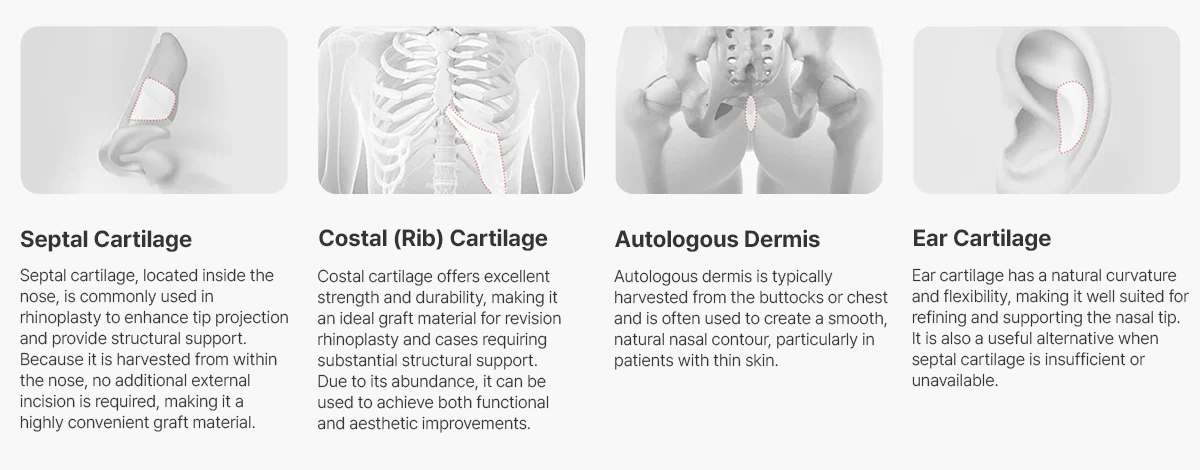
Revision rhinoplasty often involves situations where existing tissues are insufficient or have been damaged.
Commonly used autologous tissues include:
✅ Septal cartilage
✅ Ear cartilage
✅ Rib cartilage
Using autologous tissue can help reconstruct nasal structures more securely and reduce the risk of long term structural changes.
In revision rhinoplasty, a structural reconstruction approach is often more important than simply inserting another implant.
A Design That Avoids Excessive Correction
If a consultation repeatedly emphasizes making the nose “higher,” “more defined,” or “more dramatic,” it may be worth reconsidering.
Factors that must be considered include:
✅ Already weakened nasal tissues
✅ The burden created by repeated surgeries
Ignoring these factors may increase the likelihood of requiring another revision procedure.
Hospitals experienced in revision rhinoplasty prioritize safe and realistic outcomes within the limits of each patient’s anatomy.
Extensive Experience with Revision Rhinoplasty Cases
The outcome of revision rhinoplasty is heavily influenced by the surgeon’s experience, not only with revision rhinoplasty itself but with revision procedures in general.
Important experience includes:
✅ Managing a wide variety of revision rhinoplasty cases
✅ Structural reconstruction procedures
✅ Functional correction cases
Accumulated experience allows surgeons to anticipate potential issues and develop appropriate surgical strategies in advance.
Rather than simply reviewing before and after photos, it is important to evaluate how different problems were analyzed and resolved in actual cases.
Revision Rhinoplasty Hospital Checklist
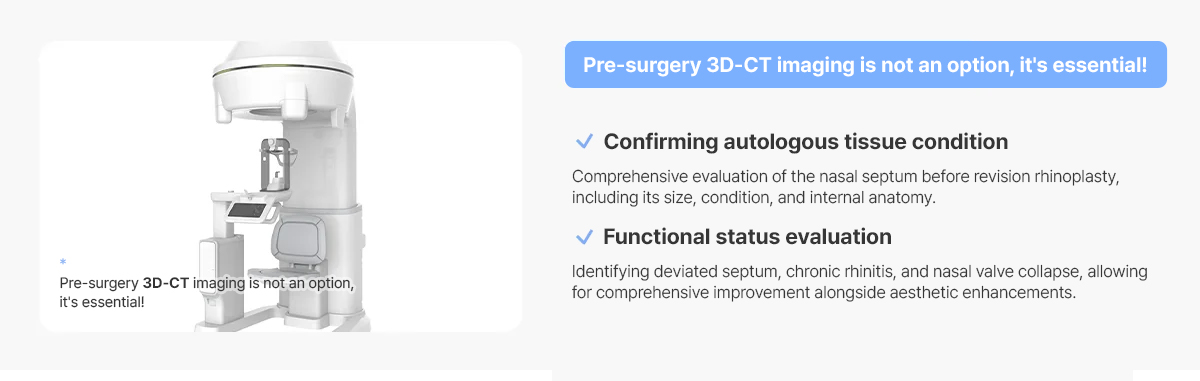
When evaluating a hospital, consider the following questions:
✅ Does the surgeon personally perform structural analysis using 3D CT imaging during consultation?
✅ Can both aesthetic improvement and functional correction be addressed through revision rhinoplasty?
✅ Is there a thorough explanation regarding the use of autologous tissue and the planned reconstruction strategy?
✅ Is there a clear explanation of a personalized, safe surgical plan rather than simply promoting a more dramatic appearance?
Hospitals that accurately identify the cause of the problem, consider both function and aesthetics, and prioritize safe structural reconstruction are more likely to provide reliable revision rhinoplasty care.
Revision rhinoplasty is often the final opportunity to correct previous issues, making hospital selection especially important.
Rather than choosing a hospital simply because it has many reviews, focus on whether the medical team understands your condition accurately and can provide a treatment plan tailored to your needs.
Please undergo a thorough consultation to receive an accurate diagnosis and surgical plan based on your current nasal condition.
If you would like more information about revision rhinoplasty, please contact AB Plastic Surgery on WhatsApp at +82 10 4393 1298 for a detailed consultation.
|
Writer. Dr. Lee Dong-Han, AB Plastic Surgery |