Title
Revision Surgery for a Contracted Nose: Will My Nose Become Shorter if Silicone Implant Inflammation Is Left Untreated?Date
2026-09-28Views
295
Medical Column
Revision Surgery for a Contracted Nose: Will My Nose Become Shorter if Silicone Implant Inflammation Is Left Untreated?
Hello, I am Dr. Lee Dong Han of AB Plastic Surgery.
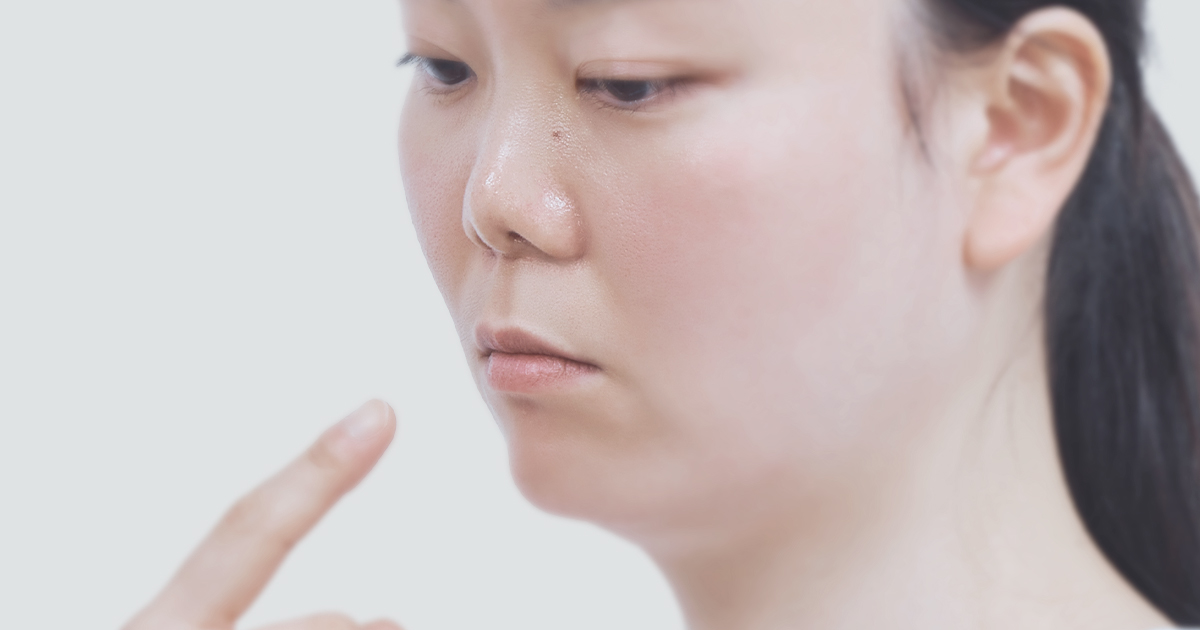
When the nose suddenly becomes firm or the tip turns upward after rhinoplasty, resulting in a contracted nose, patients may experience considerable discomfort and distress in their daily lives.
In particular, many patients hesitate to seek treatment because they worry, “What if another surgery makes things worse?” Today, using an actual contracted nose case, I will explain why inflammation after rhinoplasty should not be left untreated and how revision surgery can address the condition.
1. Why Does a Contracted Nose Develop After Rhinoplasty?
When a foreign material enters the body, the body naturally forms a thin capsule around it to protect the surrounding tissues. This is a normal physiological response. However, if inflammation develops around the implant or the inflammatory response continues over time, the capsule may become abnormally thick and firm.
As this hardened tissue continues to contract, it pulls on the nasal tissues, causing the tip of the nose to turn upward and the nose itself to become shorter. This is how a contracted nose deformity can develop after rhinoplasty.
According to a report by the Korean Society of Plastic and Reconstructive Surgeons, the incidence of delayed inflammation following surgery with artificial implants has been reported to be approximately 3% to 5%.
Because inflammation around a silicone nasal implant can cause the internal tissues to become hardened if left untreated, appropriate treatment at an early stage is particularly important.
2. Are Inflammation Around a Silicone Implant and Nasal Asymmetry Warning Signs of a Contracted Nose?
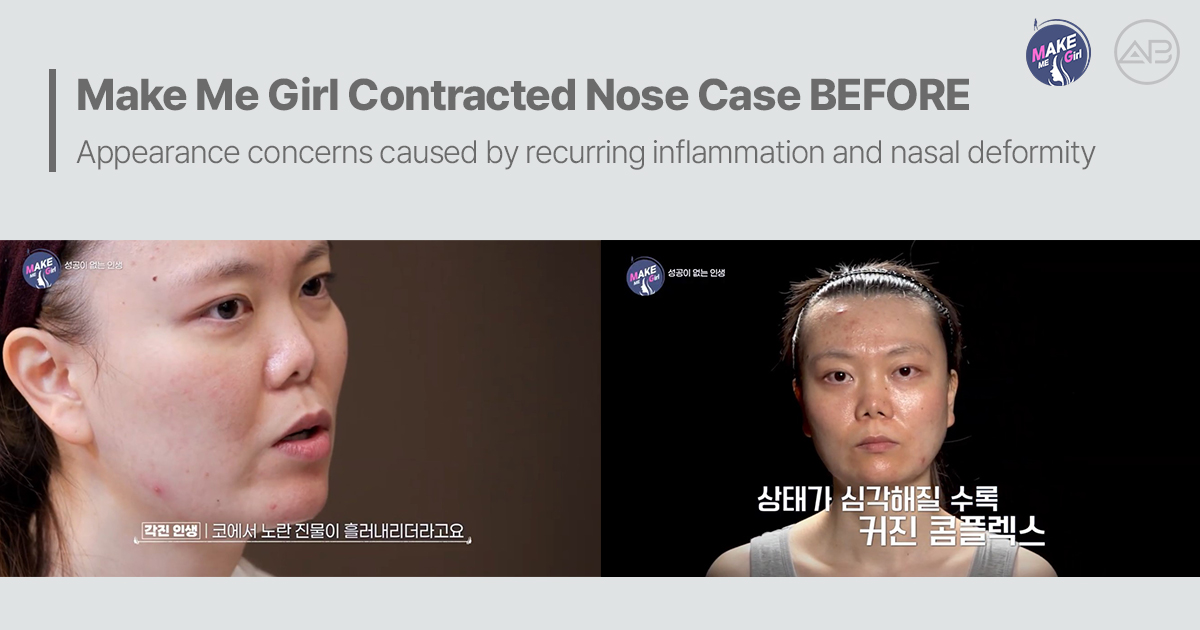
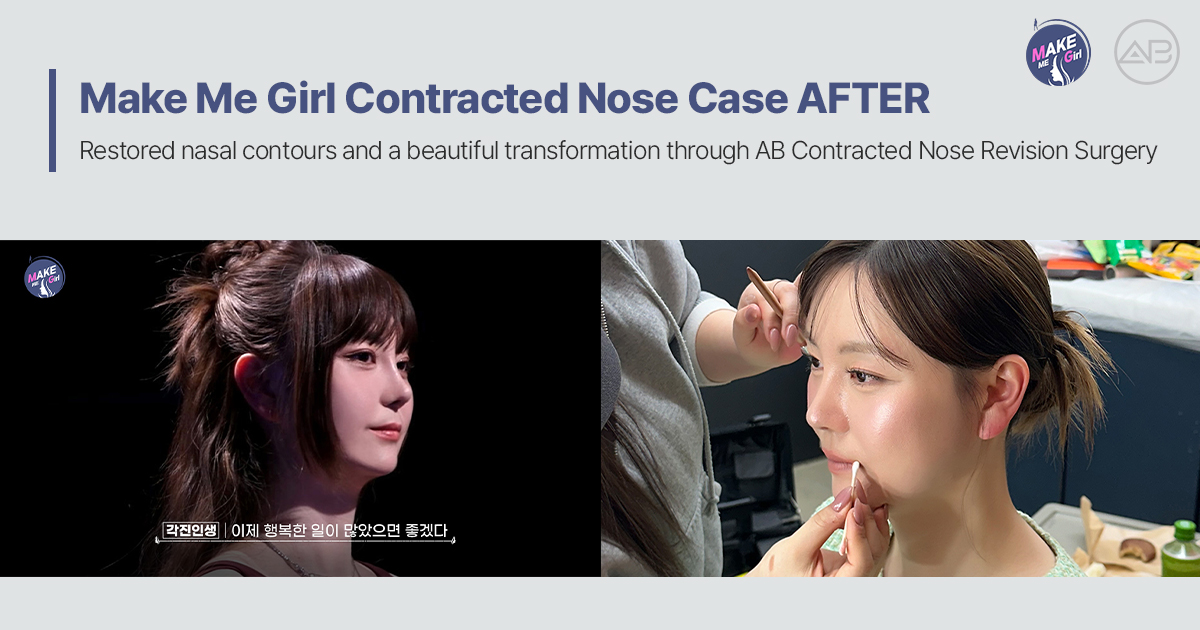
Many people assume there is no serious problem until the nose visibly turns upward. However, a contracted nose does not necessarily develop without warning.
Two of the most representative warning signs are inflammation around the silicone implant and nasal asymmetry. If the nasal skin becomes progressively thinner and the outline of the implant becomes increasingly visible, this may indicate that changes are already occurring in the internal tissues.
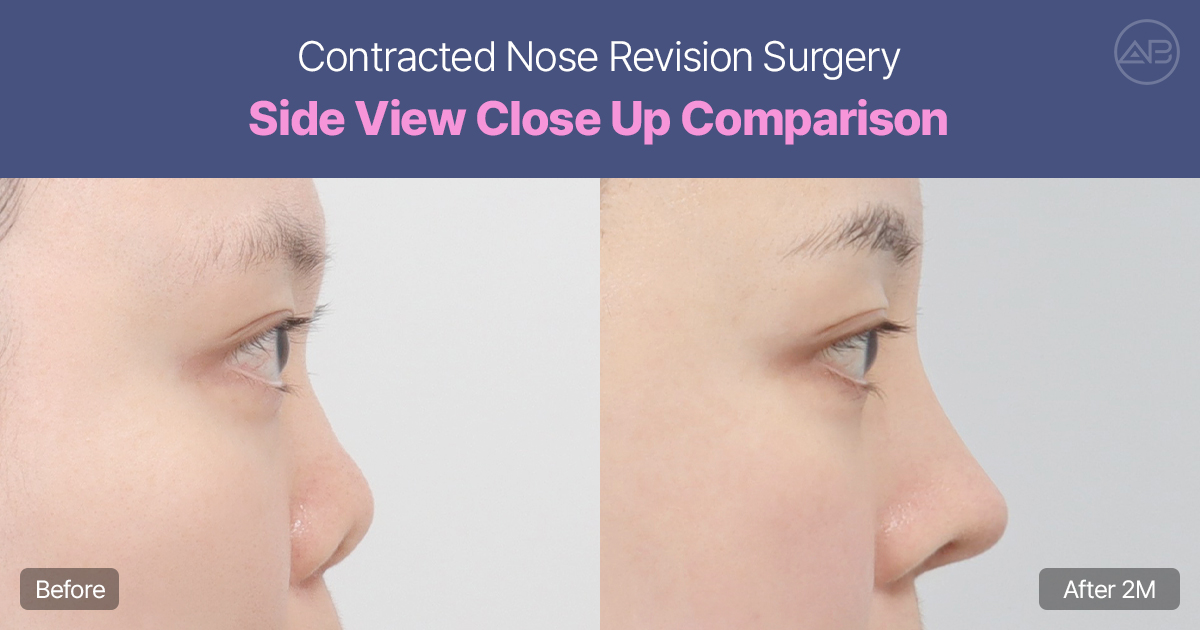
In this actual Megirl case, an inflammatory reaction around the silicone implant began approximately one week after the patient’s previous rhinoplasty.
This process of inflammation subsiding and then recurring continued. During this period, the internal tissues gradually contracted, causing the nose to become shorter and the nasal tip to turn upward. The tissues also became increasingly firm, ultimately resulting in a contracted nose.
Repeated inflammation and infection can contribute to tissue changes and contracture. Research has also found an association between bacterial biofilms and more severe capsular contracture in patients with silicone nasal implants. PubMed
If this cycle continues, inflammation and scarring can accelerate the contracture. Therefore, if you notice any abnormal signs, it is important to consult a specialist promptly to determine the appropriate timing for treatment.
3. Revision Surgery for a Contracted Nose: What Can Be Done When the Nose Cannot Be Lengthened Due to Hardened Tissue?
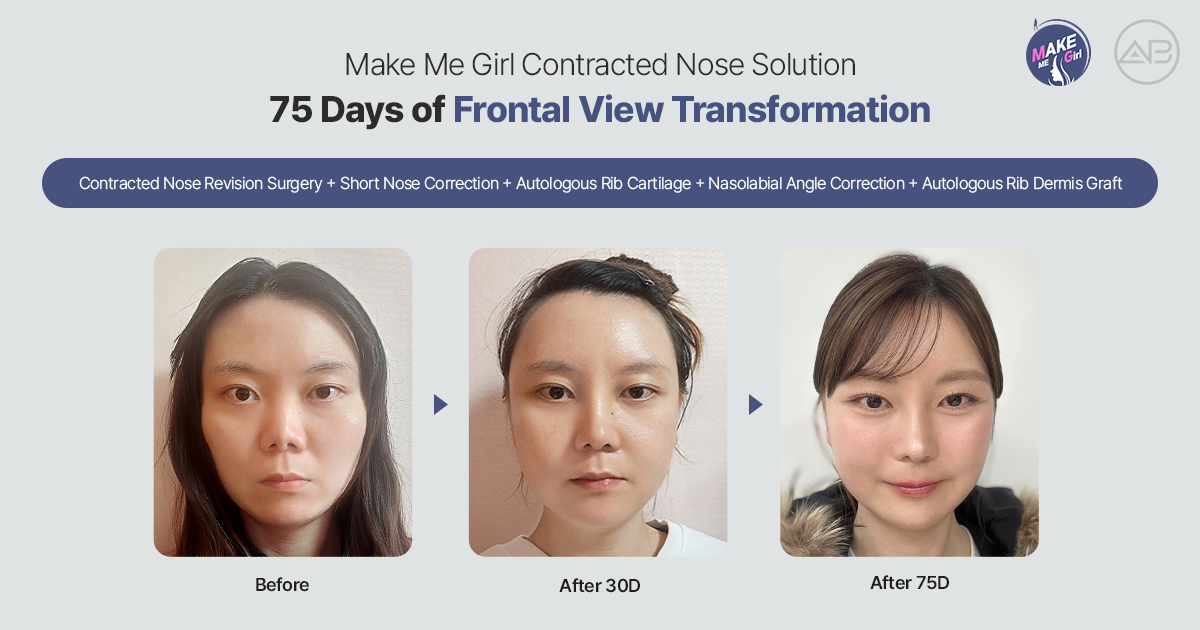
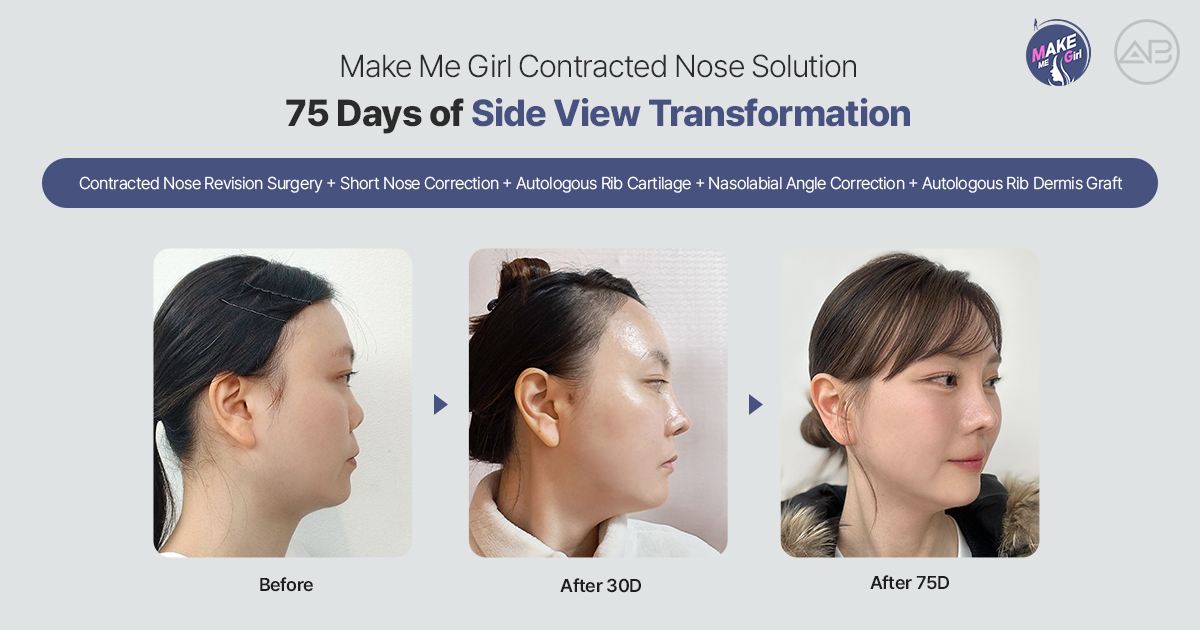
As in this Make Me Girl case, when the tissues have become adhered due to prolonged, repeated inflammation and the nose can no longer be sufficiently lengthened, conventional surgical techniques alone may not be enough to correct the condition.
The elasticity of the tissues must be restored, and the collapsed internal nasal framework must be reconstructed.
AB Contracted Nose Revision Surgery Solution
Remove the source of inflammation and create sufficient space: The existing silicone implant that caused the inflammatory reaction is completely removed. The hardened and contracted skin and scar tissue are then carefully released to create sufficient space for the upturned nose to be repositioned downward.
Restore the collapsed nasal tip: The septal cartilage is lowered sufficiently using the patient’s own rib cartilage, and the nasal tip is firmly stabilized to achieve reliable extension.
Improve the skin environment: In areas where the skin has become thinner due to silicone implant exposure, autologous dermis is placed beneath the nasal dorsum to reinforce soft tissue thickness and help restore adequate coverage over the reconstructed framework.
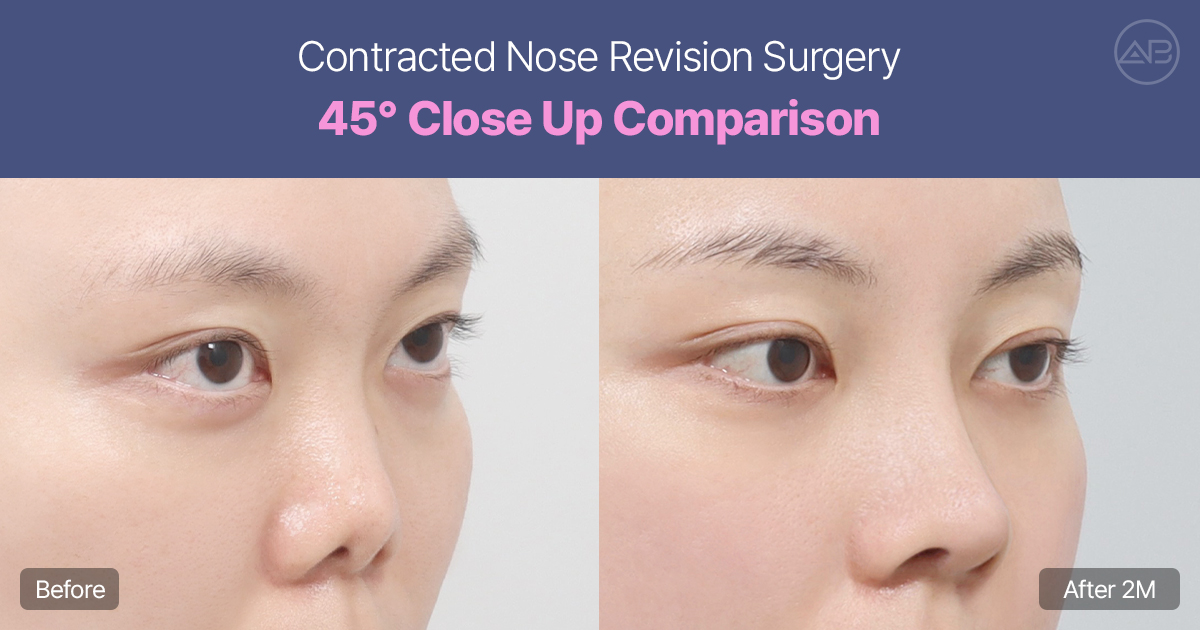
Correct nasal tip and nostril asymmetry: The asymmetric cartilage of the upturned nasal tip is realigned. The nostrils, which may appear more exposed from the front, are also corrected to achieve a more balanced nasal contour.
Immediately after surgery, swelling may make the nose appear somewhat unnatural. However, after approximately 30 days, the previously firm tissues gradually begin to soften.
As shown in the images taken 75 days after surgery, the length of the nose gradually stabilizes.
This improvement is not simply the result of lengthening the nasal tip. The hardened internal tissues are released and the collapsed framework is securely reconstructed. This helps maintain a more stable nasal contour over time.
4. When Is the Best Time for Contracted Nose Revision Surgery?
Many patients have heard that they must wait at least six months before undergoing revision surgery. However, in cases of a contracted nose, the appropriate timing can vary depending on the condition.
Immediate surgery: If inflammation is actively progressing or there is a risk of implant exposure, the implant may need to be removed regardless of the time elapsed in order to stabilize the tissues.
Revision surgery after recovery: Once the inflammation has subsided and the tissues have softened sufficiently, revision surgery is generally recommended after approximately 6 months to 1 year.
Published literature likewise emphasizes that infection involving nasal implants requires active management, while the timing and method of reconstruction depend on the severity of infection and the condition of the surrounding tissues.
Because this may be your final revision surgery, it is essential to accurately assess the relationship between the scar tissue and cartilage using 3D CT imaging and establish a surgical plan tailored to your individual recovery process.
I fully understand how seeing your nose change every time you look in the mirror can affect your confidence and cause considerable distress.
Revision surgery for a contracted nose is a complex procedure that requires careful planning.
However, I hope that, just like the Make Me Girl case introduced today, patients can ultimately regain a healthy and aesthetically pleasing nose.
If you have any questions about AB Plastic Surgery or contracted nose revision surgery, please contact AB Plastic Surgery on WhatsApp at +82 10 4393 1298 for a detailed consultation.

|
Writer, Dr. Lee Dong Han, AB Plastic Surgery |