Title
Submentoplasty Before and After in Korea: Improving Double Chin and Neck ContoursDate
2026-11-17Views
18
Medical Column
Submentoplasty Before and After in Korea: Improving Double Chin and Neck Contours
Facial aging does not affect only the cheeks and jawline. Changes beneath the chin and around the neck can also influence the overall appearance of the lower face. As skin elasticity decreases and the underlying soft tissues change over time, the transition between the chin and neck may become less defined.
For patients concerned about a double chin, loose tissue beneath the jawline, or reduced neck definition, submentoplasty may be one surgical option worth considering.
Unlike facelift surgery, which primarily addresses sagging facial tissues, submentoplasty focuses on the area beneath the chin. Understanding the differences between these procedures is important when determining an appropriate approach to lower facial rejuvenation.
In this medical column, we explore how submentoplasty works, how it differs from facelift surgery, and the visible changes in the chin and neck contours shown in a before-and-after case from AB Plastic Surgery in Korea.
Why Does the Double Chin Become More Noticeable with Age?
A double chin is not always caused by excess fat. Although fat accumulation beneath the chin is a common contributing factor, the appearance of this area is also influenced by skin elasticity, underlying muscles, and individual anatomy.
As aging progresses, several changes may occur:
-
Reduced skin elasticity can contribute to loose or sagging tissue beneath the chin.
-
Changes in the platysma muscle, a thin superficial muscle extending across the neck, can affect neck contours.
-
Submental fat accumulation may make the area beneath the chin appear fuller.
-
Changes in the surrounding facial and neck tissues can reduce jawline definition.
These factors may occur individually or together, which explains why patients with similar-looking double chins may require different treatment approaches.
For this reason, determining whether the primary concern involves fat, skin laxity, muscle changes, or a combination of factors is an important part of surgical planning.
What Is Submentoplasty, and How Does It Work?
Submentoplasty is a surgical procedure focused on improving the contour of the submental area, the region directly beneath the chin.
Depending on the patient's anatomy and the surgical approach, submentoplasty may involve tightening or repositioning the platysma muscle to improve support and definition beneath the chin.
The platysma plays an important role in the appearance of the neck. With age, changes in this muscle and surrounding tissues may contribute to reduced definition between the chin and neck.
By addressing selected underlying structures, submentoplasty aims to improve the contour of this area rather than simply tightening the skin.
However, submentoplasty does not necessarily correct significant loose neck skin or sagging throughout the lower face. Patients with more extensive tissue laxity may require a different or combined surgical approach.
The specific surgical technique must be determined through an in-person assessment of the patient's anatomy and treatment goals.
Submentoplasty vs. Facelift: What Is the Difference?
Although both procedures may contribute to a more defined lower facial appearance, they address different anatomical concerns.
Submentoplasty primarily focuses on the tissues beneath the chin. It may be considered when the main concern is reduced submental definition associated with selected muscle or soft-tissue changes.
Facelift surgery, on the other hand, addresses sagging tissues of the face, particularly around the cheeks, jowls, and jawline. Depending on the surgical approach, a facelift may also incorporate procedures to improve the neck.
For example, patients with prominent jowls and descended cheek tissues may benefit more from a facelift-based approach, while patients whose concerns are concentrated beneath the chin may be evaluated for submentoplasty.
In some cases, both facial and submental concerns are present, making a combined treatment plan worth considering.
Neither procedure is universally superior. The appropriate choice depends on the location and severity of tissue laxity, the underlying anatomy, and the patient's desired outcome.
Before and After: Changes in the Chin and Neck Contour
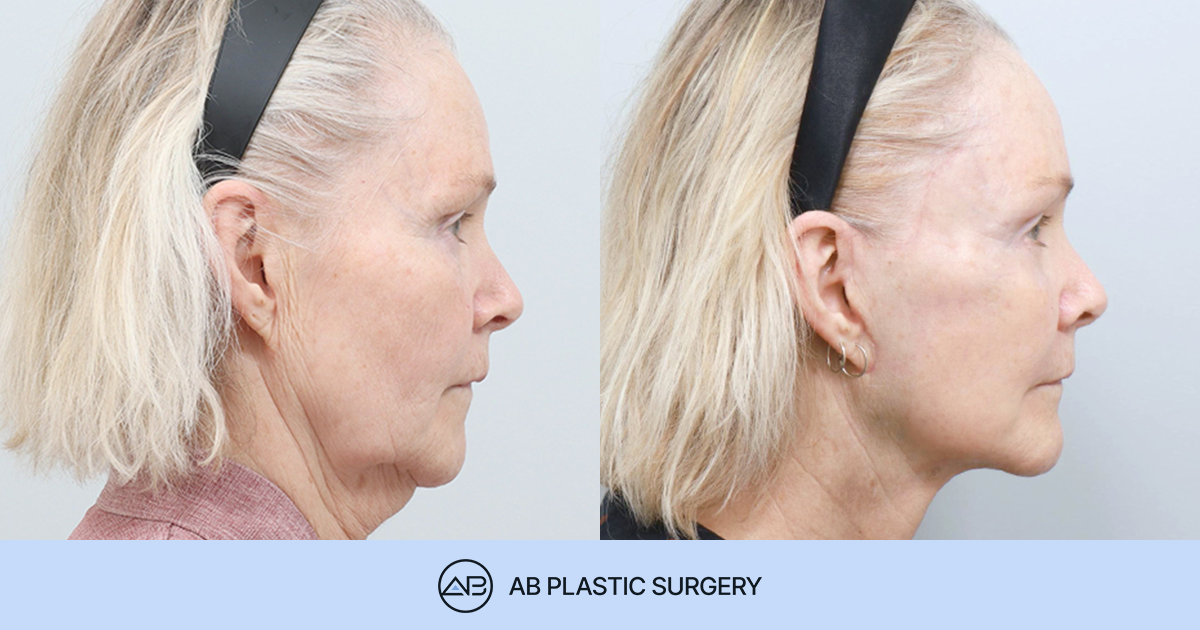
The side-profile photographs show a noticeable difference in the contour beneath the chin.
In the preoperative image, the transition between the lower jaw and upper neck appears less defined, with visible fullness and loose tissue beneath the chin.
In the postoperative image, the area beneath the chin appears more contoured, creating a clearer distinction between the jawline and neck.
These visible changes illustrate how the appearance of the submental region can influence the overall lower facial profile.

The closer preoperative photograph highlights the fullness and tissue laxity beneath the chin.
The angle between the chin and neck appears relatively broad, and the lower jawline is less clearly separated from the upper neck.
This illustrates why assessing the tissues beneath the chin is important when planning lower facial contour improvement.
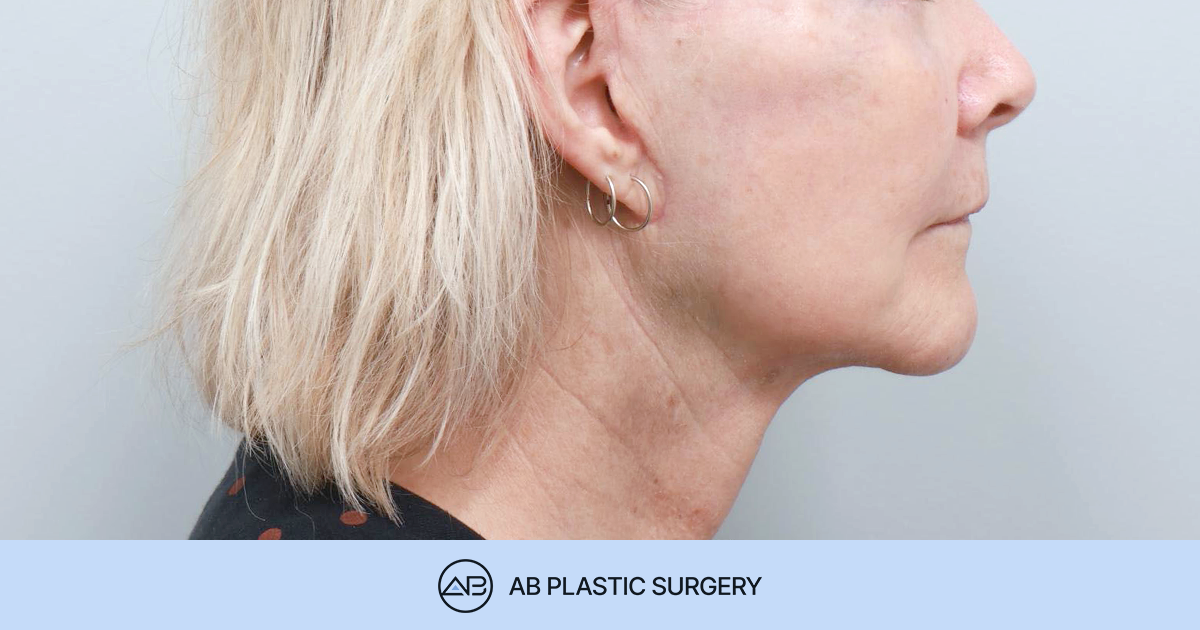
In the postoperative photograph, the chin-to-neck transition appears more distinct, with a smoother contour extending from the underside of the chin toward the upper neck.
The jawline also appears more clearly defined in comparison with the preoperative image.
However, the extent of improvement and the final contour depend on the procedures performed, individual anatomy, and postoperative healing.
How Does Submental Contouring Affect the Overall Facial Appearance?
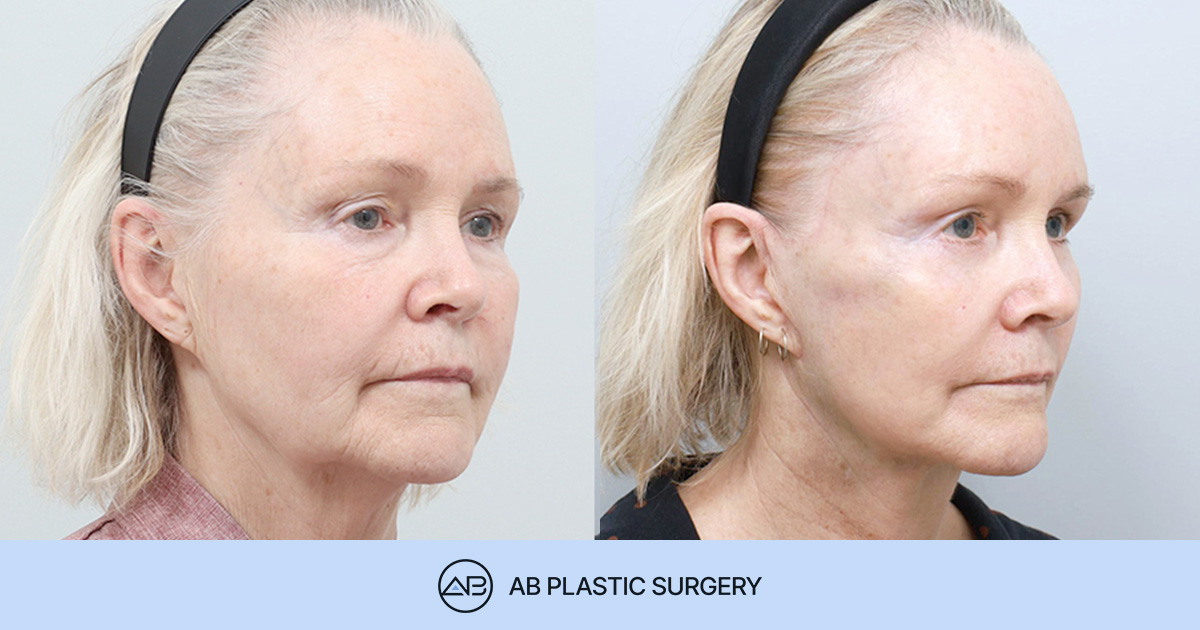
The three-quarter-view photographs provide another perspective on the changes in the patient's lower facial contour.
Compared with the preoperative image, the postoperative photograph shows a more defined transition along the lower jawline and beneath the chin.
Although submentoplasty primarily targets the submental region, changes in this area can influence how the lower face and neck appear together.
It is important to distinguish improvement beneath the chin from correction of facial jowls or cheek sagging, which may require other procedures.
Is Submentoplasty Suitable for Everyone with a Double Chin?
Not every double chin requires the same treatment.
For patients whose primary concern is localized submental fat, liposuction may be considered when appropriate. However, fat removal alone may not adequately address underlying muscle laxity or significant loose skin.
Submentoplasty may be considered when changes in the platysma muscle or other selected submental tissues contribute to reduced contour definition.
Patients with more extensive sagging of the neck or lower face may require a neck lift, facelift, or another surgical approach.
As with other surgical procedures, submentoplasty carries potential risks, including bleeding, hematoma, infection, scarring, asymmetry, changes in sensation, and contour irregularities. Risks depend on the specific surgical technique and individual patient factors.
Postoperative swelling, bruising, tightness, and temporary discomfort may occur. Recovery time varies according to the extent of surgery, additional procedures, and individual healing.
A detailed consultation is therefore necessary to determine whether submentoplasty is appropriate and to establish realistic expectations.
Submentoplasty in Korea: A Personalized Approach to Double Chin Correction
Improving the appearance of a double chin is not simply about removing fat or tightening loose skin. The relationship between the skin, underlying muscles, fat distribution, and overall facial anatomy must be considered.
The before-and-after photographs presented in this column demonstrate visible changes in the patient's submental contour, including a clearer transition between the chin and neck.
However, individual results vary, and the appropriate surgical approach should be based on a comprehensive assessment rather than photographs alone.
At AB Plastic Surgery in Korea, treatment planning for double chin and lower facial contour concerns involves evaluating each patient's anatomical characteristics, degree of tissue laxity, and individual aesthetic goals.
For patients considering submentoplasty, double chin correction, or facelift surgery in Korea, please contact AB Plastic Surgery on WhatsApp at +82 10 4393 1298 for a detailed consultation.