Title
Why Columella and Nasolabial Angle Correction Matter for Achieving a Refined Rhinoplasty ResultDate
2026-08-24Views
939
Medical Column
Why Columella and Nasolabial Angle Correction Matter for Achieving a Refined Rhinoplasty Result
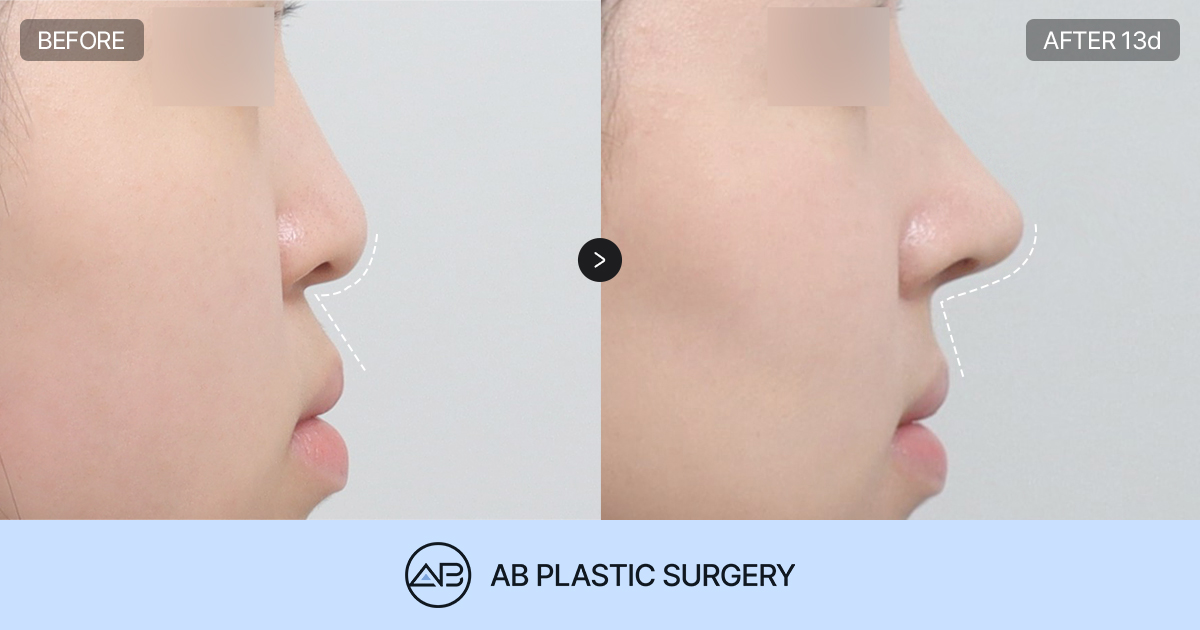
Hello, this is Dr. Park Seong-Hoon from AB Plastic Surgery.
Have you ever felt that your nose looks somewhat blunt despite having a sufficiently high nasal bridge, or that your side profile looks awkward even though there is no obvious problem?
This is often related to the shape of the columella and the nasolabial angle. The overall impression of the nose can vary significantly depending on how naturally these two structures are refined.
The increasingly preferred “refined nasal profile” also depends greatly on the design of the columella and nasolabial angle.
What Are the Columella and Nasolabial Angle?
When planning rhinoplasty, two structures that should always be considered together are the columella and the nasolabial angle.
The columella is the central structure located between the nostrils and serves as an important structural support for the nose.
The appearance of the nose can change depending on whether the columella is retracted or protruding. When appropriately refined, it can create a more balanced nasal tip and a smoother nasal profile.
The nasolabial angle is the angle formed between the columella and the upper lip. The impression created by the profile and the overall three dimensional appearance of the face can vary depending on this angle.
Correcting the nasolabial angle is a key step in creating a refined profile that flows naturally from the nose to the lips.
What Is Columellar Line Rhinoplasty?
Columellar line rhinoplasty does not simply aim to increase the height of the nasal bridge. Instead, it focuses on improving the structural support of the nose.
A columellar strut placed beneath the columella is commonly used to create a natural connection from the nasal tip to the philtrum.
When the columella is appropriately positioned through this process, a more balanced appearance can be achieved from both the frontal and lateral views, which may also improve overall satisfaction with the rhinoplasty result.
This approach is particularly suitable for patients with a retracted columella, a flat nasal tip, or a wide nasolabial angle.
How Does AB Design the Columellar Line?
At AB, we first consider the shape and position of the columella, which can influence the overall appearance of the nose.
If the columella that supports the nasal tip is too short or recessed, the nose may appear relatively long or flat.
For this reason, rhinoplasty should be planned with a design tailored to the individual nasal structure rather than simply focusing on increasing nasal bridge height.
In patients with a retracted columella, a columellar strut can be used to adjust the degree of nostril exposure while improving the relationship between the nasal tip and the upper lip, creating a more refined columellar line.
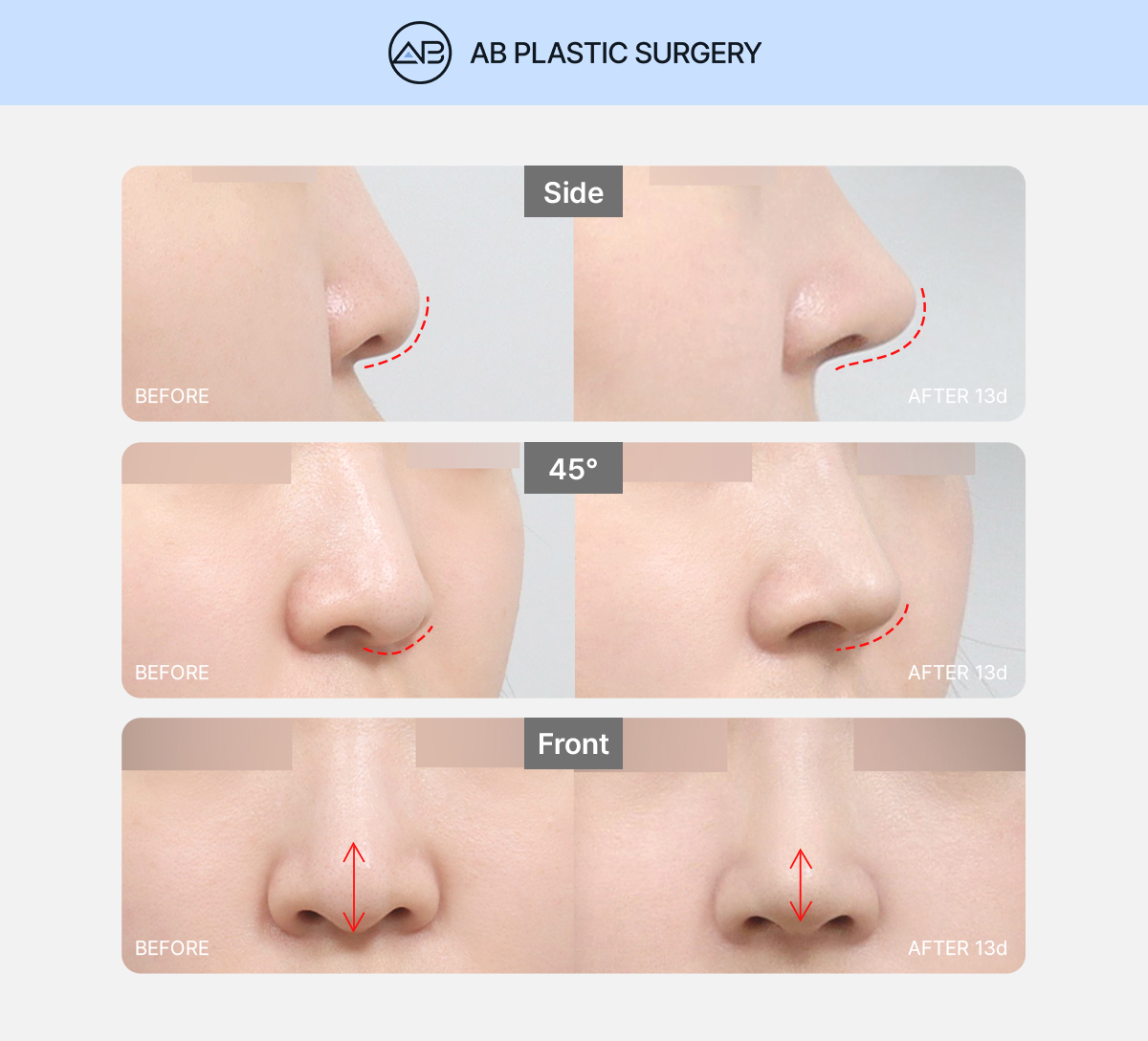
AB’s Rounded Columellar Line Design
The columella is not simply designed as a straight line. It should be planned in harmony with the overall facial contours.
The goal is to create a naturally curved line when viewed from the front while maintaining a three dimensional contour from the side.
To achieve this, the skin thickness, soft tissue, nasal tip support structure, and facial proportions are comprehensively analyzed before applying a surgical design tailored to the individual.
✅ Rounded columellar line: For those who prefer a softer, more natural appearance
✅ Smooth and refined shape: To create a more sophisticated appearance without looking overly sharp
A precise design that considers both anatomical structure and aesthetic needs is essential to achieving a refined rhinoplasty result.
How Does Nasolabial Angle Correction Complete the Profile? What Is the Key Point of Rhinoplasty?
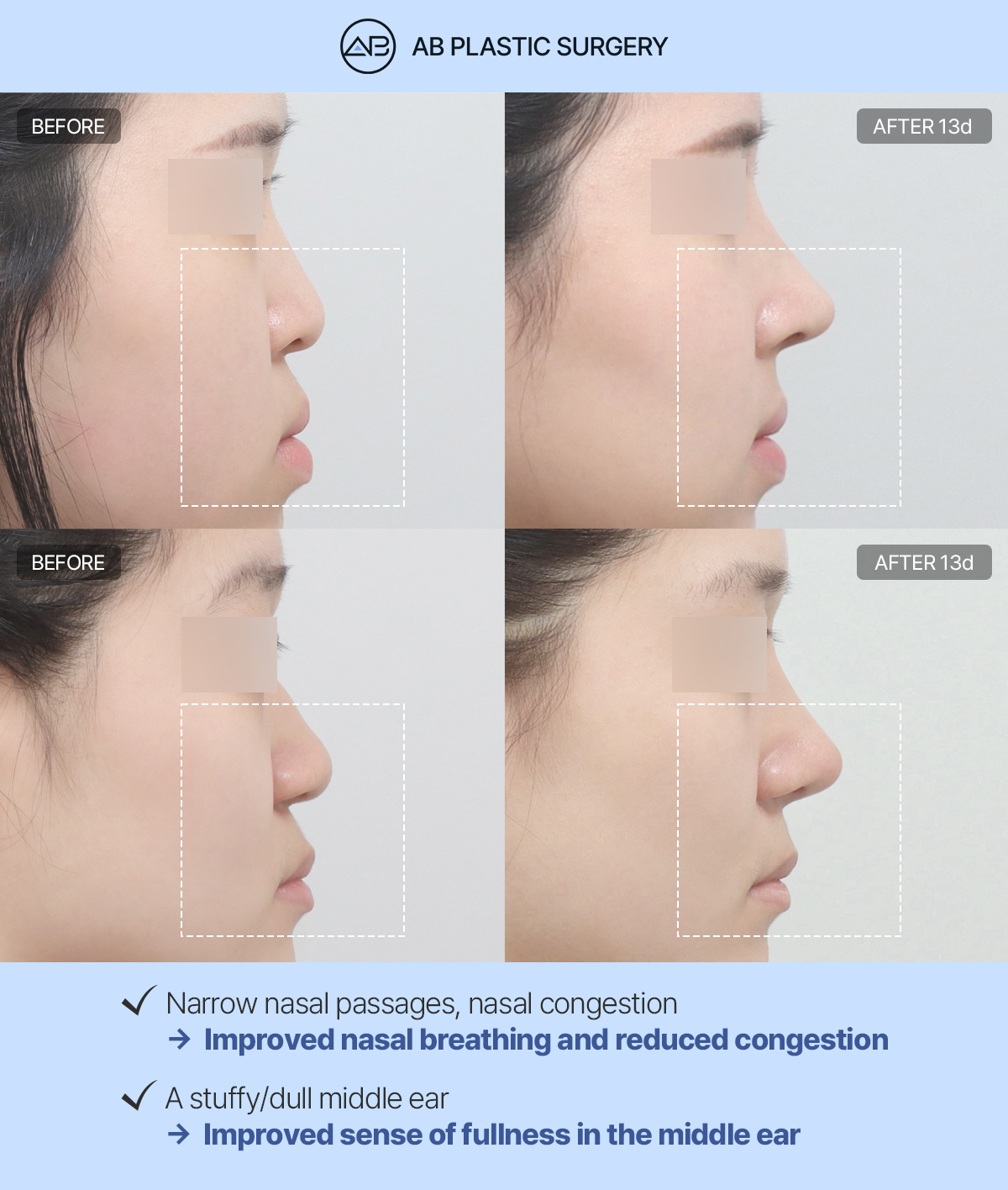
Even if the shape of the nasal tip is aesthetically pleasing, a protruding mouth or an awkward looking lower face may indicate that the nasolabial angle should also be evaluated. The nasolabial angle is an important factor in determining the overall impression of the facial profile, and correcting it can help create a more natural and refined side profile.
The commonly cited reference ranges for the nasolabial angle are:
Women: 95° to 105° / Men: 90° to 95°
However, these numbers should not be regarded as absolute standards.
The appropriate angle varies depending on the individual’s philtrum length, lip protrusion, and overall facial proportions.
Therefore, rather than simply adjusting the nasolabial angle to a specific numerical value, it is important to refine it naturally according to the proportions of the individual face.
In particular, when the nasolabial angle is narrow, the nasal tip may appear droopy or the mouth may appear more protrusive.
At this time, simply elevating the nasal tip is not enough. The nasal base must also be considered to create a more natural improvement.
The Quality of a Rhinoplasty Result Ultimately Lies in the Details
During consultations, many patients ask about the height of the nasal bridge or the shape of the nasal tip. However, the factors that determine the actual result include the balance between the columellar line and the nasolabial angle.
Even with an aesthetically pleasing nasal tip, the overall impression can look awkward if the philtrum appears excessively long. Conversely, when the columellar line and nasolabial angle are refined according to the individual facial structure, a sophisticated yet natural change can be achieved.
Rhinoplasty is not simply a procedure that changes the shape of the nose. It is a process of creating balance across the entire face.
The details determine the final result.
If you have any questions about AB Plastic Surgery’s columellar line rhinoplasty, please contact on WhatsApp at +82 10 4393 1298 for a detailed consultation.

|
Writer, Dr. Park Seong-Hoon, AB Plastic Surgery |