Title
Why Is the Nasal Shape Still Unsatisfactory After Revision Rhinoplasty?Date
2026-10-13Views
23
Medical Column
Why Is the Nasal Shape Still Unsatisfactory After Revision Rhinoplasty?

Hello, this is Dr. Park Seong-Hoon from AB Plastic Surgery.
Many patients undergo revision rhinoplasty in hopes of achieving a more refined nasal shape, only to find themselves dissatisfied with the results.
In particular, the reappearance of a dorsal hump or a nose that looks bulbous again over time is one of the main reasons patients consider another revision procedure.
In this article, we will examine why these outcomes occur and what needs to be considered from an anatomical perspective when performing revision rhinoplasty.
1. Where Do the Causes of Unsatisfactory Revision Rhinoplasty Results Begin?
A bulbous nose refers to a nasal shape in which the nasal tip appears wide or the nasal dorsum protrudes prominently.
The important point is that a bulbous nasal appearance is not caused by a single structure, but rather by a combination of multiple anatomical structures.
Even when the nasal bridge is straight, the nose may appear bulbous if the underlying cartilage is thick or the soft tissue is excessively bulky.
Failure to accurately distinguish between these structures can result in a nasal shape that remains insufficiently refined after the initial surgery, potentially leading to revision rhinoplasty.
2. Structural Differences in the Nose That Are Easily Overlooked During the Initial Surgery
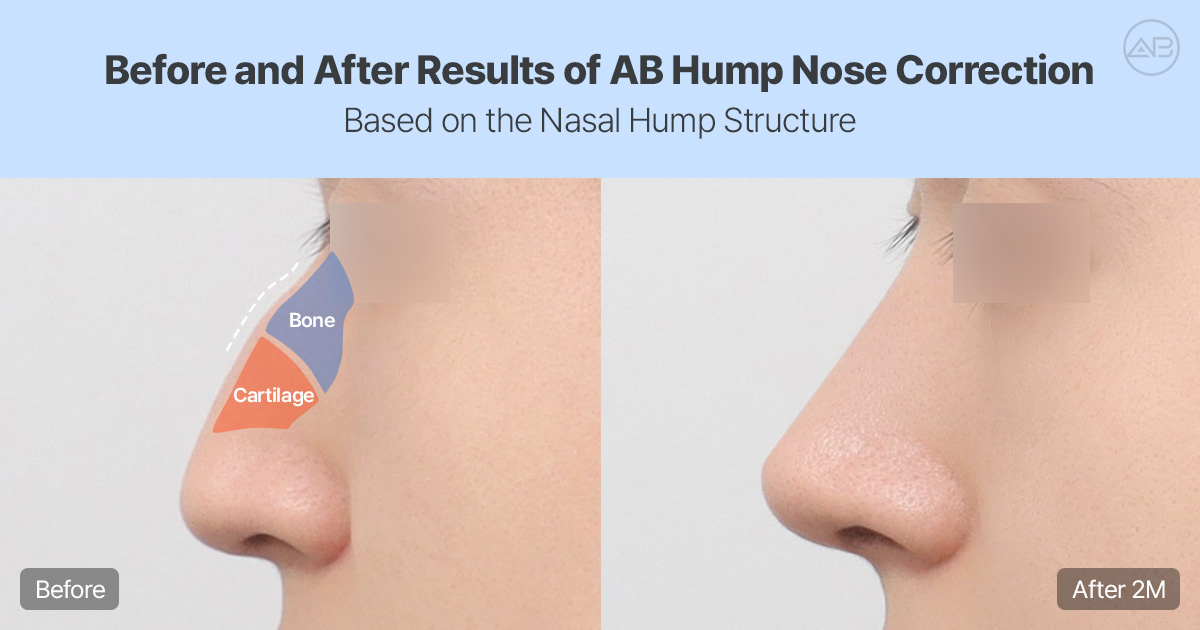
The nose is not simply composed of a single rigid mass of tissue. It is a complex structure in which the rigid bones of the upper nose and the flexible soft tissues of the lower nose are connected.
If these differences in tissue characteristics are not accurately identified and addressed during the initial surgery, achieving satisfactory results can be difficult.
Bone, on the other hand, has a relatively rigid structure, whereas cartilage is flexible and elastic.
Therefore, it is important to determine which structures are responsible for the nasal hump and to select an appropriate surgical approach.
[Comparison of Bone and Cartilage Treatment]
✅ Bone: Relatively easy to contour through grinding or cutting. However, if the nasal bones are wide, simply removing the dorsal hump may make the nasal bridge appear wider and more bulbous. In such cases, osteotomy may also be necessary to reposition the nasal bones inward.
✅ Cartilage: Unlike bone, cartilage is not easily contoured through grinding. It requires precise resection. If this area is not adequately addressed, the remaining cartilage may be a major reason why the nasal hump appears to recur.
3. Why Is Osteotomy Essential in Revision Rhinoplasty?
Osteotomy is a key surgical technique that not only reduces the nasal hump but also corrects the width of the nasal bridge and the overall nasal framework when viewed from the front.
If the nasal bones are wide, simply removing the dorsal hump may leave the nasal bridge looking wider.
In revision rhinoplasty, if the nasal bridge was originally wide or became flattened during the initial surgery, the nose may appear bulbous and flat when viewed from the front.
In such cases, osteotomy can be used to reposition the nasal bones inward, creating a more refined nasal bridge and a balanced dorsal contour.
Simply reducing the dorsal hump does not necessarily result in a more attractive nasal shape. This is why revision rhinoplasty requires an assessment of the patient's individual bone structure and the overall nasal framework to achieve a more natural result.
4. Does a Recurrent Nasal Hump Really Mean That the Hump Has Grown Back?
Patients seeking revision rhinoplasty often believe that their nasal hump has grown back. However, when examining the actual causes, the appearance of recurrence is frequently due to incomplete removal of cartilage or insufficient correction during the initial surgery, rather than the hump itself growing back.
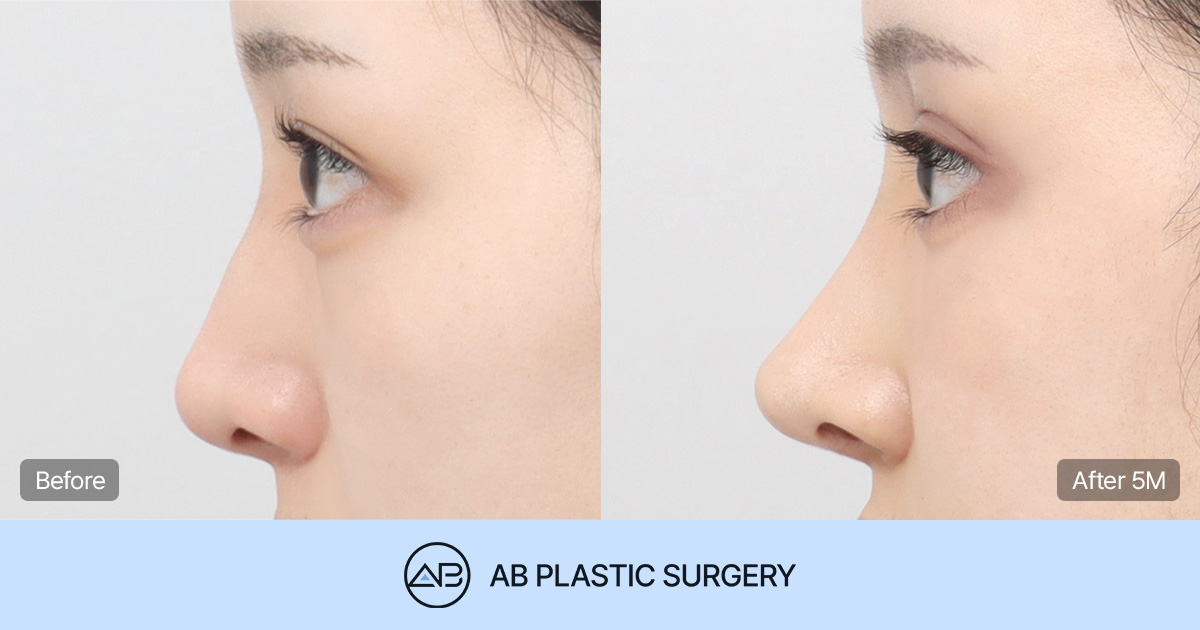
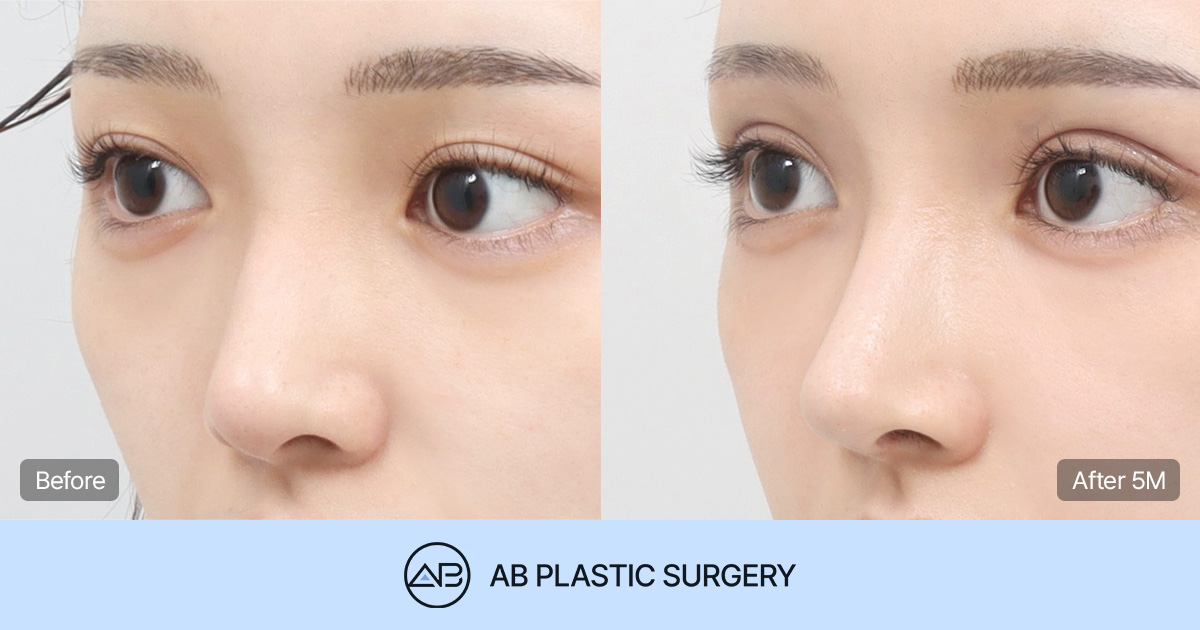
Main Causes of an Apparent Recurrence of the Nasal Hump
-
Incomplete Cartilage Resection: When sufficient visualization and precise resection were not achieved during cartilage treatment.
-
Failure to Correct the Bone and Cartilage Relationship: When the protruding area was not adequately addressed due to insufficient structural correction.
-
Inadequate Repositioning of the Nasal Bones After Osteotomy: When the nasal bones were not sufficiently repositioned inward, leaving the nasal bridge appearing wide.
For these reasons, the surgeon's experience and the precision of the osteotomy are among the most important factors determining the outcome of revision rhinoplasty.
The key to achieving a noticeable difference before and after revision rhinoplasty lies in how accurately and precisely the cartilage is treated.
5. What Complications Should Be Considered When Using an Implant During Revision Rhinoplasty?
When an implant is used during revision rhinoplasty, excessive reduction of the nasal hump may expose the implant space toward the nasal tip, particularly if the nasal bridge has been extensively contoured.
If the nasal tip becomes a completely unsupported, hollow space, the risk of inflammation increases.
Therefore, when planning revision rhinoplasty, it is essential to preserve an appropriate amount of the nasal framework while carefully considering the balance between dorsal hump correction and implant placement.
Additionally, patients undergoing revision rhinoplasty may have a nasal bridge that is already elevated to some extent due to their previous surgery, making it difficult to secure adequate space for implant fixation in some cases.
If an implant is used solely to increase the height of the nasal bridge, without considering the overall nasal contour, the nasal bridge may appear excessively elevated and the nasal tip may look relatively low. This can create an unnatural appearance, making it important to carefully assess the relationship between the nasal bridge and nasal tip.
Accurate Analysis Determines the Success of Revision Rhinoplasty
Successful revision rhinoplasty begins with accurately identifying the reasons why the initial surgery did not achieve the desired results.
When sufficient consideration is given to the bone and cartilage structure, along with the overall balance of the nasal framework, it is possible to achieve a refined nasal contour that better aligns with the patient's desired shape.
If you are considering revision rhinoplasty due to concerns about the shape of your nose, we recommend consulting a specialist with a thorough understanding of nasal anatomy and extensive experience in revision rhinoplasty to determine the most appropriate surgical approach for your individual condition.
If you have further questions about revision rhinoplasty at AB Plastic Surgery, please contact AB Plastic Surgery on WhatsApp at +82 10 4393 1298 for a detailed consultation.

|
Writer, Dr. Park Seong-Hoon, AB Plastic Surgery |