Title
Why Is the Revision Rhinoplasty Rate So High?Date
2026-06-01Views
1727
Medical Column
Why Is the Revision Rhinoplasty Rate So High?
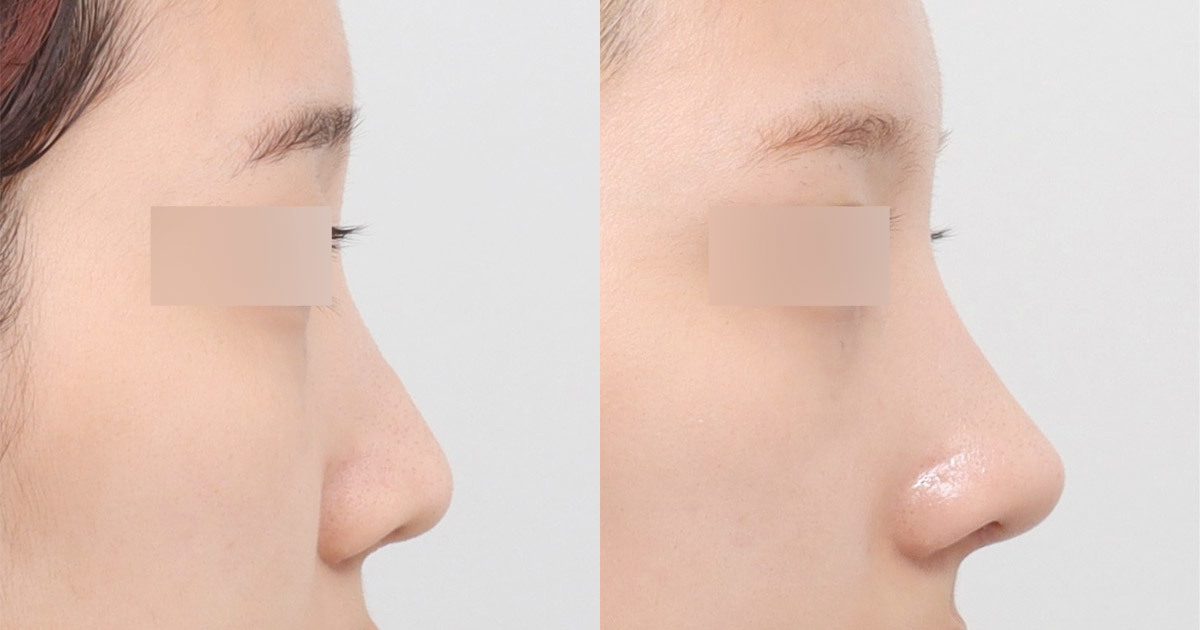
“Is it true that revision rhinoplasty has a high rate?” This is one of the most common questions asked during consultations.
When searching online, it may seem that revision rhinoplasty cases are particularly common compared to procedures on other facial areas. As a result, many people feel that the likelihood of requiring revision surgery is extremely high.
Because the nose is positioned at the center of the face and significantly affects overall facial balance, expectations for surgical outcomes tend to be higher than for many other procedures.
However, Plastic surgery in Korea, based on actual clinical data, the reported revision rate for rhinoplasty is generally around 5–15%, with an average of approximately 10%.
Does this mean that one out of every ten patients inevitably undergoes revision surgery?
Not necessarily. These figures include a wide range of cases, from aesthetic refinements and asymmetry correction to functional improvements.
Therefore, the reported revision rate should not be interpreted as an exact indicator of surgical failure.
The nose has a highly complex anatomical structure, and outcomes can be influenced by numerous factors, including skin thickness, cartilage strength, and preexisting asymmetry. For this reason, it is difficult to determine surgical success or failure based solely on revision statistics.
In particular, if sufficient structural support is not established during the initial surgery, changes in shape may occur over time, leading some patients to seek revision consultations.
Since revision rhinoplasty may involve both reconstructive and corrective procedures, the actual number of revision consultations can appear higher than expected.
In other words, revision rhinoplasty is not uncommon, but it should not be regarded as inevitable. It is simply a possibility that patients should understand accurately.
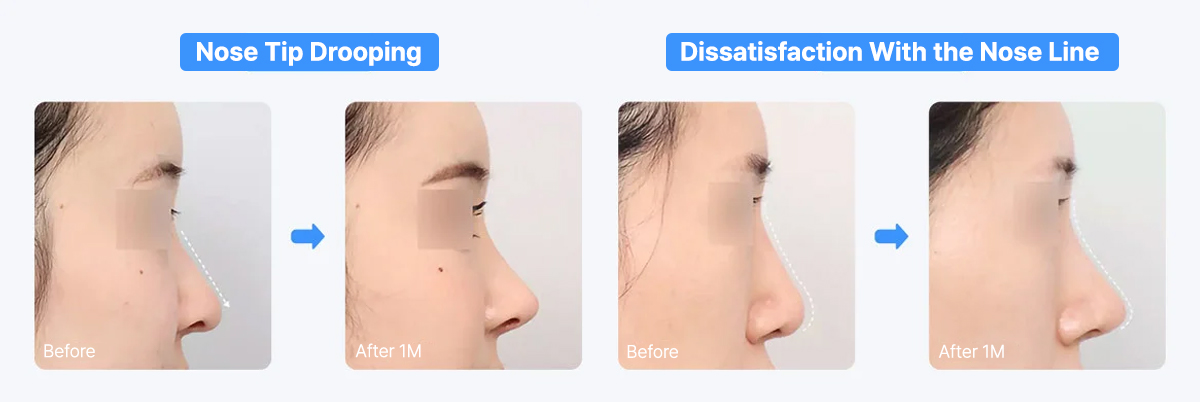
Q. Why Is the Revision Rhinoplasty Rate High?
1. Aesthetic Dissatisfaction
The most common reason patients seek revision rhinoplasty is dissatisfaction with the postoperative appearance.
Typical concerns include:
• “The result is different from what I wanted.”
• “The nasal tip droops.”
• “The nose appears asymmetrical.”
Because the nose occupies the center of the face, even subtle differences can feel significant.
In many cases, the issue is not surgical failure but rather a discrepancy between expectations and the actual outcome.
A large proportion of revision consultations involve minor corrective procedures related to aesthetic dissatisfaction.
2. Structural Problems
Another factor that increases the likelihood of revision surgery is insufficient structural stability.
Common examples include:
✅ Recurrence of a dorsal hump
✅ Weakening of nasal tip support
✅ Gradual drooping of the nasal tip over time
In particular, if the nasal tip support framework is not adequately designed, shape changes may develop months or years after surgery.
These cases often require structural reconstruction through revision surgery rather than simple corrections.
Many revision consultations reveal that the issue is not merely cosmetic but that the internal support structures have weakened. When the nasal cartilage is not sufficiently stabilized or when excessive cartilage removal has reduced support, the nasal tip may gradually droop and deform over time.
For this reason, revision rhinoplasty often requires a more advanced structural design than primary rhinoplasty.
The likelihood of revision is heavily influenced by how precisely the structural framework was designed during the original surgery.
3. Functional Problems
Another factor that can increase revision rhinoplasty rates is functional impairment.
Common examples include:
✅ Deviated septum
✅ Internal nasal tissue adhesions
✅ Breathing difficulties
If the septum is significantly deviated or the internal nasal valves are narrowed, both aesthetic and functional corrections may be necessary.
The nose is not only an aesthetic structure but also an essential organ for breathing.
Surgery that does not adequately consider nasal function may increase the likelihood of revision surgery in the long term.
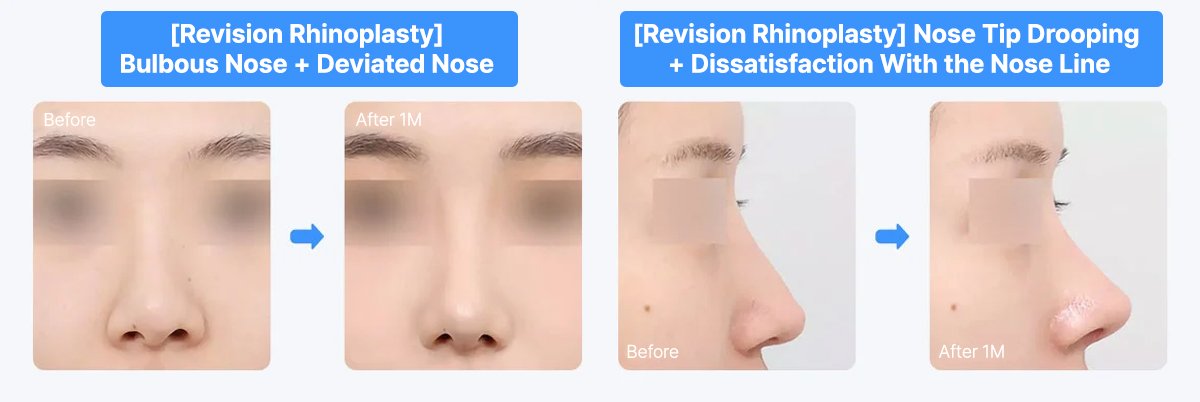
Q. What Factors Can Reduce the Likelihood of Revision Rhinoplasty?
Although the average revision rate is reported to be approximately 10%, it is not a fixed number.
With personalized surgical planning and precise structural design, the likelihood of revision can be significantly reduced.
1. Thorough Anatomical Analysis (Including 3D CT Imaging)
Key factors that should be carefully evaluated include:
✅ Skin thickness
✅ Cartilage strength
✅ Septal condition
✅ Presence of preexisting asymmetry
Failure to adequately assess these factors may compromise long term stability.
Rhinoplasty is not simply a procedure that changes appearance. It is a surgery that designs and establishes structural support.
Reducing the need for revision surgery requires more than extensive experience alone. Three dimensional structural analysis, cartilage reinforcement strategies based on skin thickness, and long term structural stability considerations are all essential.
The nasal tip is particularly prone to changes over time, making it crucial to establish sufficient support structures during the initial surgery.
2. Realistic and Personalized Surgical Design
An excessively high bridge or an overly elevated nasal tip may appear attractive in the short term but can increase tissue tension.
Designs that exceed the natural limits of stability may increase the likelihood of revision surgery over time.
3. Realistic Expectations
Many revision consultations stem from insufficient expectation management.
Statements such as:
“I wanted exactly the same nose shape as someone else.”
can be difficult to achieve because facial structure, skin characteristics, and tissue properties vary from person to person.
It is important to thoroughly discuss achievable results and surgical limitations before surgery.
This process is one of the most realistic ways to reduce revision procedures caused by aesthetic dissatisfaction.
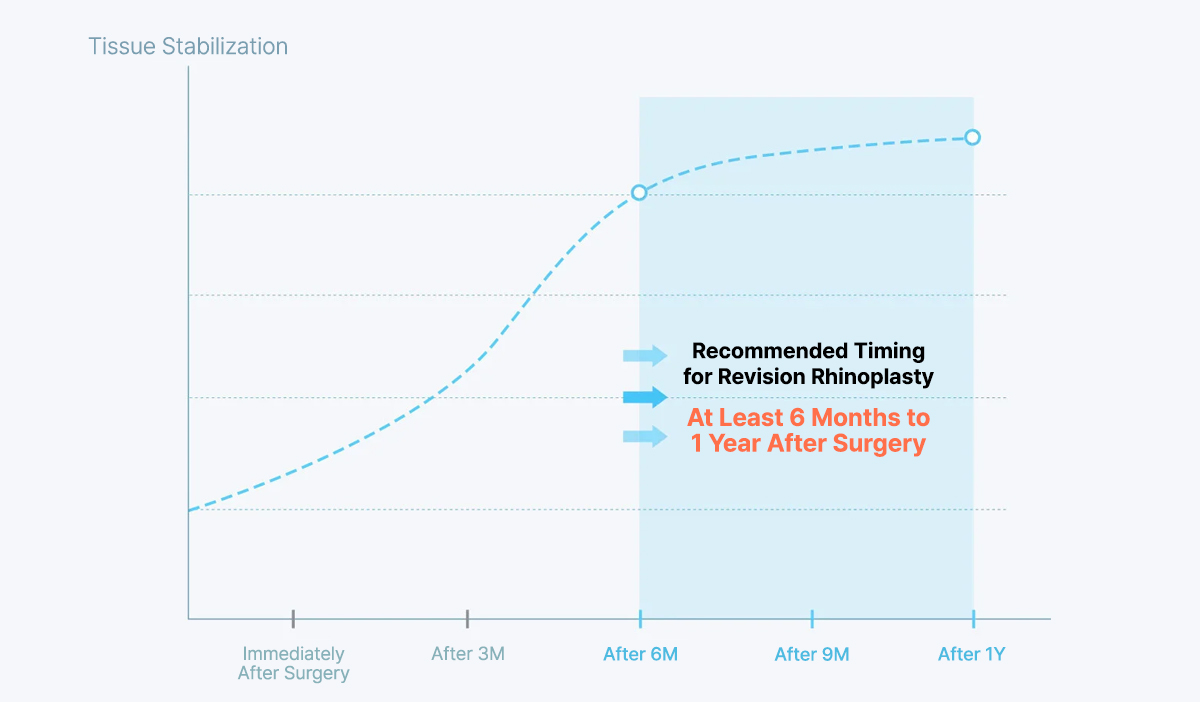
Q. When Is the Appropriate Time for Revision Rhinoplasty?
The timing of revision surgery is extremely important.
During the first two to three months after surgery, swelling has not fully resolved, making it inappropriate to judge the final outcome during this period.
In general, it is recommended to wait at least 6 months, and preferably around 1 year, to allow complete tissue stabilization before considering revision surgery.
Undergoing revision surgery too early may weaken the tissues and make future outcomes more difficult to predict.
Revision Rhinoplasty Rates: No Need for Excessive Concern
The revision rate for rhinoplasty is commonly reported to be around 10%, but this figure can vary significantly depending on each patient's anatomy and surgical design.
Four key factors that help reduce revision rates include:
✅ Thorough analysis
✅ Structural stability
✅ Personalized and realistic design
✅ Adequate consultation
The important consideration is not whether revision surgery might be needed, but rather how much emphasis was placed on structural stability and long term durability during the initial surgery.
Revision rhinoplasty is not simply a procedure that reshapes the nose. In many cases, it is closer to reconstructive surgery that restores and rebuilds structural support.
For that reason, comprehensive consultation and precise analysis are more important than anything else before surgery.
Ultimately, the most realistic way to reduce the likelihood of revision surgery is to prioritize structural stability and long term changes from the very first operation.
If you would like more information about revision rhinoplasty rates, please contact AB Plastic Surgery on WhatsApp at +82 10 4393 1298 for a detailed consultation.
The Leader in K-Beauty : AB Plastic Surgery
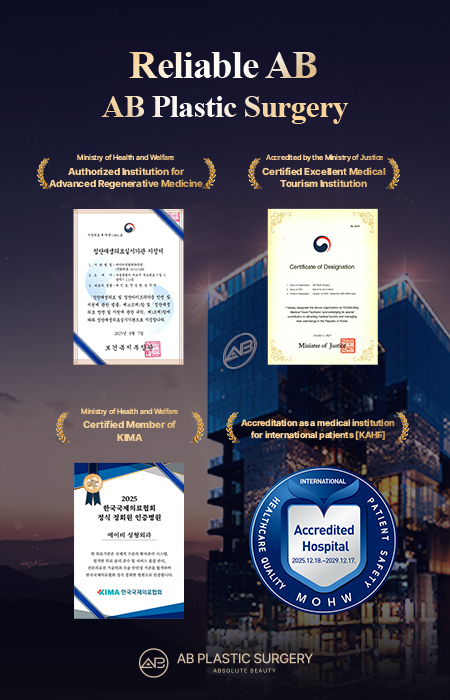
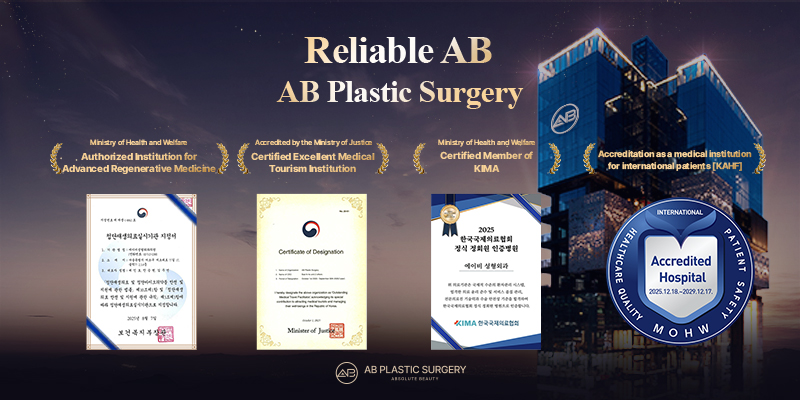
🇰🇷 KAHF-Accredited : Government-Verified Safety & Quality
🎓IFAAS Faculty : Doctors Who Teach Doctors
🛡️Safety First : In-house Anesthesia / CCTV / Named Surgeons Only / Zero Accident Record
✨Patient-Centered Care : Multilingual Medical Interpreters & 1:1 Personalized Care
👍Proven Satisfaction : 4.9⭐ Rating, Real Patient Reviews
📍Located in Gangnam, Seoul
Watch the full guide on our Channel!
#Kbeauty #PlasticSurgeryKorea #FaceliftSeoul #ABPlasticsurgery #Gangnamplasticsurgery #plasticsurgeryreview #beforeandafter
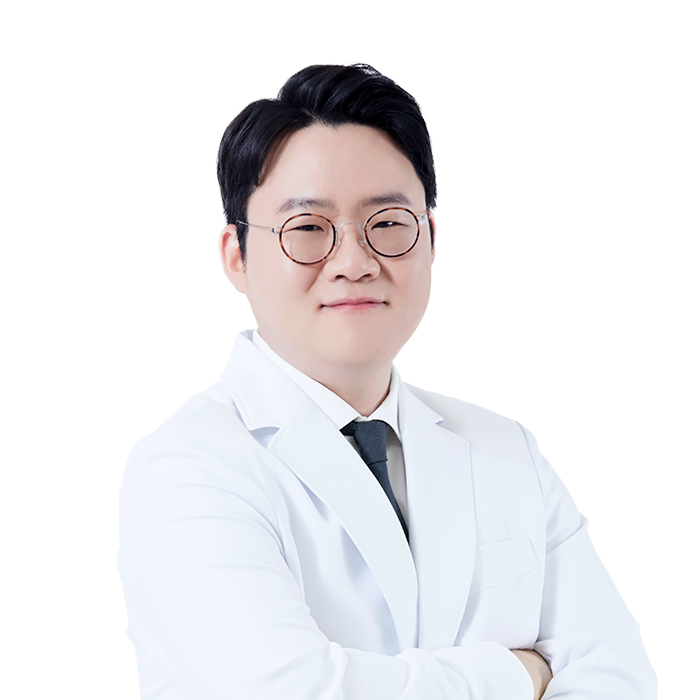
|
Writer. Dr. Ma Seong-Hwan, AB Plastic Surgery |