Title
Alarplasty in Korea: How Alar Base Reduction Can Enhance Your Nose ShapeDate
2026-09-09Views
387
AB Blog
Alarplasty in Korea: A Complete Guide to Natural Alar Base Reduction
Table of Contents
1. What Is Alarplasty—and Who May Benefit?
2. Alarplasty vs Rhinoplasty: Which Procedure Fits Your Goal?
3. Alarplasty Techniques, Natural Results, and Key Risks
4. Alarplasty Scars and Recovery Timeline
5. Alarplasty in Korea: Cost, Consultation, and Travel Planning
6. How AB Plans Alarplasty Around Shape, Symmetry, and Safety
7. Frequently Asked Questions About Alarplasty in Korea
Alarplasty, also called alar base reduction or nostril reduction surgery, is a targeted procedure that narrows or reshapes a wide, flared, or asymmetric nostril base. It may be performed alone when the concern is limited to the nostrils or combined with rhinoplasty when the nasal tip, bridge, septum, or internal structure also requires correction.
Because even a small change to the alar base can affect the balance of the entire nose, the goal is not simply to create the narrowest possible nostrils. Planning should account for the alar curve, nostril openings, nasal tip, columella, facial proportions, existing asymmetry, and movement when smiling.
This guide explains who may benefit from alarplasty, how it differs from rhinoplasty, which surgical techniques may be considered, and what patients should know about scars, recovery, risks, cost, and planning surgery in Korea. Patients can also review AB Plastic Surgery Korea’s alar base reduction procedure information for details about available approaches and actual before-and-after cases.
Alarplasty at a Glance
-
Common concerns: Wide, flared, large, or asymmetric nostrils
-
Primary treatment area: The alar base and nostril openings
-
Possible changes: Lower nasal width, nostril flare, and nostril shape
-
Areas not usually changed by alarplasty alone: Nasal bridge height, major nasal tip projection, and internal septal structure
-
AB procedure information: The procedure may take approximately 30 minutes, depending on the surgical plan
-
AB recovery guidance: A return to normal daily activities may be possible from approximately seven days after surgery
-
Important consideration: The surgical method, degree of correction, and recovery timeline vary according to anatomy and individual healing
What Is Alarplasty—and Who May Benefit?
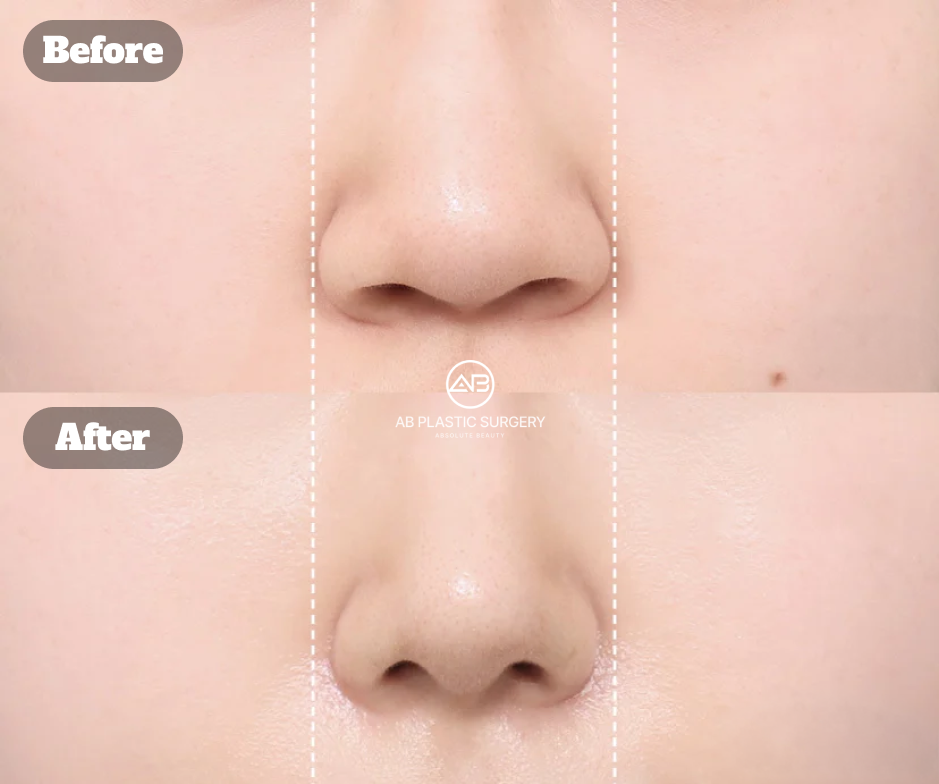
Alarplasty is a targeted surgical procedure that reduces or reshapes the alar base—the lower outer part of the nose where the nostrils meet the cheeks. Also known as alar base reduction or nostril reduction surgery, it primarily addresses the width, flare, opening shape, or selected asymmetry of the nostrils rather than reshaping the entire nose.
The concern may originate from the outer alar walls, the nostril sill at the floor of each opening, or a combination of both. Because these patterns require different approaches, candidacy should be determined by assessing the nose from the front and basal views, both at rest and during facial expression.
Concerns Alarplasty May Address
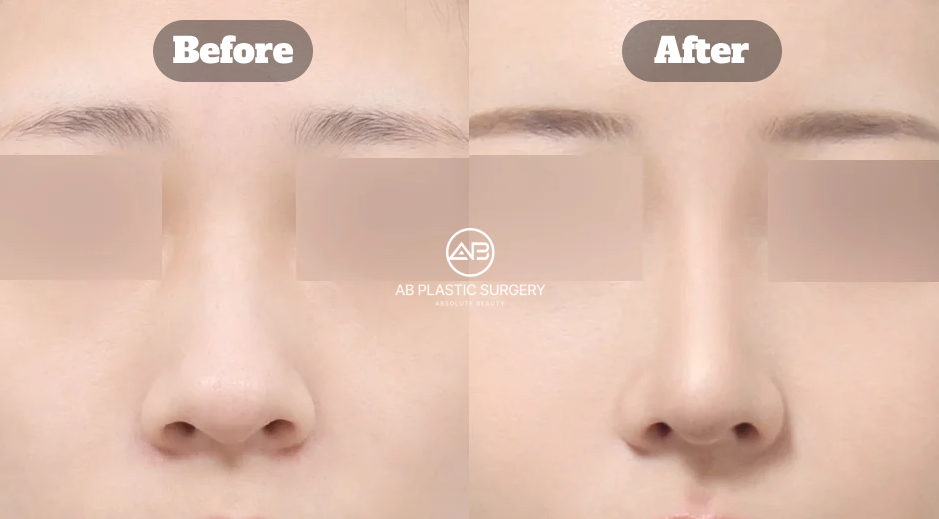
Alarplasty may be considered when the lower nose appears disproportionately wide, the nostrils flare outward, the openings appear horizontally broad, or differences between the two sides are concentrated around the alar base.
|
Observed concern |
Possible anatomical source |
Potential alarplasty goal |
|---|---|---|
|
Wide lower nose at rest |
Broad alar base or outwardly positioned alar attachments |
Reduce selected width at the nostril base |
|
Flared nostrils |
Outward curvature or movement of the alar walls |
Refine excessive lateral flare |
|
Horizontally wide nostril openings |
Broad nostril sill or floor |
Narrow and refine the nostril opening |
|
Uneven nostrils |
Differences in the alar walls, sill, tip, columella, or septum |
Improve selected asymmetry within anatomical limits |
These concerns are not universal beauty standards or a self-diagnosis checklist. The appropriate amount of change depends on the existing nasal tip, columella, facial width, skin and soft-tissue characteristics, and the original shape of each nostril.
Static Width vs Dynamic Nostril Flare
A wide alar base may be visible while the face is at rest. In other patients, the nostrils appear proportionate at rest but spread more noticeably when smiling. This movement is known as dynamic alar flare.
Static photographs alone may not show the full pattern. Assessment should therefore include front and basal views at rest as well as photographs or video taken while smiling. Surgery may reduce excessive flare in selected cases, but normal nostril movement should not be expected to disappear completely.
What Alarplasty Cannot Correct Alone
Alarplasty mainly changes the lower outer portion of the nose. When performed alone, it does not usually raise a low nasal bridge, substantially change nasal tip projection, correct a deviated septum, or treat an internal cause of restricted breathing.
A broader rhinoplasty assessment may be necessary when the apparent width is related to a broad or under-projected nasal tip, structural deviation, septal anatomy, or an imbalance involving several parts of the nose. Patients with persistent congestion or unequal airflow should also receive a separate functional evaluation rather than assuming that nostril reduction will improve breathing.
The objective of alarplasty should be proportional refinement rather than maximum narrowing. A suitable candidate is generally someone whose concern is primarily concentrated at the alar base and whose desired change can be achieved while preserving a smooth alar curve, sufficient nostril openings, natural movement, and balance with the rest of the nose.
Alarplasty vs Rhinoplasty: Which Procedure Fits Your Goal?
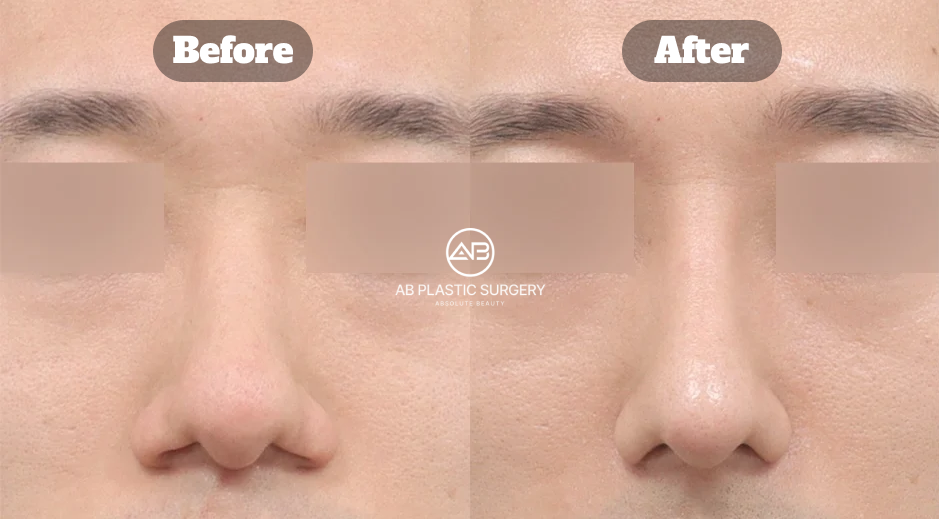
Alarplasty may be appropriate when the main concern is limited to the width, flare, or opening shape of the nostrils, whereas rhinoplasty may be needed when the nasal bridge, tip, septum, or overall nasal structure also requires correction. Alarplasty is therefore not simply a smaller version of rhinoplasty. Each procedure addresses different anatomical areas.
|
Procedure |
Primary treatment area |
Concerns it may address |
Main limitation |
|---|---|---|---|
|
Alarplasty |
Alar base, outer nostril walls, and nostril sill |
Wide or flared nostrils, broad nostril openings, and selected alar asymmetry |
Does not usually change the bridge or significantly alter tip projection |
|
Tip plasty |
Nasal tip cartilage and supporting structures |
Tip width, definition, support, rotation, or projection |
Does not necessarily reduce a wide alar base |
|
Rhinoplasty |
Bridge, tip, septum, and broader nasal framework, depending on the plan |
Overall nasal shape, structural balance, deviation, and selected functional concerns |
A broader operation may be unnecessary when the concern is isolated to the nostril base |
When Alarplasty Alone May Be Enough
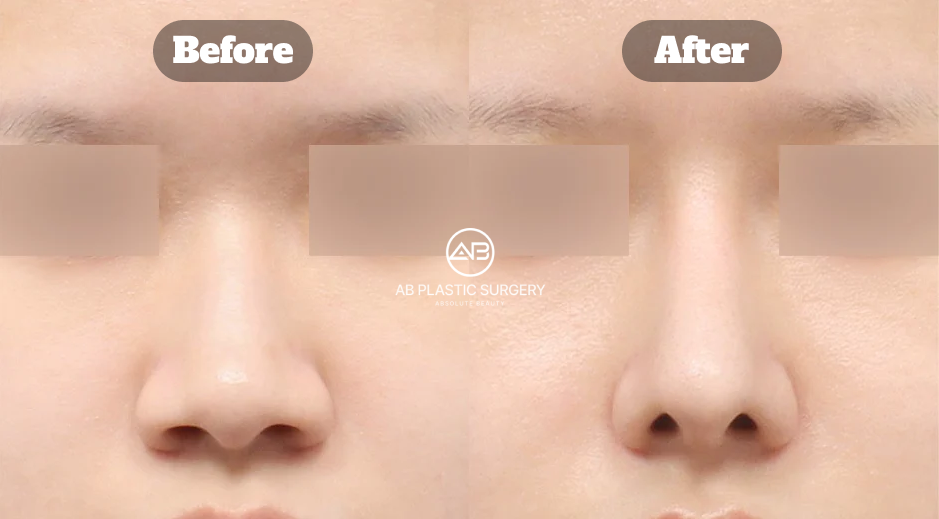
Isolated alarplasty may be considered when the nasal bridge and tip already appear proportionate and the patient’s concern is concentrated at the lower nasal width or nostril openings. Possible goals include reducing a wide alar base at rest, refining excessive flare, or narrowing a broad nostril sill.
However, the proposed reduction must remain balanced with the existing tip, columella, and surrounding facial features. Narrowing the nostrils without considering these structures may make the lower nose appear disconnected from the rest of the nose.
When Tip Plasty or Rhinoplasty May Be Needed
A broader assessment may be appropriate when the patient also wants to change bridge height, nasal tip width or projection, nasal length, deviation, or internal support. In some cases, the alar base appears wide partly because the tip is broad or under-projected. Reducing only the nostrils may not correct that structural relationship.
Patients can review how the bridge, tip, nostrils, and supporting structures contribute to different results in AB Plastic Surgery Korea’s guide to Korean nose job before-and-after results by structural nose type. This comparison can help explain why patients with similar frontal nasal width may require different surgical plans.
Patients who report persistent congestion, restricted airflow, or uneven breathing also require an internal nasal assessment. Alarplasty primarily changes the external nostril base and should not be assumed to correct obstruction caused by the septum, turbinates, or nasal valve.
The appropriate procedure should ultimately be selected according to the anatomical source of the concern. If the issue is isolated to the alar base, alarplasty may provide the most focused approach. If several nasal structures contribute to the appearance or function, combining procedures may create a more balanced plan.
Alarplasty Techniques, Natural Results, and Key Risks
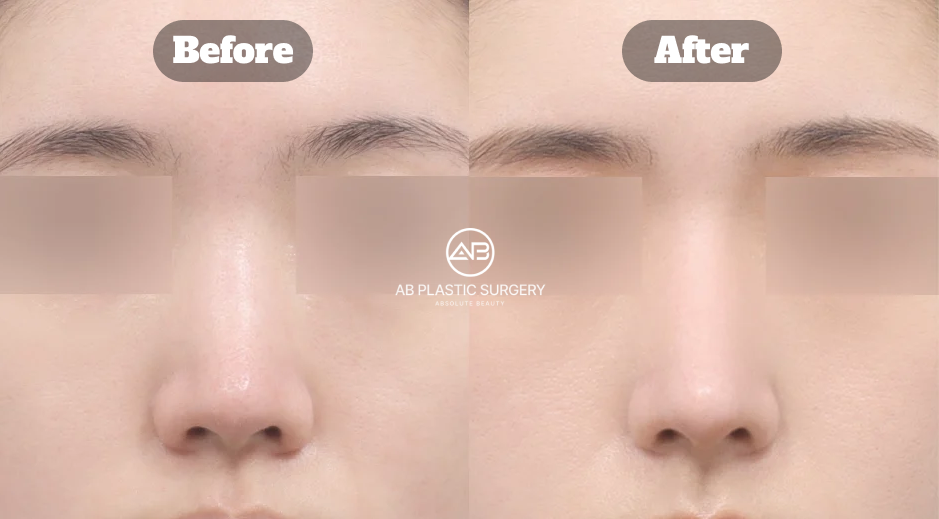
The appropriate alarplasty technique depends on whether the width originates from the outer alar walls, the nostril sill, or both areas. Tissue thickness, nostril shape, pre-existing asymmetry, previous surgery, facial proportions, and movement when smiling should also be considered before selecting a method.
The aim is not to remove the maximum amount of tissue. Because even a small adjustment can change the nostril openings and overall balance of the lower nose, conservative planning is important for preserving natural shape and adequate airflow.
Excisional Alar Base Reduction
Excisional alar base reduction removes a carefully planned amount of tissue from the area where the outer nostril wall meets the cheek. It may be considered when the alar walls are widely positioned or the nostrils show noticeable lateral flare.
The incision is generally placed along or near the natural alar crease. This may help the scar become less noticeable as it matures, but an external incision should not be described as completely scarless. Scar visibility varies according to incision placement, skin characteristics, wound tension, pigmentation, and individual healing.
Nostril Sill Reduction
Nostril sill reduction focuses on the floor of the nostril opening. It may be appropriate when the nostrils appear horizontally wide even without significant outward flare of the outer alar walls.
The method may be performed alone or combined with external alar base reduction when both areas contribute to the width. If the nostrils differ before surgery, each side may require a different design rather than removal of the same amount of tissue.
Suture-Based or Combined Approaches
A suture-based approach may bring selected tissues inward without the same type of external tissue removal used in excisional alarplasty. It may be considered when the desired change is limited and the patient’s tissue characteristics are suitable.
However, this method does not address every source of nostril width and should not be presented as a universally suitable or entirely scar-free option. More noticeable flare, a broad nostril sill, or thicker tissue may require an excisional or combined approach.
|
Technique |
Primary focus |
May be considered when |
|---|---|---|
|
Excisional reduction |
Outer alar tissue |
The alar base is wide or visibly flared |
|
Nostril sill reduction |
Floor of the nostril opening |
The nostrils appear horizontally broad |
|
Suture-based narrowing |
Selected inward repositioning |
A limited degree of narrowing may be suitable |
|
Combined approach |
Outer alar walls and nostril sill |
More than one anatomical area contributes to the width |
What a Natural-Looking Result Should Preserve
A natural-looking result should refine the lower nasal width without making the nostrils appear pinched, excessively small, elongated, or unnaturally fixed. Important features to preserve include:
-
A smooth and continuous alar curve
-
Nostril openings that remain proportionate to the nasal tip and columella
-
Adequate space for nasal airflow
-
Natural movement when smiling or speaking
-
Improved balance without promising perfect left-right symmetry
-
The patient’s individual facial and anatomical characteristics
Before-and-after photographs should be reviewed from equivalent front and basal views, with attention to lighting, expression, camera distance, and postoperative timing. Early photographs may still reflect swelling, firmness, redness, or temporary asymmetry and cannot predict another patient’s outcome.
Why Over-Reduction Requires Special Attention
Over-reduction can create pinched nostrils, irregular alar curves, visible asymmetry, nostril distortion, or excessive narrowing that may affect airflow. These concerns can be difficult to correct because excised tissue cannot simply be returned to its original condition.
|
Potential concern |
How it may appear |
Planning consideration |
|---|---|---|
|
Over-reduction |
Overly narrow, small, or pinched nostrils |
Use a conservative design based on individual proportions |
|
Asymmetry |
Differences in nostril height, width, or curvature |
Identify pre-existing asymmetry and its underlying cause |
|
Visible scarring |
Persistent redness, pigmentation, firmness, or raised tissue |
Consider incision placement, tension, and scar history |
|
Nostril distortion |
Notching, indentation, or an irregular opening shape |
Evaluate the design from front, basal, and oblique views |
|
Airflow changes |
A sensation of restricted nasal breathing |
Preserve an adequate nostril opening and assess existing symptoms |
Revision may require scar release, tissue rearrangement, cartilage support, or grafting, depending on the remaining tissue and original problem. For this reason, the first operation should prioritize proportional refinement and preservation rather than the narrowest possible result.
Alarplasty Scars and Recovery Timeline
Initial alarplasty recovery may involve swelling, tenderness, tightness, redness, and temporary differences between the nostrils. Although alarplasty treats a smaller area than full rhinoplasty, the incision and lower nasal tissues continue to heal over several months.
Patients should not judge the final nostril shape during the early recovery period. Swelling and tissue firmness may temporarily make the nostrils appear wider, tighter, higher, or more uneven than expected.
Where Are Alarplasty Scars Located?
In excisional alarplasty, the incision is generally placed along or near the natural crease where the outer nostril wall meets the cheek. Nostril sill reduction may place part of the incision along the floor of the nostril opening. The exact location depends on the anatomical concern and selected technique.
The scar may initially appear pink, red, firm, slightly raised, or darker than the surrounding skin. It often becomes less noticeable as it matures, but alarplasty should not be described as completely scarless.
Scar healing may be affected by skin characteristics, pigmentation, wound tension, previous surgery, smoking or nicotine exposure, sun exposure, infection, and adherence to postoperative instructions. Scar gels, tapes, or ointments should be used only when recommended by the medical team.
Alarplasty Recovery by Stage
|
Recovery period |
What patients may notice |
General guidance |
|---|---|---|
|
First few days |
Swelling, tenderness, tightness, mild bruising, or incision-related discharge |
Avoid pressure on the nose and follow the prescribed cleaning and medication instructions |
|
Around 1 week |
Early swelling may begin to decrease; sutures may be reviewed or removed depending on the method |
Attend the scheduled follow-up and do not remove sutures or dressings without guidance |
|
Weeks 2–4 |
The nostril shape may become easier to assess, although redness, firmness, or mild asymmetry may remain |
Avoid rubbing, stretching, or placing unnecessary pressure on the incision |
|
Months 1–3 |
Swelling continues to settle and the incision may gradually soften and fade |
Follow individualized scar-care and sun-protection instructions |
|
Several months |
Further contour refinement and scar maturation may occur |
Continue follow-up if the scar or nostril shape remains concerning |
AB Plastic Surgery Korea provides general guidance that patients may be able to return to normal daily activities from approximately seven days after alar base reduction. This does not mean that swelling, redness, or incision visibility will have completely resolved by that point.
The appropriate timing for work, exercise, makeup, glasses, facial treatments, and other activities varies according to the surgical method and individual recovery. Patients should follow their own postoperative schedule rather than relying solely on a general online timeline.
When to Contact the Clinic
Some swelling and tenderness are expected during early recovery, but symptoms that worsen rather than gradually improve may require medical assessment. Patients should contact the medical team promptly if they experience:
-
Rapidly increasing or one-sided swelling
-
Worsening pain that is not controlled as instructed
-
Persistent or heavy bleeding
-
Fever or spreading redness
-
Discharge with an unusual color or odor
-
Wound separation or concerning skin-color changes
-
Sudden difficulty breathing through the nose
Recovery timelines provide general guidance only. Healing varies according to the surgical extent, skin and tissue characteristics, previous procedures, postoperative care, and the individual body’s response.
Alarplasty in Korea: Cost, Consultation, and Travel Planning
The cost of alarplasty in Korea varies according to the anatomical concern, selected technique, degree of asymmetry, and whether the procedure is performed alone or combined with rhinoplasty. International patients should compare what is included in each quotation rather than evaluating the surgical fee alone.
A final treatment plan usually requires an in-person examination. Photographs can support an initial online consultation, but they cannot fully show tissue thickness, scar condition, internal nasal structure, or airflow.
What Determines the Cost of Alarplasty?
Factors that may affect the quotation include:
-
Whether the concern involves the outer alar walls, nostril sill, or both
-
Whether an excisional, suture-based, or combined method is planned
-
The degree of pre-existing nostril asymmetry
-
Whether the patient has undergone previous nose surgery
-
Whether alarplasty is performed alone or with tip plasty or rhinoplasty
-
The anesthesia, testing, medication, and postoperative care included in the quotation
Patients should confirm whether the quoted amount includes preoperative tests, anesthesia, medication, suture removal, follow-up visits, and any additional procedures. The final cost may change if the in-person examination identifies a different anatomical concern from the one visible in photographs.
Patients can request an individualized estimate through AB Plastic Surgery Korea’s plastic surgery cost inquiry page.
What to Send for an Online Consultation
Clear photographs can help the medical team assess the visible alar width, nostril shape, and relationship between the alar base and nasal tip. Images should be taken without beauty filters or lens distortion and should include:
-
A straight front view with a neutral expression
-
A basal view showing the nostril openings from below
-
Left and right side or oblique views
-
A front view while smiling to show dynamic flare
-
Details of previous rhinoplasty, alarplasty, fillers, or nasal injuries
-
Any symptoms involving congestion, restricted airflow, or unequal breathing
During the consultation, patients should ask which anatomical area creates the width, which technique is being considered, where the incisions may be placed, how much change is realistic, and whether another nasal procedure is necessary.
Planning Your Stay in Korea
International patients should plan their stay around the required postoperative visits rather than the earliest available return flight. The schedule may include an in-person examination before surgery, an early wound check, dressing care, and suture removal depending on the surgical method.
|
Planning stage |
What to confirm |
|---|---|
|
Before booking travel |
Estimated surgical schedule, recommended stay, and required preoperative tests |
|
Before surgery |
Final technique, incision location, realistic goals, total quotation, and recovery instructions |
|
After surgery |
Wound checks, dressing schedule, medication, and suture-removal timing |
|
Before returning home |
Fitness to travel, symptoms requiring urgent assessment, and restrictions during the trip |
|
After returning home |
Online follow-up method and when an in-person medical examination may be required |
Patients should also allow for visible swelling or redness when planning work, photographs, or important events. Recovery varies, and the earliest possible return date may not provide enough time for all required postoperative care.
Online consultations and general timelines are intended to support planning. The final surgical method, cost, recovery schedule, and recommended length of stay should be confirmed after individualized medical assessment.
How AB Plans Alarplasty Around Shape, Symmetry, and Safety
AB Plastic Surgery Korea plans alarplasty according to the source of the nostril width, the relationship between the alar base and the rest of the nose, and the amount of tissue that can be adjusted while preserving a natural appearance. The objective is not to apply the same reduction to every patient or create the narrowest possible nostrils.
Because alarplasty permanently changes a small but visually important area, the plan should address both the desired improvement and the structures that need to remain preserved.
Anatomy-Based, Conservative Design
AB’s alar base assessment considers whether the concern originates from the outer alar walls, the nostril sill, dynamic flare, or more than one area. The nostrils are evaluated in relation to the nasal tip, columella, bridge, and overall facial proportions rather than by using one fixed width or ratio.
Planning may also account for:
-
The shape and curvature of each alar wall
-
Nostril width and opening shape from the basal view
-
Differences between the left and right sides
-
Changes in nostril flare when smiling
-
Skin thickness and soft-tissue tension
-
Existing scars or previous nose surgery
-
Current nasal breathing concerns
The two sides should not automatically receive identical tissue reduction when preoperative anatomy differs. The design may need to be adjusted for each nostril while recognizing that surgery cannot guarantee perfect symmetry.
Preserving Shape While Avoiding Over-Reduction
AB’s planning approach prioritizes a smooth alar curve, proportionate nostril openings, and balance with the nasal tip and columella. This is particularly important because removing too much tissue may create pinching, distortion, visible asymmetry, or excessive narrowing that can be difficult to revise.
When the width is related partly to the nasal tip or another structural feature, isolated alarplasty may not be recommended as the only procedure. The surgical scope should be selected according to the actual source of the concern rather than the procedure name requested during the initial inquiry.
Procedure-Relevant Academic and Safety Systems
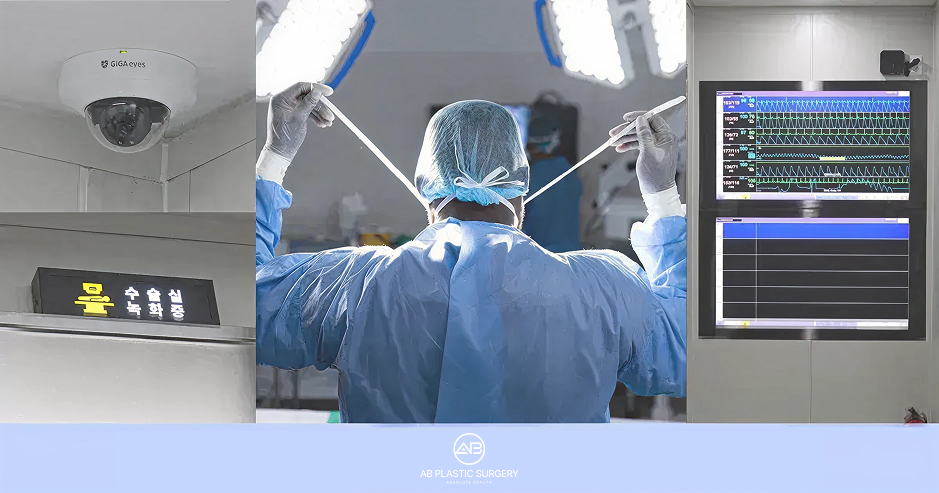
AB Plastic Surgery medical staff participated in rhinoplasty-related academic sessions at APS Korea 2025, sharing and reviewing surgical considerations within a professional medical setting. Academic participation does not guarantee an individual result, but it provides procedure-relevant context for the hospital’s continued engagement with rhinoplasty planning and technique.
AB also presents preoperative checks, surgical-site confirmation, and team cross-check processes as part of its surgical safety system. These steps are intended to support accurate surgical planning and communication before the procedure; they do not eliminate every surgical or healing risk.
AB Alarplasty Planning Priorities
-
Identify whether the width comes from the alar walls, nostril sill, or another nasal structure
-
Assess the nose from multiple views and during facial movement
-
Plan each side according to its existing anatomy
-
Preserve a natural alar curve and adequate nostril openings
-
Avoid excessive reduction that may complicate future revision
-
Use preoperative checks and cross-check processes before surgery
Patients should discuss the proposed incision location, amount of reduction, expected limits, existing asymmetry, scar considerations, and postoperative plan before deciding whether alarplasty at AB is appropriate for their goals.
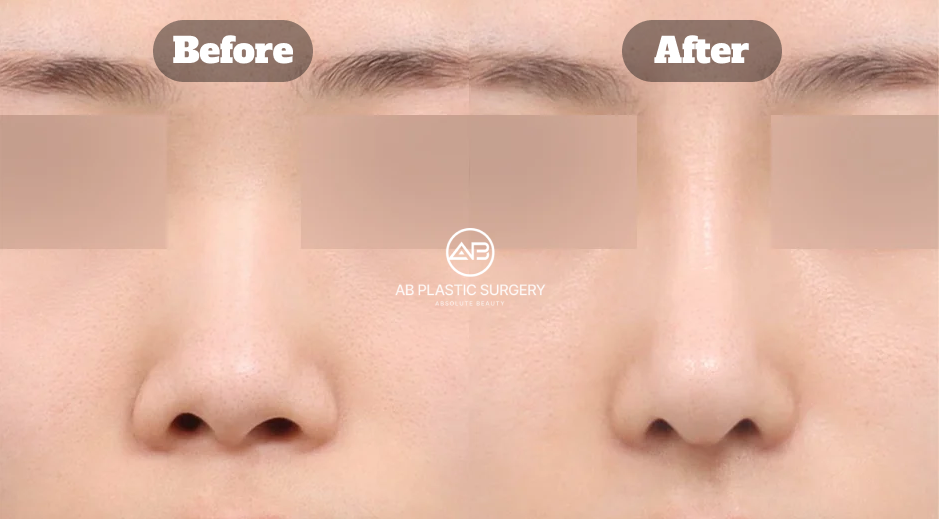
Frequently Asked Questions About Alarplasty in Korea
Is Alarplasty the Same as Nostril Reduction?
Yes. Alarplasty is commonly referred to as alar base reduction, alar reduction, or nostril reduction surgery. It focuses on adjusting the width, flare, or opening shape of the nostrils rather than reshaping the entire nose.
Can Alarplasty Be Performed Without Full Rhinoplasty?
Alarplasty may be performed alone when the concern is limited to the alar base or nostril openings and the nasal bridge and tip are already proportionate. If the bridge, tip, septum, or internal nasal structure also requires correction, tip plasty or rhinoplasty may be recommended.
Where Are Alarplasty Scars Located?
External incisions are generally placed along or near the natural crease where the nostril wall meets the cheek. Nostril sill reduction may involve an incision along the floor of the nostril opening. Scars may become less noticeable as they mature, but excisional alarplasty should not be described as completely scarless.
How Long Does Alarplasty Recovery Take?
AB Plastic Surgery Korea provides general guidance that normal daily activities may be possible from approximately seven days after surgery. Swelling, redness, firmness, and scar maturation can continue for several weeks or months, depending on the technique and individual healing response.
Can Alarplasty Correct Asymmetric Nostrils?
Alarplasty may improve selected differences in nostril width, curvature, or opening shape. However, it cannot guarantee perfectly identical nostrils, particularly when the asymmetry originates from the nasal tip, columella, septum, facial skeleton, or previous surgery.
How Much Does Alarplasty Cost in Korea?
The cost of alarplasty in Korea varies according to the technique, degree of asymmetry, previous surgery, anesthesia plan, and whether it is performed alone or combined with tip plasty or rhinoplasty. Patients should request an individualized quotation and confirm which tests, medications, and follow-up services are included.
Medical Information Notice
This content is intended for general educational purposes and does not replace an individualized consultation or medical examination. The appropriate procedure, cost, recovery timeline, scar appearance, and surgical result vary according to anatomy, treatment extent, previous surgery, and individual healing.
Patients considering alarplasty in Korea can request a Free Online 1:1 Consultation with AB Plastic Surgery Korea to discuss their concerns, possible treatment options, estimated cost, and recommended stay in Korea.

This article is for informational purposes only and does not replace a personal medical consultation.