Title
Facial Contouring Korea: Can Multiple Contouring Procedures Be Combined?Date
2026-10-28Views
42
AB Blog
Facial Contouring in Korea: Choosing Combined or Staged Surgery
Table of Contents
1. What Does Facial Contouring in Korea Include?
2. Which Facial Contouring Procedures Can Be Combined?
3. Combined vs. Staged Facial Contouring: How Is the Decision Made?
4. How Is a Personalized Facial Contouring Plan Created?
5. What Risks and Safety Checks Matter Before Combined Facial Contouring?
6. Recovery and Travel Planning for Facial Contouring in Korea
7. What Affects the Cost of Combined Facial Contouring in Korea?
8. Frequently Asked Questions About Combined Facial Contouring
If your cheekbones, jawline, and chin all affect the shape of your face, should you address them together or start with one area? This guide explains how surgeons decide, what to ask AB Plastic Surgery Korea, and how to plan your treatment and travel.
Quick Answer: Can Multiple Facial Contouring Procedures Be Combined?
Facial contouring in Korea may combine cheekbone reduction, jaw reduction, and genioplasty in one operation when each procedure is indicated and the overall surgical plan is appropriate. Some patients need only one or two procedures; others may benefit from staged treatment. The decision depends on facial anatomy, health, surgical scope, anesthesia assessment, and postoperative care needs.
What Does Facial Contouring in Korea Include?
In this guide, facial contouring refers primarily to surgery that reshapes selected facial bones. It is not a single operation. Cheekbone reduction, jaw reduction, and genioplasty address different parts of the facial skeleton, and a patient may need one, two, or all three.
-
Cheekbone reduction: reshapes or repositions parts of the zygomatic bones to address cheekbone prominence and facial width.
-
Jaw reduction: modifies selected areas of the mandibular angle or jaw contour to address a broad or angular lower face.
-
Genioplasty: changes the chin’s position or dimensions, depending on its projection, width, length, and relationship to the jawline.
How Is Facial Contouring Different From a Facelift or Orthognathic Surgery?
A facelift addresses soft tissue laxity, while orthognathic surgery repositions the jaws and may be needed for skeletal alignment and bite problems. A concern that looks like a contour issue may therefore require a different assessment rather than additional bone reduction.
Which Facial Contouring Procedures Can Be Combined?
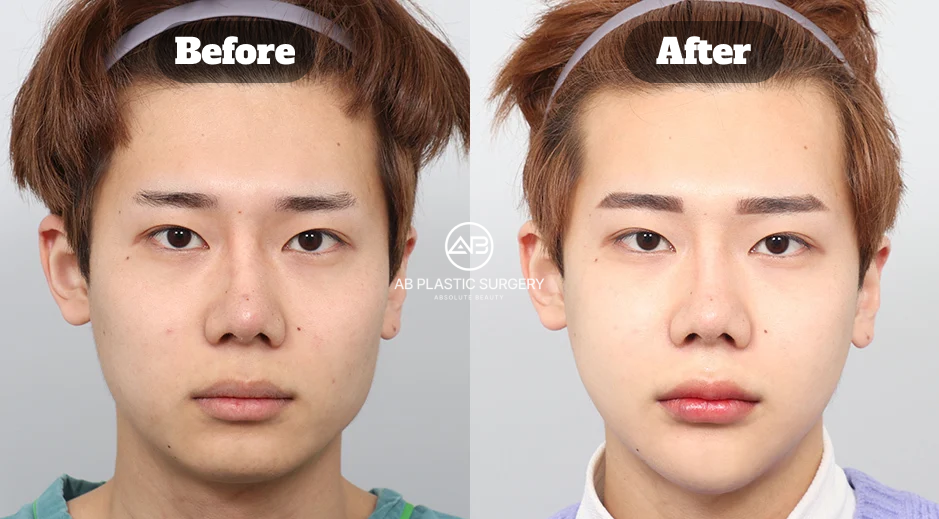
Facial contouring combinations may include cheekbone reduction with jaw reduction, jaw reduction with genioplasty, or all three procedures. The appropriate combination depends on which structures contribute to your concern and whether changing them together supports the planned facial proportions.
Why Are Several Facial Areas Planned Together?
The cheekbones, jawline, and chin contribute to facial proportions as a connected structure. Narrowing one area can change how prominent another appears. A coordinated assessment considers:
-
Front view: the relationship between cheekbone width, jaw width, and chin shape.
-
45-degree view: cheekbone projection and the transition from the cheeks to the lower face.
-
Side view: chin projection, jawline shape, and their relationship to the overall profile.
-
Soft tissue: how the skin, fat, and muscles may influence the visible contour after skeletal changes.
The goal is balanced proportions rather than maximum bone removal. If one area already fits the planned proportions, preserving it may be more appropriate than adding another procedure. Planning areas together does not necessarily mean operating on all of them.
Common Cheekbone, Jaw, and Chin Surgery Combinations
The table below explains the purpose of each combination. These are planning examples, not recommendations based on appearance alone.
| Surgery combination | Concern being assessed | Planning goal | Important consideration |
|---|---|---|---|
| Cheekbone Reduction + Jaw Reduction | Prominent cheekbones together with a broad or angular lower jaw | Coordinate changes to midface and lower-face width | Assess whether width comes from bone, muscle, or soft tissue, and how each area contributes to overall proportions |
| Jaw Reduction + Genioplasty | A jawline concern accompanied by a chin that appears disproportionate in width, length, or projection | Plan the transition between the jawline and chin | The chin may require narrowing, length adjustment, or repositioning rather than reduction alone |
| Cheekbone Reduction + Genioplasty | Cheekbone prominence and a separate chin proportion concern | Address selected midface and chin features while preserving an appropriate jaw angle | Confirm that jaw reduction is unnecessary and assess the relationship between cheekbone width and chin shape |
| Cheekbone Reduction + Jaw Reduction + Genioplasty | Distinct concerns involving all three facial bone regions | Coordinate cheekbone, jawline, and chin changes within one overall design | Each procedure needs its own indication, followed by assessment of the combined surgical and anesthesia plan |
Is V-Line Surgery the Same as Facial Contouring?
V-line surgery generally refers to lower-face contouring involving the jawline and chin. It does not necessarily include cheekbone reduction. Because clinics may use the term differently, confirm the exact procedures included in the proposed plan rather than relying on the name alone.
What Do 3-Set, 3-Point, and 3-Type Facial Contouring Mean?
“3-set,” “3-point,” and “3-type” facial contouring usually refer to a combination of cheekbone reduction, square jaw reduction, and genioplasty. The names are marketing shorthand, not a standard surgical category, and clinics may define the components differently. The actual techniques within each procedure can also vary. Ask which specific procedures and techniques are included in your plan.
Does Everyone Need 3-Set Facial Contouring?
No. Three-set facial contouring describes a combination of procedures, not a requirement for every patient. If your concern is concentrated in one or two areas, a more limited plan may be appropriate.
For example, someone considering jaw reduction may already have proportionate cheekbones. Similarly, a chin concern does not automatically mean that the mandibular angles need to be reduced. At AB Plastic Surgery Korea, the three-procedure approach is described as a customized plan that considers facial bone structure alongside muscle, skin, and fat.
Explore AB’s three-procedure facial contouring approach to see how the cheekbones, jawline, and chin are assessed together.
What About Adding Other Facial Procedures?
Concerns involving facial fat, skin laxity, the nose, or the eyelids require their own assessment. They should not be treated as automatic additions to a facial bone surgery plan.
-
Facial fat or fullness: evaluate its location and contribution to the contour before considering removal or volume adjustment.
-
Skin laxity: determine whether a separate soft tissue treatment is appropriate and when it should be performed.
-
Nose or eyelid concerns: assess their individual indications and how an additional operation would affect surgical time and postoperative care.
The next decision is therefore not only which procedures to choose, but whether to perform them together or in separate stages.

Combined vs. Staged Facial Contouring: How Is the Decision Made?
Combined facial contouring addresses selected areas during one operation, while staged surgery separates procedures into different operations with recovery between them. Neither approach is automatically safer or more effective. The decision depends on your health, the complexity of the proposed procedures, anticipated operating time, and whether an earlier result needs to be evaluated before further surgery.
When a Combined Approach May Be Considered
A combined approach may be considered when several facial areas have clear surgical indications and the team determines that the overall plan is appropriate.
-
Each procedure has a defined purpose: every area included in the operation addresses an identified concern.
-
The proposed changes work together: the surgical design considers how adjustments to one area affect the others.
-
The overall surgical scope is acceptable: the surgeon and anesthesiologist assess the expected duration, health factors, and monitoring requirements.
-
Postoperative care is practical: the patient can follow the necessary recovery instructions and attend scheduled reviews.
One operation may allow recovery periods to overlap and reduce the number of separate surgical visits. However, one anesthesia episode does not automatically mean lower overall risk: its duration and the extent of surgery also matter.
When Staged Surgery May Be Considered
Staging may be appropriate when limiting the scope of each operation or reassessing the result between procedures would help guide treatment.
-
A more extensive plan: combining all proposed procedures would substantially increase operating time or recovery demands.
-
Individual health considerations: preoperative findings may support modifying, delaying, or separating procedures.
-
Complex revision surgery: previous bone changes, fixation materials, or scar tissue may affect the treatment sequence.
-
The need to reassess: the team may want to review healing, facial proportions, or soft tissue changes before deciding on another procedure.
Separating procedures also means additional operations, anesthesia episodes, and recovery periods. The interval between stages must be determined individually rather than chosen solely around travel dates.
Comparing the Two Approaches
| Planning factor | Combined surgery | Staged surgery |
|---|---|---|
| Surgical scope | Several indicated procedures are performed during one operation | Procedures are divided between separate operations |
| Anesthesia planning | One episode, with duration reflecting the combined surgical scope | Separate episodes, each requiring its own assessment and preparation |
| Recovery demands | Recovery overlaps across treated areas, potentially creating greater care needs during the initial period | Recovery occurs after each operation, extending the overall treatment timeline |
| Result assessment | Changes are planned together and evaluated as healing progresses | An earlier result can be reassessed before confirming the next procedure |
| Travel arrangements | May consolidate surgical visits, but still requires adequate local follow-up | May require additional trips or a longer overall treatment schedule |
What Information Is Needed to Confirm the Choice?
The choice between combined and staged surgery can only be confirmed after the team has your examination findings, imaging, health history, and a defined list of indicated procedures. Photographs alone can suggest a direction, but they cannot settle it. Before booking your stay in Korea, ask why the recommended approach suits your case, which procedures are necessary, and whether any part of the plan should remain conditional on examination or recovery findings.
Travel convenience should follow the medical plan, not lead it.
How Is a Personalized Facial Contouring Plan Created?
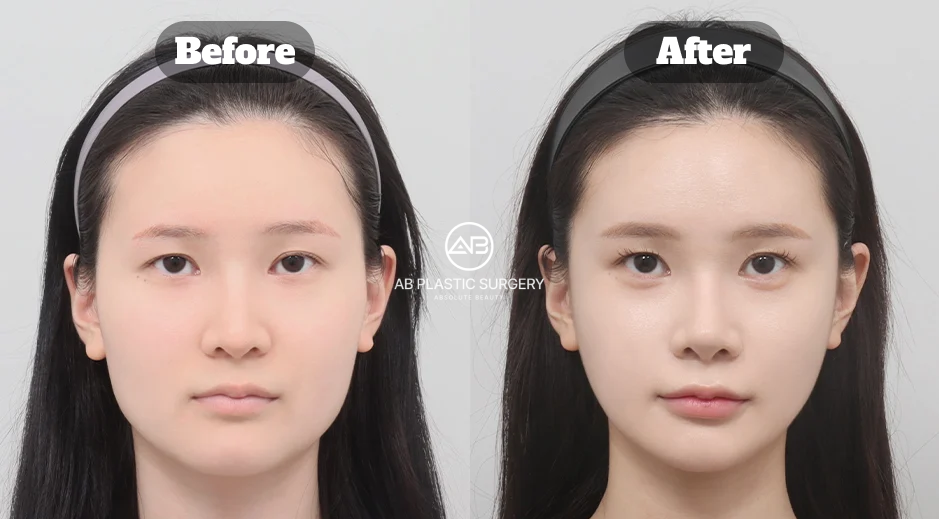
A personalized facial contouring plan connects your goals with an assessment of facial bones, soft tissue, bite, and surgical suitability. Photographs can help identify concerns before traveling to Korea, but the final procedures and surgical design require an in-person examination and appropriate investigations.
Assessing Bone Structure, Nerve Position, and Bite
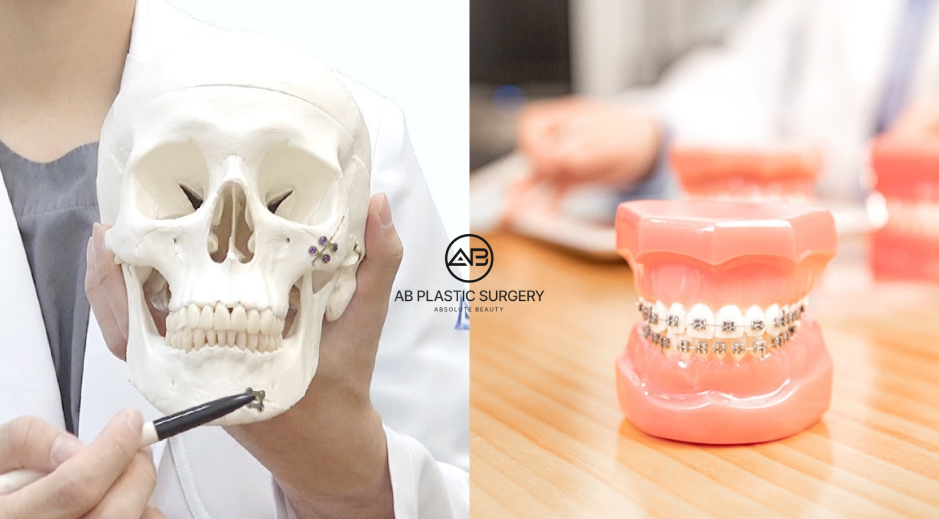
AB Plastic Surgery describes using 3D CT as part of its facial contouring assessment. This supports evaluation of the facial skeleton and relevant anatomical landmarks, including the mandibular canal that carries the nerve supplying sensation to the lower lip and chin.
-
Bone shape and dimensions: cheekbone projection, jaw angles, and chin width, length, and position.
-
Asymmetry: differences between the two sides and the limits of achievable correction.
-
Nerve-related anatomy: the relationship between planned bone changes and relevant nerve pathways.
-
Previous procedures: existing bone changes, fixation materials, and available surgical records.
-
Bite and jaw alignment: whether a concern requires an orthognathic or dental assessment rather than contour reduction alone.
Imaging helps inform the surgical plan, but it does not eliminate risks or predict every postoperative change. Findings must be interpreted alongside the clinical examination.
Evaluating Skin, Fat, and Facial Proportions
A broad-looking face is not always caused by prominent bones. Muscle bulk, fat distribution, skin laxity, and skeletal structure can contribute in different proportions. Identifying these factors helps determine which concerns bone surgery can reasonably address.
For example, a short, broad chin and a long, broad chin may both prompt discussion of genioplasty, but their planning goals differ. Cheekbone prominence must likewise be assessed alongside cheek volume and soft tissue support rather than judged by width alone.
The plan should explain what will change, what will be preserved, and what may remain. This includes discussing existing laxity or hollowness and how the proposed skeletal changes could affect the visible facial contour.
Setting Realistic Goals Before Surgery
Bring a short list of priorities to your consultation: the feature that concerns you most, the views in which it is noticeable, and the degree of change you would feel comfortable with. Reference photographs can support this conversation, but another person’s face cannot serve as an exact surgical template.
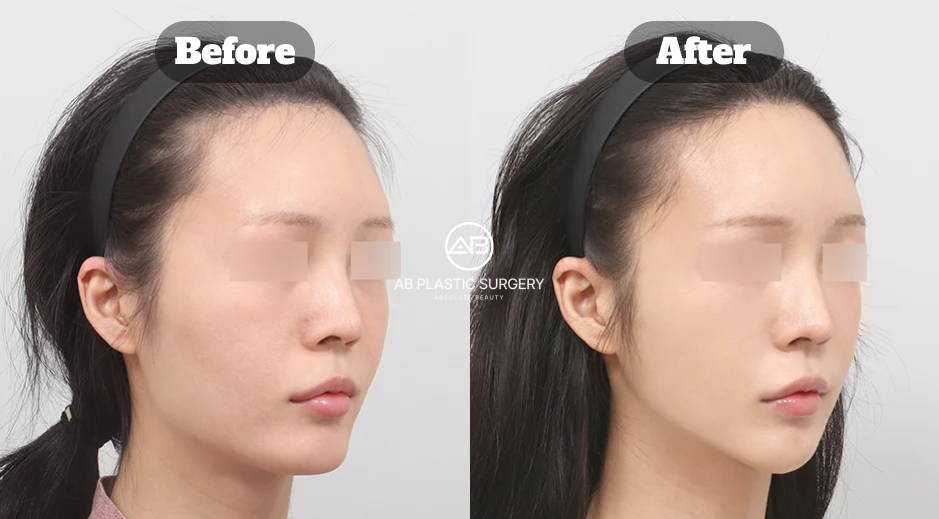
When reviewing any example, compare similar angles, lighting, expressions, and postoperative time points. Check which procedures were performed together, because a result involving several treatments cannot be attributed to one procedure alone.
Compare facial contouring before-and-after photos to prepare questions about the changes shown and the recovery stage represented.
Before confirming treatment, ask the surgeon to explain the purpose of each proposed procedure, its limitations, and the reasoning behind the recommended sequence. Meet the specialists who plan your facial contouring surgery and review their profiles before your consultation.

What Risks and Safety Checks Matter Before Combined Facial Contouring?
Before combined facial contouring, the surgical team should explain the risks and limits of each procedure, then assess your health, anesthesia requirements, and postoperative monitoring needs. Safety planning must account for the entire operation rather than evaluating each procedure in isolation.
What Risks and Limitations Should Be Discussed?
-
Cheekbone surgery: soft tissue sagging, asymmetry, and problems with bone healing.
-
Jaw and chin surgery: altered sensation in the lower lip or chin, and contour irregularity.
-
All facial bone surgery: bleeding, infection, and anesthesia-related risks.
-
Limits of the result: existing asymmetry or soft tissue concerns are not necessarily resolved by bone surgery, and outcomes cannot be guaranteed.
Published medical studies report these types of complications, but study figures should not be read as any clinic’s complication rate or as your personal risk. Your surgeon should explain which risks apply to your proposed plan.
General Anesthesia and Individual Risk Assessment
AB Plastic Surgery lists general anesthesia for its three-set facial contouring procedure. General anesthesia and sedation are different approaches; sedation should not be assumed to replace general anesthesia for facial bone surgery.
Before confirming a combined operation, discuss:
-
Medical and anesthesia history: existing conditions, allergies, previous anesthesia problems, and relevant test findings.
-
Medications and supplements: provide a complete list and follow the team’s instructions about any changes.
-
Surgical scope and duration: why each procedure is needed and how the combination affects the anesthesia plan.
-
Postoperative observation: where recovery will take place, who will monitor you, and how unexpected symptoms will be addressed.
How AB Plastic Surgery Manages Surgical Safety
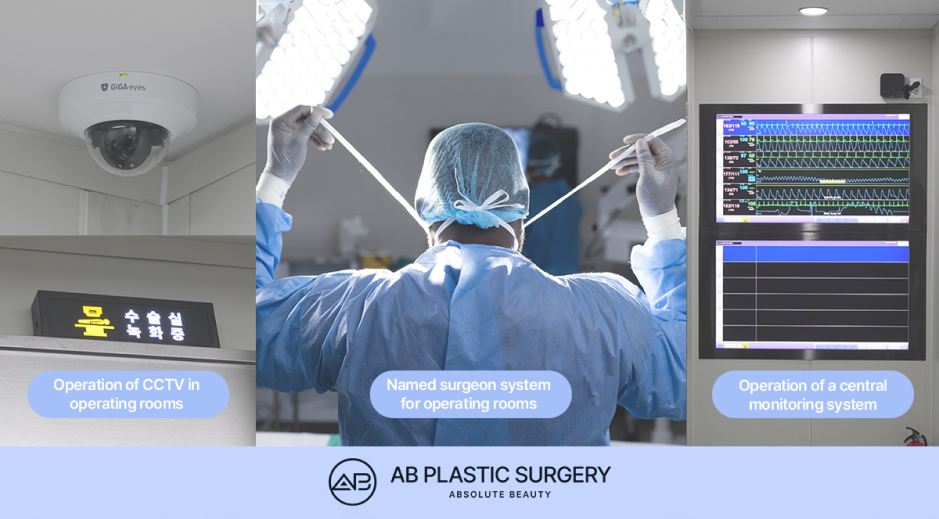
AB Plastic Surgery’s published safety information describes an integrated system covering preoperative screening, anesthesia management, surgical monitoring, and recovery care. For facial contouring, these processes complement the anatomical assessment and individualized surgical design.
-
Anesthesia management: individualized anesthesia planning and monitoring by anesthesiologists, as described in AB’s published materials.
-
Real-time monitoring: observation of vital signs such as blood pressure, heart rate, and oxygen saturation.
-
Operating room CCTV: recording as part of the clinic’s transparent surgical environment.
-
Team cross-checks and emergency preparedness: pre-surgery verification, bleeding-response preparation, and blood cross-matching for applicable procedures.
-
Postoperative follow-up: assessment of recovery findings and arrangements for further care when needed.
Explore AB’s safety approach to facial contouring for its procedure-specific planning principles.
In its published announcement, AB Plastic Surgery reports zero medical accident cases since opening. This is a hospital-reported figure as of that announcement, not an independent audit and not a prediction of an individual patient’s outcome. Surgical and anesthesia risks still require personal assessment and informed consent. Read AB’s published medical accident record and safety protocols for the clinic’s explanation of how it manages safety.
Academic Experience and International Patient Credentials
According to AB Plastic Surgery’s August 2026 announcement, Dr. Dong Pil Cho was selected as an IFAAS medical lecturer for three consecutive years, from 2024 to 2026. The announcement describes a facial contouring program covering zygoma reduction, square jaw surgery, and genioplasty.
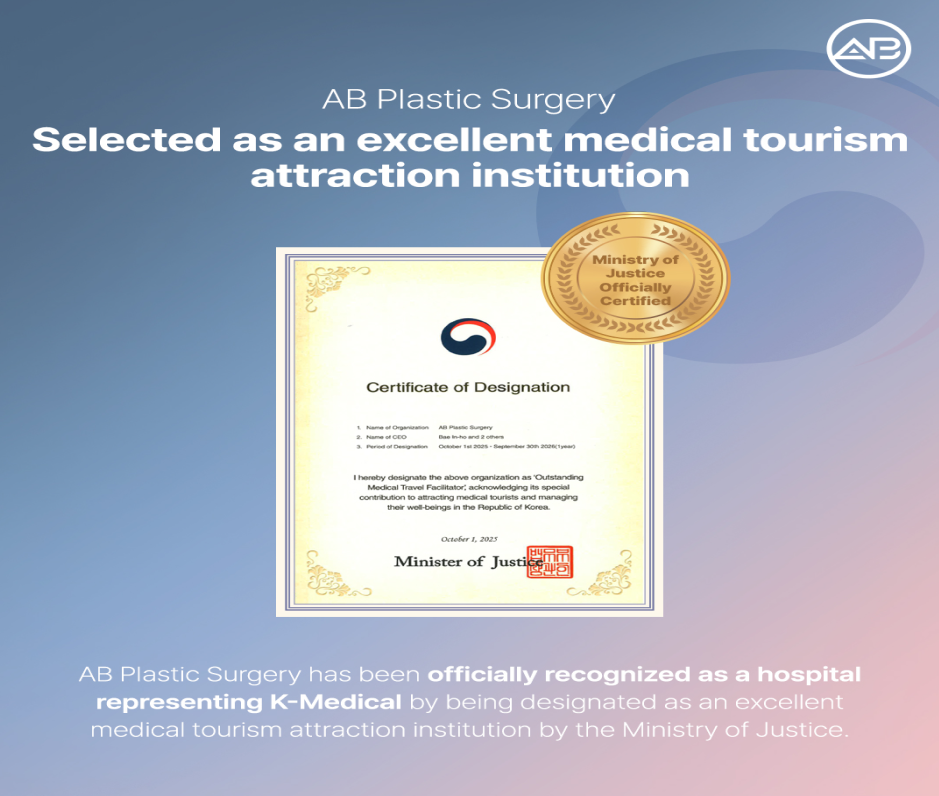
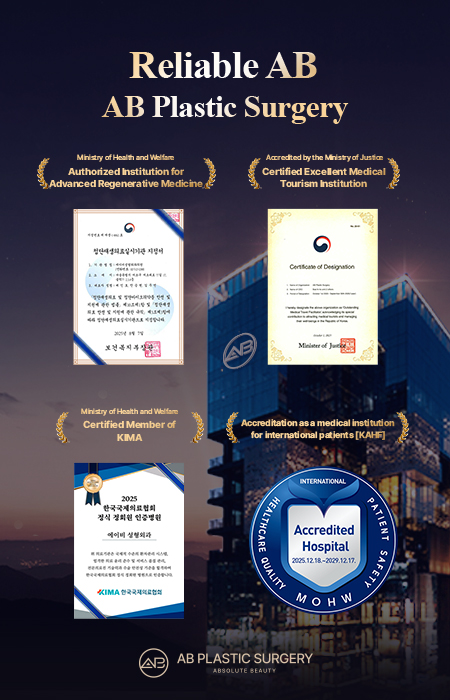
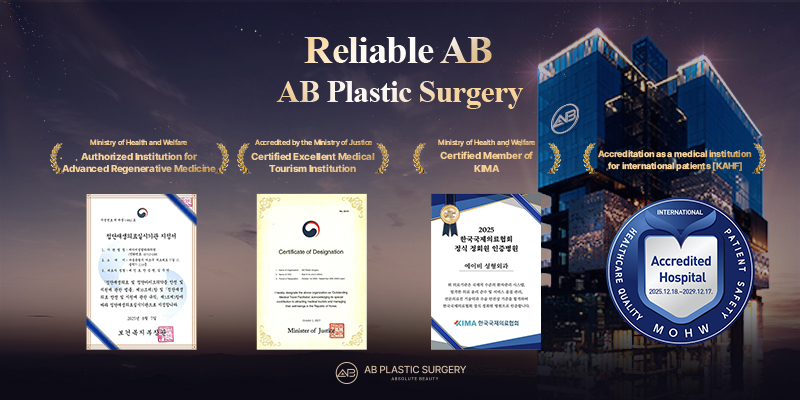
AB also reports KAHF accreditation for international patient services and full membership in KIMA. These credentials describe institutional systems for international patients; they do not indicate a surgical result.
During consultation, confirm who will perform each procedure, who will manage anesthesia, and how your postoperative care will be coordinated. Credentials and academic participation support that discussion; they do not guarantee a particular surgical result.
Recovery and Travel Planning for Facial Contouring in Korea
Your stay in Korea should allow time for preoperative assessment, surgery, and the follow-up visits required before departure. Returning to light activities, being ready to fly, and seeing your final facial contour are separate milestones, and their timing depends on the procedures performed and your recovery findings.
Early Recovery vs. Final Contour Changes
Early recovery may involve swelling, bruising, discomfort, and temporary difficulty opening your mouth. Depending on the operated areas, changes in sensation may also need monitoring. Feeling more comfortable does not mean that bone healing is complete or that the final contour is visible.
| Recovery item | What is being assessed? | What to confirm with the clinic |
|---|---|---|
| Immediate postoperative observation | Recovery from anesthesia, wound condition, swelling, and ability to maintain fluid and food intake | Whether you are observed on site, and the criteria for discharge |
| Early outpatient visits | Wound condition, swelling, sensation, and early healing findings | When the first visits are scheduled and what each visit checks |
| Diet and oral care | Ability to eat safely and keep the mouth clean during healing | Which food stages apply and what allows you to move to the next stage |
| Pre-departure review | Healing progress, intake, and whether further treatment is needed before travel | Written travel advice and follow-up arrangements before leaving Korea |
| Later contour assessment | Changes in swelling, tissue settling, sensation, and facial proportions over subsequent months | When photo consultations are sufficient and when an in-person visit is needed |
Being comfortable in daily life, being cleared to fly, and seeing the final result happen at different times. Do not treat any one of them as confirmation of the others.
Planning Your Stay and Return Flight
Before booking flights, obtain a provisional schedule that includes consultation, investigations, surgery, and postoperative appointments. Ask which arrangements may change after the in-person assessment and whether you will need someone to assist you during early recovery.
-
Allow for follow-up: confirm the required visits and whether wound care or suture removal is needed before departure.
-
Keep accommodation practical: consider access to the clinic, suitable meals, and a comfortable place to rest.
-
Discuss the actual journey: tell the team about flight duration, connections, and onward travel.
-
Build in flexibility: understand how to extend your stay if additional observation or treatment is recommended.
Do not use a published recovery estimate as automatic clearance to fly. Departure should follow the team’s assessment of your condition and the planned journey. Explore support for your treatment journey in Korea and confirm which services are available for your visit.
Follow-Up After Returning Home
Before departure, obtain written aftercare instructions, the follow-up schedule, and contact details for postoperative concerns. Ask how photographs will be used for follow-up and when an in-person examination may be necessary. Keep your procedure summary and medication list available for any local clinician who needs to assess you.
Seek urgent local medical care for difficulty breathing or swallowing, rapidly increasing swelling, or bleeding that does not stop. Contact the surgical team promptly for fever, worsening pain, or other unexpected changes. Do not wait for an online reply when symptoms require immediate assessment.
What Affects the Cost of Combined Facial Contouring in Korea?
The cost of combined facial contouring depends on the procedures included and the surgical plan required for your anatomy. A two-procedure combination, three-set facial contouring, and revision surgery may involve different techniques and care requirements. Adding together single-procedure prices does not establish the price of a combined operation, so a reliable figure comes from a written, itemized quotation after assessment.
Why Does a Combined Surgery Quotation Vary?
-
Selected procedures: the specific combination of cheekbone, jaw, and chin surgery recommended after assessment.
-
Anatomical requirements: bone shape, asymmetry, and the extent of reshaping or repositioning.
-
Previous surgery: existing bone changes, fixation materials, or other revision considerations.
-
Anesthesia and observation: the requirements of the proposed operation and postoperative care plan.
-
Additional treatment: separately indicated procedures or services included in the agreed plan.
-
Staging: a staged plan involves the cost and travel of each stage, not only the first operation.
A combined approach should not be selected solely because it appears more economical or convenient. Ask for the medical purpose of each procedure before comparing quotations.
What Should You Confirm in Your Quotation?
Request a written breakdown that identifies the procedures and clarifies whether the following items are included or charged separately:
-
Preoperative consultation, imaging, and laboratory tests
-
Anesthesia and surgical facility fees
-
Postoperative observation or accommodation within the medical facility
-
Prescribed medication, wound care, and scheduled follow-up visits
-
Applicable taxes and the payment currency
Budget separately for flights, accommodation, meals, and any extension of your stay.
Pricing and Surgery Scheduling for U.S. Patients
Patients traveling from the United States can use AB’s designated pricing and scheduling page to prepare a proposed treatment timeline. Any schedule remains subject to consultation, preoperative assessment, and clinic confirmation.
For U.S. patients: explore procedure pricing and surgery scheduling
Frequently Asked Questions About Combined Facial Contouring
Is V-line surgery the same as 3-point facial contouring?
Not necessarily. V-line surgery generally refers to lower-face contouring of the jawline and chin, while 3-point facial contouring usually adds cheekbone reduction. Clinics may use both terms differently, so confirm the exact procedures in your proposed plan.
Does facial contouring leave visible scars?
Scar location and visibility depend on the techniques and incision approach proposed for each procedure, and every incision heals differently. Ask your surgeon where incisions will be placed for your plan, what scarring is expected, and how wound healing will be monitored.
Can facial contouring cause numbness or soft tissue sagging?
Both can occur. Jaw and chin surgery is performed near the nerve supplying the lower lip and chin, so altered sensation is a recognized risk. After cheekbone or jaw reduction, soft tissue may not settle evenly, which can cause sagging. Neither can be fully predicted, so discuss them and how they would be assessed before surgery.
Is combined facial contouring safer than having separate surgeries?
Neither approach is automatically safer. Combined surgery involves one anesthesia episode but may increase its duration and the scope of recovery. Staged treatment involves separate operations and recovery periods. The surgical and anesthesia teams must evaluate the appropriate approach for your case.
Can facial contouring correct bite problems?
Facial contouring should not be assumed to correct bite problems. Jaw reduction and genioplasty have different purposes from orthognathic surgery, which repositions the jaws. Bite or jaw-alignment concerns require an appropriate dental or orthognathic assessment before deciding on cosmetic contouring.
Can facial contouring be combined with a facelift?
A combined or staged approach may be considered when both skeletal contour and soft tissue laxity require treatment. A facelift is not an automatic addition to bone surgery. Its suitability and timing depend on tissue condition, the proposed techniques, overall surgical scope, and recovery requirements.
How long should I stay in Korea after combined facial contouring?
Your stay should cover the required postoperative appointments and a pre-departure assessment. The duration depends on the procedures, healing progress, and travel itinerary. Obtain a provisional schedule before booking and confirm departure advice with the surgical team rather than relying on a general recovery estimate.
How much does combined facial contouring cost at AB Plastic Surgery?
The cost depends on the procedures recommended after consultation, your anatomy, any revision history, and the services included. Combined plans are quoted individually rather than by adding single-procedure prices. Request a written, itemized quotation that lists what is included.
Prepare for Your Facial Contouring Consultation
Bring your main concerns, previous surgical records if applicable, and proposed travel dates. Ask the team:
-
Which procedures are necessary for my goals, and which areas can be preserved?
-
Why do you recommend combined or staged surgery for my case?
-
What does my quotation include, and what follow-up is required before I leave Korea?
Request a free one-to-one online consultation for your contouring plan to discuss your priorities with AB Plastic Surgery Korea. Online guidance can help you prepare; the final surgical plan requires an in-person assessment.

Written by
AB Medical Editorial Team
Medically reviewed by
Updated on
October 28, 2026
This article is for informational purposes only and does not replace a personal medical consultation.