Title
Festoons vs Eye Bags: Causes, Key Differences, and Treatment OptionsDate
2026-10-14Views
31
AB Blog
Festoons vs Eye Bags: How to Tell the Difference and Choose the Right Treatment
Table of Contents
1. Festoons vs Eye Bags: Key Differences at a Glance
2. What Causes Eye Bags, Malar Edema, and Festoons?
3. How to Tell Whether You Have Eye Bags, Festoons, or Both
4. Festoons vs Eye Bags Treatment: What Each Option Can Address
5. Recovery, Risks, and Realistic Results After Under-Eye Treatment
6. Frequently Asked Questions About Festoons vs Eye Bags
7. Considering Treatment for Eye Bags or Festoons in Korea
8. How AB Plastic Surgery Korea Assesses Under-Eye Bags and Festoons
Festoons and eye bags can both create puffiness beneath the eyes, but they develop in different anatomical areas. Eye bags typically appear within the lower eyelid and are commonly associated with prominent orbital fat, while festoons sit lower over the upper cheek or cheekbone and involve lax skin and muscle, often with a swelling component.
This distinction matters because the treatments are not interchangeable. Lower blepharoplasty or under-eye fat repositioning may improve lower eyelid bags and tear trough irregularities, but these procedures do not automatically correct festoons or malar edema over the cheekbone.
Some people have both conditions at the same time. The appropriate treatment therefore depends on identifying whether the visible fullness comes primarily from orbital fat, a tear trough hollow, loose skin, malar swelling, tissue laxity, or a combination of these changes.
This guide compares festoons vs eye bags by location, appearance, causes, and treatment options, and explains what international patients should consider when discussing under-eye treatment in Korea at AB Plastic Surgery Korea.

Festoons vs Eye Bags: Key Differences at a Glance
Quick answer: Eye bags are usually located directly beneath the lower eyelid and commonly involve prominent orbital fat. Festoons are positioned lower over the cheekbone and are more closely associated with lax skin and muscle, often combined with malar swelling.
The two conditions can occur together, and treating an eye bag does not necessarily improve a festoon. Location is the clearest starting point, but the tissues involved—and whether both conditions are present—determine the treatment plan.
Where Eye Bags and Festoons Appear
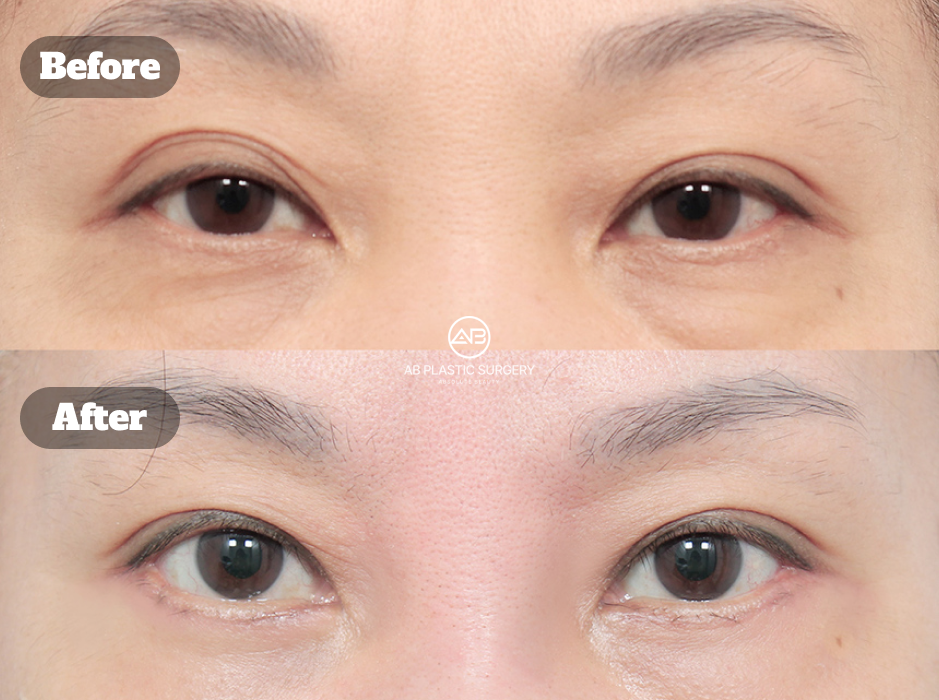
Structural eye bags typically appear as rounded bulges beneath the eyes, above the transition between the lower eyelid and cheek. They commonly involve orbital fat, the fat surrounding the eye, becoming more prominent as supporting tissues change. A tear trough—a hollow extending from the inner corner of the eye—may sit below the bulge and make it look more noticeable.
Festoons appear lower, over the cheekbone region. They can resemble a hanging fold or pouch involving loose skin and underlying muscle, sometimes accompanied by swelling. This lower position is why a person may still notice cheek puffiness even after the fat bulge within the lower eyelid has been treated.
|
Comparison point |
Lower eyelid bags |
Festoons |
|---|---|---|
|
Typical location |
Within the lower eyelid, above the eyelid-cheek transition |
Over the upper cheek and cheekbone, below the lower eyelid |
|
Main tissue changes |
Prominent orbital fat, sometimes with loose skin and associated puffiness |
Lax skin and muscle in the malar region, often with an element of swelling |
|
Common appearance |
Rounded bulges that may sit above a tear trough hollow |
A draped fold or pouch over the cheekbone, sometimes with a crepey surface |
|
Changes over time |
The structural bulge may remain visible, although accompanying swelling can fluctuate |
The fold may persist, while its swelling component can vary |
|
Treatment implication |
Lower blepharoplasty or fat repositioning may be considered after assessment |
Requires assessment of the cheek tissues and swelling; standard eye bag surgery alone may not address it |
Eye Bags vs Malar Edema vs Malar Mounds vs Festoons
When researching malar bags vs eye bags, you may encounter several overlapping terms. “Malar” refers to the cheekbone region, but each term emphasizes a different feature:
-
Lower eyelid bags: Fullness within the lower eyelid, commonly associated with protruding orbital fat.
-
Malar edema: Fluid-related swelling over the upper cheek. Swelling alone does not necessarily mean a festoon is present.
-
Malar mounds: Persistent elevations over the cheekbone that may involve tissue fullness and swelling.
-
Festoons: More pronounced hanging folds involving lax skin and muscle over the upper cheek, with or without associated edema.
In practical terms, “eye bags” usually refers to lower-eyelid fullness, “malar edema” emphasizes fluid-related cheek swelling, “malar mounds” describes persistent elevations over the cheekbone, and “festoons” generally describes more pronounced folds involving lax skin and muscle in the same region. These terms may overlap in clinical use and vary across medical publications, so treatment should be based on the tissues involved rather than the label alone.
What Causes Eye Bags, Malar Edema, and Festoons?
Eye bags commonly involve changes in the support around orbital fat, while malar edema and festoons involve the tissues over the cheekbone. Several factors can overlap, including inherited anatomy, aging, tissue laxity, and fluid accumulation. Understanding which factor contributes most helps explain why the same treatment does not suit every type of under-eye fullness.
Structural Causes of Lower Eyelid Bags
Orbital fat normally cushions the eye. As the tissues containing and supporting that fat change, it can become more prominent beneath the lower eyelid. This creates a persistent bulge that may remain visible even after a good night’s sleep.
-
Inherited anatomy: Some people develop noticeable lower eyelid bags at a younger age because of their natural fat distribution and supporting structures.
-
Age-related support changes: Changes in the orbital septum and surrounding tissues can allow fat to bulge forward.
-
Skin laxity: Loose skin can accompany the fat bulge and add folds beneath the eye.
-
Adjacent hollowing: A deeper tear trough can increase the contrast between a raised fat pad and the hollow below it, making the bag appear more pronounced.
Temporary swelling can make structural bags look larger, but it is not necessarily their underlying cause. Improving sleep or managing allergies may reduce accompanying puffiness without removing a persistent fat bulge.
Tissue Laxity and Fluid Accumulation Over the Cheekbones
The upper cheek contains tissue compartments bounded by supporting ligaments and connective structures. Fluid can accumulate in this region, contributing to malar edema. When swelling occurs alongside weakened support and lax skin or muscle, the area may develop more noticeable mounds or hanging folds.
-
Natural anatomy and inherited tendencies: The structure of the eyelid-cheek region can influence where fullness develops.
-
Aging and sun damage: Reduced tissue elasticity can make folds over the cheekbone more apparent.
-
Fluid-related changes: Allergies and other causes of swelling may accentuate existing malar fullness.
-
Previous procedures: Treatment-related changes can affect swelling and tissue behavior in the eyelid-cheek region.
Morning puffiness or changes after salty meals may indicate a fluctuating swelling component, but these observations cannot confirm festoons. Likewise, reducing temporary fluid retention may leave an established skin-and-muscle fold unchanged.
Previous Fillers and Procedures: Why Your History Matters
Previous tear trough or cheek filler is important information when assessing under-eye swelling. Hyaluronic acid filler can contribute to persistent or delayed edema in some patients, particularly in someone with pre-existing malar swelling.
However, swelling after filler is not automatically a festoon, and not every festoon is caused by filler. A clinician needs to distinguish a filler-related problem from orbital fat prominence, tissue laxity, and other causes of edema before recommending treatment. For your consultation, prepare the following where available:
-
The filler product, injection location, and approximate treatment date.
-
Whether swelling began before or after the injections.
-
Any previous filler-dissolving treatments and their effects.
-
Previous lower blepharoplasty, fat repositioning, or facial surgery.
-
Photographs showing the area before treatment and how it has changed.
Adding volume, removing fat, and tightening tissue address different problems—so identifying the cause comes before choosing an under-eye procedure.
How to Tell Whether You Have Eye Bags, Festoons, or Both
Start by observing the location of the fullness, how it changes, and whether a hollow or loose fold accompanies it. These details help you describe your concern during a consultation. They cannot establish a diagnosis or determine which procedure you need without a clinical assessment.
Festoons vs Eye Bags Self-Check: What to Look For
This checklist cannot diagnose festoons or eye bags. Use it to identify the location and behavior of the fullness so you can describe your concern more clearly during consultation. Look at the area in even lighting, with your face relaxed and without beauty filters, and note the following:
-
Location: Is the bulge within the lower eyelid, farther down over the cheekbone, or visible in both areas?
-
Fullness and hollowing: Does a rounded bulge sit above a tear trough hollow, creating a noticeable ridge or shadow?
-
Skin folds: Is there a loose, draped fold over the upper cheek, rather than fullness alone?
-
Daily variation: Does the swelling change between morning and evening, or does the contour remain similar?
-
Expression: Does the area look different when you smile? Record the change without using it as a diagnostic test.
-
Timing: Has the concern developed gradually, appeared suddenly, or become noticeable after a procedure?
-
Treatment history: Have you had tear trough filler, cheek filler, lower eyelid surgery, or filler-dissolving treatment?
The checklist has no score. Several observations can overlap, and both eye bags and festoons may be present. Rather than choosing a treatment from your answers, use them to explain which area bothers you most and how it behaves.
What a Specialist Needs to Examine
A clinical assessment considers more than the visible bulge. The specialist evaluates how the lower eyelid and upper cheek relate to each other, including:
-
The prominence of orbital fat and the depth of adjacent hollows.
-
The amount of loose skin and the support of the lower eyelid.
-
Whether upper-cheek fullness involves swelling, tissue laxity, or both.
-
Existing asymmetry, previous procedures, and any associated eye symptoms, such as dry eye or difficulty closing the eyes.
A person may have a lower eyelid fat bulge, a tear trough hollow, and a separate fold over the cheekbone. Each component needs its own treatment goal. Photographs can support an initial discussion, especially for international patients, but they cannot reliably show tissue firmness, eyelid support, or the cause of swelling. An online consultation provides preliminary guidance; the final treatment recommendation depends on an appropriate in-person examination.
When Swelling Needs Medical Assessment First
New, unexplained swelling—particularly when it appears suddenly or affects only one side—should be assessed before being treated as a cosmetic concern. Persistent swelling with irritation or a rash also warrants medical advice.
Seek urgent medical care if swelling is accompanied by reduced vision, severe eye pain, fever, a bulging eye, or difficulty moving the eye. These symptoms require assessment for an eye or medical condition before discussing elective under-eye treatment.
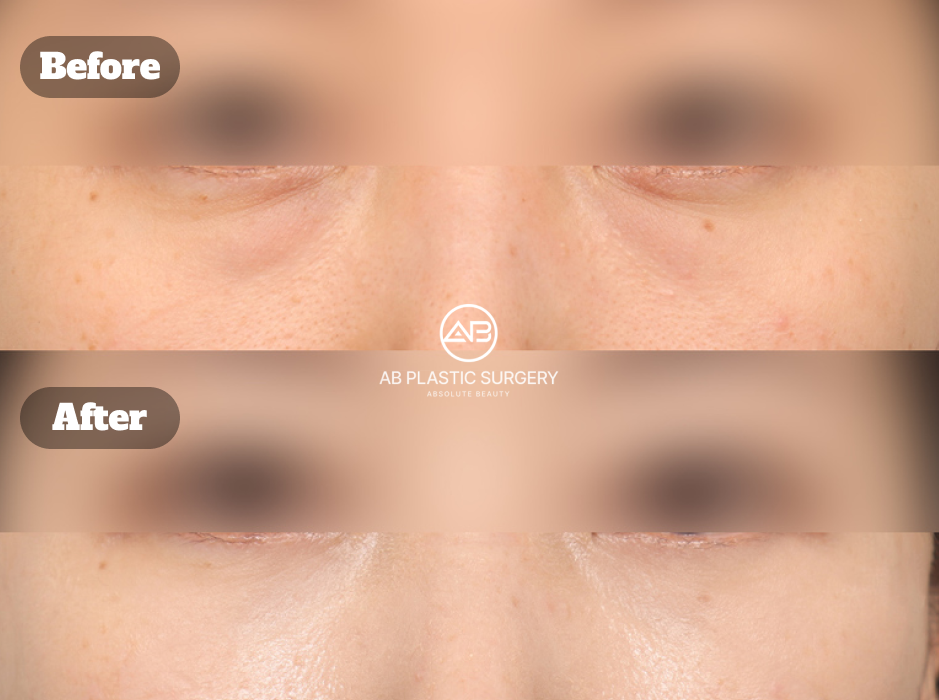
Festoons vs Eye Bags Treatment: What Each Option Can Address
There is no single “festoon vs eye bag treatment.” The appropriate option depends on whether the main problem is orbital fat, a tear trough hollow, excess lower-eyelid skin, malar swelling, or a persistent cheek fold. The first question is which part of your concern a proposed treatment can improve—and which part may remain.
Lower Blepharoplasty for Lower Eyelid Bags and Loose Skin
Lower blepharoplasty may be considered when prominent orbital fat, excess lower eyelid skin, or both contribute to a tired-looking appearance. Depending on the assessment, the surgeon may remove or reposition selected fat, address excess skin, and provide additional eyelid support when needed. An approach through the inner eyelid can address fat without an external skin incision, while an incision below the eyelashes may allow treatment of excess skin and other tissues.
A standard lower blepharoplasty does not automatically correct festoons over the cheekbone. If upper-cheek folds or malar edema are also present, their management needs to be discussed separately.
Explore lower blepharoplasty for under-eye bags and loose skin
Under-Eye Fat Repositioning for Bags and Tear Trough Hollows
When a protruding fat pad sits above an adjacent hollow, under-eye fat repositioning may help smooth the transition between them. Rather than simply removing the bulge, the procedure redistributes selected orbital fat to reduce the contrast between fullness and hollowing. Fat repositioning can be part of lower blepharoplasty; the terms do not always describe separate operations.
Repositioning orbital fat does not directly resolve fluid accumulation or a hanging fold over the cheekbone. It should not be presented as a universal treatment for malar bags or festoons.
See how under-eye fat repositioning addresses bags and tear trough hollows
Treatment Approaches for Malar Edema and Festoons
For swelling-dominant concerns, assessment begins with potential contributors, including previous filler and relevant medical conditions. If hyaluronic acid filler is contributing to edema, a clinician may consider hyaluronidase after evaluation. Dissolving filler does not necessarily correct underlying tissue laxity or unrelated swelling.
For selected cases involving skin texture or laxity, laser resurfacing or radiofrequency-based treatments may be considered. Published evidence varies by technique, and these treatments cannot be assumed to remove a substantial festoon. More pronounced folds may require a surgical approach directed at the affected cheek tissues; published techniques include direct excision and selected combinations of skin-muscle adjustment, midface lifting, and eyelid support, each with limitations such as scarring, prolonged swelling, and possible additional treatment.
These are treatment approaches described in medical literature, not confirmation that every option is offered at AB Plastic Surgery Korea. The consultation should establish the diagnosis, available procedures, and expected scope of improvement.
|
Treatment approach |
Main concern addressed |
Important limitation |
|---|---|---|
|
Lower blepharoplasty |
Lower eyelid fat prominence and, where indicated, excess skin |
Standard techniques may leave separate cheek festoons or malar edema unchanged |
|
Under-eye fat repositioning |
A fat bulge with an adjacent tear trough hollow |
Does not directly treat cheek swelling or substantial skin-and-muscle folds |
|
Management of swelling contributors |
Edema associated with an identified cause, including filler in selected cases |
May not change persistent tissue laxity or structural fat bulges |
|
Laser or radiofrequency-based treatment |
Selected skin-quality and laxity concerns |
Evidence and improvement vary; substantial festoons may persist |
|
Targeted festoon surgery |
Selected persistent folds involving upper-cheek tissues |
Requires individualized planning; residual swelling or further treatment may occur |
When Eye Bags and Festoons Coexist
If both conditions are present, the plan should identify separate goals for the lower eyelid and upper cheek. Combined treatment may be appropriate in some cases; others may benefit from addressing swelling first and reassessing before surgery. Before proceeding, ask your surgeon:
-
Which visible bulge or fold will this procedure address?
-
What fullness or swelling is likely to remain?
-
Would combined or staged treatment be more appropriate?
-
What are the risks, recovery requirements, and possibilities for additional treatment?
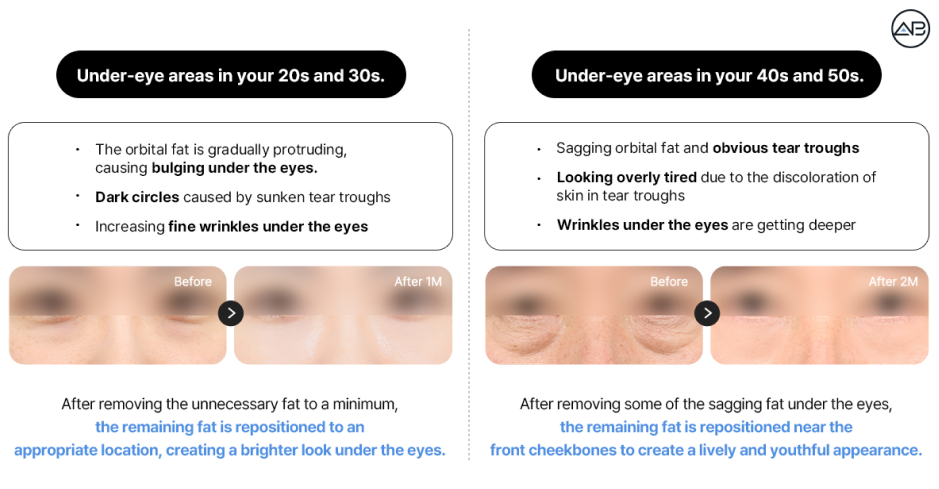
Recovery, Risks, and Realistic Results After Under-Eye Treatment
Recovery depends on the procedure, the tissues treated, and your individual healing response. Treating lower eyelid fat is different from addressing loose skin or folds over the cheekbone, so discuss both the expected improvement and how swelling may affect the appearance during recovery.
Recovery Depends on the Procedure and the Treated Area
After lower eyelid surgery, bruising and swelling can temporarily obscure the new contour, and the two sides may settle at different rates. An early photograph therefore cannot reliably show the final result. Procedures involving more extensive skin, muscle, or upper-cheek adjustment may have different recovery requirements, and malar swelling can persist after treatment even when a fold improves.
Before surgery, confirm:
-
Follow-up appointments: When the surgeon needs to examine the eyelids and treated cheek tissues.
-
Wound care: Whether external stitches require removal and how to care for the incision.
-
Activity restrictions: When you may resume exercise, makeup, contact lenses, and other usual activities.
-
Travel clearance: When the medical team considers you ready to fly and how follow-up will continue afterward.
Follow the instructions provided for your procedure, and avoid applying pressure, massaging the area, or adding cosmetic treatments unless your treating clinician recommends them.
Risks to Discuss Before Treatment
Each treatment has its own risk profile. For lower eyelid surgery and targeted festoon procedures, the consultation should cover relevant possibilities such as:
-
Persistent swelling or residual fullness: Part of the original concern may remain or require further assessment.
-
Asymmetry or contour irregularity: Differences may reflect healing, existing anatomy, or the treatment itself.
-
Dryness, irritation, or watering: Existing eye symptoms should be discussed before surgery.
-
Lower eyelid position changes: Retraction or outward turning of the eyelid may require additional management.
-
Scarring, bleeding, or infection: Risks depend on the approach and the individual patient.
-
Additional treatment: Further intervention may be needed for an unresolved concern or complication.
Sudden vision changes, severe eye pain, or rapidly increasing swelling after treatment require urgent medical assessment. Obtain clear instructions before discharge about whom to contact and where to seek urgent care.
How to Read Before-and-After Photos
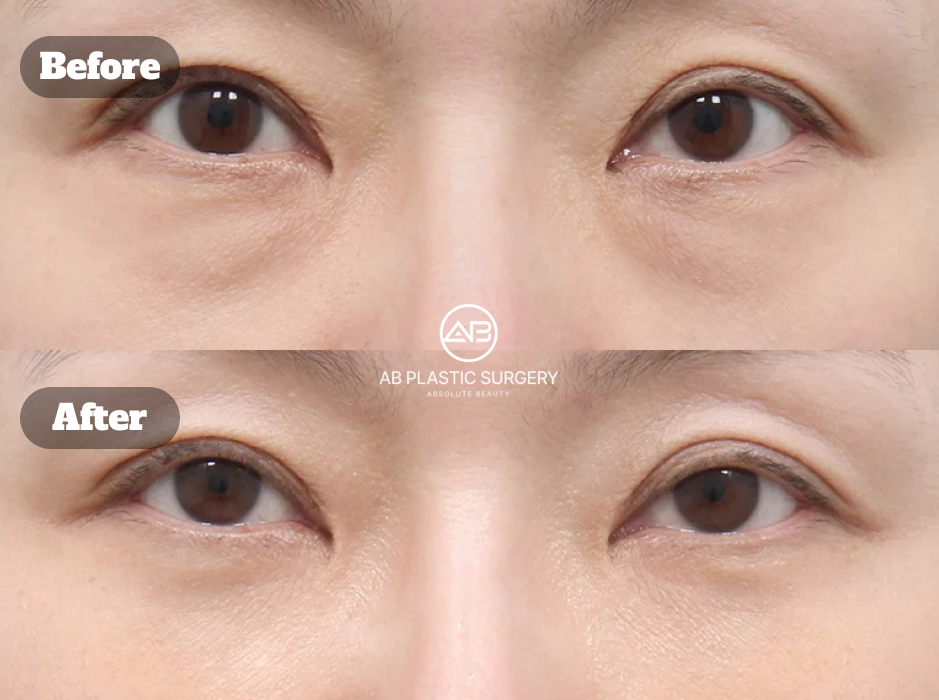
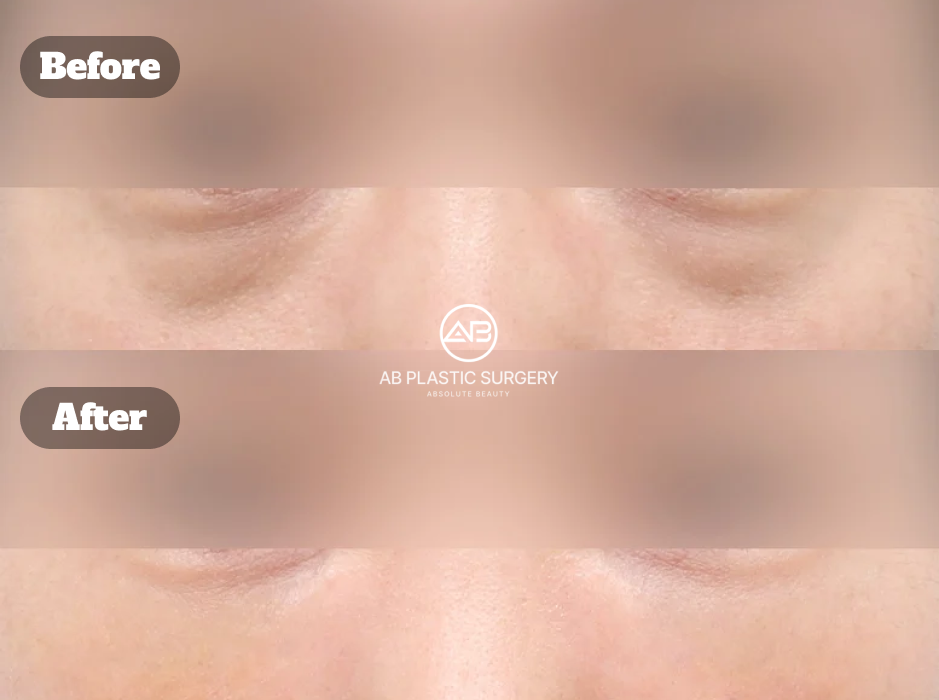
Useful comparisons show whether the treatment improved the same concern you have. A smoother lower eyelid after fat repositioning, for example, does not establish that a separate cheek festoon was treated. When reviewing photographs, check:
-
Whether the original concern was a lower eyelid bag, tear trough hollow, cheek fold, or a combination.
-
Which procedures were performed, including any combined treatments.
-
The time elapsed between treatment and the postoperative photograph.
-
Whether lighting, angle, facial expression, and makeup are comparable.
Review before-and-after photos with your treatment goal in mind
A realistic goal is improvement in the identified problem, with an understanding of what may remain. Agree on that goal with your surgeon before proceeding, rather than expecting every form of under-eye fullness to disappear after one procedure.
Frequently Asked Questions About Festoons vs Eye Bags
What is the main difference between festoons and eye bags?
Lower eyelid bags commonly involve prominent orbital fat within the lower eyelid. Festoons sit farther down over the upper cheek and involve lax skin and muscle, sometimes with swelling. Location is a useful starting point, but an examination is needed to identify the tissues involved and select an appropriate treatment.
Are malar bags, malar edema, and festoons the same thing?
These terms overlap, but they emphasize different features. Malar edema describes fluid-related swelling over the cheekbone. Malar bags or mounds describe fullness in that region, while festoons generally refer to more pronounced hanging folds involving skin and muscle. Terminology varies, so the treatment decision should focus on the underlying swelling, tissue fullness, and laxity.
Can you have eye bags and festoons at the same time?
Yes. A lower eyelid fat bulge can coexist with a separate fold or swelling over the cheekbone. Each component needs its own assessment and treatment goal. Improving the lower eyelid contour does not automatically improve the upper-cheek concern, and combined or staged treatment may be discussed.
Does lower blepharoplasty remove festoons?
Standard lower blepharoplasty primarily addresses lower eyelid fat and, where indicated, excess skin. It may leave festoons over the cheekbone unchanged. Selected extended or combined surgical approaches may address cheek tissues, but these require separate planning and should not be assumed to be part of routine eye bag surgery.
Can under-eye fat repositioning treat malar bags?
Under-eye fat repositioning may improve a lower eyelid fat bulge and an adjacent tear trough hollow. It does not directly treat fluid accumulation or substantial skin-and-muscle folds over the cheekbone. If the term “malar bags” is being used to describe your concern, ask the clinician which tissues are involved before considering fat repositioning.
Can under-eye filler make malar swelling worse?
Hyaluronic acid filler can contribute to persistent or delayed swelling in some patients, including those with pre-existing malar fullness. However, not all cheek swelling is filler-related. Share your injection history before further treatment. If filler is contributing to edema, a clinician may consider dissolving it, although this will not necessarily correct underlying tissue laxity.
Can festoons improve without surgery?
Some concerns may improve when an identified swelling contributor is addressed. Selected laser or radiofrequency-based treatments may also help certain skin-quality or laxity concerns, but evidence and outcomes vary. A substantial hanging fold may persist despite nonsurgical treatment. Assessment is needed to distinguish potentially reversible swelling from established tissue laxity.
Considering Treatment for Eye Bags or Festoons in Korea
Before booking under-eye treatment in Korea, clarify the concern being assessed, the proposed procedure, and the follow-up schedule. A preliminary consultation can help you prepare, but photographs alone cannot confirm whether you need treatment for lower eyelid bags, festoons, or both.
What to Send for an Initial Online Consultation
Provide clear photographs in even lighting, without filters or heavy makeup: a relaxed front view and angled views showing the transition between the lower eyelid and upper cheek. A photograph with a gentle smile may help illustrate changes with expression. Alongside your photographs, explain:
-
Your main concern and its history: Identify the specific bulge, hollow, fold, or swelling, when it appeared, and whether it changes during the day.
-
Previous procedures: Include lower eyelid surgery, tear trough or cheek filler, and filler-dissolving treatment.
-
Relevant health information: Mention eye conditions, dry-eye symptoms, medical conditions, medications, and allergies.
-
Travel availability: Share your possible dates and any limits on your stay.
The final recommendation may change after an in-person assessment.
Start with a free one-to-one online consultation
What Determines the Cost of Under-Eye Treatment?
Lower blepharoplasty, under-eye fat repositioning, and treatment directed at festoons are not interchangeable price categories. A quotation should specify which tissues and concerns the proposed procedure addresses. Factors that may affect it include:
-
The surgical approach and whether fat is removed, repositioned, or treated alongside excess skin.
-
Whether additional eyelid support or separate cheek-tissue treatment is recommended.
-
Previous surgery or filler that makes assessment and treatment more complex.
-
The anesthesia plan, preoperative examinations, medications, and follow-up services included.
Request an itemized quotation in USD. If festoons are your main concern, ask whether the quoted procedure specifically addresses them rather than assuming an eye bag surgery estimate covers the same treatment. If the plan changes after the in-person consultation, ask for an updated explanation of the scope and charges before proceeding.
Scheduling Follow-Up Visits and Your Return Flight
Plan your stay around medical appointments as well as the procedure itself. Depending on the approach, you may need preoperative examinations, postoperative checks, and stitch removal before departure. Confirm with the treating team:
-
Recommended stay: How long you should remain nearby for the planned treatment.
-
Return-flight clearance: Have your readiness to travel assessed rather than relying on a generic recovery timetable.
-
Communication and follow-up: Language support, how to report concerns during your stay, and where to seek in-person care after departure.
Keep your itinerary flexible until the treatment and follow-up requirements are clear.

How AB Plastic Surgery Korea Assesses Under-Eye Bags and Festoons
Choosing a clinic for under-eye treatment involves both procedure-specific assessment and the systems supporting your care. For patients comparing festoons vs eye bags, the consultation should establish which tissues need treatment, what the proposed procedure can improve, and how anesthesia, recovery, and follow-up will be managed.
Lower Blepharoplasty–Related Academic Activity
AB Plastic Surgery’s published academic information documents participation in PRS Korea 2025, including a presentation on facial lifting and lower blepharoplasty. This is relevant to assessing the relationship between the lower eyelid and surrounding facial tissues.
Academic participation provides context for the medical team’s professional activity. It does not, by itself, establish a particular patient’s suitability for surgery or demonstrate outcomes for festoon treatment. During consultation, ask who will perform your procedure and how their experience relates to your specific concern.
Anesthesia Monitoring and Surgical Safety Systems
According to AB Plastic Surgery’s published safety information, the hospital describes the following systems. The anesthesia method for an individual patient is determined according to the procedure and preoperative assessment.
-
Preoperative checks: Assessment of medical history, medications, and relevant examination findings before surgery and anesthesia.
-
Real-time monitoring: Observation of the patient during surgery and recovery by on-site anesthesia specialists.
-
Operating room CCTV: Part of the hospital’s surgical transparency system.
Ask the team to explain how these systems apply to your planned under-eye procedure, including the recovery checks required before discharge.
Explore AB’s anesthesia and surgical safety systems
AB Plastic Surgery’s Published Zero-Accident Record
According to AB Plastic Surgery’s published safety content, the hospital has recorded 0 medical accident cases since opening in September 2020. This is a hospital-reported historical record, not a guarantee of future safety. It does not mean that postoperative swelling, bleeding, infection, or other complications cannot occur, so your consultation should still cover the risks of the proposed procedure and how concerns will be managed.
The treatment decision begins with identifying your main concern. Establish whether it involves lower eyelid fat, a tear trough hollow, cheek swelling, tissue laxity, or several components, then agree on a plan with clearly explained benefits, limitations, and follow-up requirements.