Title
Lower Blepharoplasty vs Midface Lift: When Is Under-Eye Surgery Good Enough?Date
2026-11-04Views
19
AB Blog
Lower Blepharoplasty vs Midface Lift: Is Under-Eye Surgery Alone Enough?
Quick answer: Lower blepharoplasty primarily treats lower eyelid bags and, depending on the technique, excess skin and tear trough contour. A midface lift repositions descended cheek tissue. A deep tear trough alone does not establish the need for a midface lift. Assessment may instead identify a role for fat repositioning, volume restoration, eyelid support, or a combined approach. The appropriate plan depends on an in-person examination.
Table of Contents
1. Why Under-Eye Concerns Are Not Always an Eyelid Problem
2. What Lower Blepharoplasty Treats, and What It Cannot Change
3. What a Midface Lift Treats and How It Differs From a Facelift
4. Lower Blepharoplasty vs Midface Lift: Side-by-Side Comparison
5. When Is Lower Blepharoplasty Alone Good Enough?
6. Frequently Asked Questions About Lower Blepharoplasty and Midface Lift
7. Risks and Recovery: What to Expect After Each Approach
8. Planning Under-Eye Surgery in Korea as an International Patient
Tired-looking eyes, puffy lower lids, and a shadowed groove beneath the eyes are among the most common reasons people start researching facial surgery. Many land first on lower blepharoplasty, often called lower eyelid surgery or under-eye bag surgery. Others come across the midface lift and wonder whether it is the more complete answer. The useful question is not which operation sounds more advanced, but where your under-eye concern actually begins: in the eyelid, in the cheek, or in both.
Patient expectations are also shifting. According to the RealSelf Real Talk Report for Q1 2026, page views for eyelid surgery rose 17% compared with the previous quarter, and the report describes a growing preference for a “refreshed, not done” appearance. The same report notes that more patients now arrive at consultations carrying AI-generated analyses of their faces, which surgeons say can reflect algorithmic ideals rather than clinical reality. That is why this guide explains the principles behind the decision, while the final plan always rests on an in-person examination.
Why Under-Eye Concerns Are Not Always an Eyelid Problem
The lower eyelid and the cheek form a single aesthetic unit called the midface, and the way they blend into each other largely determines whether the eyes look rested or tired. A review of midface rejuvenation published in the Archives of Aesthetic Plastic Surgery by a Seoul-based surgeon describes the goal of treatment as restoring harmony between the lower eyelid and the anterior cheek.
The Lid-Cheek Junction and the Tear Trough
The tear trough is the groove that runs diagonally from the inner corner of the eye along the border between the lower eyelid and the cheek. In a youthful face, this border is smooth and the cheek flows up into the lower lid in one gentle curve. With time, the cheek fat pad can lose volume and slide downward, supporting ligaments loosen, and the groove becomes more defined. The lower eyelid may also look longer because the cheek no longer lifts it from below.
Common Signs of Under-Eye and Midface Aging
Under-eye aging rarely shows up as a single problem. Most patients notice a combination of the following:
-
Bulging under-eye fat: the “bags” that make the lower lid look puffy.
-
Loose lower eyelid skin: fine creasing or a crepey look that deepens with expression.
-
A deep tear trough or hollow: a shadowed groove that persists even after a full night’s sleep.
-
A long-looking lower eyelid: the distance between the lash line and the top of the cheek seems to increase.
-
A flattened or drooping cheek: less fullness at the apple of the cheek and early deepening around the nose and mouth.
Not Every Under-Eye Concern Has a Surgical Answer
Dark circles caused by skin pigmentation or visible blood vessels, fluid retention that changes through the day, and allergy-related puffiness are different from structural aging. Surgery changes structure: fat, skin, muscle, and the position of the cheek. It does not change skin color. Separating structural concerns from pigment or fluid concerns is one of the first things a surgeon does during an assessment.
What Lower Blepharoplasty Treats, and What It Cannot Change
Lower blepharoplasty is a surgical procedure on the lower eyelid designed to address the tissues that create puffiness and a tired look: herniated fat, excess skin, and a weakened supporting muscle. As a form of under-eye bag surgery, it is among the most requested blepharoplasty procedures for people who feel their lower lids make them look older than they feel.
Two Main Approaches: Transconjunctival and Transcutaneous
Surgeons generally approach the lower eyelid in one of two ways, and the choice depends on whether the main problem is fat, skin, or both.
-
Transconjunctival approach: the incision is made on the inner surface of the lower eyelid, so there is no external skin incision. It suits patients whose main concern is under-eye fat with relatively good skin quality, and it is also used when fat is repositioned into the tear trough rather than simply removed.
-
Transcutaneous (subciliary) approach: the incision is placed just beneath the lash line, which allows excess skin and muscle to be addressed along with fat. It is chosen when loose skin is a significant part of the picture.
Fat management has also evolved. Rather than removing as much fat as possible, which can leave a hollow look, many surgeons now preserve or reposition fat so it softens the junction between the lid and cheek. This is why two patients who both have “lower blepharoplasty” can end up with quite different surgical plans.
What Lower Blepharoplasty Does Well
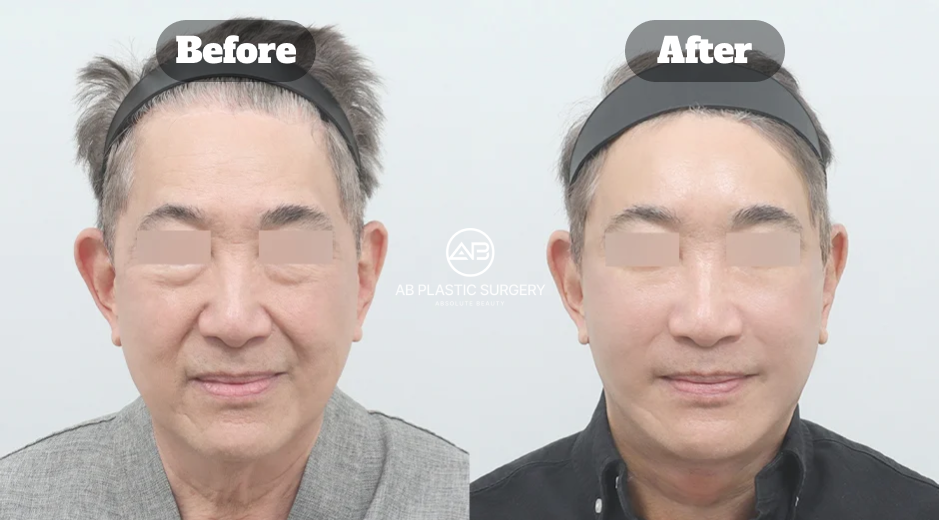
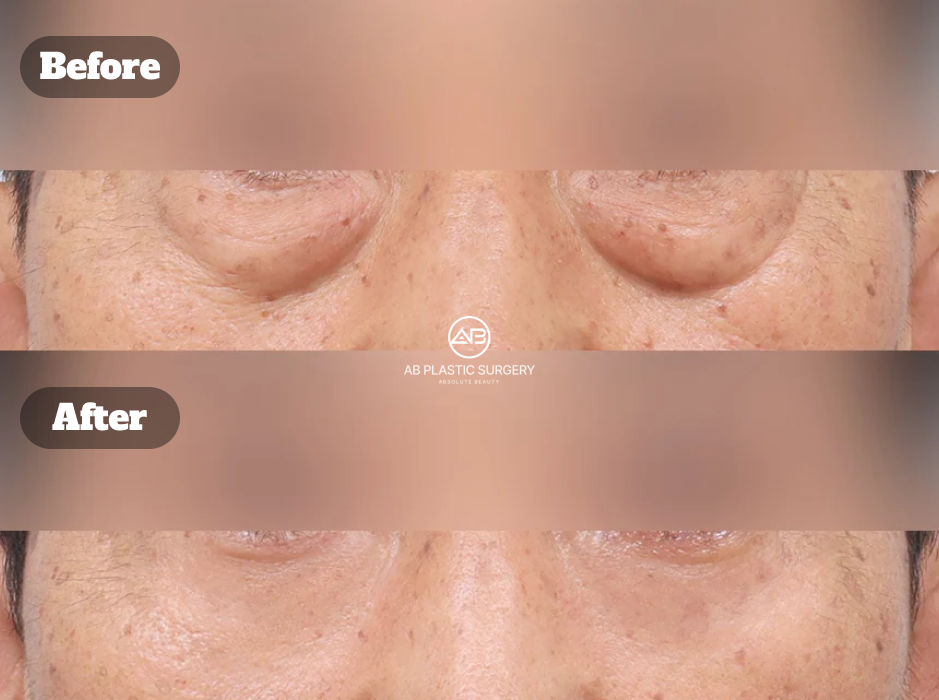
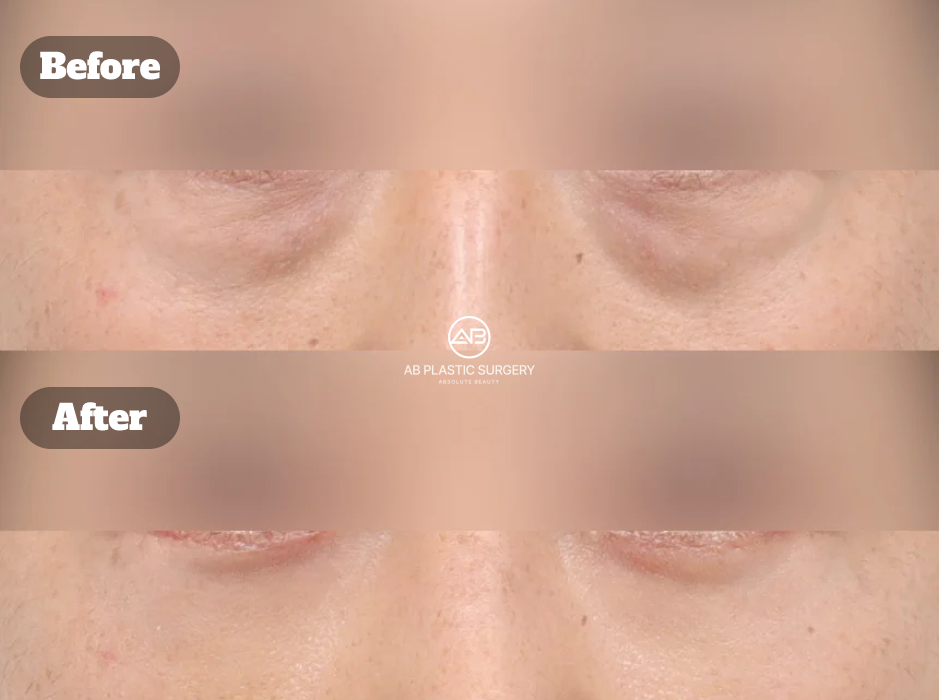
Lower blepharoplasty is most effective when the cheek is still in a good position and the problem lies mainly in the eyelid itself. It can reduce true fat bulging, tighten mildly loose skin, and refine the contour of the lower lid. For younger patients with hereditary under-eye bags, it is often the entire solution because the cheek has not yet descended.
What Lower Blepharoplasty Cannot Change on Its Own
Understanding the limits is as important as understanding the benefits. On its own, lower blepharoplasty does not:
-
Lift a cheek that has descended, so a tear trough driven by midface sagging may remain after the bag is treated.
-
Replace volume lost in the cheek or the tear trough area, unless fat repositioning or grafting is added to the plan.
-
Change skin pigmentation, so dark discoloration can look the same after surgery.
-
Reliably change a long-looking lower eyelid when reduced cheek support is part of the cause.
What About Fillers and Non-Surgical Options?
Hyaluronic acid filler can soften a mild tear trough hollow, but it does not remove or reposition herniated fat, so true bags remain. Filler can also look heavy or swollen when the underlying problem is cheek descent, because it adds volume to a structure that may actually need repositioning. Regenerative options such as PRP and PRF are drawing growing interest. The RealSelf Q1 2026 report quotes a facial plastic surgeon who describes them as useful evidence-based alternatives for the under-eye area but not true volumizers for a deep tear trough, with several sessions often needed. For mild concerns they can be reasonable first steps, while structural bulging and descent are generally addressed surgically.
For readers who are also weighing the upper eyelid, our guide on choosing between upper and lower blepharoplasty in Korea explains how the two procedures differ.
What a Midface Lift Treats and How It Differs From a Facelift
A midface lift repositions descended soft tissue of the cheek upward and outward. Its goals are to restore cheek fullness, soften the transition between the lower eyelid and the cheek, and, in suitable patients, improve the contour of the tear trough. Because it works on the cheek rather than only on the eyelid, it addresses a different layer of the under-eye problem.
What a Midface Lift Is Designed to Improve
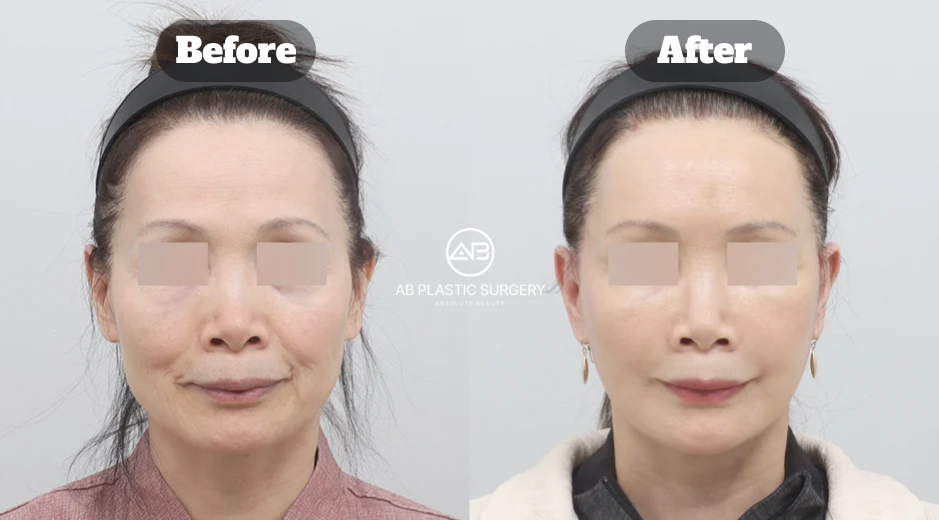
A midface lift is considered when the aging pattern involves cheek descent as well as eyelid changes. Typical goals include a smoother lid-cheek junction, a less pronounced groove beneath the eye, a shorter-looking lower eyelid, and a more balanced curve from the lower lid into the cheek. In selected patients, surgeons plan it alongside lower blepharoplasty so that the eyelid and cheek are treated in a coordinated way.
Common Surgical Approaches
There is no single “best” midface lift. Surgeons choose from several techniques depending on how far the cheek has descended, the patient’s anatomy, and the surgeon’s experience:
-
Through the lower eyelid: the cheek tissue is lifted through the same transconjunctival or subciliary incision used for lower blepharoplasty, which keeps scars hidden at the lash line or inside the lid.
-
Endoscopic or temple-based approaches: incisions placed in the hairline allow the cheek to be lifted without working directly beneath the eyelid.
-
Deeper-plane techniques: tissue is released and repositioned along the cheekbone, which may suit more advanced descent.
For patients with only mild midface descent, some surgeons describe an extended skin-muscle lower blepharoplasty as an alternative to a formal midface lift. It is intended to address skin laxity, tear trough deformity, and mild cheek ptosis with less downtime, and it is meant for mild cases rather than significant descent.
Eyelid Support vs Cheek Lift: Two Different Roles
Eyelid support and cheek lifting are often discussed together, but they are not the same step. Techniques such as canthopexy or a tarsal sling support the position of the lower eyelid margin, particularly at the outer corner. A midface lift repositions cheek tissue beneath the eyelid. Depending on the patient, a surgeon may use eyelid support alone, a cheek lift alone, both together, or neither. The choice depends on lid tone, cheek position, and the technique used for the blepharoplasty.
Midface Lift vs Facelift: The Difference in Scope
A midface lift is not the same as a facelift. A facelift mainly addresses the lower face and neck, including jowls and jawline laxity, while a midface lift focuses on the cheek and the lid-cheek junction. Patients with more widespread sagging sometimes need both areas assessed, and the right plan depends on where the descent is most noticeable. If your concerns extend beyond the cheek toward the jawline, our comparison of midface lift vs full face lift can help you understand the difference in scope.
Lower Blepharoplasty vs Midface Lift: Side-by-Side Comparison
The table below summarizes how the two approaches differ in what they treat and what they involve. These are general comparisons, and an individual plan may include elements of one, both, or neither.
|
Factor |
Lower Blepharoplasty |
Midface Lift |
|---|---|---|
|
Main area treated |
Lower eyelid: fat, skin, and muscle |
Cheek tissue and the lid-cheek junction |
|
Best-matched concerns |
Under-eye bags, mildly loose lower lid skin |
Cheek descent, flattened cheek contour, a long-looking lower lid |
|
What it does not reliably treat |
Cheek descent, volume loss, skin pigmentation |
True fat bags and loose lower eyelid skin on its own, skin pigmentation |
|
Cheek position |
Not lifted |
Repositioned upward and outward |
|
Typical approach |
Inside the lower lid or just below the lash line |
Through the lower lid, the temple or hairline, or a deeper-plane technique |
|
May be combined? |
In selected patients, with midface support or other additions |
In selected patients, with lower blepharoplasty |
|
Relative recovery |
Generally shorter |
Generally longer, especially when combined |
|
Role in lid position |
Requires careful skin removal and support planning |
Can reduce downward tension on the lid in selected patients |
The two are not rival procedures. They address different layers of the same area, and a surgeon may recommend one, the other, or a combination after examining the eyelid and cheek together. Pricing for both is shown separately in the cost section further below.
When Is Lower Blepharoplasty Alone Good Enough?
Under-eye surgery alone is good enough when the lower eyelid is the real source of the concern and the cheek is not contributing meaningfully to it. The framework below reflects the factors surgeons typically weigh. It is a way to prepare for a consultation, not a self-diagnosis.
Lower Blepharoplasty Alone Is Often Reasonable When
-
The main complaint is a visible bulge of under-eye fat, with or without mild extra skin.
-
The cheek still has good volume and sits high on the cheekbone.
-
The tear trough is absent or only mildly visible.
-
The surgeon’s assessment of lower eyelid tone and position shows no significant laxity.
-
You have not had previous lower eyelid surgery, and you have no dry eye or thyroid-related eye condition.
-
The bags are hereditary and appeared at a younger age, before broader facial aging.
A Deep Tear Trough Does Not Automatically Mean a Midface Lift
A deep tear trough is a sign to look more closely, not a conclusion. Depending on the cause, a surgeon may consider one or more of the following:
-
Fat repositioning: moving under-eye fat into the groove to soften the transition.
-
Volume restoration: using filler or fat grafting to replace lost volume.
-
Eyelid support: techniques that stabilize the position of the lower lid margin.
-
Midface lifting: repositioning cheek tissue when descent is a significant cause.
-
A combination of the above, tailored to the findings.
When Midface Support May Be Considered
The following findings may lead a surgeon to evaluate whether cheek support belongs in the plan. None of them establishes the need for a midface lift on its own:
-
A flattened or descended cheek together with a deep groove beneath the eye.
-
A long-looking lower eyelid with a visible step between the lid and the cheek.
-
A double-curve contour of lid bulge, hollow, and cheek mound.
-
Reduced lower lid tone or elasticity identified at examination.
-
Early deepening around the nose and mouth that suggests the cheek is sliding downward.
Situations That Need a Careful, Separate Evaluation
-
Previous lower blepharoplasty: if the lower lid appears pulled down or the white of the eye shows beneath the iris, the plan needs a dedicated assessment. In some of these cases midface lifting is used to relieve tension on the lid.
-
Dry eye or thyroid eye disease: eye health influences which approach is appropriate and how much skin can be treated.
-
Widespread facial sagging: when jowls and the jawline are involved, a broader lifting plan may be more appropriate than eyelid and cheek work alone.
What the Surgeon Evaluates at Consultation
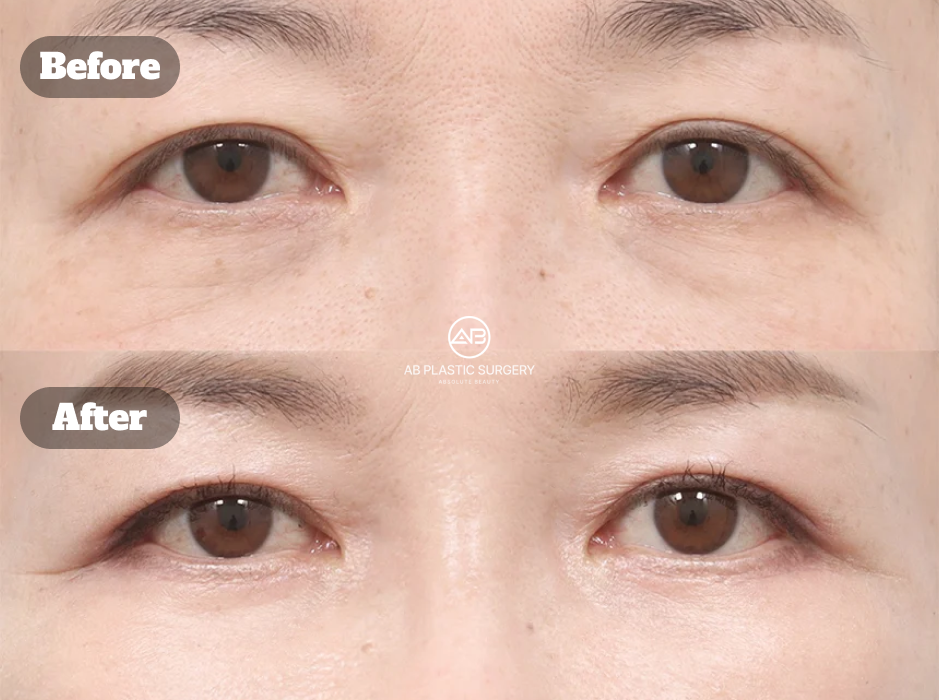
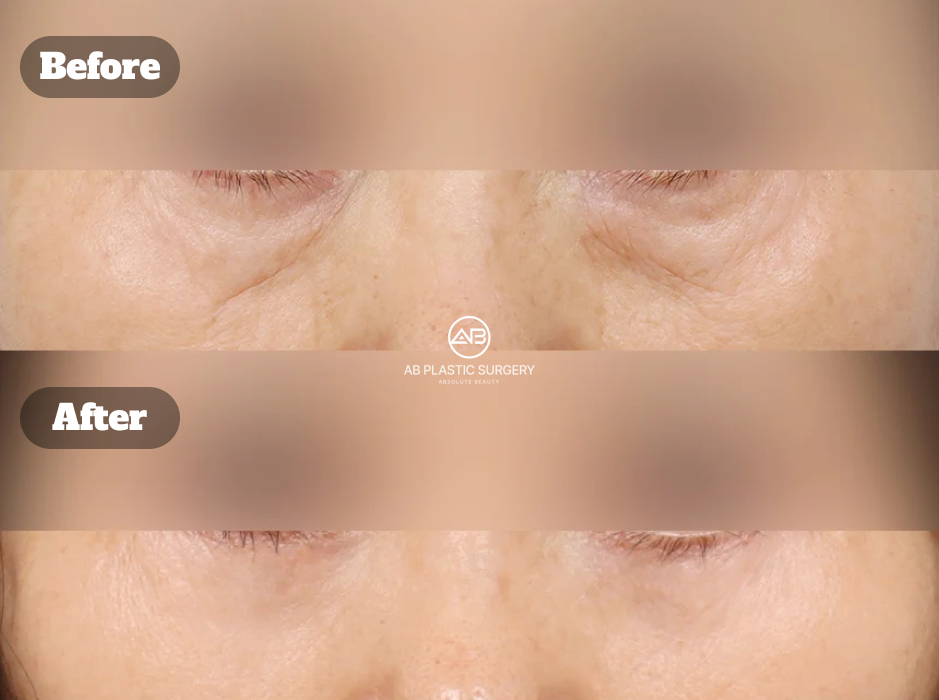
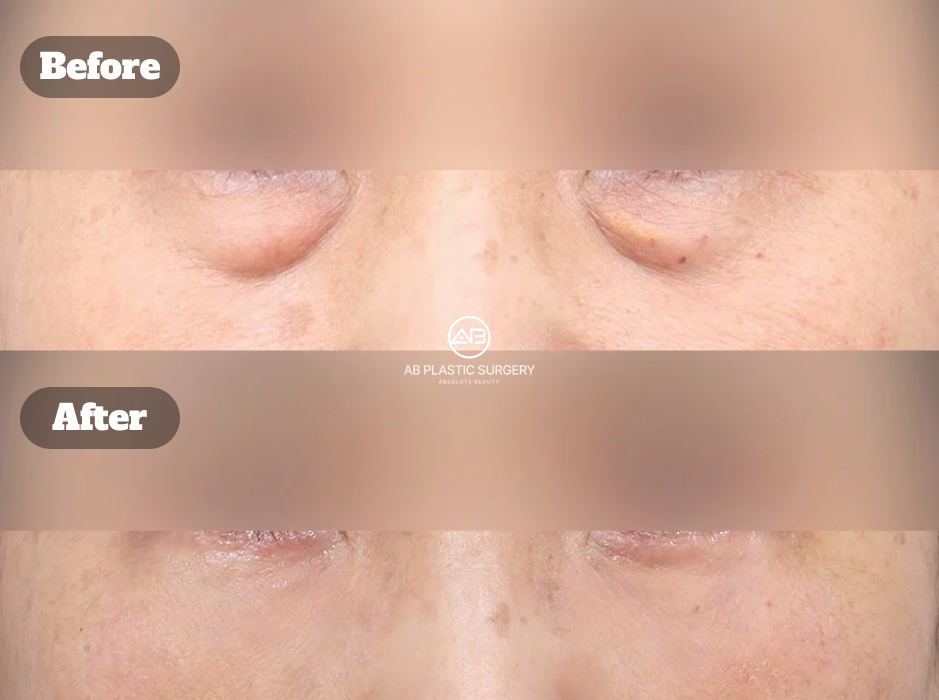
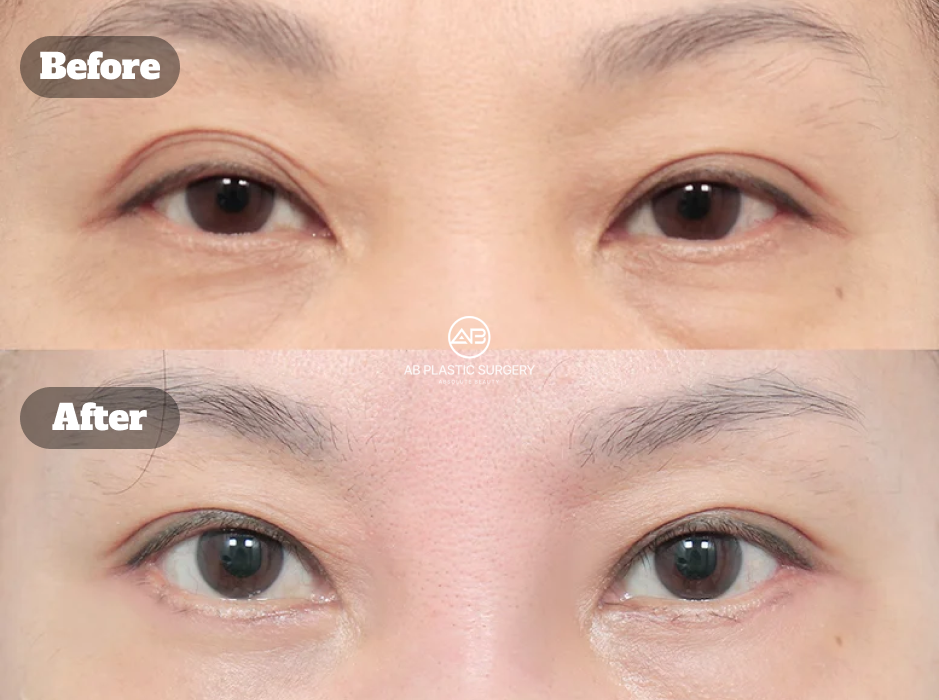
An accurate recommendation comes from examining the face at rest and in motion, which photos and apps cannot fully capture. A surgeon will typically assess lower lid position and tone, the amount and location of fat bulging, cheek volume and projection, the depth of the tear trough, skin quality, and overall eye health. Reviewing before-and-after cases at AB Plastic Surgery can help you understand how results are presented, although individual outcomes vary with anatomy, technique, and healing.
Frequently Asked Questions About Lower Blepharoplasty and Midface Lift
What is the difference between lower blepharoplasty and a midface lift?
Lower blepharoplasty treats the lower eyelid itself, addressing herniated fat and, depending on the technique, loose skin and muscle laxity. A midface lift repositions descended cheek tissue. The two address different layers of the same area and may be combined in selected patients, depending on the findings at examination.
Is lower blepharoplasty enough if I only have under-eye bags?
Often, yes. When the concern is mainly fat bulging and mild skin laxity, and the cheek still sits in a good position with a minimal tear trough, lower blepharoplasty alone can be a well-matched solution. A surgeon confirms this by examining lid tone and position, cheek volume, and tear trough depth in person.
Can lower blepharoplasty fix a deep tear trough?
It depends on the cause. Tear trough hollowing that comes from volume loss or from a descended cheek is not fully corrected by removing fat alone. Options include repositioning fat into the groove, restoring volume, supporting the lower eyelid, or lifting the cheek, sometimes in combination. Which one fits depends on the depth of the groove and on how much the cheek has descended.
Does combining a midface lift with lower blepharoplasty make recovery longer?
Generally, yes. Combined procedures involve more tissue repositioning, so swelling and bruising may last somewhat longer than with lower blepharoplasty alone. A study of East Asian patients also reported longer swelling and more conjunctival swelling (chemosis) with a midface-lifting technique, alongside higher satisfaction. Your surgeon will outline the expected timeline for your specific plan.
Can fillers or regenerative treatments replace under-eye surgery?
For mild hollowing, fillers or PRP and PRF can be reasonable non-surgical options. They do not remove or reposition under-eye fat, and they do not lift a descended cheek. When bulging fat or midface descent is the main problem, surgery tends to address the cause more directly.
What if my lower eyelid looks pulled down after a previous blepharoplasty?
A lower eyelid that sits too low or shows more of the white of the eye after surgery needs a dedicated evaluation. In selected cases, surgeons use a midface lift, sometimes together with eyelid support techniques, to reduce downward tension on the lid. Because every case differs, an in-person assessment is essential before any corrective plan is chosen.
Risks and Recovery: What to Expect After Each Approach
Every surgery carries risk, and the eyelid is a delicate area. Knowing the main risks, how surgeons reduce them, and what recovery generally looks like helps you plan with realistic expectations.
General Risks of Eyelid Surgery
The American Society of Plastic Surgeons lists the following among possible eyelid surgery risks. They apply to lower blepharoplasty and are relevant when it is combined with other procedures:
-
Anesthesia risks, bleeding from the incision lines, and infection.
-
Swelling and bruising, dryness of the eyes, and sensitivity to sun or bright light.
-
Difficulty closing the eyes, changes in skin sensation, and numbness of the eyelashes.
-
Ectropion (an outward rolling of the lower eyelid) and lid lag (a pulling down of the lower eyelid, which is often temporary).
-
Unfavorable scarring, asymmetry, and the possible need for revision surgery.
-
Temporary or even permanent change in vision, and a very rare chance of blindness.
Serious vision-related complications are rare, but they are the reason eye health is assessed before surgery and why patients are told to report severe pain, sudden swelling, or vision changes immediately. A surgeon will discuss how these risks apply to your own case before you consent to surgery.
Lid Position Problems and How Surgeons Reduce Them
The risks most specific to the lower eyelid involve its position: ectropion, scleral show (more of the white of the eye visible beneath the iris), and lower lid retraction. These are more likely when too much skin is removed or when the lid has too little support. A 2025 study in Aesthetic Plastic Surgery of extended lower blepharoplasty with midface rejuvenation reported it as safe and effective for patients with extensive skin laxity and midface aging, while emphasizing that the amount of skin excised must be carefully judged to avoid these complications.
Surgeons use several strategies to protect lid position, including conservative skin removal, techniques that support the outer corner of the lid such as canthopexy, and, in selected patients, midface lifting. A 2015 study in the Aesthetic Surgery Journal on 40 patients found that adding a tarsal sling reduced scleral show after lower blepharoplasty, although lid position continued to settle gradually over about two years. Published reports have also described cheek-midface lifting as part of correcting lower eyelid malposition after earlier surgery that removed too much tissue. Together, this research shows why surgeons assess the eyelid and cheek as a connected system.
A General Recovery Timeline
Recovery varies by technique, anatomy, and whether a midface lift is added. The ranges below are general planning guides, and your surgeon’s instructions always take priority.
-
Days 1 to 3: swelling and bruising are most noticeable, and the eyes may feel tight, dry, or watery. Cold compresses and head elevation are commonly recommended.
-
Days 5 to 7: if external stitches were used, they are generally removed around this time. Bruising begins to shift in color and fade.
-
Weeks 1 to 2: most visible bruising fades, and many patients feel comfortable in public with makeup after about 10 to 14 days for lower blepharoplasty alone.
-
Weeks 2 to 4: a combined lower blepharoplasty and midface lift often needs about two to three weeks before swelling is socially manageable. Contact lenses and strenuous exercise are commonly avoided for roughly two to four weeks.
-
Months 1 to 3: residual swelling, tightness, or mild unevenness gradually softens as tissues settle.
-
Months 3 to 6: the final contour becomes clearer, with midface lifting often taking the longer end of this range.
Lower eyelid tissue tends to hold fluid longer than the upper eyelid, so lingering puffiness in the first weeks is common. Following aftercare instructions and attending scheduled check-ups are the most reliable ways to support healing.
What Research Says About East Asian Patients
A retrospective study by Lee, Cha, and Ko in Plastic and Reconstructive Surgery (2023) reviewed East Asian patients who underwent midface rejuvenation through a lower blepharoplasty approach between 2013 and 2020. It compared a technique combining deep nasolabial fat lifting with lower blepharoplasty and fat transposition. The deep fat lift group reported significantly higher satisfaction and lower recurrence of tear trough and fat bulging, but also longer swelling and more chemosis. The study illustrates a trade-off patients may face: more extensive correction was associated with lower recurrence in that study, at the cost of a somewhat slower recovery. It is one retrospective study, and results for an individual depend on anatomy and technique.
Planning Under-Eye Surgery in Korea as an International Patient
For international patients, choosing between lower blepharoplasty and midface lift is only part of the decision. Planning travel, recovery, and follow-up care around the procedure matters just as much, because under-eye surgery needs time to heal before the final result can be judged.
Consultation and Treatment Planning
A good plan begins with a consultation that evaluates your lids, cheeks, skin quality, and eye health together. International patients can usually begin with photos and an online inquiry, then confirm the final plan at an in-person assessment before surgery. It is worth asking which technique is recommended for your anatomy and why, whether eyelid support or midface lifting is part of the plan, how skin removal will be managed to protect lid position, and what follow-up schedule applies. Treatment plans vary by patient.
Planning Your Stay: Four Separate Questions
Length of stay, stitch removal, flight readiness, and final recovery are different milestones, and they should not be read as one number. The AB Plastic Surgery medical team sets the stay and follow-up schedule based on your surgical plan and how you are healing.
-
Stitch removal: if external stitches are used, they are generally removed around 5 to 7 days after surgery. Transconjunctival approaches may not need external stitches.
-
Length of stay in Korea: a commonly cited planning range is about 7 to 10 days after lower blepharoplasty alone and about 10 to 14 days when combined with a midface lift. Confirm the schedule for your plan during consultation.
-
Flying home: your surgeon clears you to travel after reviewing your early recovery, usually at a post-operative check-up.
-
Final result: contour continues to settle over several months, so the final look is assessed well after you return home. Ask about remote follow-up arrangements.
Safety Systems and Credentials at AB Plastic Surgery
When surgery involves anesthesia, patients often want to understand how safety is managed. AB Plastic Surgery’s published safety information describes the following systems, with protocols that may vary depending on the procedure and the patient’s condition:
-
Preoperative checks and cross-check processes before surgery.
-
Real-time monitoring systems during surgical procedures.
-
An on-site anesthesiology and pain medicine specialist overseeing anesthesia for applicable procedures.
-
Postoperative observation and follow-up care processes after surgery.
AB Plastic Surgery has received KAHF accreditation for systems serving international patients, including patient safety management, infection control, and emergency response protocols. It has also been designated by the Ministry of Justice as an Excellent Medical Tourism Provider for international patients. On the academic side, AB Plastic Surgery medical staff presented on face lift and lower blepharoplasty considerations at PRS Korea 2025. According to AB Plastic Surgery’s published safety content, the clinic presents a no-accident record since opening in September 2020.
These credentials and records describe hospital systems and academic activity. They do not guarantee a surgical outcome, and they do not mean that surgery is risk-free. Their value is that they give you concrete points to ask about and compare during consultation. You can review each specialist’s background on the AB Plastic Surgery medical team page before your visit.
Cost Reference for Under-Eye Surgery
Cost is often the next question once you understand which approach may fit. The table below lists the starting prices shown in AB Plastic Surgery’s published price guide. Note that the second line is a combined procedure, not a midface lift on its own.
|
Procedure |
Published starting price |
|---|---|
|
Lower blepharoplasty |
USD 1,870 |
|
Lower blepharoplasty + midface lifting |
USD 4,490 |
These are starting figures in US dollars. The final amount depends on the surgical plan, the technique, whether additional procedures are included, and exchange rates at the time of booking. Because the right plan depends on your anatomy, the most reliable way to get an accurate quote is a personalized consultation. You can request details through the price inquiry page.
Whether lower blepharoplasty alone is enough comes down to where the concern originates. If the lower eyelid is the main source and the cheek is not contributing, focused under-eye surgery can be a reasonable and efficient choice. If the cheek has descended or the lid needs more support, a surgeon may recommend fat repositioning, volume restoration, eyelid support, midface lifting, or a combination. An in-person examination is the way to know which applies to you.
Sources and references
-
Yi S. Midface Lift. Archives of Aesthetic Plastic Surgery. 2012;18(3):122-125.
-
Lee TY, Cha JH, Ko HW. Rejuvenation of the Lower Eyelid and Midface with Deep Nasolabial Fat Lift in East Asians. Plastic and Reconstructive Surgery. 2023;151(6):931e-940e.
-
Pascali M, Avantaggiato A, Brinci L, Cervelli V, Carinci F. Tarsal Sling: An Essential Stitch to Prevent Scleral Show in Lower Blepharoplasty. Aesthetic Surgery Journal. 2015;35(1):11-19.
-
Extended lower blepharoplasty with midface rejuvenation study. Aesthetic Plastic Surgery. 2025. DOI: 10.1007/s00266-025-05405-7.
-
Extended Lower Eyelid Skin Muscle Blepharoplasty. Thieme Medical Publishers (e-journals).
-
American Society of Plastic Surgeons. Eyelid Surgery: Risks and Safety (plasticsurgery.org).
-
RealSelf. Real Talk Report: The Biggest Aesthetic Treatment Trends of Q1 2026 (consumer search and page view data, January 1 to March 31, 2026).
This article is for educational purposes only and does not replace an in-person medical evaluation. Individual results, risks, and recovery vary.



This article is for informational purposes only and does not replace a personal medical consultation.