Title
Revision Double Eyelid Surgery: Timing, What Gets Corrected, and What to ExpectDate
2026-08-12Views
522
AB Blog
Revision Double Eyelid Surgery: Timing, Corrections, and Recovery
Table of Contents
1. What Is Revision Double Eyelid Surgery?
2. When Can Revision Double Eyelid Surgery Be Considered?
3. What Can Revision Double Eyelid Surgery Correct?
4. How Is Double Eyelid Revision Evaluated and Planned?
5. What Happens During Revision Double Eyelid Surgery?
6. Recovery and Risks After Double Eyelid Revision
7. Frequently Asked Questions About Revision Double Eyelid Surgery
8. Revision Double Eyelid Surgery at AB Plastic Surgery Korea
Quick answer: Revision double eyelid surgery may be considered when a previous procedure leaves a crease that is too high, low, deep, faint, uneven, or divided into multiple folds. The timing and correction method depend on healing progress, scar tissue, remaining eyelid tissue, muscle function, and whether the concern affects appearance, eyelid movement, or both.
Revision double eyelid surgery is performed to address concerns that remain or develop after a previous double eyelid procedure. Common reasons for consultation include uneven crease height, an overly deep or high fold, a crease that has faded, multiple folds, visible scarring, upper eyelid hollowing, or differences in how widely the two eyes open.
However, an eyelid that appears uneven during early recovery does not always require another operation. Swelling, tissue stiffness, scar formation, and temporary changes in eyelid movement can affect the appearance of the crease while healing is still progressing. For this reason, revision surgery should be considered only after temporary postoperative changes have been distinguished from concerns that are unlikely to improve without further treatment.
This guide explains when revision double eyelid surgery may be considered, what concerns it may correct, how the procedure is planned, and what international patients can expect from consultation and recovery in Korea.
This article provides general educational information and does not replace an in-person examination, medical diagnosis, or personalized surgical plan.
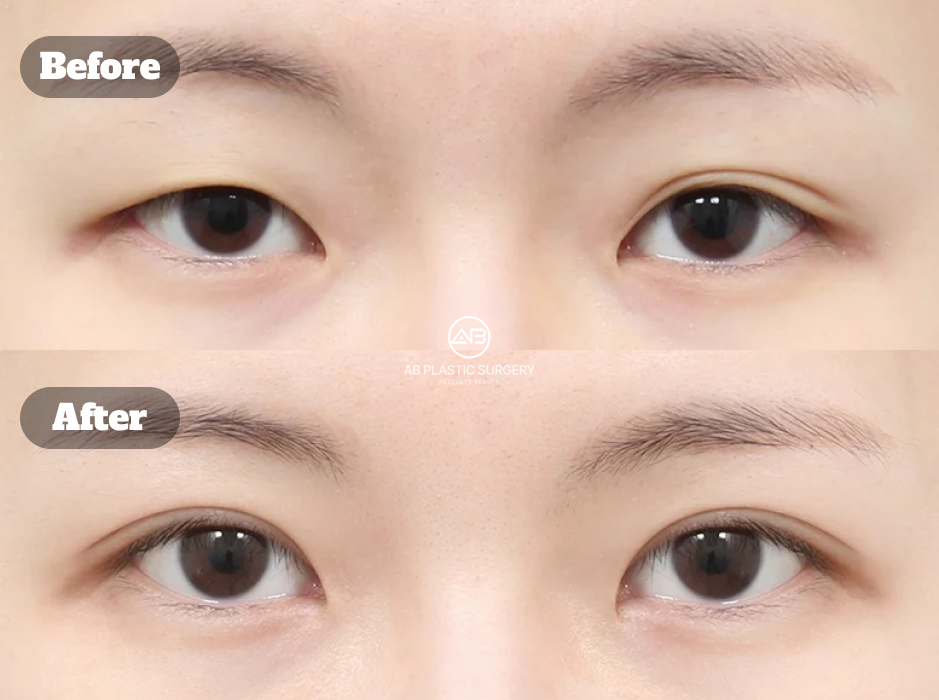
What Is Revision Double Eyelid Surgery?
Revision double eyelid surgery is a secondary procedure performed to address concerns remaining after an initial double eyelid procedure. Rather than simply repeating the first surgery, revision requires an evaluation of how the original crease was created, how the eyelid healed, and why the current appearance differs from the intended result.
The original procedure may have changed the position of the eyelid crease, internal fixation points, scar tissue, skin distribution, fat volume, or eyelid-opening function. These changes can make revision planning more complex than primary double eyelid surgery.
For example, two patients may both appear to have a high eyelid crease, but the underlying causes may be different. One patient may have a fixation point placed too high, while another may have strong scar adhesion, excessive skin removal, upper eyelid hollowing, or weakness in the muscle that opens the eye. Because the visible concern may have several possible causes, the correction method should be selected after examining the eyelid structure and movement.
How Revision Differs from the First Double Eyelid Surgery
Primary double eyelid surgery is generally performed on tissue that has not been surgically altered. During revision, the surgeon may need to work with existing incision lines, internal adhesions, fixation points, scar tissue, or reduced amounts of skin, muscle, fat, and soft tissue.
Scar tissue may make the eyelid less flexible and can obscure the original anatomical layers. Tissue that has already been removed cannot always be restored directly, and repeated fixation can create additional stiffness or visible pulling. The surgeon should therefore determine which structures need to be released, preserved, repositioned, or reconstructed.
A revision assessment may consider:
-
The location and shape of the existing eyelid crease
-
The position of the previous incision and fixation points
-
The depth and firmness of scar adhesion
-
The amount of remaining skin, muscle, fat, and soft tissue
-
Eyelid-opening strength and differences between the two eyes
-
Eye closure, dryness, irritation, and other functional symptoms
-
Eyebrow position and forehead compensation
Revision surgery may involve releasing the previous crease, changing the fixation level, reconstructing the fold, adjusting muscle function, revising a scar, or restoring volume in selected areas. The procedure depends on the cause of the concern rather than the visible crease shape alone.
Cosmetic Concerns and Functional Symptoms
Many patients seek revision because of cosmetic concerns such as uneven crease height, a deep fold, multiple lines, visible scarring, or an unnatural-looking eyelid shape. However, a crease concern may also be related to eyelid function.
For example, one eye may appear to have a higher crease because it opens less widely than the other. In this situation, adjusting only the crease may not correct the underlying asymmetry. Muscle strength, eyelid height, eyebrow movement, and eye closure may need to be evaluated together.
Functional symptoms may include difficulty opening or closing the eyes, persistent dryness, irritation, excessive tearing, eye fatigue, or changes in vision. When these symptoms are present, protecting eyelid movement and eye comfort should take priority over cosmetic refinement.
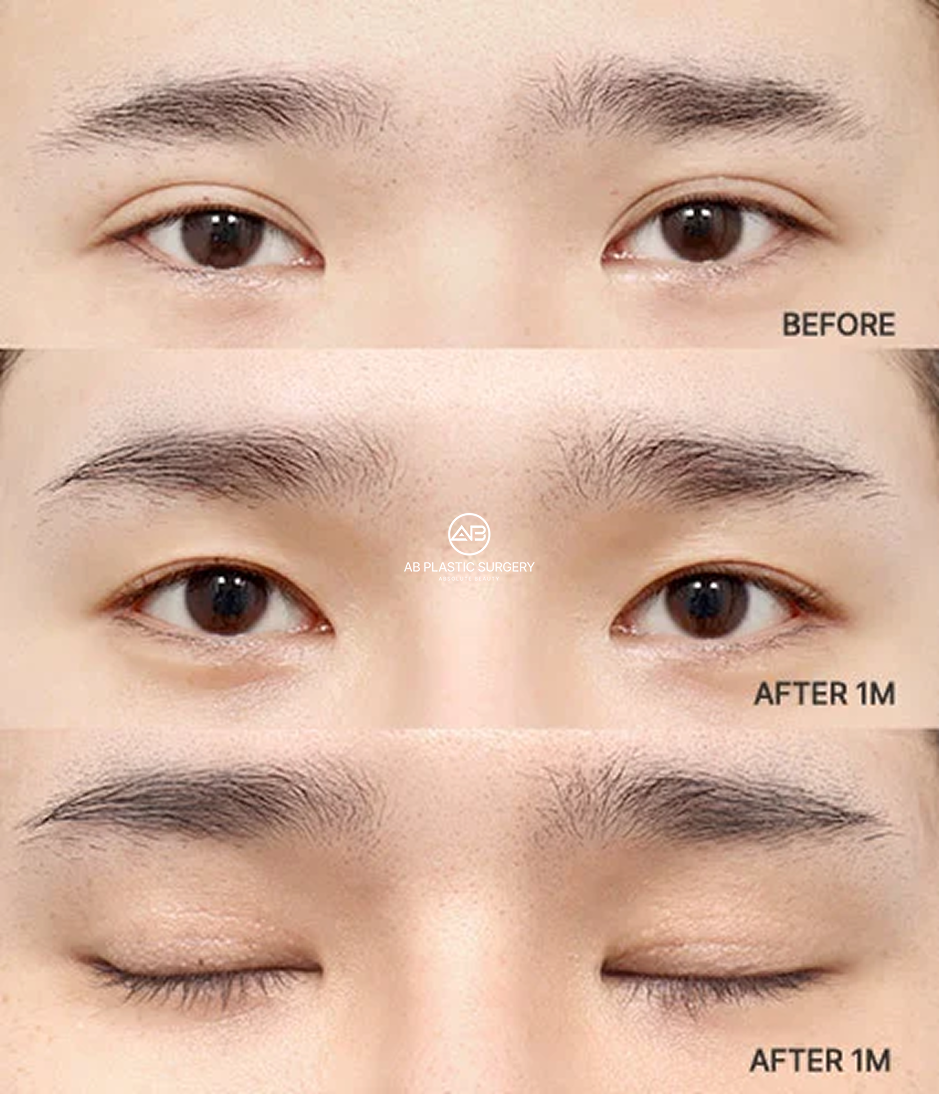
When Can Revision Double Eyelid Surgery Be Considered?
There is no single waiting period that applies to every eyelid surgery revision. The appropriate timing depends on the original procedure, the concern being evaluated, the condition of the tissue, and whether the issue is cosmetic or functional.
For non-urgent concerns, surgeons commonly recommend allowing sufficient time for swelling to decrease and scar tissue to soften. The crease may look high, deep, firm, or uneven during early recovery, but these features can change as the tissue settles.
A period of observation lasting several months may be appropriate when healing is progressing normally. Revision planning generally becomes more accurate when temporary swelling can be distinguished from stable structural concerns.
However, patients should not delay medical assessment when symptoms involve vision, severe pain, rapid swelling, significant bleeding, infection, incomplete eye closure, or another sudden postoperative change. Early evaluation does not always mean immediate revision surgery will be necessary, but it can help identify problems that require prompt care.
Why Early Asymmetry May Improve Without Revision
Swelling does not always occur equally on both sides. One eyelid may appear higher, deeper, thicker, or more prominent because it is more swollen or has developed greater tissue stiffness. Temporary differences in muscle movement can also affect how the crease appears when the eyes are open.
Changes that may improve during the healing period include:
-
Uneven swelling between the two eyelids
-
A crease that appears temporarily high or deep
-
Firmness along the incision line
-
Temporary fullness above or below the crease
-
Mild asymmetry caused by swelling or muscle stiffness
-
Temporary dryness, irritation, or tearing
Repeatedly judging the eyelid from day to day may cause unnecessary concern because lighting, facial expression, fatigue, and swelling can change its appearance. Follow-up photographs taken under similar conditions and examinations over time provide more useful information.
Why Scar Stabilization Matters
Scar tissue initially tends to be firm and less flexible. As it matures, the crease may soften and the surrounding skin may move more naturally. Operating before the scar has sufficiently stabilized can make it more difficult to identify the true cause of a high, deep, or uneven fold.
Premature revision may also place additional stress on thin eyelid tissue and increase the amount of internal scarring. Before recommending surgery, the surgeon may assess whether the concern is improving, whether sufficient tissue remains, how firmly the old crease is attached, and whether the eyelid opens and closes normally.
Waiting does not guarantee that every concern will resolve, but it can allow the surgeon to plan the revision using a more stable eyelid condition.
When Earlier Evaluation Is Important
Patients should contact the operating clinic or seek medical care when a symptom is sudden, severe, or progressively worsening. Warning signs may include:
-
Sudden or worsening vision changes
-
Severe eye pain or rapidly increasing swelling
-
Significant bleeding or signs of infection
-
Difficulty closing the eyes completely
-
Severe dryness or corneal discomfort
-
New or persistent double vision
-
A major change in eyelid position or movement
Depending on the cause, treatment may involve observation, medication, lubrication, wound care, or another postoperative intervention. Immediate revision surgery is not always the first treatment.
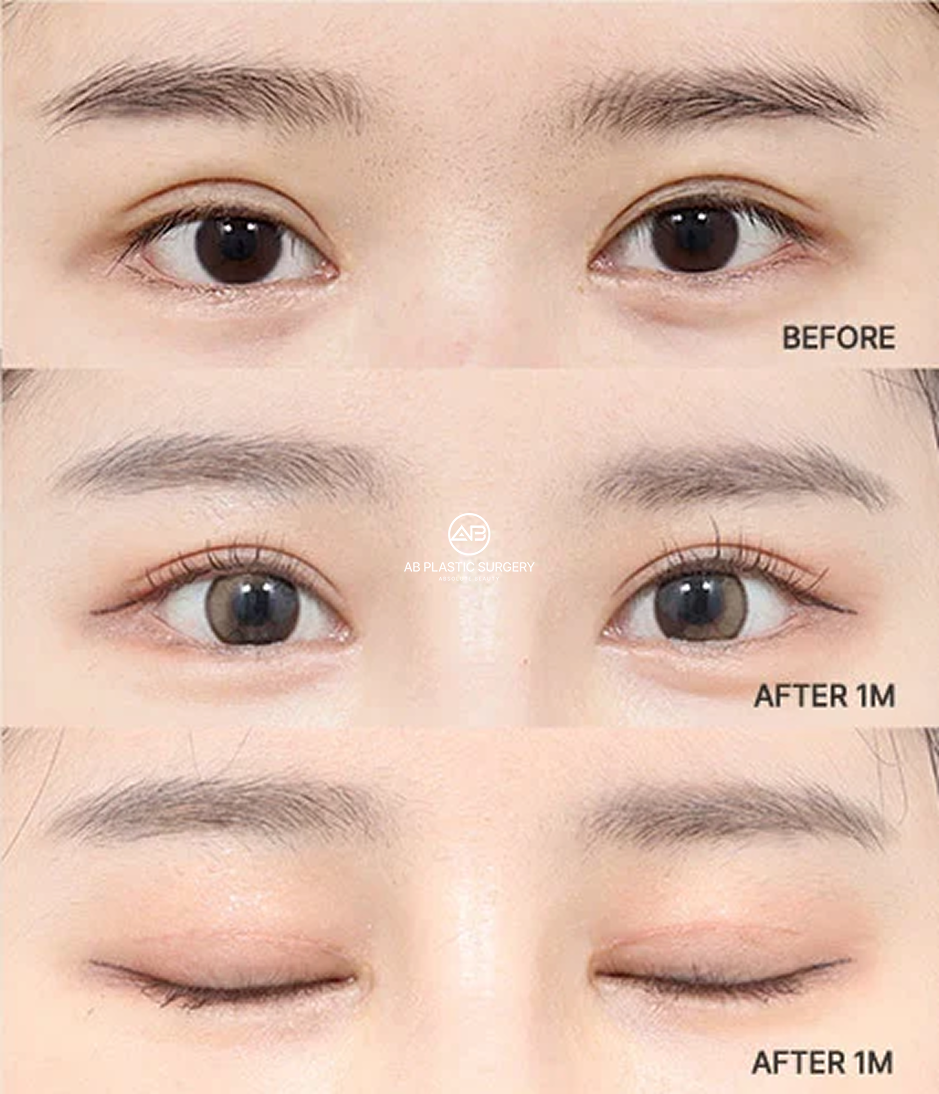
What Can Revision Double Eyelid Surgery Correct?
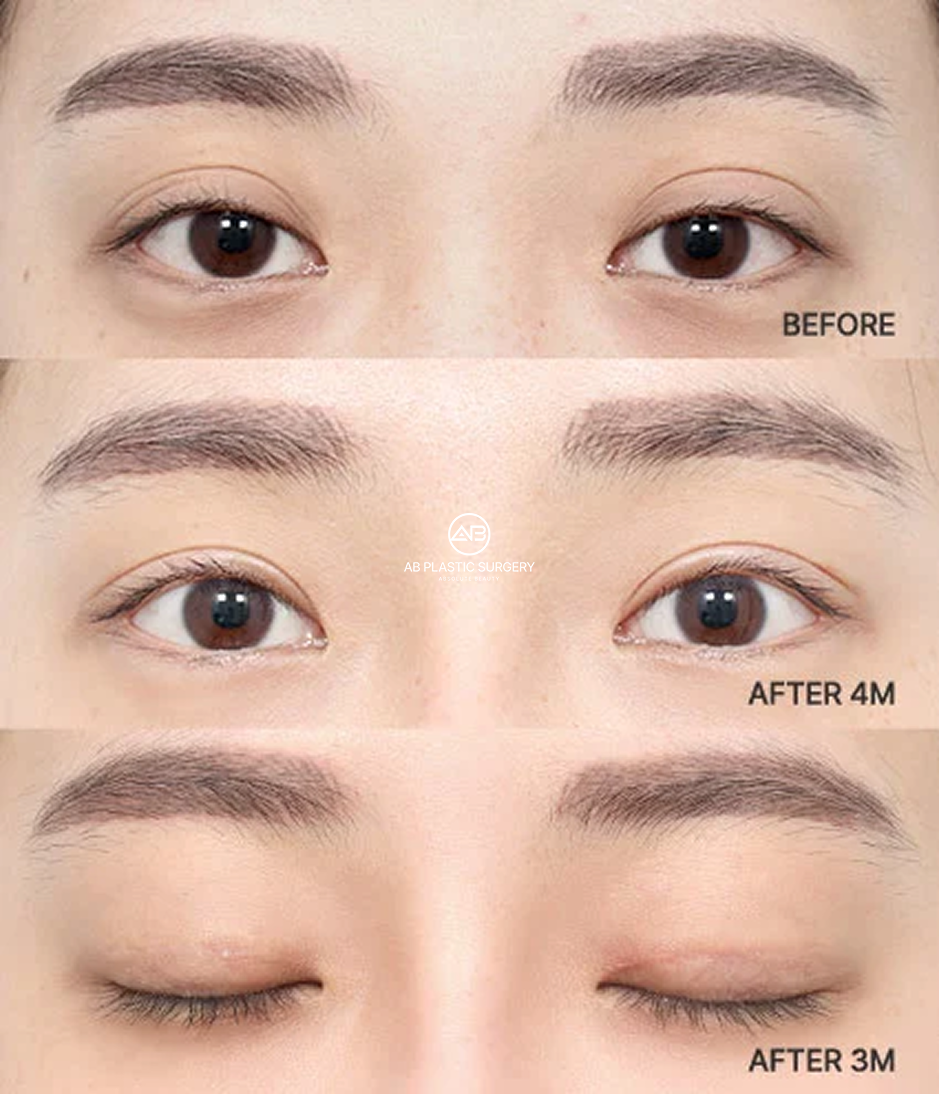
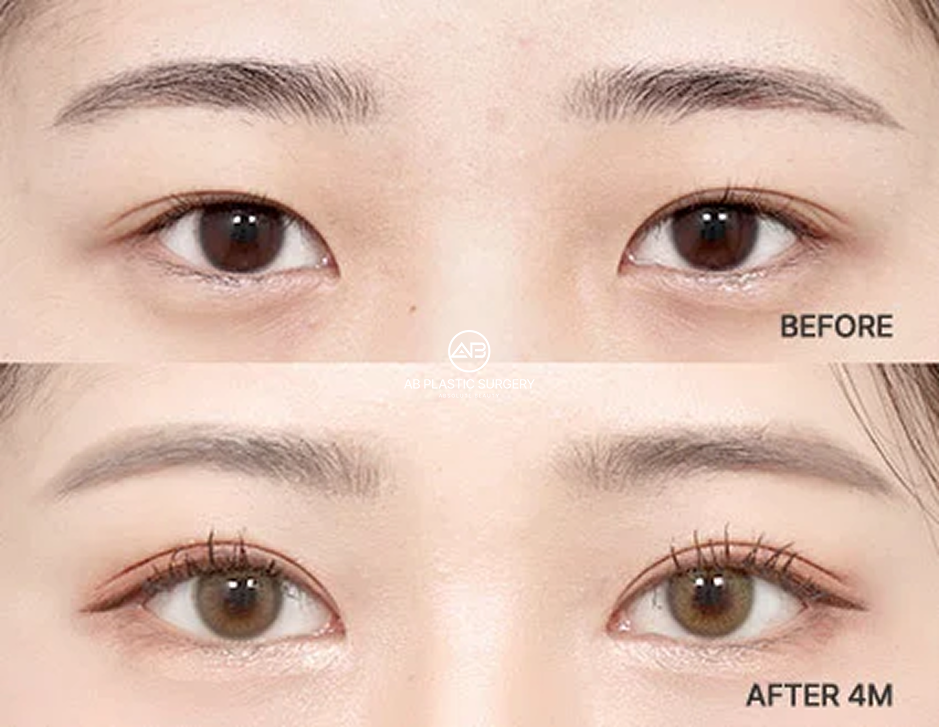
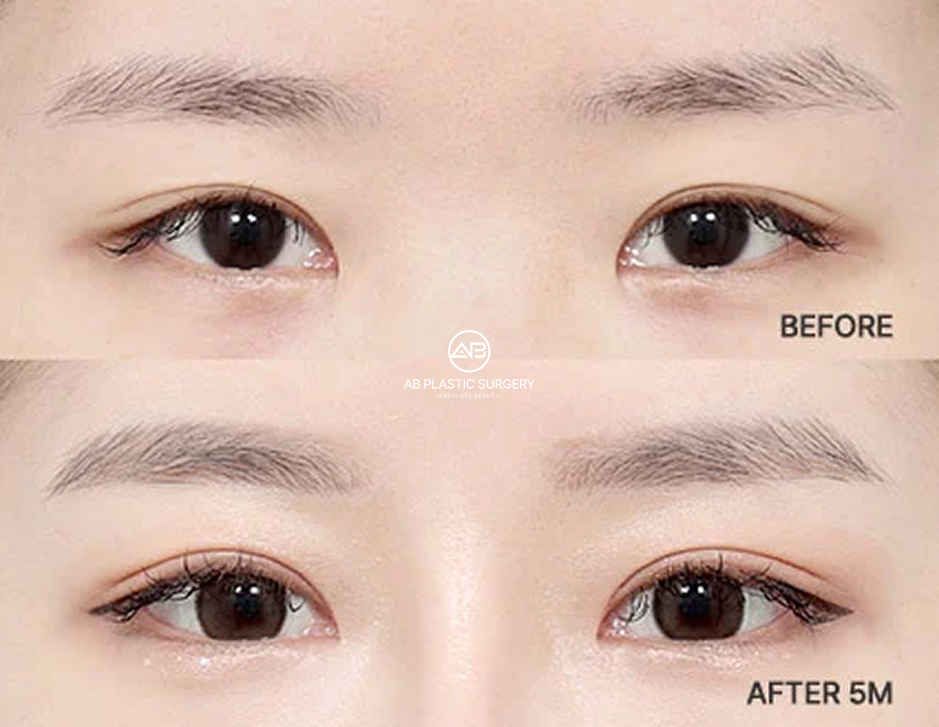
Revision double eyelid surgery may address the position, depth, continuity, symmetry, or stability of a previous eyelid crease. It may also address visible scar adhesion, upper eyelid hollowing, or differences in eyelid-opening strength when these concerns contribute to the appearance of the fold.
The appropriate correction depends on the underlying cause, the amount of healthy tissue remaining, and how the eyelid moves. Revision may improve selected concerns, but it cannot always restore the eyelid to its original preoperative condition or create perfect symmetry.
A Crease That Is Too High
A high double eyelid crease can create a wide fold or make the eyelid look heavy, hollow, or less natural. Possible causes include fixation placed too high, strong scar adhesion, excessive skin removal, tissue shortage, or upper eyelid volume loss.
Revision may involve releasing the old crease and creating a new fold at a lower level. Depending on the tissue condition, the surgeon may also need to reduce unwanted adhesion, reposition remaining tissue, or restore volume in selected areas.
Lowering a crease can be challenging when skin or soft tissue has already been removed. The extent of correction possible should therefore be determined after examining tissue flexibility and the relationship between the existing and proposed crease positions.
A Crease That Is Too Low, Weak, or Faded
A low, faint, or partially released crease may result from insufficient fixation, thick eyelid tissue, remaining skin, repeated swelling, or differences in eyelid-opening strength. Some creases appear clearly in certain areas but disappear toward the inner or outer eyelid.
Revision may involve creating a more stable fixation point or adjusting the direction and continuity of the fold. When the eyelid-opening muscle contributes to the problem, crease revision alone may not provide balanced correction.
The surgeon should determine whether the fold has weakened because of fixation, tissue thickness, muscle function, or another structural factor.
Uneven Crease Height or Shape
One crease may appear higher, deeper, longer, or more defined than the other. Asymmetry can result from differences in fixation, scar adhesion, swelling, eyelid muscle strength, eyebrow position, remaining skin and soft-tissue volume, or natural facial structure.
When the crease itself is responsible, revision may involve releasing one or both folds and creating more balanced fixation. However, if the asymmetry is mainly caused by muscle weakness or eyebrow compensation, crease adjustment alone may not be sufficient.
Complete symmetry cannot be guaranteed because the two eyes naturally differ in bone structure, muscle strength, skin thickness, and position. The goal is generally to reduce noticeable imbalance while maintaining normal eyelid function.
An Overly Deep or Tight-Looking Crease
A crease may look excessively deep when the skin is strongly attached to deeper tissue. This can create visible pulling, restricted movement, or an indentation that remains noticeable even when the eyes are closed.
Revision may involve releasing scar adhesion and reconstructing the crease with a more appropriate level of fixation. If the deep fold is combined with volume loss, tissue repositioning or selected volume-restoration methods may also be considered.
The revision should avoid simply weakening the crease without addressing the underlying adhesion, as this may lead to an unstable or irregular fold.
Multiple Folds or an Irregular Crease
Multiple eyelid folds can develop when unwanted scar adhesions form at different levels or when upper eyelid hollowing causes the skin to fold unevenly. The original crease may also remain partially attached while a new fold develops above or below it.
Revision may involve releasing unwanted adhesions, reconstructing a single crease, and redistributing or restoring tissue where necessary. Because multiple folds can have different causes, the treatment should be based on scar position, tissue volume, and eyelid movement.
Visible Scarring and Upper Eyelid Hollowing
A mature incision scar may remain widened, raised, depressed, discolored, or irregular. Scar revision may improve the position or contour of the incision, but every new incision creates another scar. A completely scar-free result cannot be guaranteed.
Upper eyelid hollowing may occur when fat or soft tissue has been removed, displaced, or affected by scar adhesion. Correction may involve scar release, tissue repositioning, crease adjustment, or volume restoration, depending on the remaining anatomy.
Additional tissue removal may worsen hollowing when volume is already insufficient. For this reason, determining whether the eyelid has excess tissue or tissue shortage is an important part of revision planning.
Differences in Eyelid Opening
A crease can appear uneven when one eye opens less widely than the other. Possible causes include residual ptosis, muscle imbalance, overcorrection, undercorrection, scar restriction, or habitual forehead compensation.
The examination may assess eyelid height, levator muscle strength, eyebrow movement, eye closure, and symptoms such as dryness or fatigue. When muscle function contributes to the asymmetry, the treatment plan may need to address both eyelid opening and crease formation.
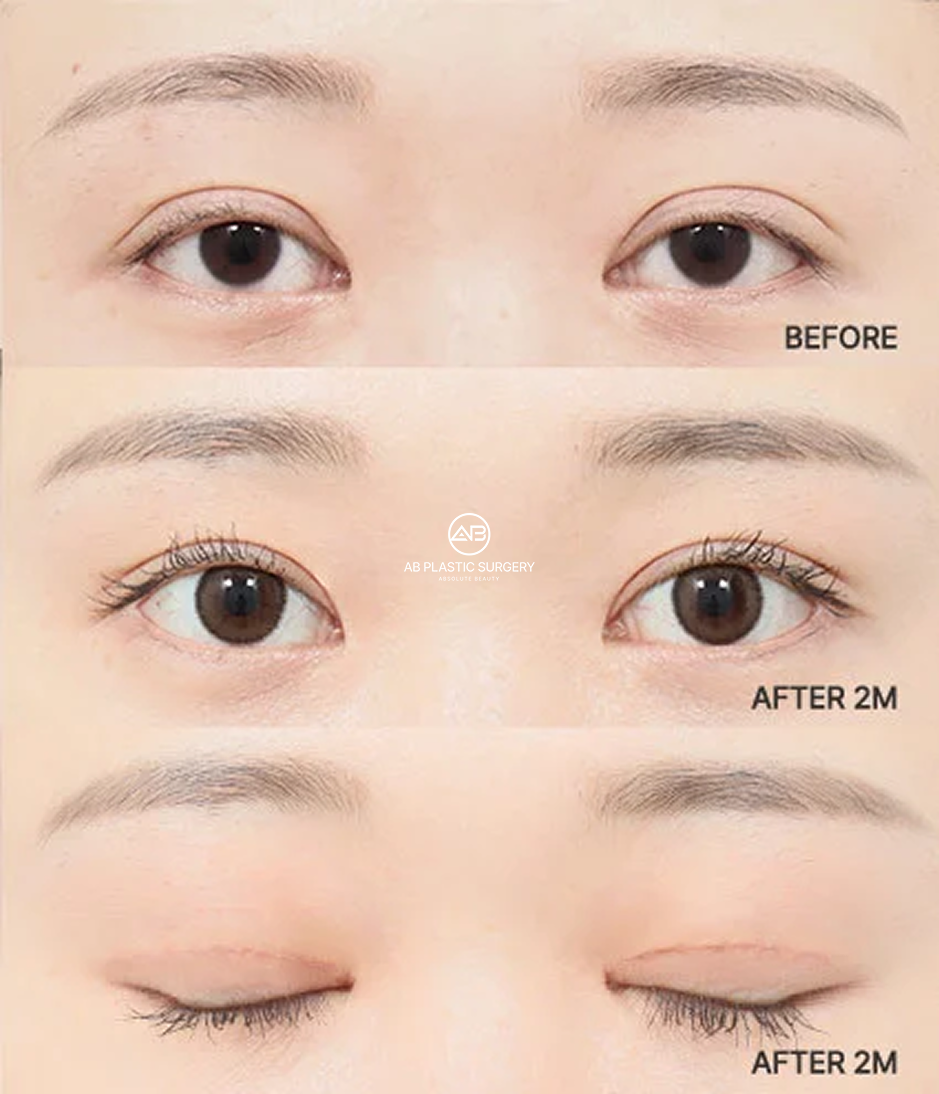
How Is Double Eyelid Revision Evaluated and Planned?
Revision planning begins by identifying why the current crease looks or functions differently from the intended result. Selecting a procedure based only on photographs or the visible height of the fold may overlook scar adhesion, tissue shortage, muscle imbalance, or eye-closure problems.
The evaluation should consider the previous operation, healing history, current tissue condition, and the patient’s main concern. The final plan may change after an in-person examination because photographs cannot fully show scar firmness, tissue mobility, fixation depth, or eyelid movement.
Reviewing the Previous Surgery
Patients should provide as much information as possible about the previous procedure, including:
-
The date and type of double eyelid surgery
-
Whether the procedure used an incisional or non-incisional method
-
The number of previous eyelid operations
-
Whether skin, muscle, or fat was removed
-
Whether ptosis correction or another eye procedure was performed
-
How the current concern changed during recovery
-
Any symptoms involving dryness, irritation, eye closure, or vision
Operative records and photographs taken before and after the previous surgery may help distinguish pre-existing asymmetry from postoperative changes. Recovery photographs can also show whether the concern has improved, remained stable, or progressively worsened.
Examining the Eyelid Structure
The surgeon may examine the eyelids with the eyes open and closed and while the patient looks in different directions. The assessment may include:
-
Crease height, depth, direction, and continuity
-
Scar position and internal adhesion
-
The amount and flexibility of remaining skin
-
Fat distribution and upper eyelid hollowing
-
Eyelid-opening strength and eyelid height
-
Eyebrow and forehead movement
-
Eye closure and symptoms of dryness or irritation
A heavy-looking eyelid may result from excess tissue, but it may also be caused by a high crease, muscle weakness, or eyebrow position. Similarly, a hollow eyelid may require tissue preservation or restoration rather than further removal.
Matching the Correction Method to the Cause
Depending on the evaluation, revision may include:
-
Releasing the previous crease or scar adhesion
-
Lowering or raising the crease position
-
Creating a new fixation point
-
Strengthening a weak or partially released fold
-
Revising an irregular incision scar
-
Adjusting ptosis correction when muscle function is involved
-
Repositioning tissue or restoring volume in selected areas
More than one method may be required when the concern involves both the crease and the surrounding tissue. The procedure should be limited to the structures that require correction rather than repeating every step of the original surgery.
Understanding What Revision Cannot Guarantee
Previous tissue removal, repeated incisions, dense scarring, reduced skin elasticity, dry-eye symptoms, and natural facial asymmetry may limit the amount of correction that can be performed.
Revision surgery cannot guarantee perfect symmetry, complete scar removal, or restoration of the eyelids to their exact preoperative condition. In some cases, the realistic goal is partial improvement in crease height, depth, stability, or symmetry.
Continued observation may be recommended when healing is still progressing or when the risks of another procedure may outweigh the expected benefit. A suitable consultation should explain both the possible improvement and the limitations of revision.
What Happens During Revision Double Eyelid Surgery?
The surgical method depends on the previous operation, the cause of the concern, and the amount of available tissue. Some revisions involve a limited adjustment of the crease, while others require scar release, tissue repositioning, muscle adjustment, or volume restoration.
The anesthesia method, extent of the incision, and surgical plan are determined according to the patient’s condition. Because the eyelid has already been operated on, the surgeon may need to identify and separate scarred tissue before reconstructing the crease.
Releasing the Existing Crease
When the previous fold is too high, deep, irregular, or divided into multiple lines, the surgeon may release the existing attachment. This can involve separating scar adhesion between the skin and deeper eyelid tissue.
The degree of release should be carefully controlled. Incomplete release may allow the old crease to remain visible, while excessive separation may create tissue instability or additional scarring.
After the unwanted adhesion is addressed, a new crease may be created at a level that better matches the eyelid structure and the treatment plan.
Adjusting Crease Height and Fixation
A crease that is too high may be lowered, while a low or weak crease may require stronger or differently positioned fixation. The proposed position should account for skin thickness, remaining tissue, eyelid-opening strength, and the location of the previous fold.
Revision does not always involve creating the same crease height on both sides. Natural differences between the eyes and eyebrows may require slightly different surgical planning on each side to achieve a more balanced overall result.
Managing Scar Tissue and Volume
Scar tissue may need to be released or rearranged when it causes visible pulling, a deep indentation, or restricted movement. If the upper eyelid is hollow, the surgeon may consider preserving and repositioning remaining tissue or restoring volume in selected areas.
Further fat or soft-tissue removal should be approached cautiously when the eyelid already appears thin or hollow. The objective is not simply to remove more tissue, but to create a stable fold while preserving sufficient coverage and movement.
Adjusting Eyelid-Opening Function When Needed
When crease asymmetry is related to differences in eyelid-opening strength, the treatment plan may include an adjustment to the muscle responsible for lifting the eyelid. This should be considered only after evaluating eyelid height, muscle function, eyebrow compensation, eye closure, and dryness.
Correcting the crease without addressing a significant muscle imbalance may leave the apparent asymmetry unchanged. At the same time, excessive muscle adjustment may affect eye closure or create an unnaturally wide appearance. The plan should therefore balance crease shape with eyelid movement and eye protection.
Recovery and Risks After Double Eyelid Revision
Recovery after revision double eyelid surgery varies according to the extent of scar release, crease reconstruction, tissue repositioning, and muscle adjustment. Previously operated tissue may swell or heal differently from tissue undergoing a first procedure.
Swelling, bruising, tightness, irritation, dryness, and temporary asymmetry may occur during early recovery. The crease can initially look higher, deeper, or firmer than expected before gradually settling.
Patients should follow the clinic’s individual instructions regarding wound care, medication, compresses, sleep position, makeup, contact lenses, exercise, and suture removal. AB Plastic Surgery Korea’s guide to precautions after eye surgery provides general postoperative considerations, but the operating surgeon’s instructions should take priority.
Early Recovery
Swelling and bruising are generally more noticeable during the early healing period. One side may appear different from the other because swelling, tissue stiffness, and scar formation do not always progress evenly.
Patients may also notice temporary pulling, numbness, irritation, dryness, or difficulty opening the eyes fully. These symptoms should be monitored during follow-up visits.
Pressure, rubbing, or massage should be avoided unless specifically recommended by the surgeon. Applying unapproved products to the incision may irritate the skin or interfere with wound care.
Crease and Scar Changes Over Time
The eyelid crease and incision scar continue to change after the initial swelling decreases. A scar may initially appear pink, firm, raised, or more visible before gradually softening.
The final crease should not be judged during the earliest stage of recovery. Tissue settling and scar maturation can continue over time, particularly when revision involved extensive adhesion release or reconstruction.
Follow-up photographs and examinations can help monitor changes in crease height, depth, symmetry, eyelid movement, and eye closure.
Possible Risks and Limitations
As with any surgical procedure, double eyelid revision involves possible risks. These may include:
-
Bleeding, infection, or delayed wound healing
-
Visible or unfavorable scarring
-
Persistent or recurrent asymmetry
-
A crease that remains too high, low, deep, or faint
-
Multiple folds or recurrence of the previous crease
-
Temporary or persistent dryness and irritation
-
Altered eyelid movement or incomplete eye closure
-
Under-correction, overcorrection, or the need for additional treatment
The level of risk varies according to the number of previous operations, scar condition, remaining tissue, muscle function, health history, smoking, and postoperative care.
Sudden vision changes, severe pain, rapidly increasing swelling, significant bleeding, signs of infection, or inability to close the eye require prompt medical assessment.
Recovery Planning for International Patients
International patients should allow enough time in Korea for consultation, examination, surgery, suture removal, and postoperative follow-up. The required stay depends on the incision type, the extent of revision, and the surgeon’s follow-up schedule.
Before booking return travel, patients should confirm:
-
The expected consultation and surgery dates
-
Whether preoperative testing is required
-
The planned suture-removal schedule
-
The number of postoperative examinations
-
When the patient may be cleared for long-distance travel
-
How follow-up will be managed after returning home
Online follow-up can support routine recovery but cannot replace direct medical evaluation when severe or unexpected symptoms occur.
Frequently Asked Questions About Revision Double Eyelid Surgery
How long should I wait before revision double eyelid surgery?
There is no single waiting period for every patient. Non-urgent concerns are generally evaluated after swelling and scar tissue have sufficiently stabilized, while vision changes, severe pain, incomplete eye closure, or other functional concerns require earlier medical assessment.
Can a high double eyelid crease be lowered?
A high crease may be lowered by releasing the existing adhesion and reconstructing the fold at a different level. The possible amount of correction depends on the location of the previous crease, remaining skin and soft tissue, scar condition, and whether volume loss is present.
Can uneven double eyelid creases be corrected?
Uneven creases may be improved after identifying whether the difference is caused by fixation, scar adhesion, swelling, muscle strength, eyebrow position, or tissue volume. If eyelid-opening function contributes to the asymmetry, crease revision alone may not be sufficient.
Is revision double eyelid surgery more complex than the first surgery?
It can be more complex because the eyelid may contain scar tissue, previous fixation points, internal adhesions, or reduced amounts of skin and fat. The complexity depends on the original procedure, the number of previous operations, and the structures requiring correction.
Can a visible eyelid scar be completely removed?
Scar revision may improve the position, width, depth, or contour of a mature incision scar, but complete scar removal cannot be guaranteed. Every revision incision creates another scar, and the final appearance depends on tissue condition and individual healing.
How much does revision double eyelid surgery cost in Korea?
The cost is finalized after consultation because it depends on the previous procedure, scar condition, remaining tissue, and whether crease reconstruction, adhesion release, ptosis adjustment, or volume restoration is required. Patients may submit their surgical history through the eye surgery cost inquiry page for preliminary guidance.
Can revision surgery create perfectly symmetrical eyelids?
Revision may reduce noticeable differences in crease height, depth, or eyelid opening, but perfect symmetry cannot be guaranteed. Natural differences in bone structure, muscle strength, eyebrow position, skin thickness, and healing can remain after surgery.
Revision Double Eyelid Surgery at AB Plastic Surgery Korea
Revision double eyelid surgery requires more than selecting a new crease height. The consultation should assess the previous procedure, current scar condition, remaining tissue, fixation level, muscle function, eye closure, and the patient’s main concern.
At AB Plastic Surgery Korea, the revision plan is developed after reviewing the patient’s eyelid structure, previous procedures, and current concerns. Online photographs and operative records may provide preliminary information, but the final method is confirmed after direct examination.
Preparing for a Revision Consultation
Patients are encouraged to prepare:
-
Clear front and angled photographs with the eyes open and closed
-
The date and type of each previous eyelid surgery
-
Information about skin, muscle, or fat removal
-
Details about ptosis correction or other combined procedures
-
Operative records when available
-
Photographs showing changes during the recovery period
-
Information about dryness, irritation, eye closure, or vision symptoms
Patients should also identify the concern that matters most to them, such as crease height, asymmetry, depth, scarring, hollowing, or eyelid-opening strength. Establishing a clear priority can help the medical team explain what may be improved and which limitations may remain.
Safety-Oriented Surgical Planning
Revision planning should account for both appearance and eyelid function. Eye closure, eyelid movement, corneal protection, dryness, and the amount of remaining tissue may influence whether surgery is recommended and how much correction is appropriate.
AB Plastic Surgery Korea provides information about its surgical safety system, including the clinical systems used to support preoperative assessment, surgery, monitoring, and postoperative care.
Immediate revision is not recommended in every case. Continued observation may be more appropriate when swelling and scar tissue are still changing or when the expected benefit does not justify the risks of another operation.
Support for International Patients
International patients should consider the complete treatment schedule rather than focusing only on the surgery date. Consultation, preoperative testing, surgery, suture removal, postoperative examinations, and departure planning should be coordinated before travel.
Patients should understand how follow-up photographs will be reviewed after returning home and when local medical care may be necessary. Severe pain, vision changes, rapid swelling, bleeding, infection, or incomplete eye closure require direct medical evaluation rather than online follow-up alone.
Patients may also review AB Plastic Surgery Korea’s official plastic surgery patient stories for general information about consultation and recovery experiences. However, another patient’s procedure or outcome cannot predict an individual revision result.
Key takeaways
-
Revision double eyelid surgery may address a crease that is too high, low, deep, faint, or uneven, as well as multiple or irregular folds.
-
Early swelling and scar stiffness can temporarily affect crease height and symmetry.
-
The correction method should be based on fixation, scar tissue, remaining tissue, muscle function, and eye closure.
-
Revision may improve selected concerns but cannot guarantee perfect symmetry or complete scar removal.
-
International patients should plan enough time in Korea for consultation, surgery, and postoperative follow-up.
Revision double eyelid surgery should be considered after carefully reviewing the previous operation, healing progress, current tissue condition, and expected benefit of further treatment. A structured consultation can help clarify what may be corrected, which limitations remain, and how surgery and recovery may be planned.
This article provides general educational information and does not replace a medical diagnosis, in-person consultation, or personalized surgical plan.

This article is for informational purposes only and does not replace a personal medical consultation.