What Causes Nasal Congestion, and Can Rhinoplasty Help Resolve It?
What Causes Nasal Congestion, and Can Rhinoplasty Help Resolve It?
Hello, this is Ma Sung-Hwan from AB Plastic Surgery.
The nose plays an important role not only in determining the balance of facial features but also in breathing comfortably and detecting odors.
Therefore, when planning rhinoplasty, it is essential to consider not only aesthetic improvements but also structural issues that affect nasal stability and breathing.
Today, we will take a closer look at the structural causes of nasal congestion (nasal obstruction) and how rhinoplasty can help improve them.
1. Why Is It Important to Identify the Cause of Nasal Congestion Before Rhinoplasty?
Even when planning cosmetic rhinoplasty, if you experience persistent nasal congestion, it is important to pay attention to it.
This is because simply increasing the height of the nose without addressing underlying structural problems can further narrow the nasal airway, potentially worsening breathing difficulties after surgery.
For this reason, AB Plastic Surgery considers functional structural correction to relieve nasal congestion an essential preliminary step toward successful rhinoplasty.
2. Three Common Structural Causes of Nasal Congestion
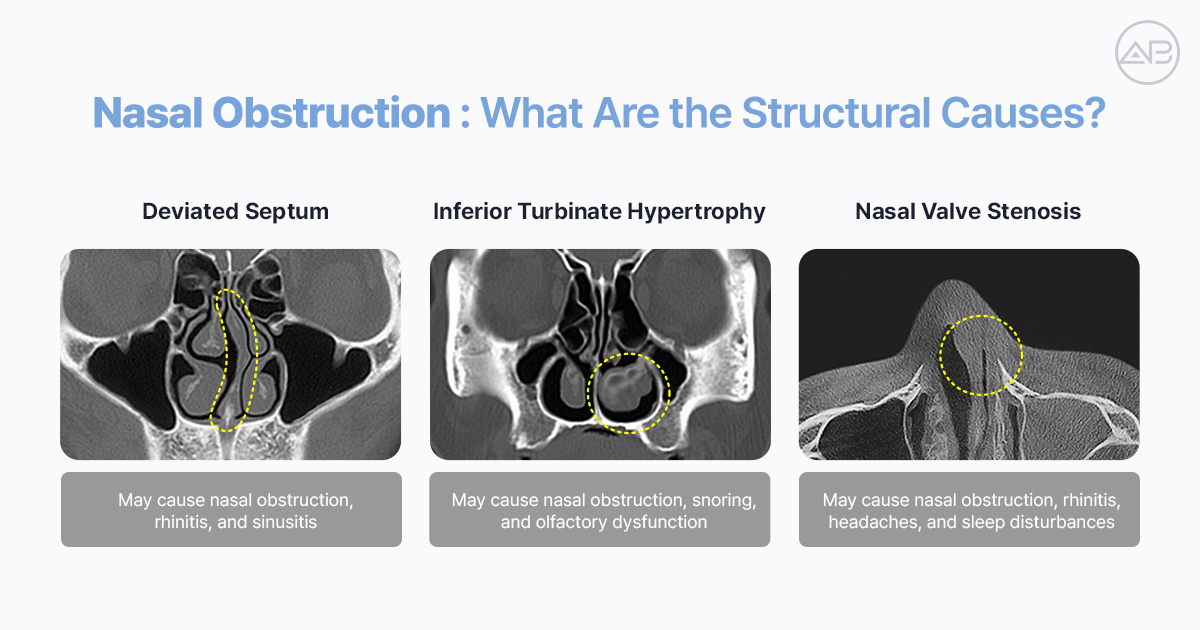
The main structural causes of nasal obstruction can be broadly divided into three categories. These conditions may occur individually or in combination.
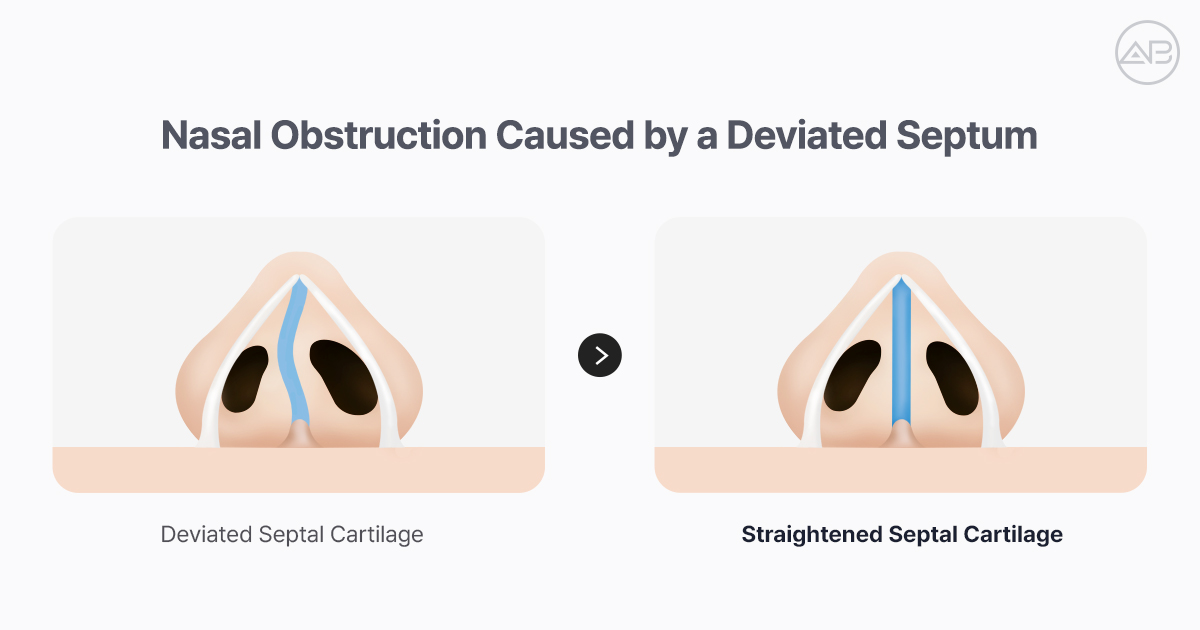
Deviated Nasal Septum:
A deviated nasal septum is a condition in which the nasal septum, the partition that separates the inside of the nose into left and right sides, is curved or displaced.
When the septum is deviated, the size of the nasal passages becomes asymmetrical, narrowing the airway on one side and causing unilateral nasal congestion.
In such cases, surgery to straighten the deviated cartilage can help improve airflow. At the same time, the nose can be straightened to create a more balanced nasal contour.
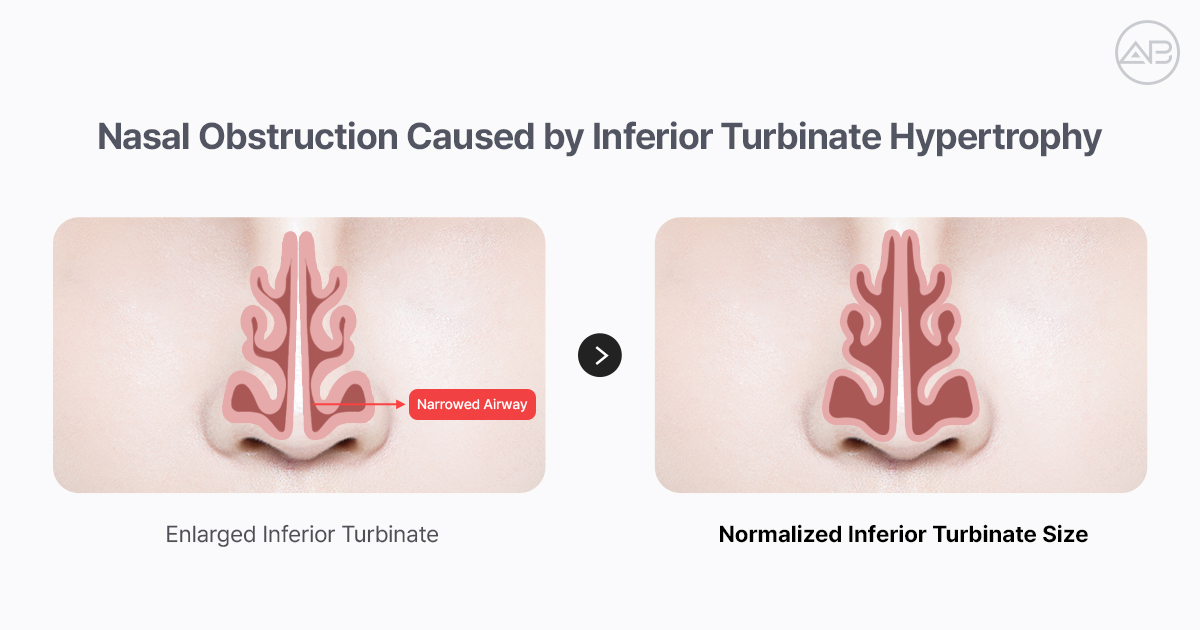
Inferior Turbinate Hypertrophy:
The inferior turbinates are structures located on both sides of the nasal septum that help regulate the temperature and humidity of inhaled air.
When these structures become excessively enlarged, a condition known as inferior turbinate hypertrophy, they can narrow the nasal cavity and become a major cause of nasal congestion.
By reducing the enlarged tissue and repositioning it outward, sufficient breathing space can be secured, helping improve nasal obstruction symptoms.
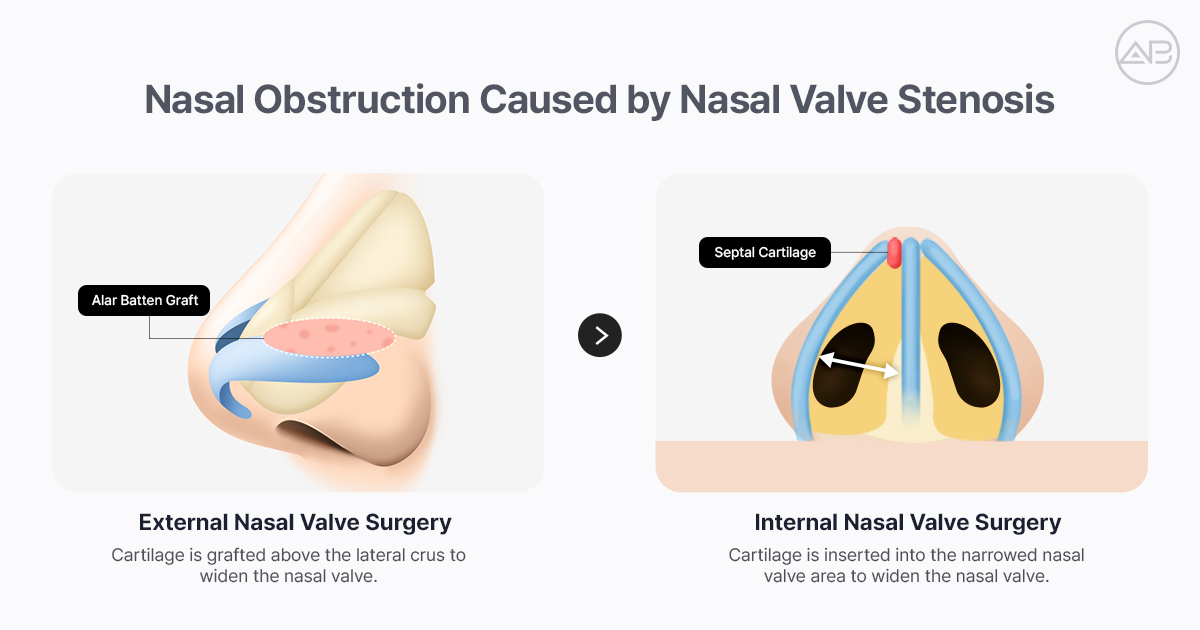
Nasal valve collapse occurs when the nasal valve, a narrow passage within the nasal cavity, becomes constricted.
This condition is often associated with a deviated nasal septum and can cause severe nasal congestion due to the narrowing of the nasal valve area.
In such cases, autologous cartilage (septal or auricular cartilage, etc.) or donated cartilage can be used to support the narrowed area. Surgery to widen and stabilize the nasal valve can help relieve nasal obstruction.
3. Is Widening the Nasal Airway Always the Right Solution for Nasal Congestion?
The most important aspect of surgery that changes the structure of the nose is maintaining a balance between functional preservation and avoiding excessive correction.
Focusing solely on widening the nasal airway may actually lead to side effects.
Asymmetry
When correcting a deviated nasal septum, excessively widening one side may cause the opposite side to become narrower. Therefore, appropriate spatial balance is essential.
Empty Nose Syndrome
If too much tissue is removed during inferior turbinate surgery, the normal airflow within the nasal cavity may be disrupted. This can lead to a condition known as empty nose syndrome, in which patients experience nasal congestion despite having a wide nasal passage.
Atrophic Rhinitis
Surgery involving excessive reduction of the nasal turbinates may cause severe dryness and progress to atrophic rhinitis.
Therefore, rather than unconditionally widening the nasal airway, it is very important to make appropriate corrections based on each patient's symptoms.
4. Nasal Congestion Treatment and Cosmetic Rhinoplasty: Should You Visit an ENT Specialist or a Plastic Surgeon?
This is a question that many patients have.
If you want to improve both nasal congestion and the external appearance of your nose, a plastic surgery approach may be advantageous.
In plastic surgery, procedures are performed to improve the nose's aesthetic appearance.
During this process, surgery may also be performed to improve breathing function.
In particular, plastic surgery has the advantage of allowing more precise identification and correction of severely deviated nasal septa or nasal valve collapse in deeper areas of the nose.
In other words, it is important to choose a method that can accurately identify and address the causes of nasal congestion while also considering the desired nasal appearance.
The extent of surgical correction is also determined through a thorough preoperative evaluation.
At AB Plastic Surgery, 3D CT scans are used to analyze the degree of nasal septal deviation, the condition of the nasal valve, and the size and position of the inferior turbinates in three dimensions.
Based on this information, functional correction and aesthetic rhinoplasty are planned together. Rather than simply making the nasal passages wider, the goal is to design the most suitable nasal contour for each patient while preserving nasal function.
Some patients may be concerned about the recovery process following nasal congestion surgery. However, the recovery process is generally not significantly different from that of standard rhinoplasty.
During procedures such as inferior turbinate surgery or septoplasty, small amounts of blood may occasionally mix with nasal discharge. This is a natural part of the recovery process and is not considered excessive bleeding.
The nose is both an airway for breathing and a central feature of the face.
If you are experiencing nasal congestion and are also considering rhinoplasty, we recommend consulting a specialist with expertise in both anatomical knowledge and aesthetic judgment to develop the most suitable surgical plan for you.
If you have any further questions about rhinoplasty at AB Plastic Surgery, please contact AB Plastic Surgery on WhatsApp at +82 10 4393 1298 for a detailed consultation.

|
Writer, Dr. Ma Sung-Hwan, AB Plastic Surgery |