Title
What to See in Seoul: Palaces, Neighborhoods, and City ViewsDate
November 26, 2026Views
11
K-medi
What to See in Seoul: Palaces, Neighborhoods, and City Views
Table of Contents
1. How to Choose What to See in Seoul
2. Royal Palaces in Seoul: Which One Should You Visit?
3. Seoul Neighborhoods Worth Exploring: Historic and Contemporary
4. Best City Views in Seoul: Towers, Peaks, and Fortress Walls
5. Sample Seoul Sightseeing Itineraries by Time and Energy
6. Frequently Asked Questions About What to See in Seoul
7. Practical Tips: Seasons, Closures, and Visiting Rules
8. Sightseeing Around a Medical Trip: Pacing Your Time in Seoul
Seoul packs a lot into one city. In a single day, you can explore palaces with more than 600 years of history, stroll down lanes of traditional hanok houses, and end the evening watching the skyline light up from a mountaintop. The hard part isn’t finding things to see in Seoul. It’s picking which ones are worth your time.
That’s what this guide is for. We’ve split the city into three simple layers: royal palaces, neighborhoods, and city views. Each section comes with an easy way to choose, a local tip or two, and the nearest subway stop so you can plan your route. And if you’re combining your trip with a visit to AB Plastic Surgery, the last section shares ideas for pacing your sightseeing so the trip stays comfortable.
How to Choose What to See in Seoul
A City Built Around Palaces, Mountains, and Rivers
The Joseon Dynasty was founded in 1392 and moved its capital to Hanyang, present-day Seoul, in 1394, and the city’s layout still shows it. The old royal center sits north of the Han River, with Bugaksan Mountain behind it and Namsan Mountain to the south. Five grand palaces, preserved hanok lanes, and sections of the old city wall are all just a few subway stops apart.
Cross the river and the mood changes. Areas like Jamsil and Gangnam are known for skyscrapers and shopping rather than history. A simple approach is to give one day to the historic side and another to the modern side instead of crisscrossing the city.
Quick Picks: Best Choices by Interest
Short on time? Start here.
|
What you want |
Best pick |
Why it works |
|---|---|---|
|
One palace on your first visit |
Gyeongbokgung Palace |
The largest of Seoul’s five palaces, right in the city center |
|
Gardens and a calmer feel |
Changdeokgung Palace |
A UNESCO site with the Huwon rear garden |
|
Traditional streets |
Bukchon, Seochon, or Insadong |
Hanok houses, tea houses, and galleries near the palaces |
|
The classic skyline photo |
N Seoul Tower on Namsan |
A well-loved viewpoint, especially at sunset |
|
Modern Seoul from above |
Seoul Sky at Lotte World Tower |
Observation floors high above the city |
|
A view you can walk to |
Naksan Park and the Seoul City Wall |
Old fortress wall paths with city panoramas |
How This Guide Is Organized
You’ll find palaces, neighborhoods, and city views first, then sample itineraries, common questions, practical rules, and a short section for medical travelers. You don’t have to see everything. One palace, one neighborhood walk, and one great view per day is a very good day.
Royal Palaces in Seoul: Which One Should You Visit?
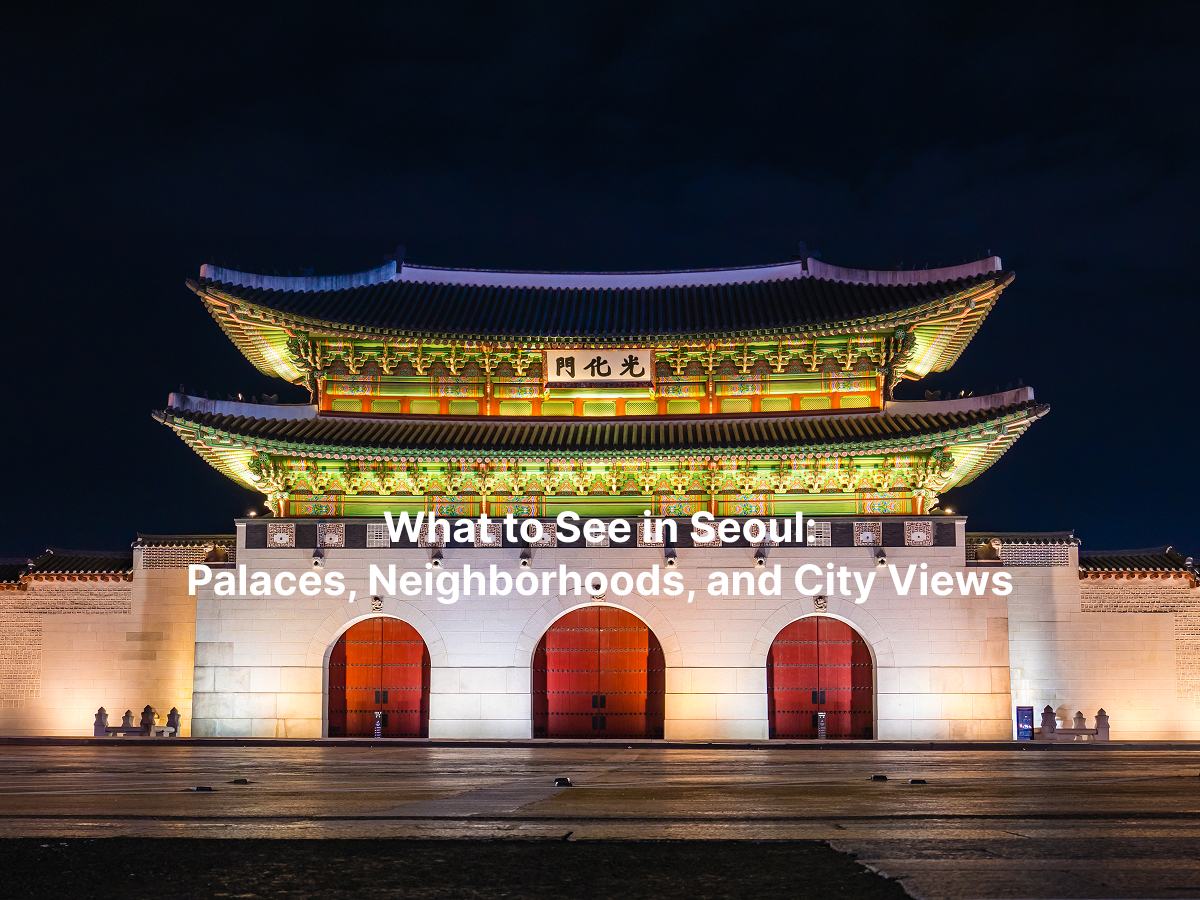
Seoul has five grand palaces from the Joseon Dynasty, and each played a different role. Gyeongbokgung served as the main royal palace, while Gyeonghuigung, the fifth, was a secondary palace used by several kings. This guide focuses on four of them. You don’t need to see all five, so pick one or two based on what you enjoy.
Gyeongbokgung: The Grand First Choice
Founded in 1395 and rebuilt in 1867 after being destroyed, Gyeongbokgung is the largest of Seoul’s five palaces. The scale is what impresses: gates, courtyards, throne halls, and pavilions set against a mountain backdrop. The Gyeonghoeru Pavilion, built on an island in a large pond, is a favorite photo spot on the grounds.
Right by Gwanghwamun Gate, you can catch a changing of the guard ceremony in traditional costume. It’s a fun way to start your visit. Plan on two to three hours.
Local tip: Arrive close to opening time. The main courtyards are much easier to photograph before the tour groups arrive.
Changdeokgung and Huwon Garden: The UNESCO Pick
Changdeokgung is a UNESCO World Heritage Site and is often called the best-preserved of Seoul’s five palaces. Instead of following a strict grid, its buildings sit naturally along the slope of the land, so it feels cozier and less formal than Gyeongbokgung.
The star attraction is Huwon, the rear garden, with its ponds, pavilions, and old trees. Entry to Huwon requires a separate ticket and a guided, timed tour, so check tour times, language options, and reservation availability before you go.
Local tip: If gardens matter more to you than grand courtyards, choose this palace over Gyeongbokgung. Autumn foliage makes Huwon especially beautiful.
Changgyeonggung and Deoksugung: Shorter, Quieter Visits
Changgyeonggung sits right next to Changdeokgung. Its story starts in 1418, when King Sejong prepared a palace called Suganggung for his father, King Taejong. In 1483, King Seongjong expanded it and renamed it Changgyeonggung. It holds Myeongjeongjeon, the oldest surviving main hall of any palace in Seoul (the current building dates to 1616). It’s compact, so about an hour is plenty.
Deoksugung is next to Seoul City Hall, which makes it easy to squeeze in between other downtown stops. It mixes traditional halls with Western-style buildings, a reminder of Korea’s move into the modern era.
Palace Comparison at a Glance (Four Palaces)
|
Palace |
Best for |
Typical visit time |
Nearest subway |
|---|---|---|---|
|
Gyeongbokgung |
First-timers, grand architecture |
2–3 hours |
Gyeongbokgung Station (Line 3) |
|
Changdeokgung |
Gardens, UNESCO heritage |
1.5–2.5 hours with a garden tour |
Anguk Station (Line 3) |
|
Changgyeonggung |
A quiet add-on next to Changdeokgung |
About 1 hour |
Hyehwa Station (Line 4) |
|
Deoksugung |
A downtown stop, East-meets-West architecture |
About 1 hour |
City Hall Station (Lines 1 and 2) |
You can also wear hanbok, the traditional Korean dress, to tour the palaces. Entry rules for hanbok wearers differ by palace and by event, so check the official palace guidance before you rent one. Rental shops cluster around Gyeongbokgung and Anguk, which makes it easy to change in the morning and head straight in.
Seoul Neighborhoods Worth Exploring: Historic and Contemporary
Palaces show you where Seoul’s kings once lived. Neighborhoods show you how the city lives now. They’re easy to walk, full of good food, and make a great follow-up to a morning at a palace.
Bukchon Hanok Village: Seeing a Lived-In Neighborhood Respectfully
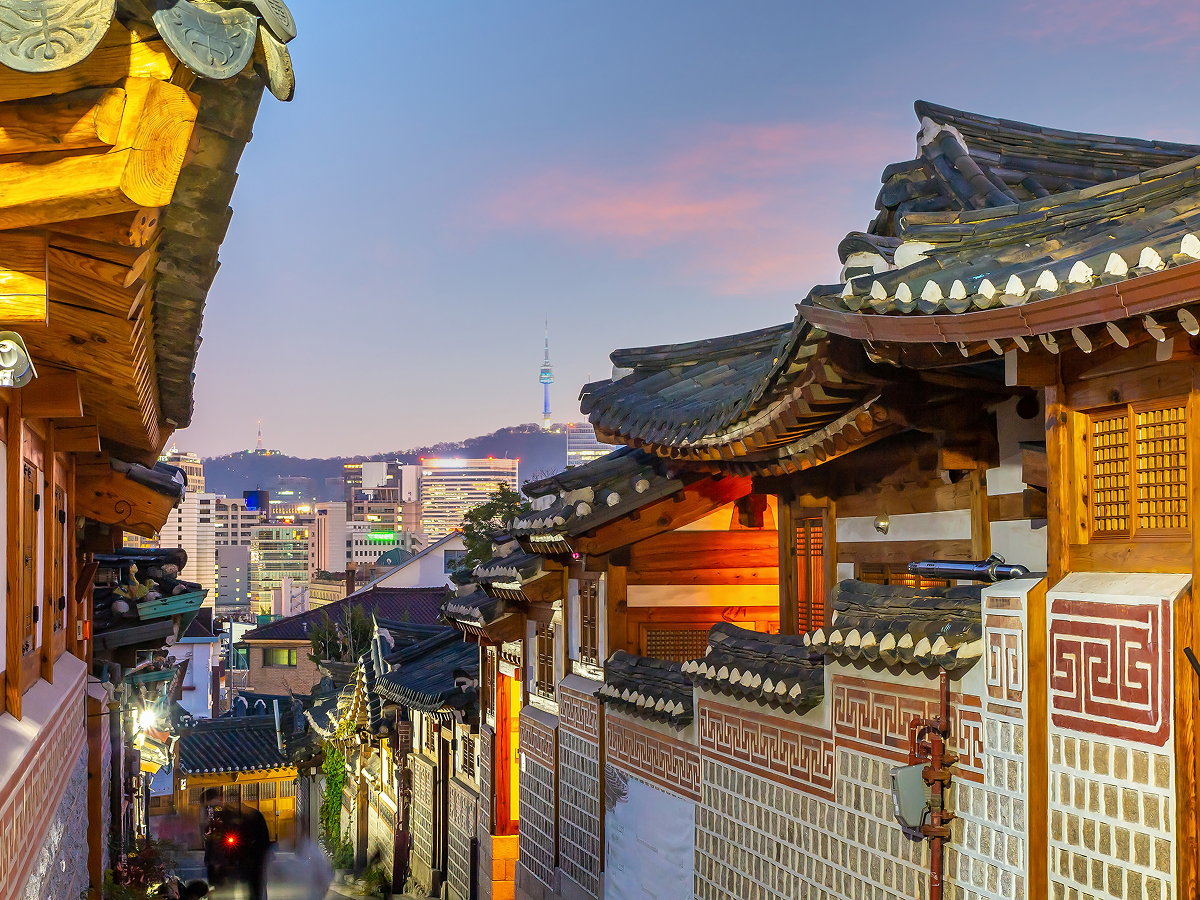
Bukchon sits between Gyeongbokgung and Changdeokgung, and its sloping lanes of tile-roofed hanok houses make it a favorite photo spot. But people really do live here. Because of overtourism, local authorities have designated Bukchon a special management area. In the red zone around Bukchon-ro 11-gil, tourists may visit only between 10 a.m. and 5 p.m., and fines apply for violations. Chartered tour buses are also restricted on designated road sections, with fines enforced since January 1, 2026.
Here’s how to handle it:
-
Visit between 10 a.m. and 5 p.m. if you’re heading into the red zone around Bukchon-ro 11-gil.
-
Keep your voice down and stay out of private property.
-
Check the latest notice from the Jongno District or Seoul city tourism office before you go, since rules can change.
Local tip: If the main lane feels packed, the quieter streets nearby in Gahoe-dong and Samcheongdong have similar rooftop views with fewer people. The nearest subway stop is Anguk Station (Line 3).
Seochon, Samcheongdong, and Insadong: Walkable Alternatives
Seochon, just west of Gyeongbokgung, has a laid-back local feel, with small restaurants, bookshops, and cafés tucked into converted hanok. Samcheongdong, on the east side, is known for galleries, boutiques, and tea houses along a pleasant main street.
Insadong is where you go for traditional crafts, calligraphy supplies, ceramics, and tea. It’s busier than the other two, but it’s easy to navigate, which makes it a reliable afternoon stop after a palace visit.
Local tip: Seochon is the easiest of the three to explore on a quiet weekday. Walk there from Gyeongbokgung Station, or reach Insadong via Anguk Station.
Ikseon-dong, Seongsu, and Hongdae: Contemporary Seoul
Want to see how Seoul gives old spaces new life? These three districts each do it differently.
-
Ikseon-dong: Narrow hanok alleys filled with cafés, small restaurants, and little shops. It’s compact, so it works as a short stop. Nearest subway: Jongno 3-ga Station.
-
Seongsu: A former industrial area where old factory buildings now house cafés, studios, and pop-up stores. Give it a few hours and wander without a plan. Nearest subway: Seongsu Station (Line 2).
-
Hongdae: Built around a university district and famous for street performances, nightlife, and youthful energy. It’s livelier after dark. Nearest subway: Hongik University Station (Line 2).
Local tip: All three are best in the late afternoon or evening, when the atmosphere picks up. They pair nicely with a palace visit earlier in the day.
Best City Views in Seoul: Towers, Peaks, and Fortress Walls
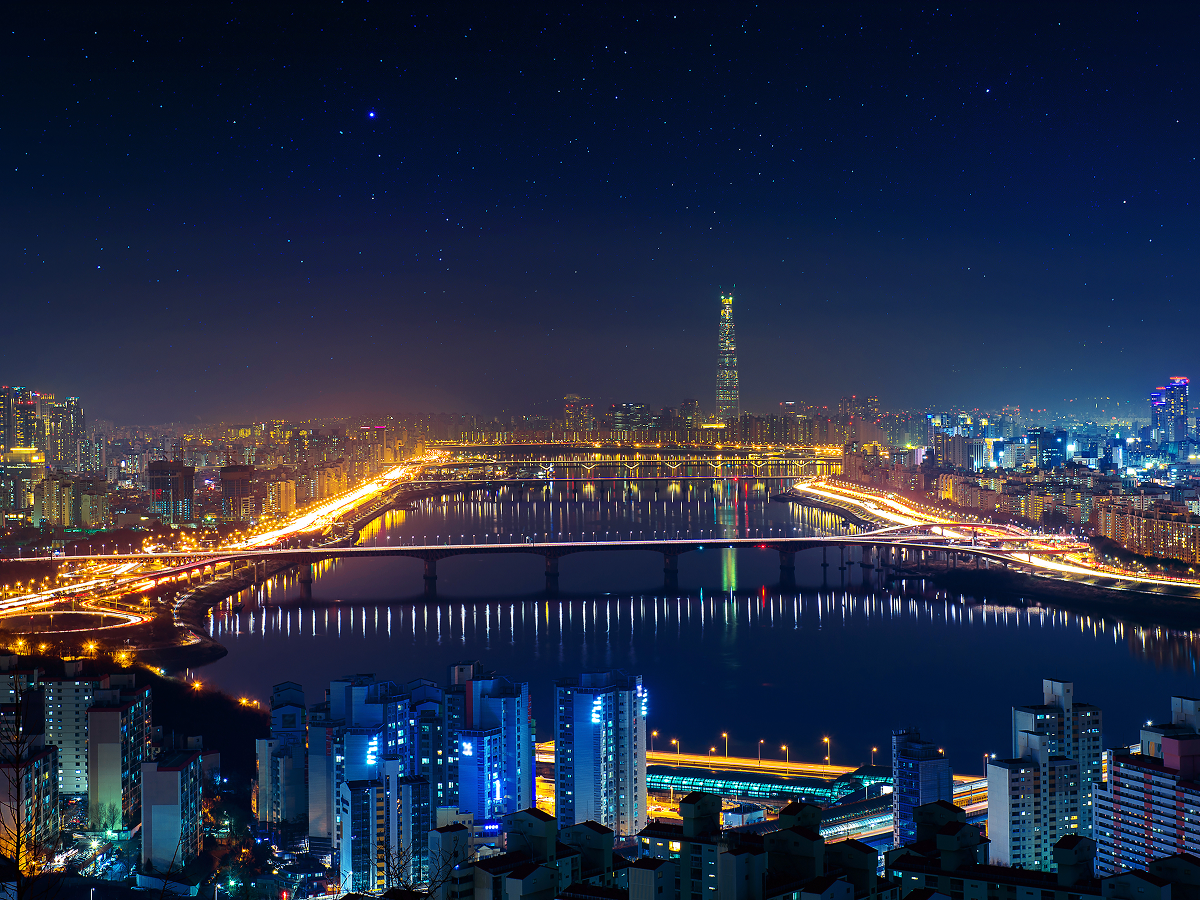
Mountains surround Seoul, so you can see the city from lots of angles. Which one you pick depends on whether you want a quick panorama, a modern skyscraper view, or a scenic walk.
N Seoul Tower and Namsan: The Classic Skyline
N Seoul Tower is about 237 meters tall and sits roughly 507 meters above sea level on top of Namsan, right in the middle of the city. You can ride the cable car or walk up through the park, then enjoy the views from the observation deck. Sunset is especially popular, when the city shifts from daylight to glittering evening lights.
Clear weather makes all the difference. Autumn often brings crisp air and great visibility, and spring adds cherry blossoms around Namsan Park.
Local tip: Ride the cable car up and walk the park path back down, or the other way around. Myeongdong Station is a convenient starting point for the cable car.
Seoul Sky at Lotte World Tower: The Vertical View
Lotte World Tower stands 555 meters tall, and the Seoul Sky observation areas take up the 117th to 123rd floors. You get a 360-degree view of the Han River, central Seoul, and the mountains beyond. It’s a great pick for a modern contrast to the historic sights, and the building’s lower floors have plenty of shops and restaurants.
Local tip: Check the visibility on the day you plan to go. A clear day makes a big difference at that height. Jamsil Station (Lines 2 and 8) connects to the tower area.
Seoul City Wall, Naksan, and Baegak Trail: Views With Walking
The Seoul City Wall once surrounded the Joseon capital, and long stretches of it still run along the hills. Naksan Park is one of the easier sections to reach, with city panoramas and a lovely evening glow. The Baegak Trail, which climbs Bugaksan behind Gyeongbokgung, reaches about 342 meters and rewards you with views over the palaces and the city.
These routes involve uphill walking, so they’re best if you’re comfortable with stairs and slopes. Check access points and opening hours before you set out.
Which View Fits You?
|
Viewpoint |
Effort level |
Best time |
Nearest subway |
|---|---|---|---|
|
N Seoul Tower (Namsan) |
Low to moderate (cable car or walk) |
Sunset or clear autumn days |
Myeongdong Station (Line 4) |
|
Seoul Sky (Lotte World Tower) |
Low (elevator access) |
Day or night, in clear weather |
Jamsil Station (Lines 2 and 8) |
|
Naksan Park and City Wall |
Moderate (uphill paths) |
Late afternoon to evening |
Hyehwa Station (Line 4) |
|
Baegak Trail (Bugaksan) |
High (steady climb) |
Morning |
Gyeongbokgung Station (Line 3), then a short ride or walk to the trailhead |
Sample Seoul Sightseeing Itineraries by Time and Energy
These routes group sights by area so you spend less time getting from place to place. Use them as a starting point and adjust to your pace.
Half-Day Highlights
Start at Gyeongbokgung in the morning, walk over to Samcheongdong for hanok scenery, and finish with tea in Insadong. Everything stays within one walkable area.
One Full Day: Palace, Neighborhood, Sunset View
Kick things off at Changdeokgung, with a Huwon garden tour if one is available. Then head to Bukchon before its 5 p.m. visiting cutoff and have lunch around Insadong or Ikseon-dong. In the late afternoon, make your way to Namsan and time it for sunset. You’ll go from historic to modern and finish with a great view.
Three Relaxed Days by Area
With three days, split the city into zones and keep each day light.
-
Day 1, the palace district: Gyeongbokgung, Bukchon or Samcheongdong, and Insadong.
-
Day 2, central Seoul: Deoksugung, a stroll around downtown, and Seongsu or Ikseon-dong in the evening.
-
Day 3, Jamsil and the river: Seoul Sky at Lotte World Tower, then a walk along the Han River.
 Frequently Asked Questions About What to See in Seoul
What is the best place to see in Seoul for first-time visitors?
Gyeongbokgung Palace is a great first stop. It’s the largest of Seoul’s five palaces and sits in the center of the city. It also pairs easily with a walk through a nearby hanok neighborhood, so you can see a palace and a neighborhood in a single morning.
How many days do you need to see Seoul’s main sights?
Two to three days is enough to see the main palaces, a neighborhood or two, and a couple of viewpoints without rushing. With one day, you can still hit the highlights if you group sights that are close together.
Which Seoul palace is best if I only have time for one?
Go with Gyeongbokgung if you want grand architecture and an easy, central visit. Pick Changdeokgung if you care more about gardens and UNESCO heritage. Either way, double-check the closing days first, since they differ for each palace.
Can tourists still visit Bukchon Hanok Village?
Yes, but tourist visiting hours are limited in the red zone around Bukchon-ro 11-gil, where visits are allowed between 10 a.m. and 5 p.m. The Bukchon section above explains how to plan your visit, and it’s worth checking the latest official notice before you go.
Where are the best city views in Seoul?
It depends on what you like. N Seoul Tower on Namsan is the classic central skyline view, Seoul Sky at Lotte World Tower is the modern high-rise option, and Naksan Park and the Seoul City Wall are best if you’d like a scenic walk.
Can I go sightseeing in Seoul while planning a medical or cosmetic procedure?
Some international patients combine travel with treatment, but the right timing depends on the procedure and on how you recover. Plan sightseeing around your medical appointments, and follow your care team’s advice on activity, sun exposure, and crowds.
Practical Tips: Seasons, Closures, and Visiting Rules
Best Seasons for Sightseeing in Seoul
-
Spring: Cherry blossoms around Namsan and the palace grounds.
-
Summer: Hot and humid, with a rainy stretch. Plan indoor stops like museums and observation decks.
-
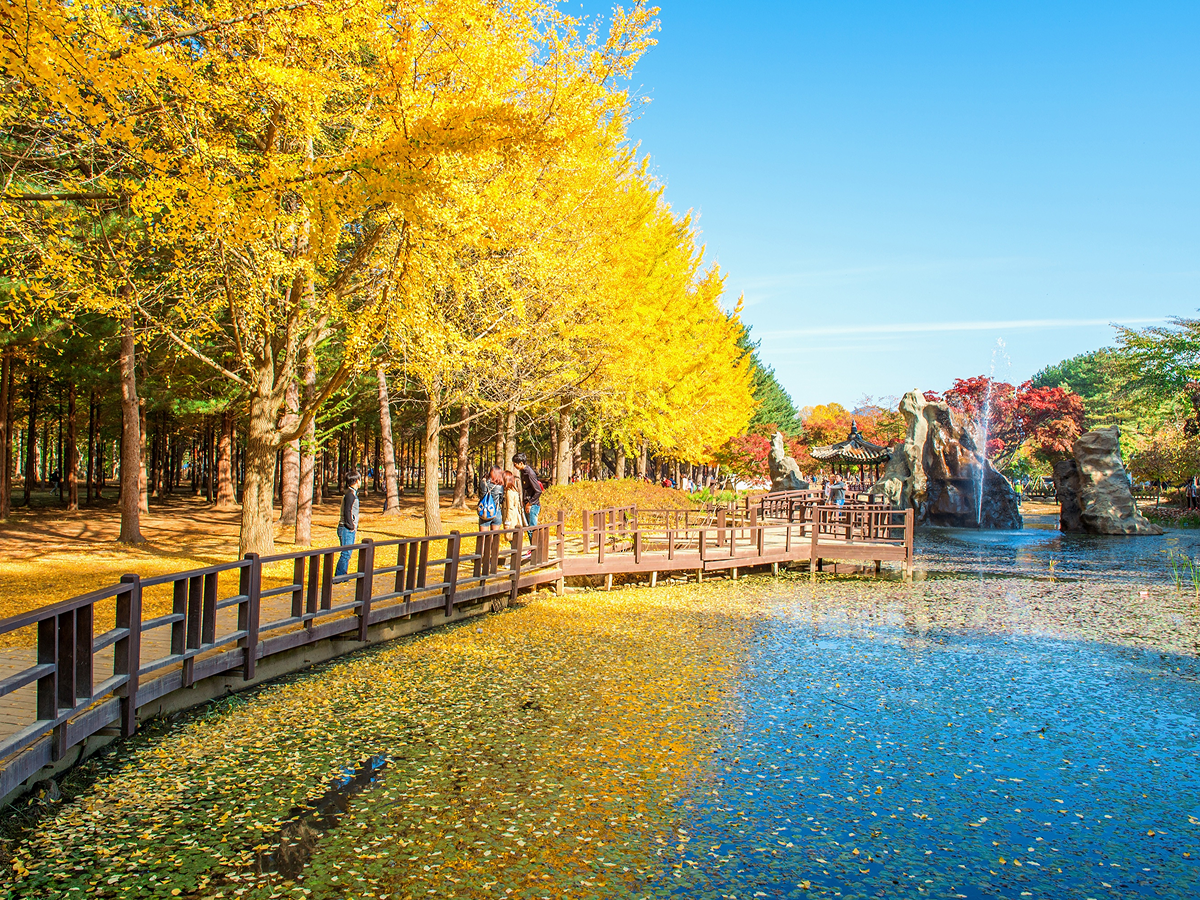
Autumn: Clear skies and colorful leaves, which make it a favorite for photos and skyline views.
-
Winter: Cold, but often crisp and clear, with snowy palace scenes.
If your trip includes a procedure, the time of year can also affect how comfortable you feel while you recover. Our guide to seasonal timing for plastic surgery recovery in Korea goes into more detail.
Closure Days and Reservation-Based Programs
Gyeongbokgung is normally closed on Tuesdays, while Changdeokgung, Changgyeonggung, Deoksugung, and Gyeonghuigung close on Mondays. Schedules can change on public holidays and during special events, so confirm before you go. Some programs, like Huwon garden tours and seasonal night viewings, need advance tickets or reservations and only run in certain periods.
Getting Around: Subway, Taxi, and Walking
Seoul’s subway reaches almost every place in this guide, with signs and announcements in English. A rechargeable transit card makes transfers simple. Taxis are handy for short hops or when your feet are tired, and many neighborhoods are best explored on foot, so comfortable shoes are the most important thing you can pack.
Local tip: Rules and hours get updated from time to time. Checking an official source a few days before your visit is more reliable than trusting an older article, including this one.
Sightseeing Around a Medical Trip: Pacing Your Time in Seoul
Some international visitors come to Seoul for a mix of reasons: culture, travel, and medical care. If you’re planning to visit AB Plastic Surgery during your stay, think about sightseeing in terms of pace instead of how much you can fit in. A relaxed plan makes the whole trip feel smoother.
Why Sightseeing Is Best Planned Around Your Medical Schedule
Consultations, procedures, and follow-up visits usually lock in certain days and times, so it’s easier to slot sightseeing into the gaps than to build your appointments around a packed tourist schedule. One approach is to see the big sights first, while your energy is high and there’s no recovery to think about, and keep later days lighter. For a bigger-picture look at how this kind of trip works, our guide to medical tourism in Korea covers what to know before a first procedure abroad.
Choosing Lower-Effort Spots
If your medical team has cleared you to go out, look for places with flat paths, spots to sit, and flexible timing. These are examples of lower-effort options, not a sign that outings suit everyone right after a procedure:
-
A short visit to Deoksugung or Changgyeonggung
-
A tea break in Insadong
-
An elevator-access viewpoint like Seoul Sky
Going at quieter times, such as weekday mornings, can make things more comfortable too.
Spots to Leave for Later
Uphill routes, long walking loops, and crowded events ask more of your body. The Baegak Trail, the steeper parts of the Seoul City Wall, and busy weekend districts may be better saved for another day or a future trip, depending on what your care team recommends. Whether to include them is a personal and medical decision, not just a travel one.
Confirming Your Plan With Your Medical Team
Everyone’s situation is different, so the safest move is to share your travel dates and sightseeing wish list with your medical team ahead of time and follow their advice on activity and aftercare. If this is your first time, our first-timer’s guide to plastic surgery in Seoul walks you through what to expect, step by step.
Seoul is a city that rewards curiosity, and a well-paced plan lets you enjoy its palaces, neighborhoods, and views without feeling rushed. If you’d like to talk through your travel dates alongside your medical plans, a consultation is a good place to start.
→ Request a Consultation with AB Plastic Surgery
Written by
AB Plastic Surgery
Updated on
November 26, 2026
This article is for informational purposes only and does not replace a personal medical consultation.