Title
Droopy Eyelid Surgery: Upper Blepharoplasty vs Ptosis CorrectionDate
2026-09-16Views
438
AB Blog
Droopy Eyelid Surgery: How to Choose Between Upper Blepharoplasty and Ptosis Correction
Table of Contents
1. Droopy Eyelid Surgery: Upper Blepharoplasty or Ptosis Correction?
2. How Surgeons Determine Which Droopy Eyelid Surgery You Need
3. When Are Upper Blepharoplasty and Ptosis Correction Combined?
4. Recovery, Risks, and Safety Planning for Droopy Eyelid Surgery in Korea
5. Frequently Asked Questions About Droopy Eyelid Surgery
Droopy eyelids can result from excess upper-eyelid skin, a low eyelid margin, descending eyebrows, or more than one of these factors. Because these concerns involve different anatomical structures, droopy eyelid surgery is not one standardized procedure.
Upper blepharoplasty primarily addresses excess skin and selected soft tissue, while ptosis correction adjusts the structures responsible for lifting the upper-eyelid margin. When both skin redundancy and true ptosis are present, the procedures may be combined within one personalized surgical plan.
Quick Answer: Upper blepharoplasty is generally considered when excess skin creates a heavy or hooded eyelid, while ptosis correction is considered when the eyelid margin itself sits too low. The correct choice depends on the source of the drooping, eyelid function, eye closure, and the relationship between both eyes.
This guide compares the two procedures, explains how surgeons select an appropriate approach, and summarizes combined surgery, recovery, risks, and safety planning for international patients considering eyelid surgery in Korea. Sudden eyelid drooping accompanied by double vision, unequal pupils, severe headache, or other muscle weakness requires medical evaluation before cosmetic treatment is considered.

Droopy Eyelid Surgery: Upper Blepharoplasty or Ptosis Correction?
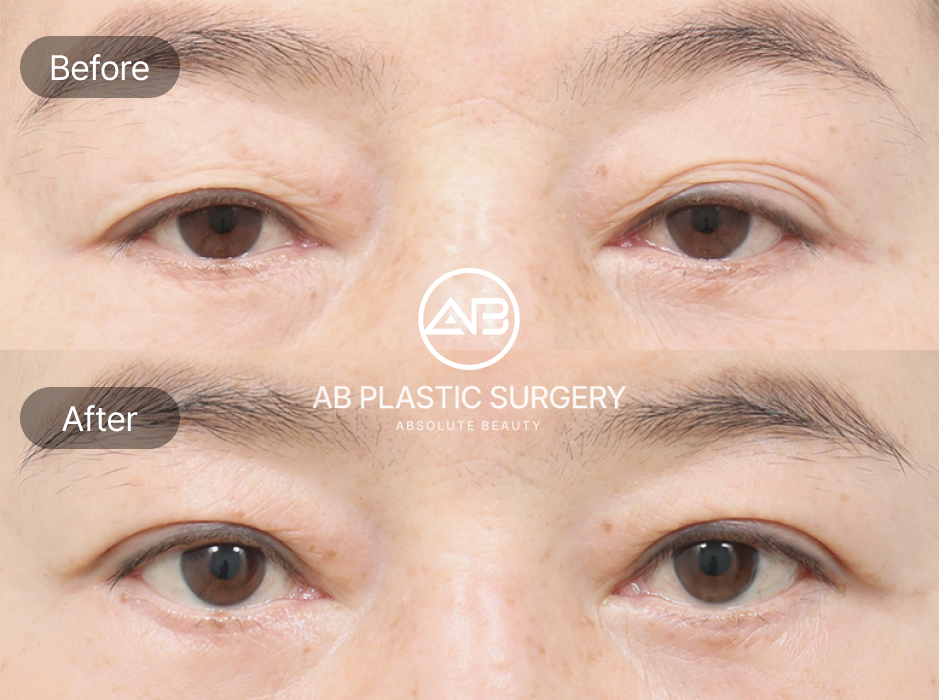
The correct droopy eyelid surgery depends on which structure is causing the eyelid to look heavy. Excess skin may fold over the crease or eyelashes even when the eyelid margin remains in a normal position. True ptosis, by contrast, occurs when the upper-eyelid margin itself sits too low. Brow descent and natural asymmetry can also contribute, and some patients have more than one cause.
|
Comparison |
Upper Blepharoplasty |
Ptosis Correction |
|---|---|---|
|
Primary concern |
Excess upper-eyelid skin and selected soft tissue |
A low upper-eyelid margin |
|
Main goal |
Reduce hooding and improve the upper-eyelid contour |
Improve eyelid height and opening |
|
Common visual sign |
Skin folds over the crease or eyelashes |
The eyelid margin covers more of the iris or pupil |
|
Primary structure addressed |
Upper-eyelid skin and selected soft tissue |
The eyelid-lifting mechanism |
|
When both may be needed |
When excess skin and a low eyelid margin occur together |
|
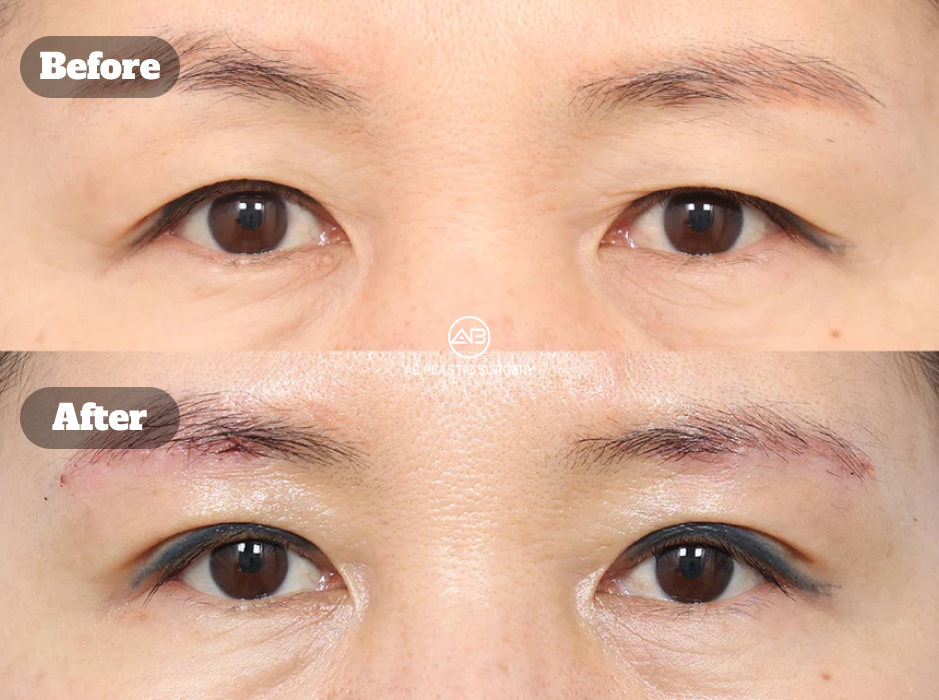
Upper blepharoplasty does not automatically correct true ptosis because changing eyelid height is not the primary purpose of standard skin-removal surgery. Likewise, ptosis correction does not necessarily remove redundant skin. Treating only one component may therefore leave part of the original concern unresolved when both conditions are present.
Brow position should also be considered. A descending eyebrow can push tissue toward the upper eyelid and create hooding that resembles an eyelid-only problem. For this reason, the choice between upper blepharoplasty, ptosis correction, or combined surgery should follow an assessment of the eyelids and eyebrows rather than appearance in a single photograph.
How Surgeons Determine Which Droopy Eyelid Surgery You Need
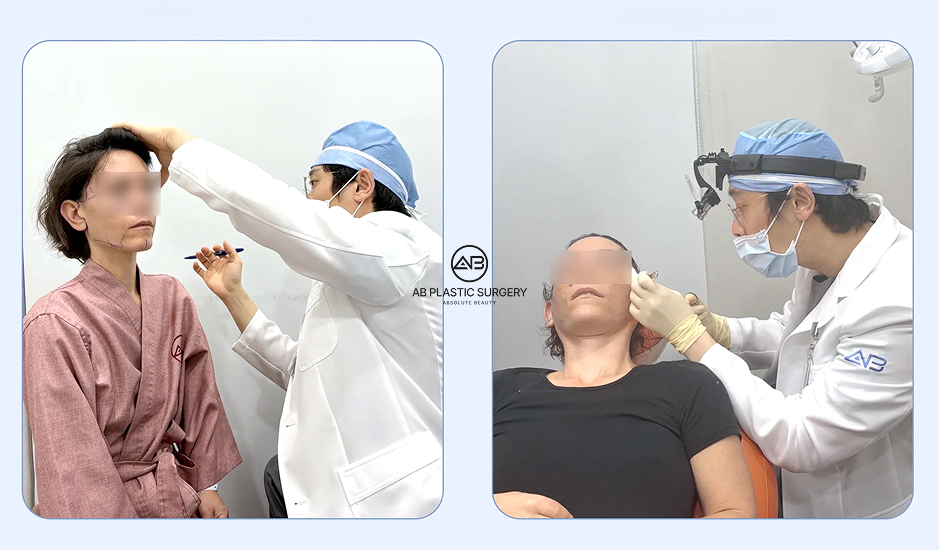
The choice of droopy eyelid surgery should be based on an examination rather than photographs alone. A surgeon evaluates where the eyelid margin sits, how much excess skin is present, how effectively the eyelid opens, and whether the eyebrows contribute to the heavy appearance.
|
Evaluation Area |
Why It Matters |
|---|---|
|
Eyelid margin position |
Helps determine whether true ptosis is present |
|
Skin and soft-tissue excess |
Shows whether upper blepharoplasty may be needed to reduce hooding |
|
Eyelid-lifting function |
Guides whether ptosis correction is appropriate and which approach may be considered |
|
Eyebrow position |
Identifies brow descent that may be contributing to upper-eyelid heaviness |
|
Eye closure and dry-eye symptoms |
Helps avoid excessive correction and informs surgical planning |
|
Baseline asymmetry |
Clarifies differences that existed before surgery and supports balanced planning |
The assessment should also include the patient’s existing eyelid crease, previous eye or eyelid surgery, contact lens use, medications, visual symptoms, and relevant medical history. If the drooping changes noticeably throughout the day or is accompanied by other eye or muscle symptoms, additional medical evaluation may be required before cosmetic surgery is planned.
One-sided drooping does not always mean that only one eyelid should be considered. The surgeon may assess both sides because eyebrow compensation, natural asymmetry, and the relationship between the eyelids can affect the apparent result. Complete symmetry cannot be guaranteed, but identifying these differences before surgery helps establish a more realistic and individualized plan.
Online consultation photos can help identify visible concerns, but they cannot replace an in-person examination of eyelid function and eye closure. The final decision between upper blepharoplasty, ptosis correction, or combined surgery should therefore be confirmed after a direct clinical assessment.
When Are Upper Blepharoplasty and Ptosis Correction Combined?
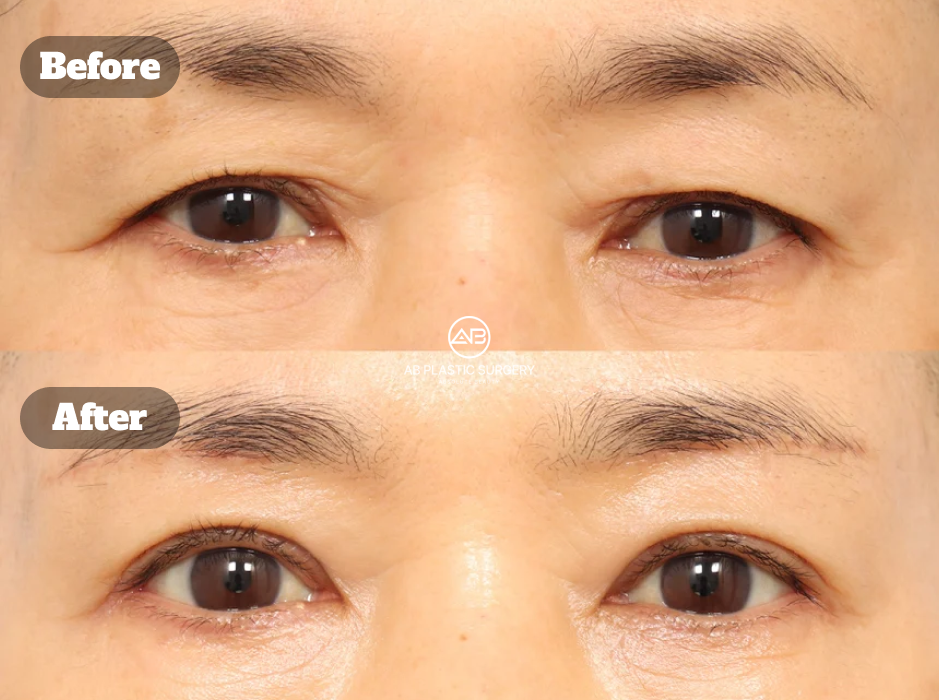
Upper blepharoplasty and ptosis correction may be combined when a patient has both excess upper-eyelid skin and a low eyelid margin. Upper blepharoplasty addresses the skin and selected soft tissue, while ptosis correction adjusts the eyelid-lifting mechanism. Performing both procedures can therefore address two different causes of drooping within one surgical plan.
If only excess skin is removed when true ptosis is also present, the eyelid margin may remain low. Conversely, correcting the eyelid height without addressing substantial skin redundancy may leave hooding over the crease. The amount of skin removal should be planned carefully in relation to the expected eyelid height, natural crease, eyebrow position, and ability to close the eyes.
Combined surgery may be considered when: excess skin folds over the eyelid, the eyelid margin also sits lower than expected, and both concerns can be treated without compromising natural eye closure or removing excessive tissue.
Ptosis correction should not be confused with double eyelid surgery. Double eyelid surgery primarily creates or defines an eyelid crease, whereas ptosis correction changes how the eyelid opens. These procedures can be performed together in selected cases, but creating a more visible crease does not automatically correct ptosis.
The surgical approach may be incisional or, in selected cases, non-incisional. The choice depends on eyelid function, tissue condition, previous surgery, desired crease, and the degree of correction required. More information about the available approaches is provided in Ptosis Correction in Korea: 7 Things You Must Know Before Eyelid Surgery.
Even when one eye appears more droopy, both eyelids should be evaluated. Pre-existing differences in eyelid height, crease, and eyebrow position can affect the balance after surgery, so the goal is individualized improvement rather than guaranteed perfect symmetry.
Recovery, Risks, and Safety Planning for Droopy Eyelid Surgery in Korea
Recovery after droopy eyelid surgery varies according to whether the patient undergoes upper blepharoplasty, ptosis correction, or both. The extent of surgery, tissue condition, individual healing response, and previous eyelid procedures can also affect the timeline.
Recovery and Result Evaluation
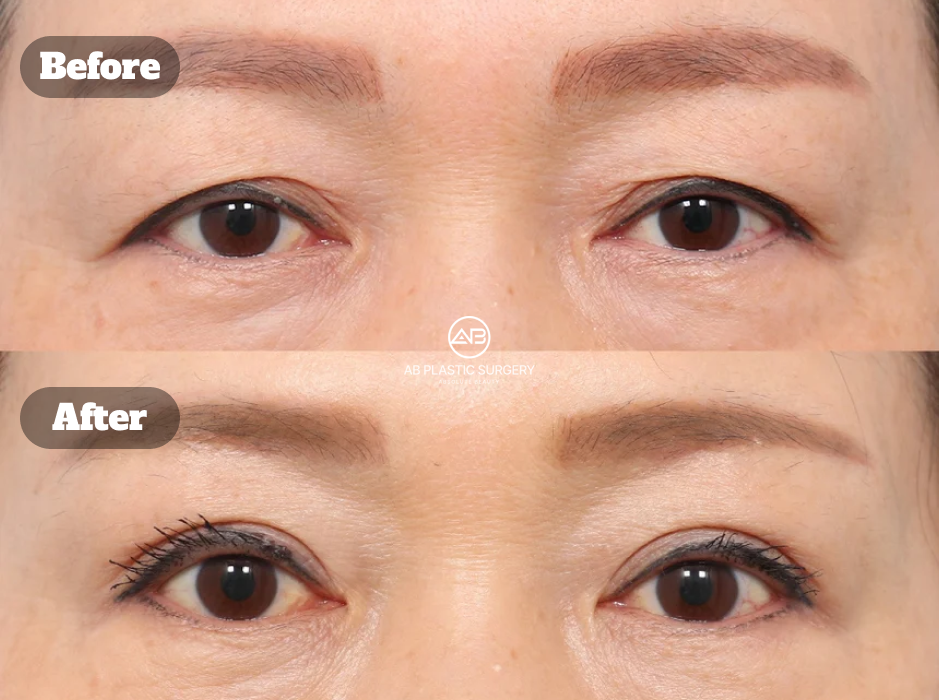
Swelling, bruising, tightness, and temporary differences between the eyelids are common during the early recovery period. These changes generally become less noticeable over the following weeks, but the eyelid crease and margin position may continue to settle for longer.
|
Recovery Stage |
What Patients May Notice |
|---|---|
|
First few days |
Swelling, bruising, tightness, and mild irritation |
|
First 1–2 weeks |
Visible swelling generally decreases, although temporary asymmetry may remain |
|
Following weeks to months |
The crease, scar, and eyelid position gradually become more stable |
Early asymmetry does not necessarily represent the final result because each eyelid may swell differently. Patients should follow the clinic’s postoperative instructions and avoid judging eyelid height or considering revision before sufficient healing has occurred.
Risks to Discuss Before Surgery
Potential risks include dry-eye symptoms, irritation, infection, bleeding, visible scarring, difficulty closing the eyes completely, contour irregularity, and persistent asymmetry. Ptosis correction may also result in undercorrection or overcorrection, and additional adjustment may occasionally be considered after healing.
Pre-existing dry eye, incomplete eye closure, previous eyelid surgery, and baseline asymmetry should be discussed before surgery because these factors may affect both the treatment plan and recovery. Results and recovery periods vary, and perfect symmetry cannot be guaranteed.
AB Safety Planning for International Patients
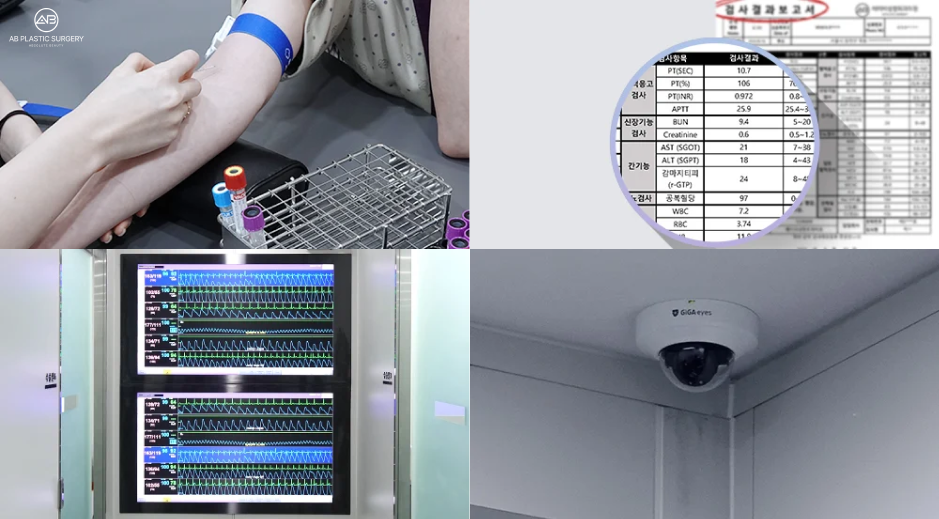
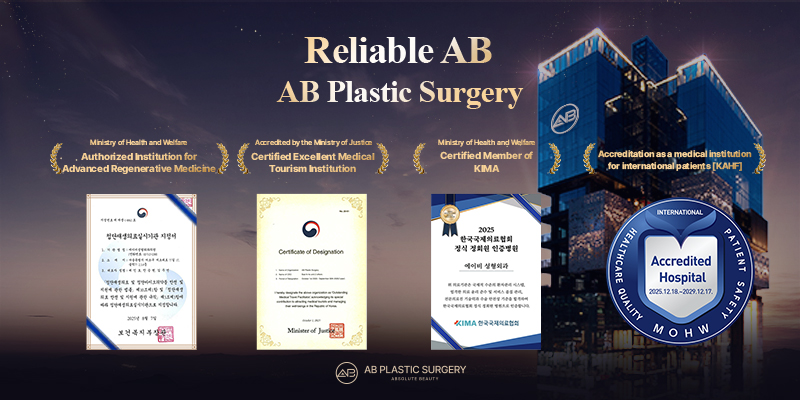
AB Plastic Surgery presents operating-room CCTV, real-time patient monitoring, and preoperative cross-check processes as parts of its surgical safety system. These systems support transparent surgical management but do not eliminate every surgical risk or guarantee a specific outcome. More information is available on the AB Plastic Surgery Safety System page.
International patients should confirm how long they need to remain in Korea, when stitches or follow-up checks are scheduled, and how postoperative concerns will be managed after returning home. Consultation photos and medical history can support initial planning, but the final surgical decision should be made after an in-person examination.
Patients considering treatment in Korea can request a personalized review through AB Plastic Surgery’s Free Online 1:1 Consultation. Final costs and schedules may vary according to the selected procedure, surgical complexity, and individual condition.

Frequently Asked Questions About Droopy Eyelid Surgery
Can upper blepharoplasty correct ptosis?
Upper blepharoplasty can reduce hooding caused by excess skin, but it does not automatically correct true ptosis. If the upper-eyelid margin itself sits too low, ptosis correction may be required to adjust the eyelid-lifting mechanism.
How do I know whether I need blepharoplasty or ptosis correction?
Upper blepharoplasty may be considered when excess skin is the main cause of hooding. Ptosis correction may be considered when the eyelid margin sits too low. A clinical examination of skin excess, eyelid height, lifting function, eyebrow position, and eye closure is needed to distinguish between them.
Can upper blepharoplasty and ptosis correction be performed together?
Yes. Combined surgery may be considered when excess upper-eyelid skin and true ptosis occur together. The amount of skin removal and eyelid elevation must be planned together to preserve natural eye closure and balance between the eyelids.
Is ptosis correction the same as double eyelid surgery?
No. Double eyelid surgery primarily creates or defines an upper-eyelid crease, whereas ptosis correction changes how the eyelid opens. The procedures may be combined in selected cases, but creating an eyelid crease alone does not necessarily correct ptosis.
Can only one droopy eyelid be corrected?
One-sided correction may be considered, but both eyelids should be evaluated before surgery. Natural differences in eyelid height, crease position, eyebrow compensation, and lifting function can influence the balance after treatment. Perfect symmetry cannot be guaranteed.
How long does recovery take after droopy eyelid surgery?
Visible swelling and bruising often improve during the first one to two weeks, but the eyelid crease, scar, and margin position may continue to settle over the following weeks or months. Recovery varies depending on the procedure, surgical extent, and individual healing response.


This article is for informational purposes only and does not replace a personal medical consultation.