Title
Stem Cell Treatment vs Rejuran: Which Is Better for Skin Rejuvenation?Date
2026-07-15Views
1231
AB Blog
Stem Cell Treatment in Korea vs Rejuran for Skin Rejuvenation: Which Option Is Right for You?
Table of Contents
1. What Is Stem Cell Treatment? (Regeneration at the Source)
2. What Is Rejuran? (Surface-Level DNA Repair)
3. Stem Cell Treatment vs Rejuran: Key Differences
4. Which One Is Better for Your Skin?
5. Stem Cell Treatment Cost in Korea
6. Frequently Asked Questions
7. Why Choose AB Plastic Surgery Korea
Quick answer: Stem cell treatment and Rejuran are both regenerative skin treatments, but they work on different layers. Rejuran (also known as Rejuran Healer) is a salmon-derived polynucleotide (PN) skin booster that improves surface skin quality — hydration, fine lines, and texture. Stem cell treatment — sometimes called a stem cell facial or stem cell skin treatment — uses your own (autologous) cells to target deeper, structural concerns such as elasticity loss and volume depletion. For early skin-quality maintenance, Rejuran is often the simpler choice; for deeper, structural aging, stem cell treatment may be considered after a medical consultation. Many patients combine both — the right plan depends on your skin, not on a trend.
By 2026, regenerative medicine has moved from a niche curiosity to the center of the anti-aging conversation — and two names come up more than any others: stem cell treatment and Rejuran. Both promise to “regenerate” your skin, both work with your body rather than against it, and both have a strong following in Korea. So when patients ask which one is better for skin rejuvenation, the honest starting point is this: they are not rivals doing the same job — they work on completely different layers of your skin.
The simplest way to understand the difference is by depth. Rejuran refines the surface; stem cell treatment works deeper, on the structure. One improves skin quality from the top down, the other supports regeneration from within. This guide breaks down how each works, who each suits, how long results last, and what stem cell treatment in Korea costs, so you can match the treatment to your actual skin.
Curious how this looks at the celebrity level? See what Kim Kardashian actually got.
Medically reviewed by the AB Plastic Surgery Korea medical team. Last reviewed: June 2026.

What Is Stem Cell Treatment? (Regeneration at the Source)
Stem cell treatment is regenerative care at its most fundamental. Rather than sitting on the skin’s surface or filling a line, it uses your body’s own master cells to help repair and renew aging tissue from within. For patients with deeper structural aging — not just surface dullness — it represents a more advanced, structurally focused option on the skin rejuvenation spectrum.
How Stem Cell Treatment Works
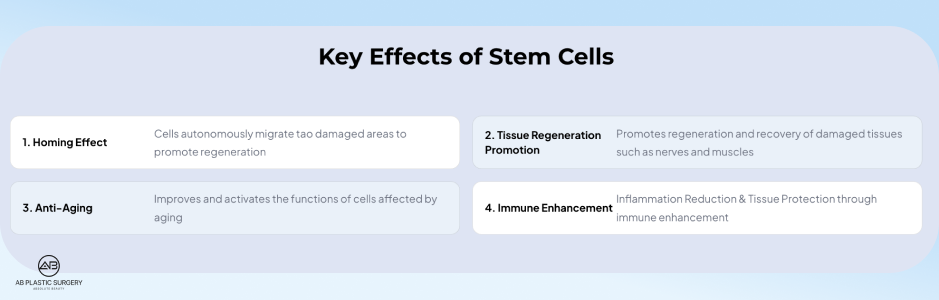
Most aesthetic stem cell treatment uses autologous cells — meaning they come from your own body, typically from fat tissue. Adipose-derived stem cells (ADSCs) are valued because they can differentiate into fibroblasts and other regenerative cell types, and because using your own cells minimizes the risk of immune rejection. Once delivered into the skin, these cells may work in two ways at once: supporting repair of damaged tissue, and releasing growth factors and cytokines that signal surrounding cells to regenerate. The goal is not to “implant new skin,” but to help reactivate your own repair processes.
This is why stem cell results tend to develop over weeks to months rather than appearing overnight — you are watching gradual regeneration, not a temporary cosmetic effect.
Types of Stem Cell Treatment at AB
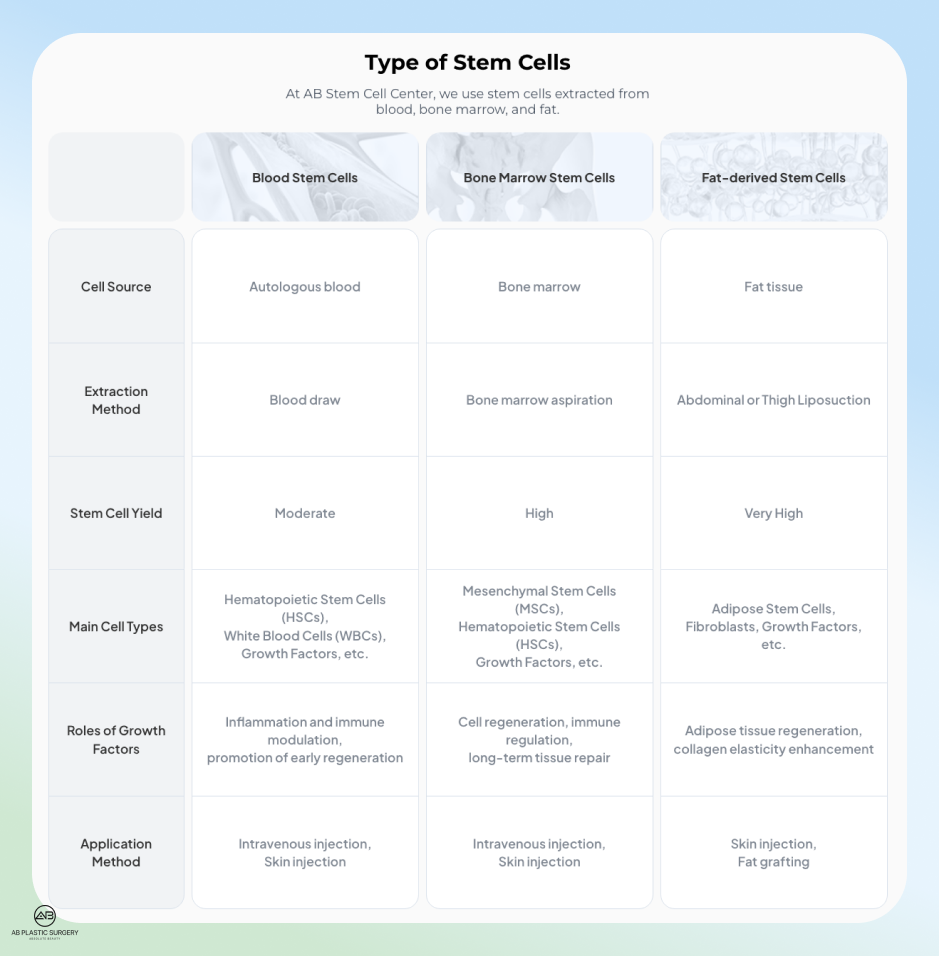
Stem cell care is not one single procedure. At AB Plastic Surgery Korea, regenerative treatment is tailored to the concern, ranging from skin-focused therapies to volume and lifting applications:
-
Activated Stem Cells — high-concentration ADSC therapy focused on skin regeneration and anti-aging
-
Stem Cell Fat Grafting — enriching transferred fat with stem cells to improve survival and create natural, lasting volume
-
Stem Cell Facelift / Anti-Aging — regenerative support for elasticity and firmness
-
Fat-, Blood-, and Bone Marrow-derived options — different harvest sources matched to treatment goals
To see how each regenerative protocol is applied, explore stem cell treatment in Korea at AB.
What Stem Cell Treatment Targets
Because it works at depth, stem cell treatment is generally considered for the structural and cumulative signs of aging rather than surface texture alone. It is most often discussed for:
-
Loss of firmness and elasticity
-
Volume depletion and hollowing
-
Advanced or multi-layered aging
-
Recovery and regeneration after procedures such as fat grafting or laser resurfacing
Why Korea Leads in Regenerative Stem Cell Care
Korea sits at the forefront of combining regenerative science with aesthetics, supported by structured regulatory oversight and a high volume of clinical experience. As stem cell treatment in Korea standardizes through 2026, the gap between clinics that simply offer “stem cell” services and those operating under Korea’s advanced regenerative medicine framework is widening — a distinction that matters enormously for safety and cell quality, and one we return to in the final section.
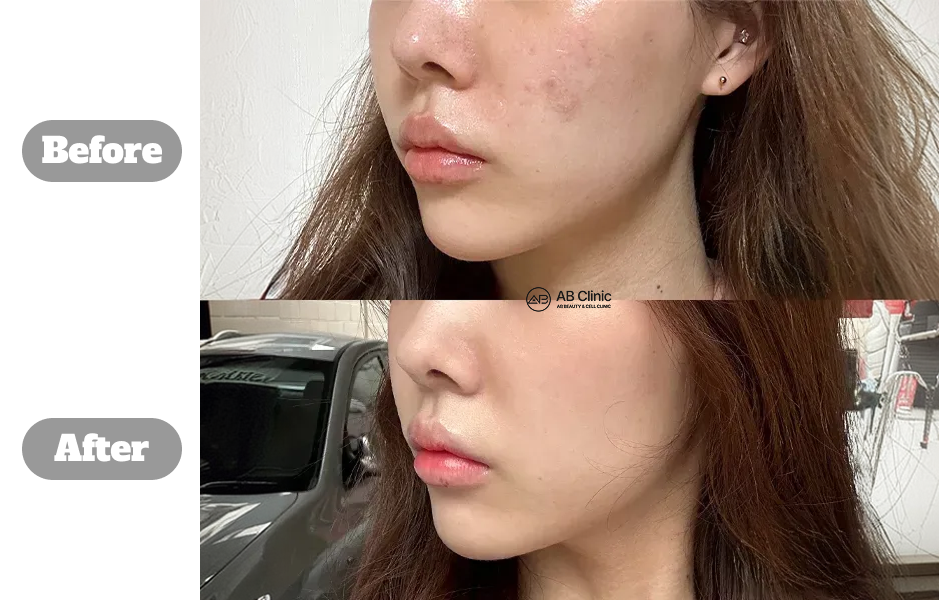
What Is Rejuran? (Surface-Level DNA Repair)
If stem cell treatment works deeper on the structure, Rejuran refines from the surface down. It is one of Korea’s most popular injectable skin boosters, and for good reason — it delivers visible improvements in skin quality with minimal downtime. But it operates in a different layer, and on a different timeline, than stem cell therapy.
How Rejuran Works
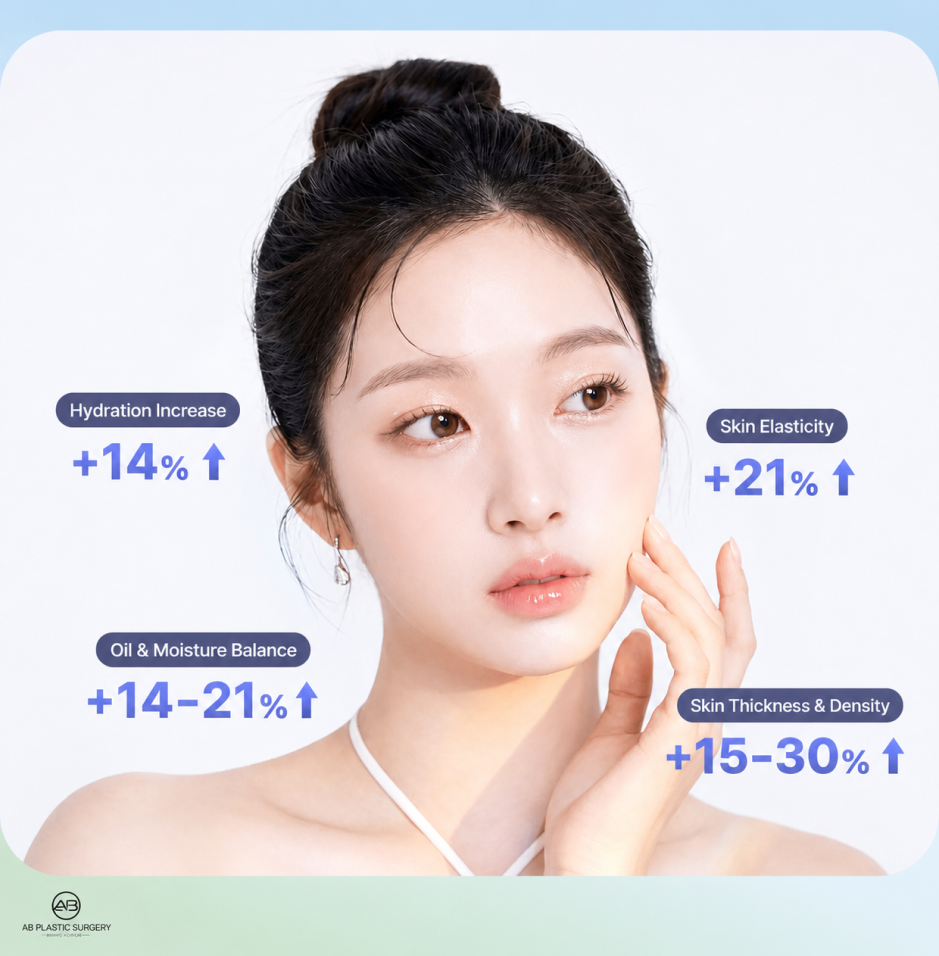
Rejuran is built on polynucleotides (PN) — purified DNA fragments derived from salmon. Developed and manufactured in Korea by PharmaResearch, it is injected into the dermis, where the polynucleotides help improve the condition of damaged skin and create a supportive scaffold that encourages fibroblast activity. Rather than adding volume, Rejuran improves the skin’s own quality: hydration, elasticity, and resilience. Think of it as restoring the health of the skin you already have, near the surface.
What Rejuran Targets
Rejuran is especially well matched to early and surface-level aging concerns, and tends to appeal to patients seeking maintenance rather than major correction:
-
Skin hydration and a luminous, “glass skin” quality
-
Fine lines and rough or crepey texture
-
Loss of surface elasticity
-
Preventive skin-quality maintenance, often from the late 20s to early 40s
For a deeper, expert-led breakdown of how the treatment works, read 7 essential facts about Rejuran.
Rejuran's Limitations
Rejuran is excellent at what it does, but it has clear boundaries. Because it works near the surface, it does not restore lost volume or change underlying facial structure, and it cannot lift sagging tissue. Results are also built gradually through a course of sessions — commonly three to four treatments spaced about four to six weeks apart, with periodic maintenance afterward. For surface skin quality, that is a fair trade. For deep structural aging, it is where stem cell treatment becomes relevant.
Stem Cell Treatment vs Rejuran: Key Differences
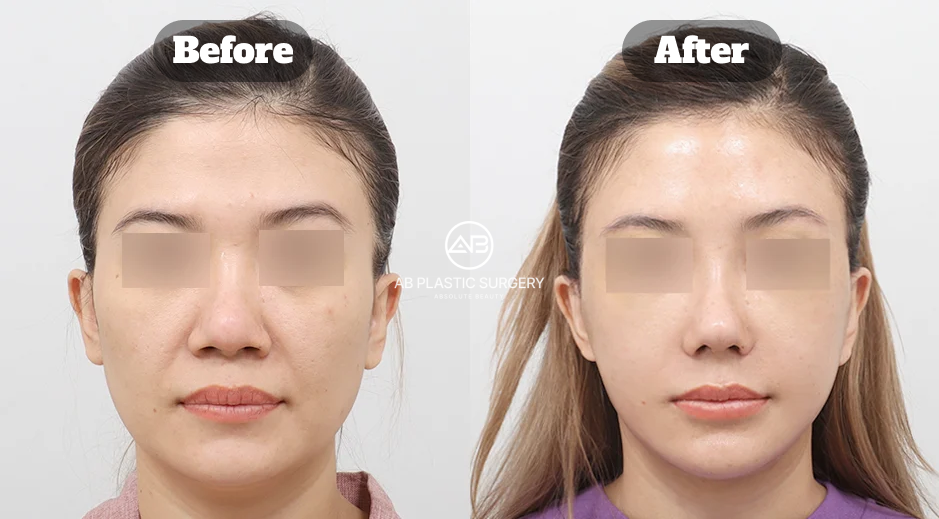
Both treatments are biologics-based and both support regeneration — but the layer they work in, the longevity of the result, and the type of concern they address are fundamentally different. The expanded table below puts them side by side, followed by the single distinction that matters most.
|
|
Stem Cell Treatment |
Rejuran |
|---|---|---|
|
Source / Material |
Your own stem cells (e.g. fat-derived ADSC) |
Salmon-derived polynucleotides (PN) |
|
Mechanism |
Supports tissue regeneration & deeper structural repair |
Improves skin quality & surface repair |
|
Treatment Depth |
Deeper / structural layers |
Dermis (surface-level) |
|
Best For |
Elasticity loss, volume depletion, structural aging |
Hydration, fine lines, texture, glow |
|
Onset of Results |
Gradual, over weeks to months |
Surface improvement over a few weeks |
|
Longevity |
Longer-term, regenerative |
Medium-term; maintenance needed |
|
Sessions |
Fewer, plan-based |
Typically 3–4, every 4–6 weeks |
|
Downtime |
Variable; involves cell harvesting & recovery |
Minimal; redness or small bumps for approximately 24–72 hours |
|
Evidence Level |
Aesthetic use follows clinic protocols and national regenerative-medicine rules; confirm regulatory status locally. |
PN-based medical device with published clinical studies. |
|
Ideal Candidate |
Deeper or multiple aging concerns. |
Early, surface-level skin-quality maintenance. |
Depth of Regeneration: Structural vs Surface
This is the heart of the comparison. Rejuran improves the quality of your existing skin near the surface — smoother, more hydrated, more resilient. Stem cell treatment works deeper, aiming to support regeneration of the tissue beneath and, with it, elasticity and volume. Neither is “stronger” in the abstract; they simply operate at different levels. The right choice depends on whether your concern lives on the surface or in the structure.
In short: if your goal is deeper tissue regeneration and longer-lasting anti-aging, stem cell treatment is generally the stronger option; if your goal is surface texture, hydration, and faster recovery at a lower cost, Rejuran may be enough on its own.
Beyond the Two: Where PRP, Exosomes, and Metacell Fit
You will likely encounter several other names in the same search: PRP, exosomes, and Metacell. They sit on the same regenerative spectrum. PRP (platelet-rich plasma) uses your own blood to deliver growth factors — a mild stimulator often chosen for early concerns or as an add-on. Exosome treatment, one of 2026’s fastest-rising trends, uses nano-sized vesicles secreted by stem cells that carry regenerative “instructions” to your skin cells.
Metacell (MCT) — short for Meta Cell Technology — is a newer, autologous (your-own-blood) regenerative treatment that AB has introduced. Using a dedicated device, it processes a small sample of your own blood to activate and amplify your own exosomes and growth factors, then re-injects them. According to the system, it generates a high concentration of autologous exosomes from your own platelets and stem cells, and produces around three times the key growth factors (such as EGF, PDGF, TGF, FGF-2, and VEGF) of conventional PRP, while supporting cellular energy (ATP) and helping reduce inflammatory signals. Positioned as a step beyond conventional PRP, Metacell focuses on skin quality, recovery, and regeneration — pore refinement, fine lines, tone, and post-procedure healing — with little to no downtime because it works from your own blood. Like Rejuran, it targets surface-to-mid skin quality rather than the deeper structural change that stem cell treatment addresses.
In practice, these are often complementary rather than competing, and many Korean clinics layer stem cell treatment, exosomes, Metacell, and Rejuran for a more complete anti-aging result — a point we return to in the FAQ on combining treatments.
Which One Is Better for Your Skin?
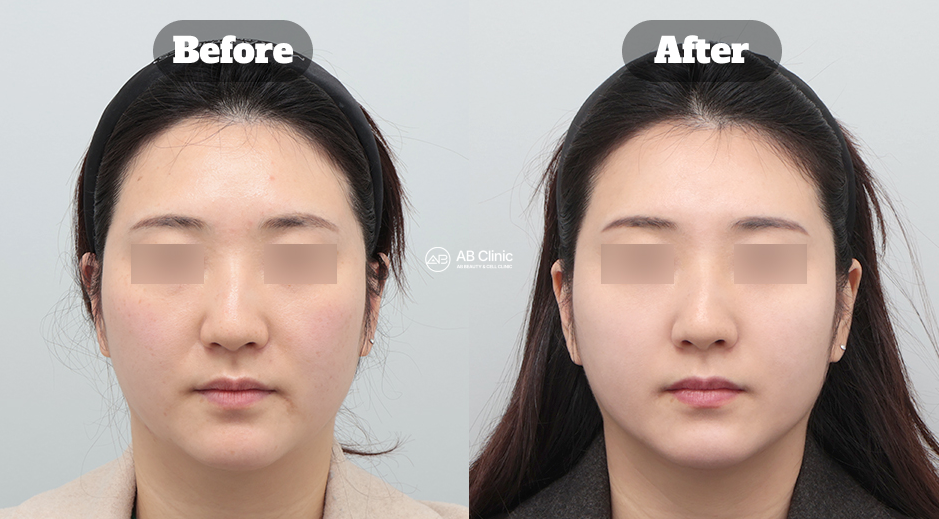
There is no universal winner — only the treatment that best matches your skin concern, age, and goals. Use the at-a-glance guide below as a starting point, then confirm with a professional assessment.
At-a-Glance: Which Treatment Suits Your Concern
|
Your main skin concern |
Often the better starting point |
|---|---|
|
Hydration, fine lines, glow |
Rejuran |
|
Rough or crepey surface texture |
Rejuran |
|
Loss of firmness and elasticity |
Stem cell treatment |
|
Volume depletion or hollowing |
Stem cell treatment |
|
Multiple or deep aging concerns |
Stem cell treatment (± Rejuran) |
Choose Stem Cell Treatment If…
-
You have multiple or deeper aging concerns — firmness, elasticity, volume loss
-
You are looking for longer-term, structural regeneration rather than a surface refresh
-
You want comprehensive rejuvenation, often in your late 30s and beyond
-
You are regenerating tissue after another procedure
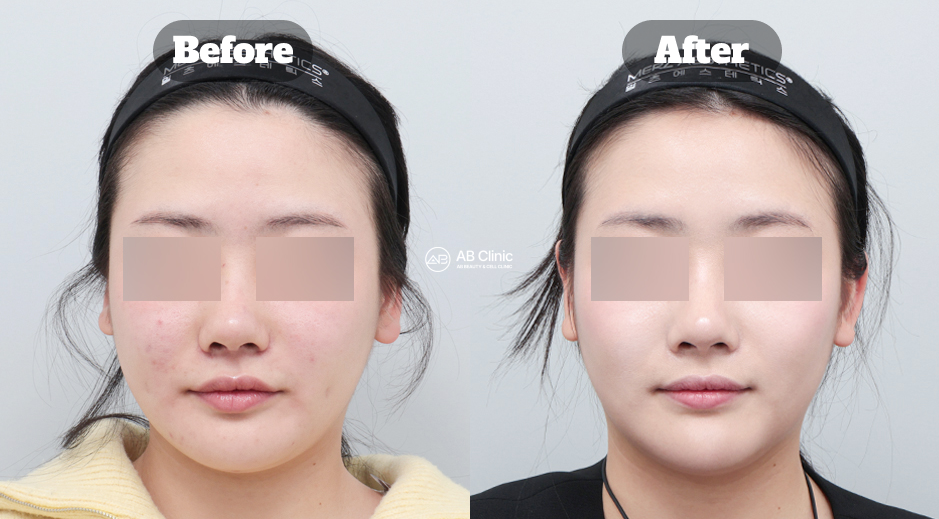
Choose Rejuran If…
-
Your main concern is hydration, fine lines, or dull, rough texture
-
You want to improve skin quality and glow with minimal downtime
-
You are focused on preventive maintenance rather than major correction
-
You are in your late 20s to early 40s and want to protect skin health early
When a Combination Approach Makes Sense
For many patients, the answer is not “either/or.” A common strategy is to use stem cell treatment for deeper, structural regeneration while using a surface-level option such as Rejuran, exosomes, or Metacell (MCT) to polish skin quality — layering depth and surface for a more complete result. The ideal sequence and combination should always be planned around your anatomy by a specialist.
To see how real patients combined treatments, including results, recovery, and cost, read real patient stories at AB.
A Quick Safety Note Before You Decide
Regenerative treatments are regulated differently from country to country, so what is offered in Korea may differ from your home country. Always confirm a treatment’s status and suitability through a qualified medical consultation rather than relying on a general guide.
Some people should delay or avoid these treatments, or need individual medical review first — for example, those who are pregnant or breastfeeding, have an active infection, have certain immune-related conditions, or take blood thinners or other relevant medications. This article is general information, not medical advice.
Stem Cell Treatment Cost in Korea
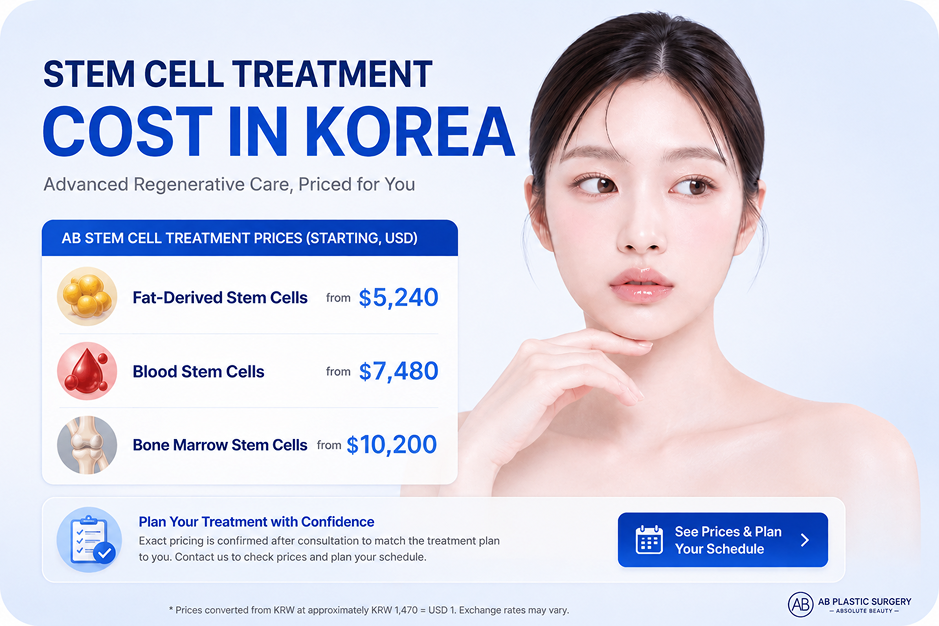
Cost is one of the first questions international patients ask, and stem cell treatment sits at the more advanced end of regenerative care, so its pricing reflects the harvesting, purification, and processing involved. Below are AB Plastic Surgery Korea’s listed starting prices for stem cell treatment, shown in approximate US dollars (converted from KRW at roughly KRW 1,470 = USD 1; exchange rates move daily, so treat USD figures as planning estimates).
AB Stem Cell Treatment Prices (Starting, USD)
-
Fat-Derived Stem Cells — from $5,240
-
Blood Stem Cells — from $7,480
-
Bone Marrow Stem Cells — from $10,200
A note on these figures: think of them as a floor, not a final bill. The cell source, the amount of tissue harvested, and the purification and separation process all shape how much regenerative material you receive — and therefore your real cost. Your exact figure is set only after a consultation matches the plan to you, not to an average.
Looking for Rejuran pricing instead? Because Rejuran is a dermatology skin-booster treatment rather than a surgical procedure, its cost is quoted separately during consultation rather than listed here — ask the team for current Rejuran options when you enquire.
Check Prices and Plan Your Schedule
If you want a number you can budget against — plus a treatment schedule mapped to your stay — the fastest route is the dedicated pricing and scheduling page.
→ See Prices & Plan Your Schedule
Key takeaways
-
Stem cell treatment focuses on deeper regeneration, elasticity, and structural anti-aging.
-
Rejuran focuses on repairing damaged surface skin and improving hydration and texture.
-
Stem cell treatment generally lasts longer but costs more; Rejuran usually needs several maintenance sessions.
-
Choose by concern: surface skin quality → Rejuran; deeper or structural aging → stem cell treatment.
-
Many Korean clinics combine stem cell treatment, exosomes, Metacell (MCT), and Rejuran for a more complete result — confirm the right plan in a medical consultation.
Frequently Asked Questions
Is stem cell treatment safe?
When performed at a properly equipped, regulated institution, regenerative treatments are generally well tolerated. Because aesthetic stem cell treatment typically uses your own cells, the risk of immune rejection is low, but cell harvesting and processing must follow strict protocols, and regulations vary by country. Safety also extends to the procedure itself: at AB Plastic Surgery Korea, a board-certified anesthesiologist is on-site for plastic surgery anesthesia and sedation (sleep) anesthesia, and the clinic reports a record of zero medical accidents since opening in September 2020. Choosing a recognized regenerative-medicine institution — and confirming suitability in consultation — is the most important safety step.
How much does stem cell treatment cost in Korea?
At AB Plastic Surgery Korea, stem cell treatment starts at approximately $5,240 for fat-derived stem cells, $7,480 for blood stem cells, and $10,200 for bone marrow stem cells (USD figures are approximate, converted from KRW). These are starting figures — your final cost depends on the cell source, the volume harvested, and the purification process, and is confirmed at consultation. Rejuran, as a skin-booster treatment, is priced separately.
Stem cell vs Rejuran - which lasts longer?
Stem cell treatment generally aims for longer-lasting, regenerative results because it works on the deeper structural layers, while Rejuran improves surface skin quality and is usually maintained with periodic sessions (results often last several months). The trade-off is timeline: stem cell results build gradually over weeks to months, whereas Rejuran shows surface improvement within a few weeks.
Can I combine stem cell treatment with Rejuran, exosomes, or Metacell?
Often, yes — they can be complementary. Because they work on different layers, stem cell treatment can address deeper, structural regeneration while Rejuran, exosomes, or Metacell (MCT) refine surface skin quality. The right combination and sequence should be planned around your skin by a specialist rather than chosen by default.
How many sessions are needed, and when will I see results?
It depends on the treatment and your skin. Stem cell treatment is typically plan-based with fewer sessions, and results develop gradually as regeneration occurs over weeks to months. Rejuran is usually done as a course of three to four sessions spaced four to six weeks apart, with surface improvements appearing sooner. Your exact protocol is set during consultation.
Who should avoid or delay these treatments?
Some people should delay treatment or have an individual medical review first — for example, those who are pregnant or breastfeeding, have an active infection, have certain immune-related conditions, or take blood thinners or other relevant medications. Regulations for regenerative treatments also differ by country, so always confirm suitability with a qualified doctor before proceeding.
What is Metacell (MCT), and how does it compare to stem cell treatment?
Metacell (MCT, Meta Cell Technology) is an autologous treatment, newly introduced at AB, that draws on your own blood to activate and amplify your own exosomes and growth factors, then re-injects them to support skin regeneration and recovery. According to the system, it produces around three times the growth factors of conventional PRP and supports cellular energy (ATP), with little to no downtime; it is usually done as a course of three or more sessions every three to four weeks. Compared with stem cell treatment, it is a lighter, surface-to-mid regenerative option focused on skin quality, pores, fine lines, and recovery rather than deep structural rebuilding. The best choice depends on your skin and goals, so confirm it in a consultation.
Why Choose AB Plastic Surgery Korea
With regenerative medicine, the institution behind the treatment matters as much as the treatment itself. Cell quality, sterility, and safety are not optional extras — they shape your result. The question worth asking is not just “where can I get stem cell treatment in Korea,” but “why can I trust this clinic with regenerative care?” AB answers that with official designations, measurable safety systems, and academic leadership.
A Government-Designated Regenerative Medicine Institution
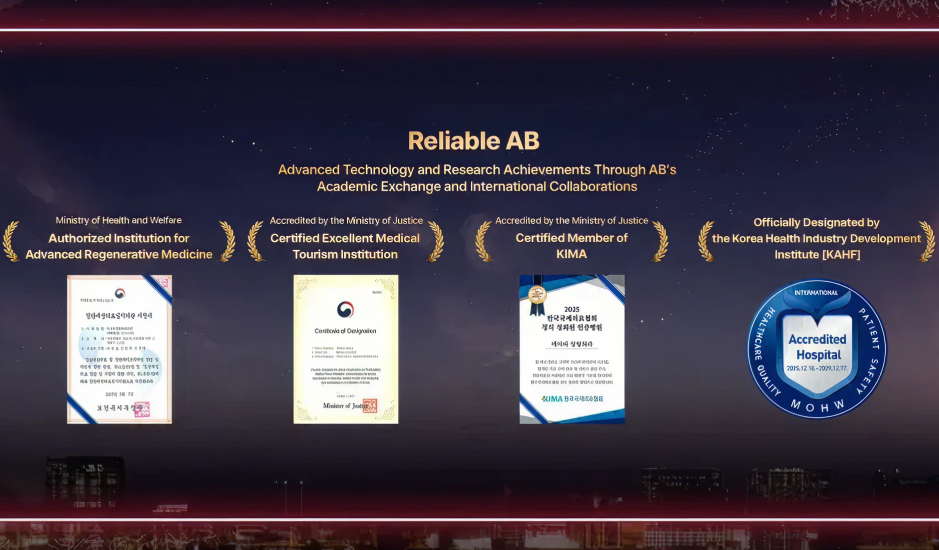
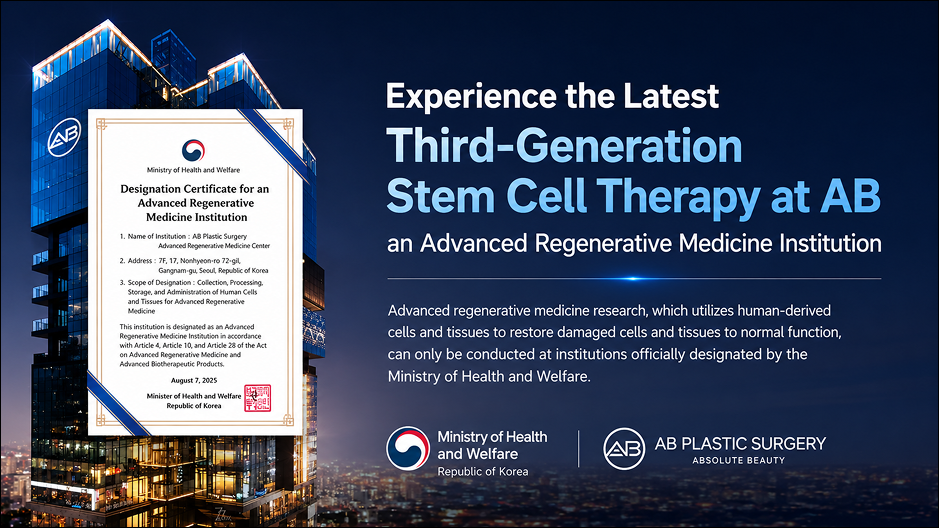
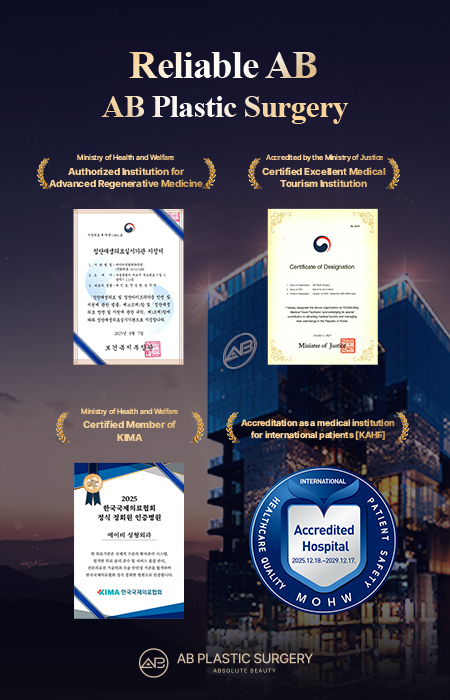
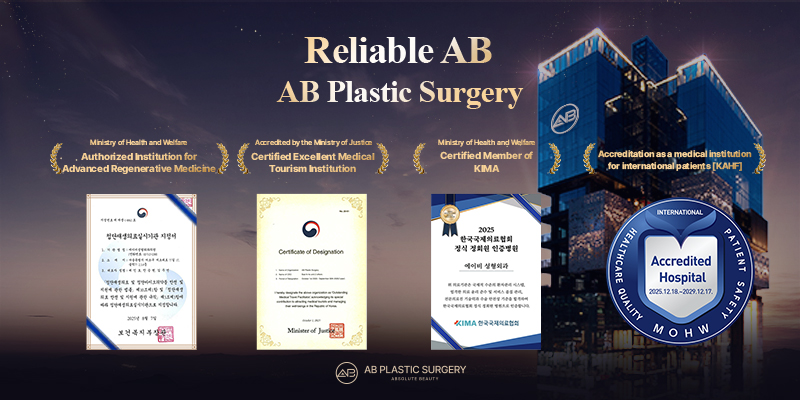
This is the distinction that matters most for stem cell care. AB Plastic Surgery Korea is a Ministry of Health and Welfare-designated advanced regenerative medicine institution — a national designation under Korea’s advanced regenerative medicine framework that relatively few clinics hold. It means AB’s regenerative work is reviewed and recognized at the government level, rather than simply marketed. For a treatment built entirely on cell quality and safe processing, that designation is one of the clearest trust signals you can look for.
3rd-Generation Stem Cell Technology and Verified Cell Quality
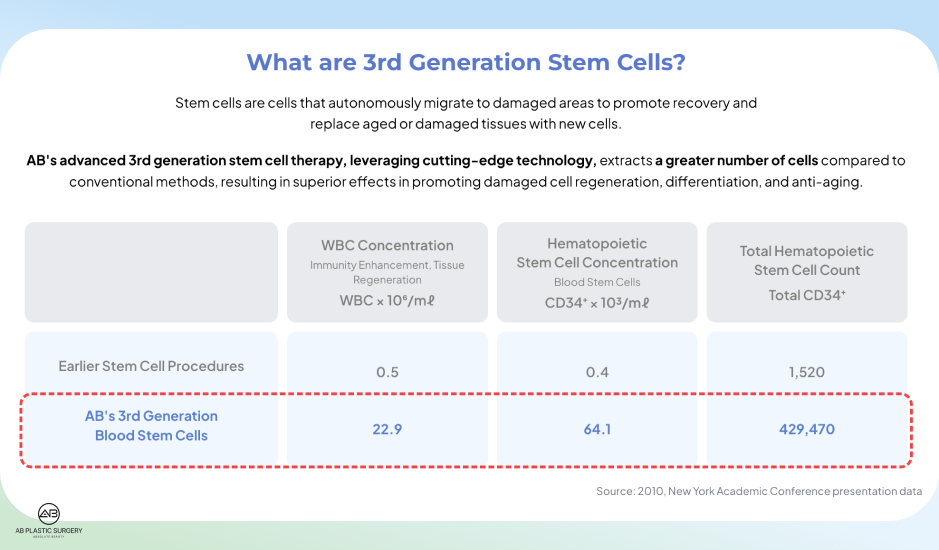
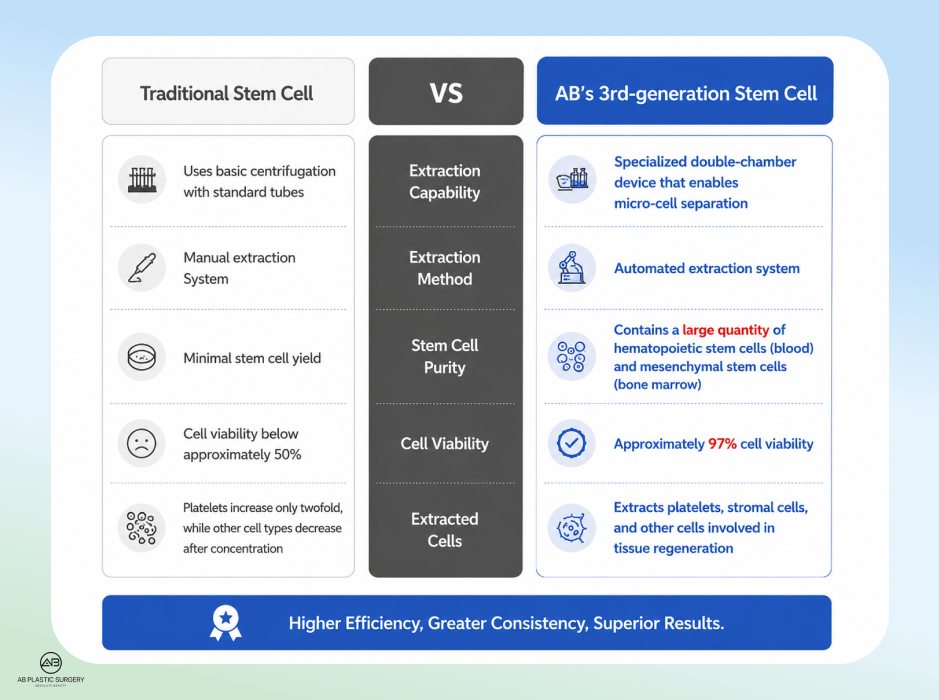
AB operates a dedicated stem cell center that merges plastic surgery with regenerative medicine, built around an in-house laboratory and controlled, laboratory-grade facilities. Its 3rd-generation stem cell technology is designed to recover more viable cells than conventional methods — and AB supports this with measurable data rather than slogans:
-
Cell viability of roughly 90–97% for its blood- and marrow-derived stem cells, according to data cited by AB’s stem cell center — meaning a high proportion of the cells delivered are alive and able to drive regeneration.
-
A patented dual-chamber extraction device with an automated system, replacing the manual, single-pass centrifugation of older methods (which can leave cell viability below 50%).
-
Up to 282 times more hematopoietic (blood) stem cells preserved than first-generation PRP, with marrow stem cells concentrated more than fivefold, per research data cited by the clinic.
-
A dedicated regenerative-medicine team and equipment for tissue harvesting, cell separation, and cell-quality maintenance.
For a treatment whose entire value depends on how many cells survive and function, this combination of high viability, patented technology, and a verified record is exactly what separates a true regenerative-medicine institution from a clinic simply offering “stem cell” services.
Autologous Regeneration — Including the New Metacell (MCT) — Under One Roof
AB has introduced Metacell (MCT, Meta Cell Technology), an autologous blood-based system that broadens its regenerative menu beyond cell-based therapy. Because Metacell activates and amplifies your own exosomes and growth factors from your own blood, it carries a low risk of allergy or rejection and usually involves little to no downtime. According to the system, a treatment is designed to:
-
Generate a high concentration of autologous exosomes from your own platelets and stem cells (reported at roughly 299.3 billion per mL).
-
Produce around 3× the key growth factors (EGF, PDGF, TGF, FGF-2, VEGF) of conventional PRP, supporting healing, tissue recovery, and collagen.
-
Support roughly 3× cellular ATP (energy) for skin vitality, while helping reduce inflammatory signals.
Metacell is typically performed with no downtime as a course of three or more sessions about three to four weeks apart, with maintenance roughly every three months. At AB, it is delivered within the same advanced regenerative-medicine framework, stem cell center infrastructure, and safety systems that govern the clinic’s cell-based work — so a lighter, surface-level option and deeper stem cell treatment can be planned by the same medically grounded team and matched precisely to your skin.
Internationally Recognized Standards
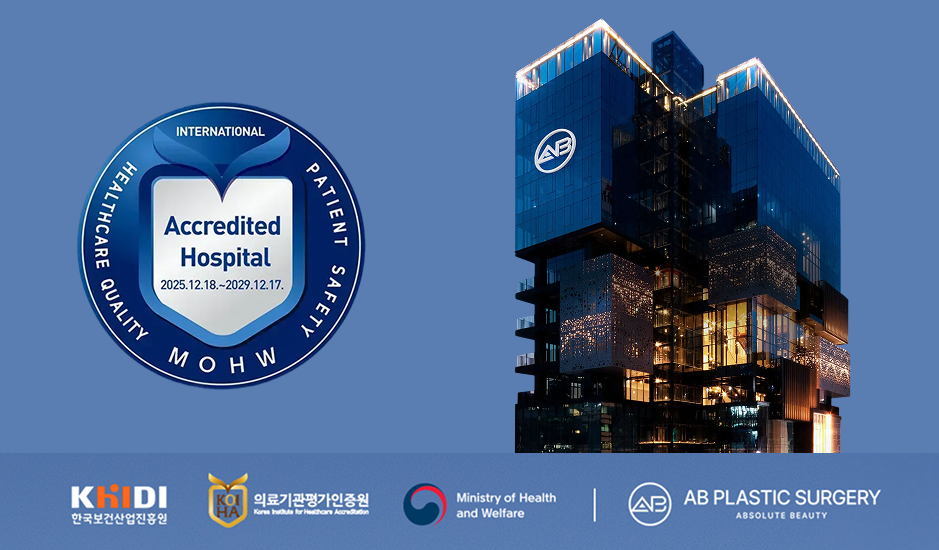
AB’s standards have been recognized by official and academic bodies, including:
-
KAHF accreditation (Korea Accreditation of Healthcare Facilities) for institutions serving international patients
-
KIMA full membership (Korea International Medical Association)
-
Active academic participation at IFAAS, APS KOREA, and PRS Korea, with a presentation at Medical Korea 2026
-
Education and cooperation ties with Seoul National University Bundang Hospital and Hallym University Dongtan Sacred Heart Hospital
These are external reviews and recognitions, not self-awarded titles — exactly what a patient evaluating regenerative care should look for.
Safety First: Anesthesiologist On-Site, Zero Reported Incidents
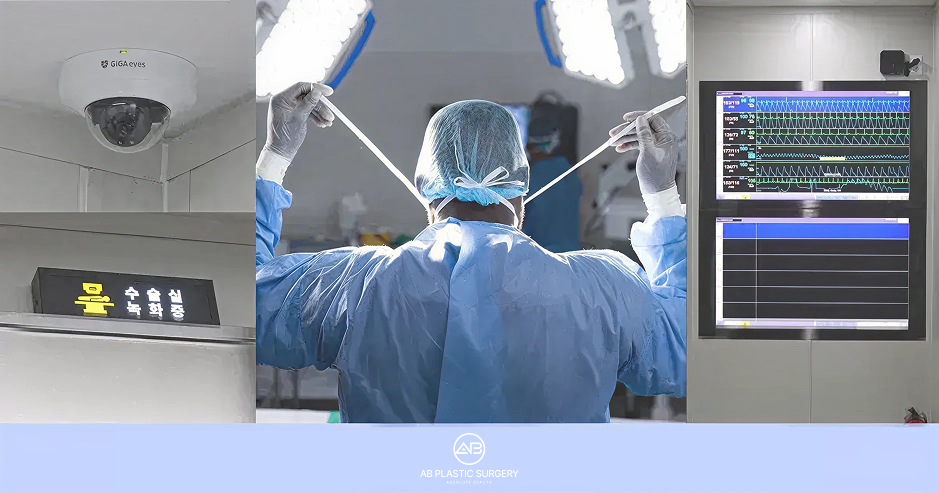
For any procedure involving sedation or surgery, anesthesia safety is the foundation — not a detail. This has become an even more pressing concern recently, and AB addresses it with systems rather than promises. A board-certified anesthesiologist is on-site for plastic surgery anesthesia and sedation (sleep) anesthesia, so sedation is never left to non-specialists. Backed by this, the clinic reports a record of zero medical accidents since it opened in September 2020. Surgery is further supported by full-area operating-room CCTV, cross-matching blood testing, and a 24-hour emergency response system.
You can see how these protocols work in practice on AB’s surgical safety system page, and meet the team behind it among AB’s board-certified specialists.
Your Next Step
Whether stem cell treatment, Rejuran, or a combination is the right anti-aging treatment in Korea for you comes down to your skin’s structure, your goals, and a professional assessment. The simplest way to find out — with no pressure — is a free 1:1 online consultation with a KAHF-accredited clinic that confirms every plan case by case.
→ Start Your Free Consultation
Sources & further reading
-
U.S. FDA — Patient information on regenerative medicine therapies: fda.gov
-
PharmaResearch — Rejuran (polynucleotide) manufacturer information: pharmaresearch.com
-
Korea Health Industry — KAHF accreditation for international healthcare facilities
-
Korea Ministry of Health and Welfare — Advanced regenerative medicine institution framework
-
Cell viability and yield figures — data cited by AB’s stem cell center (including research referenced from Seoul National University Bundang Hospital and stem-cell bio-research sources).
This article is general information and does not replace a personalized medical consultation.

This article is for informational purposes only and does not replace a personal medical consultation.