Under Eye Wrinkle Treatment: When Fine Lines Under the Eyes Need More Than Skin Tightening
Table of Contents
1. Why Skin Tightening Alone Can't Fix Every Under-Eye Wrinkle
2. The 4 Causes Behind Under-Eye Wrinkles: Fine Lines, Hollowness, Sagging, and Fat Bulging
3. How to Tell Which Cause Is Behind Your Under-Eye Wrinkles
4. Skin Tightening for Under-Eye Wrinkles: What Thermage and Ultherapy Can Do
5. Beyond Tightening: Skin Boosters and Regenerative Treatments for Under-Eye Fine Lines
6. When Non-Surgical Treatment Isn't Enough: Fat Repositioning and Lower Blepharoplasty
7. Frequently Asked Questions About Under Eye Wrinkle Treatment
8. Safety Standards and Planning Your Under-Eye Treatment in Korea
If you have tried an eye cream or a round of Thermage and the lines under your eyes are still there, the treatment may simply have been aimed at the wrong layer. Effective under eye wrinkle treatment starts with one question: what is actually creating the wrinkle?
Some fine lines under the eyes come from thin, dehydrated, or sun-damaged skin. Others are held in place by something deeper: a hollow beneath the eye, loose skin, or bulging fat that creases the skin below it. Skin tightening is an excellent starting point, but on its own it cannot rebuild skin quality, restore volume, or move fat. That is why the most effective plans usually combine tightening with skin boosters or regenerative treatments, and reserve surgery for structural problems.
This guide from AB Plastic Surgery Korea matches each cause to the treatments that address it, from skin tightening and under-eye skin boosters to fat repositioning and lower blepharoplasty. It reflects the clinic's approach to the eye area: dermatology and plastic surgery under one roof, surgeons who lecture on lower eyelid surgery at international congresses, and KAHF accreditation for international patients.
Quick answer: Under eye wrinkle treatment depends on what is causing the wrinkle. Fine lines and crepey skin respond best to a combination of skin tightening (such as Thermage or Ultherapy) and skin boosters that improve hydration and elasticity. Mild hollowness can improve with collagen-stimulating boosters. Wrinkles caused by significant hollowness, excess skin, or bulging fat usually need under-eye fat repositioning or lower blepharoplasty, because non-surgical treatments cannot move fat or remove skin.
Why Skin Tightening Alone Can't Fix Every Under-Eye Wrinkle
In short: Skin tightening devices heat the skin to contract and rebuild collagen, which firms the area and softens fine lines. They do not deliver hydration and regenerative ingredients into thin under-eye skin, restore lost volume, remove stretched skin, or reposition bulging fat. Wrinkles driven by those factors need additional treatment.
The under-eye area is one of the most demanding parts of the face to treat. Its skin is among the thinnest on the body, it moves constantly with every blink and smile, and it sits over a layered structure of muscle, ligaments, and fat pads. When this area ages, changes rarely happen in just one layer, so a single treatment often produces only partial improvement.
Tightening works on firmness. Several common sources of under-eye wrinkles sit partly or fully outside its reach:
-
Poor skin quality: Thin, dehydrated skin with weak elasticity creases easily. Tightening firms it, but skin boosters are better at restoring hydration and texture directly.
-
Volume loss: When the area beneath the eye hollows out, the skin above it folds into the shadow. Tightening does not add volume.
-
Excess skin: Once skin has stretched beyond what collagen remodeling can contract, the surplus drapes and wrinkles.
-
Herniated fat: When the fat cushioning the eye pushes forward into a bag, the skin around it creases. No device moves that fat back.
This explains a pattern many patients describe: a few sessions of tightening help, then results plateau. That is the core reason some wrinkles need more than skin tightening. For most people, "more" means adding the right skin treatment. For some, it means surgery.
Trend snapshot: RealSelf's Q1 2026 Real Talk report found that energy-based skin treatments posted some of the strongest growth in the non-surgical category, while interest in eyelid surgery also rose 17% from the previous quarter. The report described skin quality as the new focus of anti-aging care.
The 4 Causes Behind Under-Eye Wrinkles: Fine Lines, Hollowness, Sagging, and Fat Bulging
In short: Under-eye wrinkles usually come from one or more of four causes: fine lines in the skin itself, hollowness from volume loss, sagging from excess skin, and creasing from bulging fat. The first two often respond well to non-surgical treatment; the last two usually need surgery once they are significant.
Most people describe everything under the eyes as "wrinkles," but each cause calls for a different under eye wrinkle treatment.
|
Cause |
What it looks like |
Non-surgical options |
When surgery helps |
|---|---|---|---|
|
Fine lines |
Thin crisscrossing lines, crepey texture, concealer settling into creases |
Skin tightening, under-eye skin booster, Rejuran, RF microneedling |
Rarely needed |
|
Hollowness |
A groove or shadow along the tear trough; a tired look even with smooth skin |
Collagen-stimulating boosters for mild cases; filler with caution |
Deeper grooves: fat repositioning or fat grafting |
|
Sagging |
Loose skin that drapes or bunches, lines visible at rest |
Skin tightening for early, mild laxity |
Noticeable excess skin: lower blepharoplasty |
|
Fat bulging |
A puffy bag with creases forming below or around it |
Can improve the skin over the bag, not the bag itself |
Fat repositioning, fat removal, or lower blepharoplasty |
Fine Lines: Thin, Dry, or Sun-Damaged Skin
Under-eye fine lines are the most superficial cause and the one non-surgical treatment handles best. Sun exposure, dehydration, and natural collagen loss leave the skin thinner and less resilient, so it creases easily. Repeated squinting and smiling deepen these lines over time, which is why they often begin in the late twenties or thirties.
Hollowness: Volume Loss and Tear Trough Shadows
With age, the soft tissue beneath the eye thins and a groove forms between the lower eyelid and the cheek, often called the tear trough. The skin above it has less support, so it folds into the shadow. People with this pattern often have reasonably good skin yet still look tired, which suggests volume, not skin, is the main problem.
Sagging: Excess Skin and Weakened Muscle
Over time, the lower eyelid skin and the thin muscle beneath it stretch and lose tone. Early laxity can be firmed with tightening devices. Once there is a true surplus of skin that drapes and gathers into folds, especially with lines visible at rest, the excess usually has to be removed surgically.
Fat Bulging: Herniated Under-Eye Fat That Creases the Skin
The fat that cushions the eye normally sits behind a thin membrane. As that membrane weakens, the fat pushes forward into a visible bag, and the skin around it creases. Skin treatments can improve the quality of the skin over the bag, but they cannot change the bag itself.
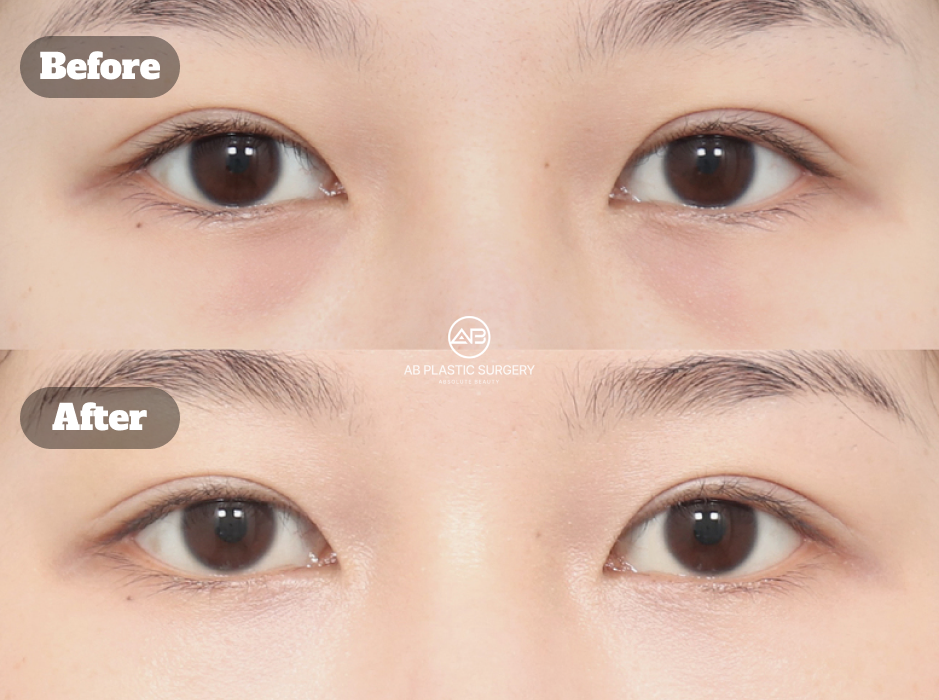
How to Tell Which Cause Is Behind Your Under-Eye Wrinkles
In short: Four simple mirror checks (at rest, smiling, a gentle pinch, and overhead light) can suggest whether your under-eye wrinkles come from skin, volume, excess tissue, or fat. Most people find more than one cause.
Before a consultation, these four checks can help you describe your concern more precisely. Use a mirror in even, natural light.
-
The rest test: Relax your face and look straight ahead. Lines that remain visible at rest point to skin-level fine lines or sagging, rather than expression alone.
-
The smile test: Smile broadly. Lines that appear only when you smile are mostly expression lines. A soft fold of skin bunching beneath the lashes suggests excess skin.
-
The pinch-and-release test: Gently pinch the skin just below the lashes. If several millimeters gather easily, excess skin may be present. Then lightly pull the lower lid down and let go; if it returns slowly, the lid may have lost support, which a doctor should assess.
-
The light-and-shadow test: Stand under an overhead light. A bulge above a dark line suggests fat bulging with hollowness. A shadow without a bulge points mainly to volume loss.
If your results point mainly to fine lines or mild hollowness, non-surgical treatment is usually the right place to start. If they point to clear excess skin or a fat bulge, it is worth discussing surgical options at the same consultation.
This self-check is a starting point, not a diagnosis. Skin thickness, lid support, fat volume, and bone structure can only be evaluated accurately in an in-person examination.
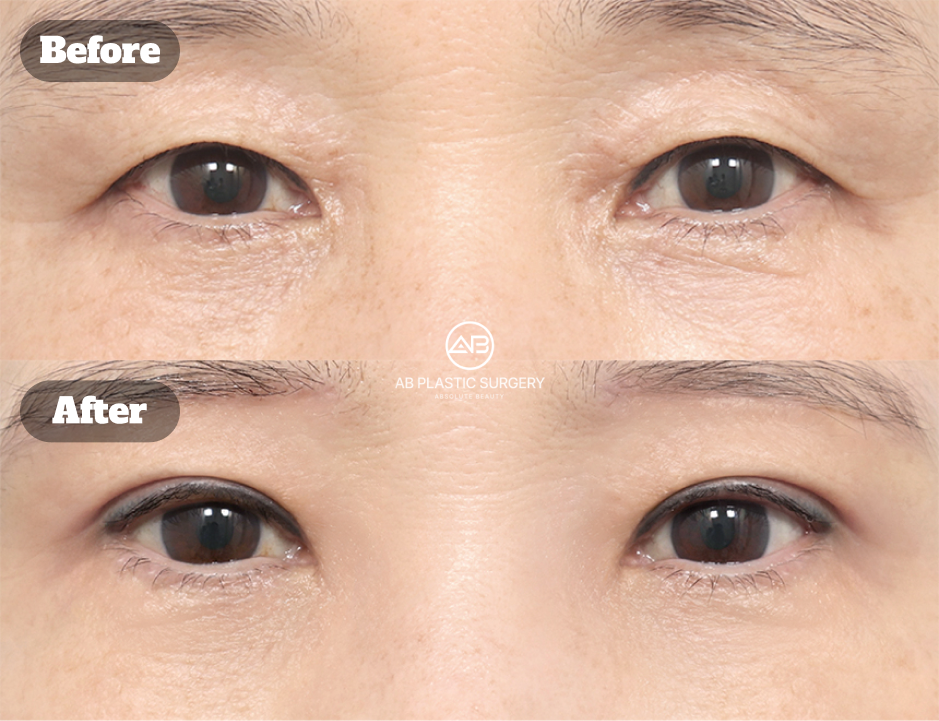
Skin Tightening for Under-Eye Wrinkles: What Thermage and Ultherapy Can Do
In short: Skin tightening uses radiofrequency or ultrasound energy to firm skin and stimulate collagen with little downtime. It works best for early laxity and crepey texture, and it is most effective as part of a plan that also improves skin quality.
Skin tightening is often the first treatment people try for under-eye wrinkles, and for good reason: it is non-invasive, requires little downtime, and builds collagen gradually over the following months. AB Plastic Surgery Korea offers several lifting and tightening devices, and the right one depends on skin thickness and how deep the laxity sits.
Thermage: Radiofrequency Tightening
Thermage delivers radiofrequency energy into the deeper layers of the skin. The heat makes existing collagen contract and signals the skin to build new collagen, with results that continue to develop over several months. Thermage offers a dedicated eye tip designed for the delicate eyelid area. It is well suited to crepey texture and early skin laxity around the eyes.
Ultherapy and HIFU: Ultrasound Lifting
Ultherapy uses microfocused ultrasound to reach deeper supportive layers than radiofrequency, which makes it useful for lifting around the eye area, such as the brow and outer eye. AB pairs eye Ultherapy with its under-eye skin booster for patients who want both lifting and improved skin quality. Shurink, another ultrasound-based (HIFU) device offered at the clinic, works on a similar principle.
Potenza: RF Microneedling for Texture
Potenza combines microneedling with radiofrequency energy. The tiny channels and controlled heat stimulate collagen in the upper layers of the skin, which makes it a useful option for texture, fine lines, and crepiness. Expect mild redness for a short period after treatment.
Who Benefits Most from Skin Tightening
-
Early crepey texture and fine lines
-
Mild skin laxity without a true surplus of skin
-
Patients who want gradual improvement with little downtime
-
Maintenance after surgery, once the area has healed
Tightening is less effective when the main problem is dehydrated, thin skin that needs regenerative support, a visible hollow, a clear fat bulge, or excess skin that bunches into folds. In those cases, it works best as one part of a broader plan.
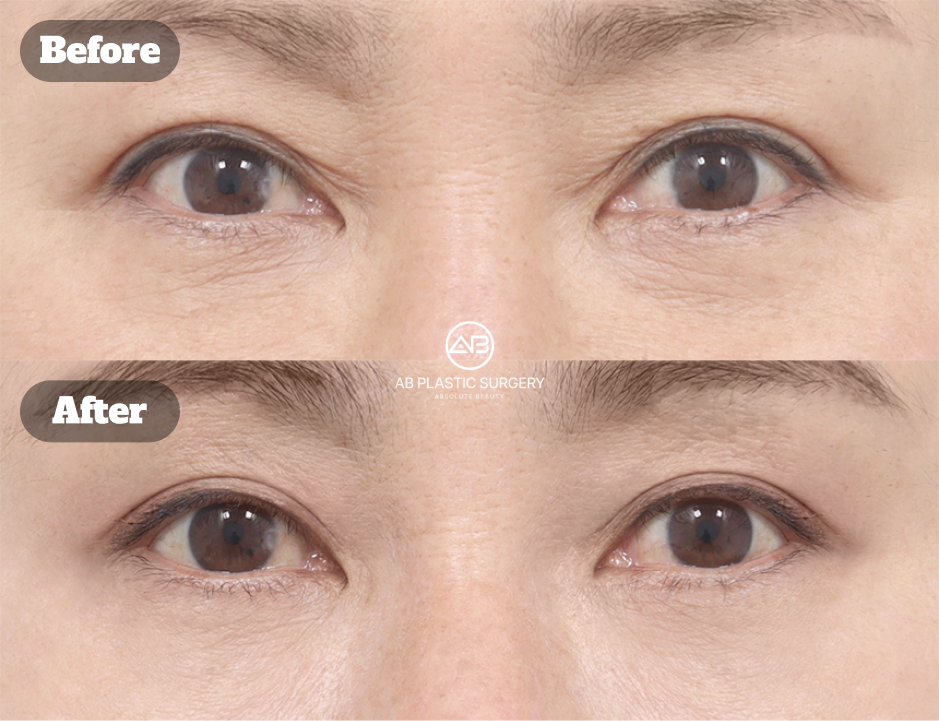
Beyond Tightening: Skin Boosters and Regenerative Treatments for Under-Eye Fine Lines
In short: Skin boosters deliver hydration and regenerative ingredients directly into the thin under-eye skin, improving elasticity, texture, and fine lines from within. Combined with skin tightening, they address both firmness and skin quality, which is what many under-eye wrinkles need.
If skin tightening works on firmness, skin boosters work on the quality of the skin itself. For fine lines under the eyes, this is often the missing piece. Boosters are injected in small amounts into the skin, where they hydrate, support collagen production, and improve elasticity over a series of sessions.
AB Under Eyes Skin Booster
AB's under-eye skin booster is designed specifically for the eye area. According to the clinic, it combines hyaluronic acid for hydration and brightening, PDRN for collagen regeneration, and ingredients aimed at fine lines and skin firmness. It targets under-eye wrinkles, crow's feet, loss of elasticity, dark circles, and a dull, tired look.
-
Treatment time: about 10 minutes, according to the clinic
-
Recommended course: at least 3 sessions, about one month apart
-
Results: visible after 1 to 2 weeks, and may last 3 to 6 months
-
Downtime: minimal
Unlike filler, the booster is not designed to add volume. Its role is to improve elasticity, regeneration, and brightness, which makes it well suited to fine lines and crepey skin. The clinic often pairs it with eye Ultherapy, eye Botox, or a brightening toning treatment.
Rejuran: Polynucleotide Skin Healing
Rejuran uses polynucleotides, purified DNA fragments derived from salmon, to support the skin's natural repair process. It is widely used to improve skin thickness, elasticity, and fine lines, and is a common choice for thin under-eye skin. A series of sessions is usually recommended, with results building gradually.
Juvelook: Collagen-Stimulating Booster
Juvelook combines a collagen stimulator with hyaluronic acid. Over time, it encourages the skin to produce its own collagen, which can help with fine lines and mild volume loss. For patients with early hollowness who are not ready for surgery, collagen-stimulating boosters can be a gentler alternative to filler.
Stem Cell Skin Booster and Exosome Treatments
Regenerative skin treatments are one of the fastest-moving areas in aesthetics. AB Plastic Surgery Korea offers a stem cell skin booster and exosome treatments as part of its regenerative care, supported by the clinic's stem cell center, which holds a Ministry of Health and Welfare designation as an Advanced Regenerative Medicine institution. Evidence for some of these treatments is still developing, so they are best discussed at consultation as part of an individual plan.
Botox and Filler: Useful, with Careful Placement
Botox can soften expression lines at the outer corners of the eyes. The American Society of Plastic Surgeons notes that injections for this area are generally placed at the crow's feet rather than along the lower lid, because weakening the muscle that supports the lid can affect its position and, in some patients, make bags look more prominent.
Filler can improve some tear trough hollows, but the under-eye skin is thin. Filler may show through as a bluish tint, attract water and look puffy, or sit unevenly beneath existing fat bags. A careful assessment of skin thickness and fat position comes first.
Building a Combination Plan by Cause
Most under-eye wrinkles have more than one cause, so the most reliable results usually come from combining treatments.
|
Main concern |
Typical non-surgical combination |
When to consider surgery |
|---|---|---|
|
Fine lines and crepey skin |
Under-eye skin booster or Rejuran + Thermage or Potenza |
Rarely needed |
|
Fine lines with dark circles |
Under-eye skin booster + brightening toning |
If shadows come from a fat bulge or deep groove |
|
Mild hollowness |
Juvelook or under-eye skin booster |
Deeper grooves: fat repositioning or fat grafting |
|
Early laxity |
Thermage or eye Ultherapy + skin booster |
Excess skin that bunches into folds: lower blepharoplasty |
|
Crow's feet with expression |
Eye Botox + skin booster |
Not typically needed |
Trend snapshot: In RealSelf's Q1 2026 report, a facial plastic surgeon described growing patient interest in regenerative under-eye treatments as "filler fatigue" sets in, while cautioning that they are not true volumizers for a deep tear trough. The same report noted a 25% rise in interest in Sculptra, a collagen stimulator, as patients look for longer-lasting improvements in skin quality.
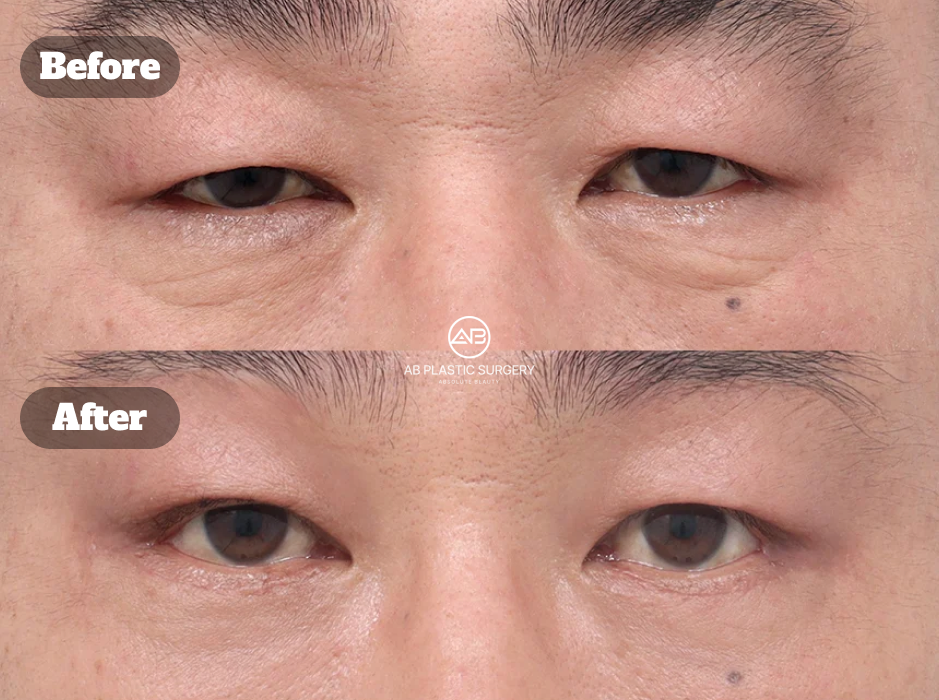
When Non-Surgical Treatment Isn't Enough: Fat Repositioning and Lower Blepharoplasty
In short: When under-eye wrinkles are caused by a fat bulge, a deep hollow, or excess skin, surgery corrects the structure that non-surgical treatments cannot reach. Fat repositioning suits bags with a groove and good skin; lower blepharoplasty suits excess skin and laxity. Skin treatments then refine the surface.
Non-surgical treatments improve the skin. When the wrinkle is created by the structure beneath it, the structure itself has to change. This is where AB Plastic Surgery Korea's plastic surgery team takes over, often working alongside the clinic's skin treatments in the same plan.
Signs It May Be Time to Consider Surgery
If you have already tried skin tightening or boosters, the pattern of what improved and what did not is a useful clue.
|
What you notice |
Likely cause |
What to consider |
|---|---|---|
|
Skin looks smoother, but the bag and its creases remain |
Fat bulging |
Fat repositioning or fat removal |
|
Fine lines improved, but a dark groove still makes you look tired |
Deeper hollowness |
Fat repositioning or eyelid fat grafting |
|
Loose skin still bunches when you smile, even after several sessions |
Excess skin |
Lower blepharoplasty |
|
Results fade quickly and need constant repeat sessions |
A structural cause beneath the skin |
Surgical assessment, with skin treatments for maintenance |
Under-Eye Fat Repositioning
Fat repositioning redistributes bulging under-eye fat into the hollow groove below it, correcting the bag and the groove in one step. Because the fat is moved rather than discarded, the area keeps its natural fullness. AB states that this procedure is performed without an external skin incision, so there is no visible scar and recovery is generally shorter than lower blepharoplasty. It suits patients with puffy bags and a shadow beneath them whose skin still has good elasticity. You can see how AB's surgeons choose between fat repositioning and lower blepharoplasty in the clinic's medical column.
Lower Blepharoplasty
When excess skin and lax muscle are creating the wrinkles, lower blepharoplasty addresses the cause directly. Through a fine incision just below the lash line, the surgeon removes a carefully measured amount of skin, restores support to the underlying muscle, and treats bulging fat in the same procedure. AB's own criteria for this surgery include an under-eye area with little elasticity left and mainly wrinkles. Where the midface has also descended, it can be combined with midface lifting. For a detailed look at the techniques and recovery, read our guide to under-eye bags and lower eyelid surgery.
Eyelid Fat Grafting
When the main problem is a hollow without much fat to reposition, small amounts of the patient's own purified fat can be grafted into the groove. Fat grafting restores volume with the patient's own tissue rather than filler. To understand how the procedure works, explore our guide to fat grafting for natural volume.
Combining Surgery with Skin Treatments
Surgery corrects structure; it does not change the texture of the skin itself. Very fine lines from thin or sun-damaged skin can remain after an excellent surgical result. This is where skin tightening and skin boosters return, as finishing and maintenance treatments once the area has healed. Having both surgical and skin treatments in one clinic makes it easier to plan the timing and sequence.
Myth vs. Reality
Myth: "Lower blepharoplasty erases every line under the eyes."
Reality: Lower blepharoplasty corrects the wrinkles created by excess skin, lax muscle, and bulging fat, which are often the deepest and most aging. Very fine surface lines can remain and are best refined with skin tightening or skin boosters afterward. Surgeons who explain this at consultation are setting honest expectations, not underselling results.
From the podium: precision in lower eyelid surgery
At PRS KOREA 2025, an international plastic surgery congress held in Seoul in November 2025, AB Plastic Surgery Korea was invited to lecture in the Asian Blepharoplasty Forum on combining facelift and lower blepharoplasty safely and effectively. The lecture focused on three principles:
-
Preserving the orbicularis muscle and securing it firmly to keep the lower lid supported and reduce the risk of the lid pulling outward.
-
Measuring skin excision precisely after the deeper tissues are repositioned, trimming decisively on the outer side and conservatively on the inner side.
-
Avoiding excessive midface dissection, handling only what each patient's anatomy requires to support safer recovery.
Under Eye Wrinkle Treatment Cost at AB Plastic Surgery Korea
Starting prices for the surgical options are listed below in USD. Skin treatment pricing depends on the device, product, and number of sessions, and is confirmed at consultation.
|
Treatment |
Starting price (USD) |
|---|---|
|
Under-eye skin booster, Rejuran, Juvelook, and other skin boosters |
Quoted at consultation |
|
Thermage, Ultherapy, Potenza, and other skin tightening treatments |
Quoted at consultation |
|
Under-Eye Fat Repositioning |
Quoted at consultation |
|
Trans-conjunctival Fat Removal |
$1,360~ |
|
Eyelid Fat Grafting |
$1,120~ |
|
Lower Blepharoplasty |
$1,870~ |
|
Lower Blepharoplasty + Mid Face Lifting |
$4,490~ |
A note on these figures: they are starting points, not final quotes. The right plan depends on how much skin, fat, and support each under-eye area actually needs, and that can only be measured in person. USD amounts are converted from the clinic's KRW price list and may shift with exchange rates. Your confirmed cost is set after examination.
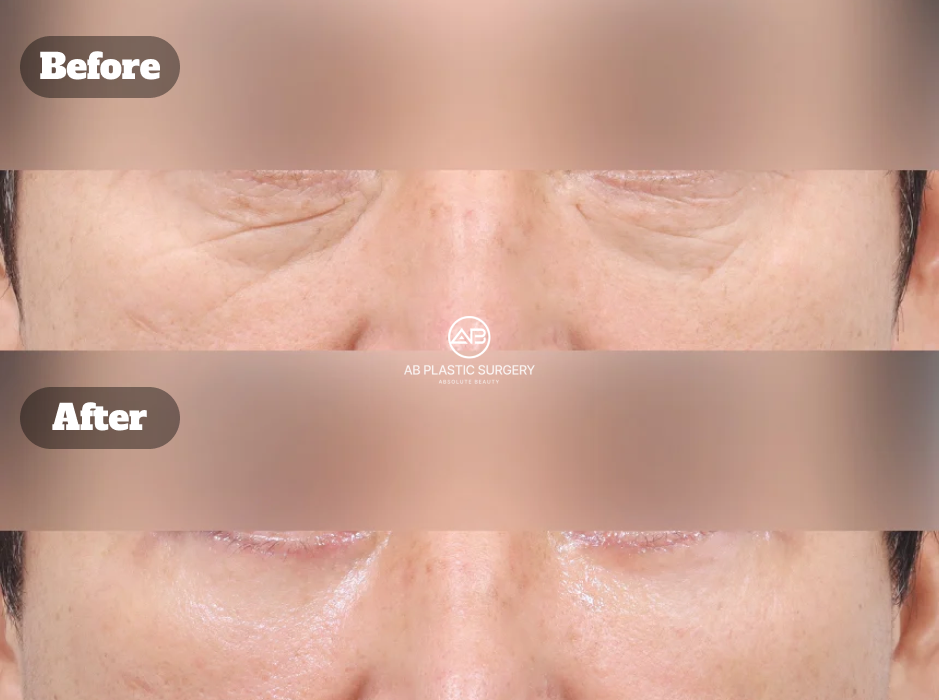
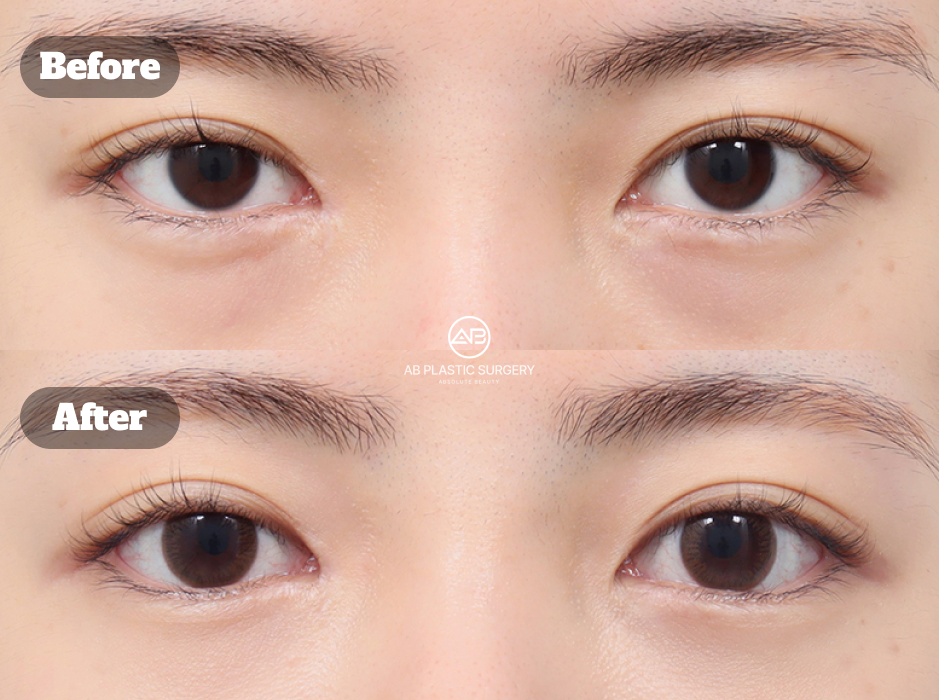
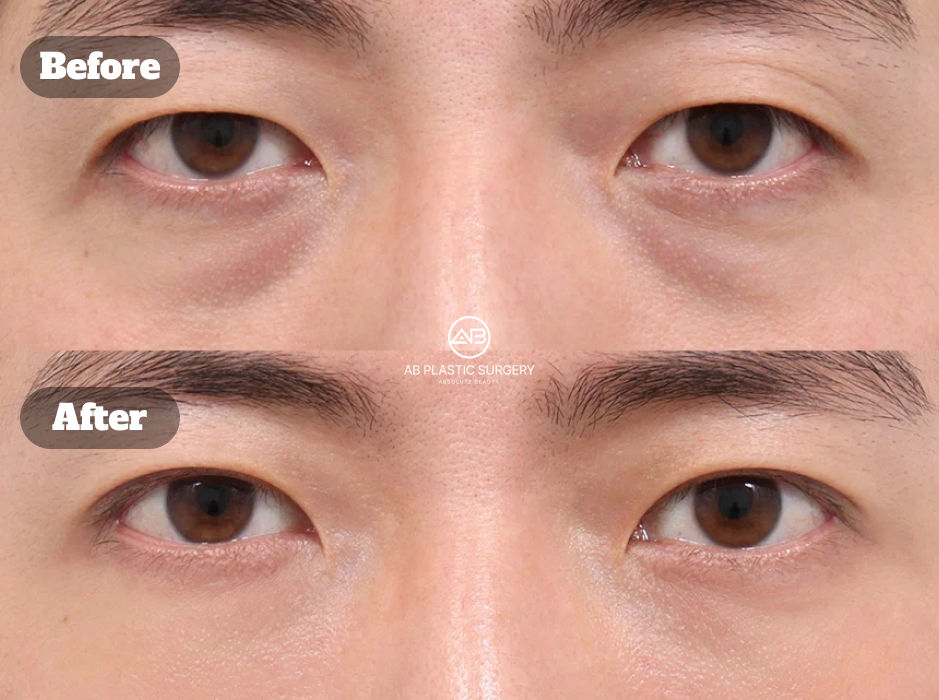
Every surgical procedure listed above is performed with anesthesia managed by a board-certified anesthesiologist, who AB states is on-site for every operation. Before deciding, it helps to view real under-eye before-and-after results from patients with similar concerns.
Frequently Asked Questions About Under Eye Wrinkle Treatment
Does Thermage work for under-eye wrinkles?
Thermage can improve under-eye fine lines, crepey texture, and early laxity by stimulating collagen, with results building over several months. It works best when combined with treatments that improve skin quality, such as skin boosters. If your wrinkles are caused by a fat bulge, a deep hollow, or significant excess skin, Thermage alone usually produces only modest change.
What is the best non-surgical treatment for fine lines under the eyes?
For most people, the best results come from a combination rather than a single treatment. A skin booster designed for the under-eye area improves hydration and elasticity, while skin tightening such as Thermage firms the skin. Rejuran is another common option for thin under-eye skin. The right mix depends on your skin thickness, the depth of the lines, and whether hollowness is also present.
How many skin booster sessions do I need for under-eye wrinkles?
For AB's under-eye skin booster, the clinic recommends at least three sessions spaced about one month apart. Improvement is typically visible after one to two weeks and may last three to six months, so periodic maintenance sessions are common. Other boosters follow their own schedules, which your doctor will explain at consultation.
Is Botox safe for wrinkles directly under the eyes?
Botox is commonly used for crow's feet at the outer corners of the eyes. Injecting directly along the lower lid requires caution, because weakening that muscle can reduce support for the eyelid and, in some patients, make under-eye bags look more prominent. A doctor should assess your lid support before treating this area.
When should I consider surgery instead of skin treatments?
Surgery is worth discussing when a fat bulge remains after skin treatments, when a deep groove still makes you look tired, or when loose skin bunches into folds as you smile. These are structural problems that non-surgical treatments cannot reach. Many patients find that repeated sessions with fading results are a sign the cause sits beneath the skin.
Does lower blepharoplasty remove fine lines under the eyes?
Lower blepharoplasty smooths wrinkles caused by excess skin, lax muscle, and bulging fat, which are usually the most noticeable lines. Very fine surface lines from thin or sun-damaged skin may remain. These are often refined afterward with skin tightening or skin boosters once the eyelid has healed.
Can I combine surgery with skin tightening or skin boosters?
Yes. Combining surgery with skin treatment is often the most complete approach for under-eye wrinkles with more than one cause. Surgery addresses the structure, and skin treatments refine the surface and help maintain results. The timing depends on the procedure and how the tissue heals, so your doctor will recommend when skin treatments can safely begin.
How long should I stay in Korea for under-eye treatment?
Most skin tightening and skin booster treatments need little downtime, so a short stay is often enough, although booster courses involve repeat sessions about a month apart. For under-eye surgery, many international patients plan for about one to two weeks to allow for consultation, the procedure, follow-up visits, and suture removal where needed. Your exact schedule is best confirmed during consultation.
Safety Standards and Planning Your Under-Eye Treatment in Korea
In short: Whether you choose skin treatments or surgery, confirm how pain and anesthesia are managed, how the clinic is monitored, which government accreditations it holds, and how recovery fits your travel plans.
The eye area leaves little margin for error, for injections as much as for surgery. Choosing where to be treated matters as much as choosing what to have, especially when traveling abroad.
Anesthesia and Treatment Safety
For skin treatments, AB offers several comfort options depending on the procedure, including topical numbing cream, ice, nitrous oxide, and sleep anesthesia. For surgery, AB Plastic Surgery Korea states that a board-certified anesthesiologist is on-site for every procedure and that the clinic has recorded zero anesthesia-related incidents since opening in September 2020. The clinic reports that anesthesiology specialists make up 47.1% of its medical team, a ratio it describes as roughly double the hospital-level average.
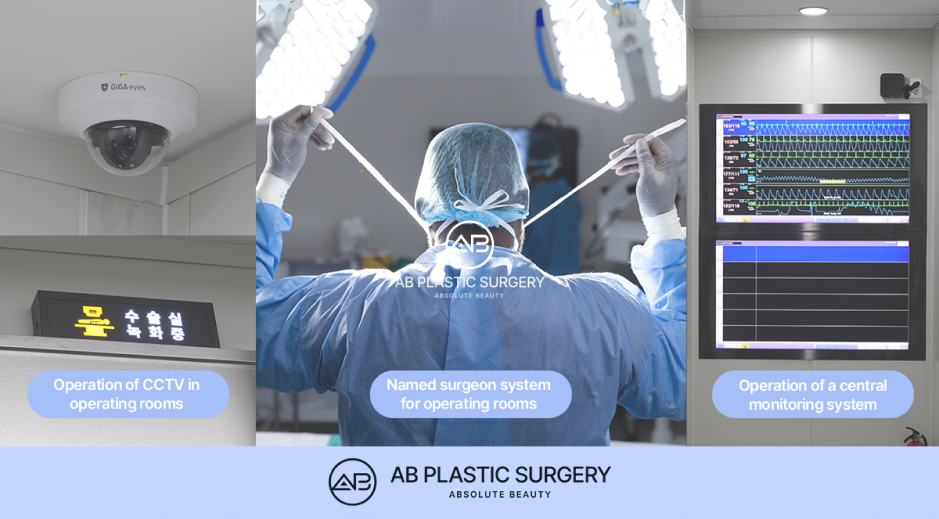
The clinic also states that its operating rooms are monitored by CCTV and follow a surgeon-name disclosure system. Additional protections it describes include in-house blood cross-matching, an on-site clinical pathologist, hospital-grade emergency equipment, and a 24-hour emergency line for patients after they leave the clinic.
Government Accreditations
-
KAHF accreditation (Accreditation as a medical institution for international patients), presented at Medical Korea 2026 under the Ministry of Health and Welfare. For international patients, what happens after treatment often matters more than the treatment itself: aftercare, clear communication, and how responsibility is handled if a problem arises. KAHF means the clinic's patient safety management, infection prevention, staff emergency training, and facility hygiene were reviewed against national standards, not simply described by the clinic. A clinic that meets the bar set for international patients applies that same standard to every patient.
-
KIMA full membership with the Korea International Medical Association, following a review of international patient systems, quality management, and surgical safety.
-
Advanced Regenerative Medicine institution designation from the Ministry of Health and Welfare for the clinic's stem cell center.
-
Excellent medical tourism institution designation from the Ministry of Justice in 2025.
Doctors Who Teach, Not Just Learn
Many clinics attend conferences; fewer are invited to teach at them. AB Plastic Surgery Korea's surgeons have lectured on lower blepharoplasty and facelift techniques at PRS KOREA, chaired and presented sessions at APS KOREA, and hosted IFAAS training programs where visiting international surgeons observe live procedures. The clinic also maintains academic ties with Seoul National University Bundang Hospital and Hallym University Dongtan Sacred Heart Hospital. You can meet the doctors behind AB's under-eye treatments before your consultation, or learn about AB's accreditations and safety system.
Downtime at a Glance
|
Treatment |
Typical downtime |
When results appear |
|---|---|---|
|
Under-eye skin booster |
Minimal |
1 to 2 weeks, building over a course of sessions |
|
Thermage / Ultherapy |
Little to none; mild redness possible |
Gradually over several months |
|
Potenza |
Mild redness for a short period |
Gradually, often over a series of sessions |
|
Under-eye fat repositioning |
Generally shorter than lower blepharoplasty |
Contour settles over the following months |
|
Lower blepharoplasty |
Swelling and bruising generally settle over about two weeks |
Final contour at around three to six months |
Planning Your Trip Around Treatment
-
Schedule the consultation early in your stay. An in-person examination may refine the plan you discussed online.
-
Plan booster courses realistically. If a booster needs several monthly sessions, ask which can be done during your trip and how to continue afterward.
-
Keep the first days after surgery free. Rest and cold compresses shape early recovery.
-
Protect the area from sun. Sunglasses and a hat help shield treated skin and healing incisions.
-
Confirm aftercare contacts before flying home. Know how to reach the clinic once you are back, including its stated 24-hour emergency line.
The right under eye wrinkle treatment is rarely about choosing the most advanced device or the most dramatic surgery. It is about matching each treatment to its cause: tightening for firmness, boosters for skin quality, and surgery for structure. Because every under-eye area needs a different combination, the most reliable next step is a personalized plan: request a personalized under-eye treatment quote to find out which combination fits your concerns.
Sources and References
-
American Society of Plastic Surgeons, "How to Get Rid of Undereye Bags" (plasticsurgery.org)
-
RealSelf News, "Real Talk Report: The Biggest Aesthetic Treatment Trends of Q1 2026"
-
AB Plastic Surgery Korea, Under Eyes Skin Booster treatment information
-
AB Plastic Surgery Korea Medical Column, "Under-Eye Fat Repositioning and Lower Blepharoplasty"
-
AB Plastic Surgery Korea, PRS KOREA 2025 lecture: "Combined Face Lift and Lower Blepharoplasty: Key Considerations for Safe and Effective Outcomes"
This article is for general information and does not replace an individual medical consultation. Treatment suitability, results, and recovery vary from person to person.