Title
Male Rhinoplasty: Why Increasing Nose Height Alone Is Not Enough | Correction Principles for a Natural, Masculine Nose ShapeDate
2026-11-09Views
13
Medical Column
Hello, I am Dr. Ma Sung-hwan, a plastic surgeon at AB Plastic Surgery.
When considering male rhinoplasty, many patients are concerned about having a nose that appears broad and heavy, even if the nasal bridge is relatively high.
In some cases, the nasal tip is wide and spread out, making the nose appear larger than its actual height and adding unnecessary heaviness to the overall facial appearance.
In such cases, simply increasing the height of the nasal bridge may not be enough to improve the appearance. Rather, it is important to consider the overall structure of the nose, including the nasal tip, nasal alae, and nasal cartilage, to achieve a more three-dimensional and balanced appearance.
Male rhinoplasty requires a different approach from female rhinoplasty. The key is to correct the nose while considering skin thickness, the amount of subcutaneous fat, and the cartilage structure.
Today, we will examine how male rhinoplasty differs from conventional rhinoplasty and explain the correction principles used to achieve a natural yet masculine nose shape through an actual patient case.
Q. Why Does Male Rhinoplasty Require a Different Approach from Conventional Rhinoplasty?
The nose is composed of several structures, including the nasal cartilage, skin, and subcutaneous tissue. When the nasal cartilage is widely spread or the skin and subcutaneous tissue are thick, the nose may appear broad and spread out.
Although rhinoplasty is performed on both men and women, male rhinoplasty requires a more comprehensive approach.
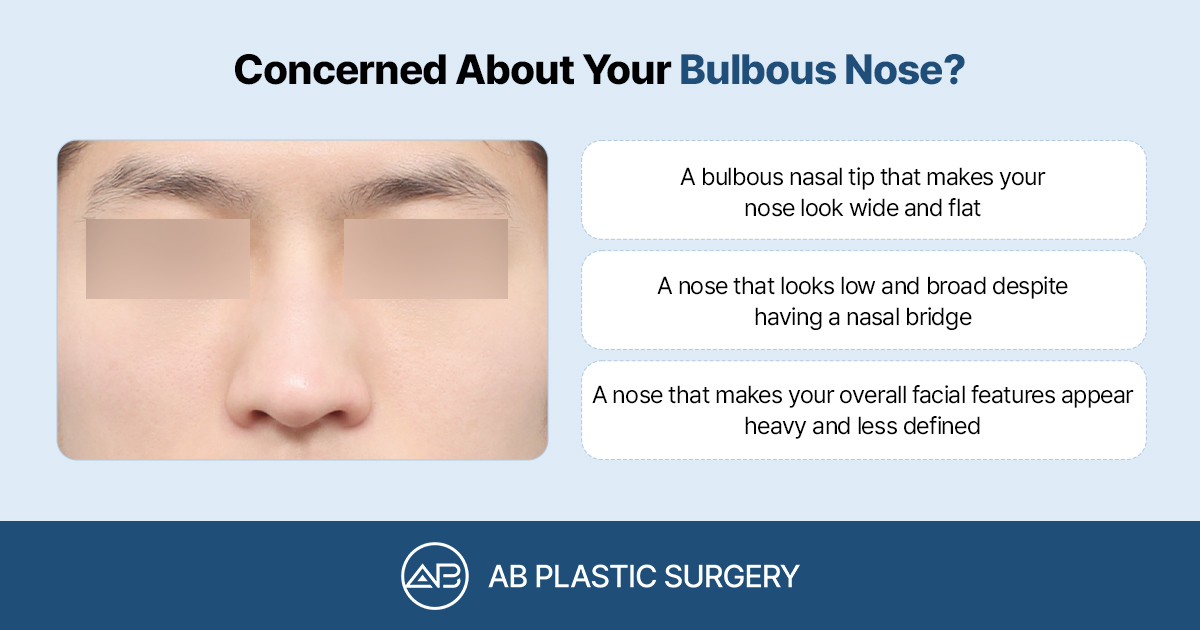
① A nose that appears broad and spread out due to prominent nasal cartilage
② A nose that appears low and flat despite having a high nasal bridge
③ A nose that appears wide and heavy due to thick skin
This is because the structural characteristics of the male nose differ from those of the female nose. Men generally have thicker nasal skin and more developed subcutaneous tissue, and there may also be differences in the size and strength of the cartilage.
In particular, because male nasal skin is thicker, changes in the external appearance may not be clearly visible even after the internal cartilage has been corrected. Therefore, the overall surgical design must be approached differently.
For this reason, even with the same bulbous nose shape, the male nose tends to appear broader and heavier, requiring a different surgical approach.
In male rhinoplasty, a straight and defined nasal line is also more important than a soft, curved line.
Rather than simply raising the nasal bridge, it is essential to create a defined nasal tip while maintaining the nose's natural volume.
Therefore, male rhinoplasty involves more than simply narrowing the nose. It requires careful consideration of how to design the entire nasal line, from the nasal bridge to the nasal tip.
Ultimately, the key to male rhinoplasty is not simply how much the nose can be narrowed, but how well the internal cartilage structure can be refined.
This is why the correction principles for male rhinoplasty must differ from those used for female rhinoplasty.
Q. What Problems Can Arise When Trying to Correct a Male Nose Simply by Increasing Its Height?
One of the most common mistakes in male rhinoplasty is attempting to correct a wide nose simply by increasing its height.
If the nasal cartilage is already widely spread, excessively raising the nasal bridge or aggressively narrowing the nose may temporarily make it appear slimmer. However, this approach can actually produce an unnatural result.
First, if the nasal bridge is raised excessively, the nose may project unnaturally, creating an appearance commonly described as an "Avatar nose." Men generally have more prominent brow bones and facial skeletal structures, so an excessively elevated nasal bridge can disrupt overall facial harmony and create an awkward appearance.
Second, if the nasal tip is narrowed excessively, it may lose its natural volume and appear unnaturally sharp or feminine. A masculine nose requires an appropriate degree of volume and height to create a natural, masculine appearance. If the nasal tip becomes overly sharp, it may appear out of proportion with the rest of the face.
Third, if the cartilage is excessively tightened without considering the thickness of the skin, changes in the external appearance may be limited. In addition, forcibly tightening the cartilage can increase the risk of nasal tip hardening or asymmetry over time.
Ultimately, the most important aspect of male rhinoplasty is not how much the nose is raised, but how precisely the nose is balanced according to the patient's facial bone structure and skin characteristics.
Q. How Should Male Rhinoplasty Be Performed?
Male rhinoplasty is not simply about changing the height of the nasal bridge. It involves designing the entire nose based on overall facial proportions and a masculine nasal line.
At AB Plastic Surgery, we focus on three key principles when correcting the male nose.
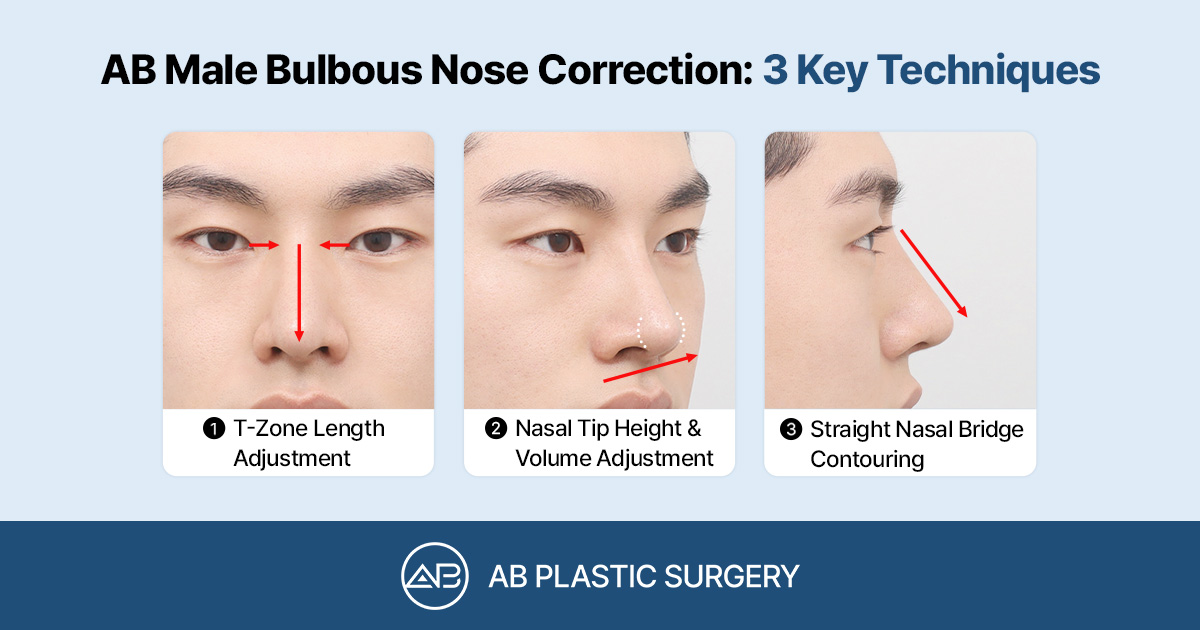
01. Adjusting the Nasal Tip Length
02. Adjusting Nasal Tip Height and Volume
03. Adjusting the Nasal Bridge Line
First, adjusting the nasal tip length.
When the nasal cartilage is widely spread, the nose tends to appear shorter and flatter overall.
Rather than simply raising the nasal tip, it is important to design the overall proportions from the nasal bridge to the nasal tip, creating a natural sense of length while maintaining a masculine appearance.
Second, adjusting the nasal tip height.
The goal of male rhinoplasty is not simply to create a sharp nose, but to achieve balanced proportions by correcting a broad nasal tip while preserving masculine volume.
Because men generally have thicker nasal skin, changes in the external appearance may be limited even after cartilage correction. Therefore, cartilage correction and the management of subcutaneous tissue must be considered together to ensure that the nasal shape is naturally reflected through the skin.
When necessary, autologous cartilage may be used to reinforce the nasal tip support structure, helping create a stable and natural nasal line.
Third, adjusting the nasal bridge line.
When a nose appears broad, the line extending from the nasal bridge to the nasal tip may become interrupted or appear excessively wide.
In male rhinoplasty, creating a straight and defined line is particularly important.
Rather than creating a curved line commonly associated with female nose shapes, the nasal line is carefully designed to extend smoothly from the nasal bridge to the nasal tip, taking into account the frontal and lateral views.
For reference, the ideal nasolabial angle in men is generally considered to be approximately 90–95 degrees. An angle narrower than this can make the nasal tip appear droopy, while an angle exceeding 110 degrees may create an excessively upturned nose that resembles a pig's nose.
However, this is not an absolute standard. The most natural angle varies depending on each individual's facial skeletal structure and overall proportions.
At AB Plastic Surgery, we aim to achieve a natural yet masculine appearance by establishing an appropriate balance based on each patient's facial proportions.
As explained above, male rhinoplasty is not simply a procedure to increase nasal height. It is a comprehensive surgical approach that considers nasal tip length, nasal tip volume, and the overall nasal bridge line.
Q. What Changes Can Be Seen Before and After Male Rhinoplasty?
Let's examine the changes through an actual male rhinoplasty case.
Before surgery, this patient had a wide, prominent nasal tip that appeared heavy and bulky, creating an overall impression of a broad and heavy nose.
Although the nasal bridge itself was not particularly low, the nasal tip was wide and spread out, and the line extending from the nasal bridge to the nasal tip lacked definition.
The patient's surgery was performed based on all three principles explained earlier.
The nasal tip length was adjusted to establish balanced proportions across the entire nose, and the widely spread cartilage was brought together and secured while maintaining masculine volume.
The nasal bridge line was also refined to create a straight, well-defined profile without excessive elevation.
The nasolabial angle was designed to complement the patient's facial proportions.
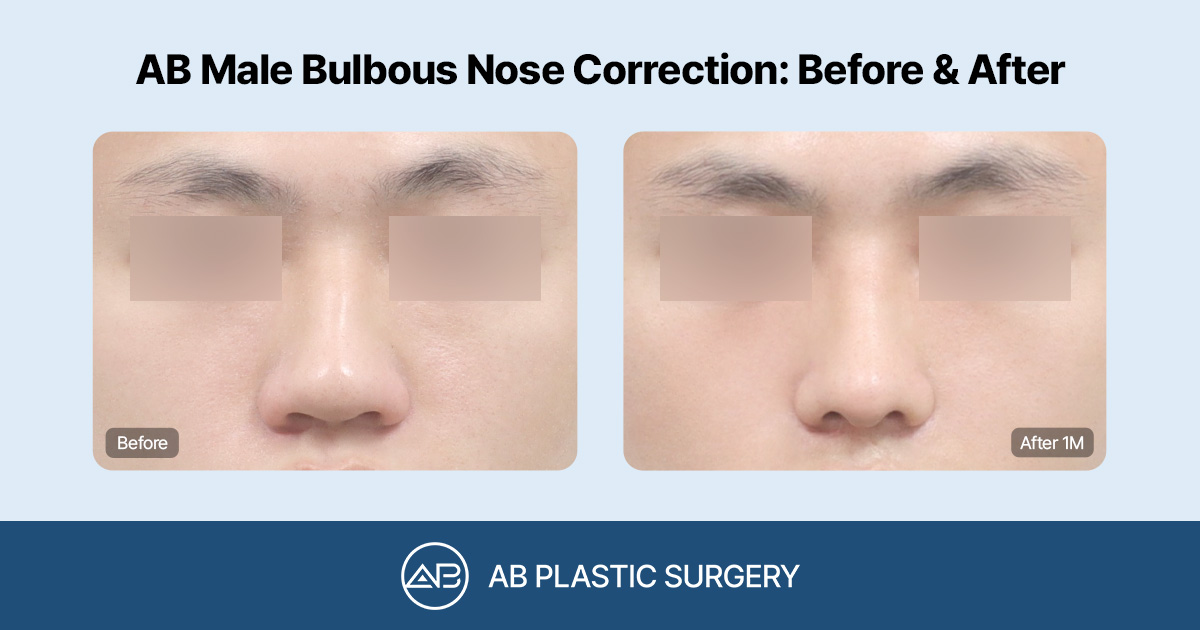
Comparing the before and after images, the previously spread nasal cartilage appears more defined, the width of the nasal tip has been reduced, and the nasal contours have become more refined, creating a noticeable improvement in the overall facial appearance.
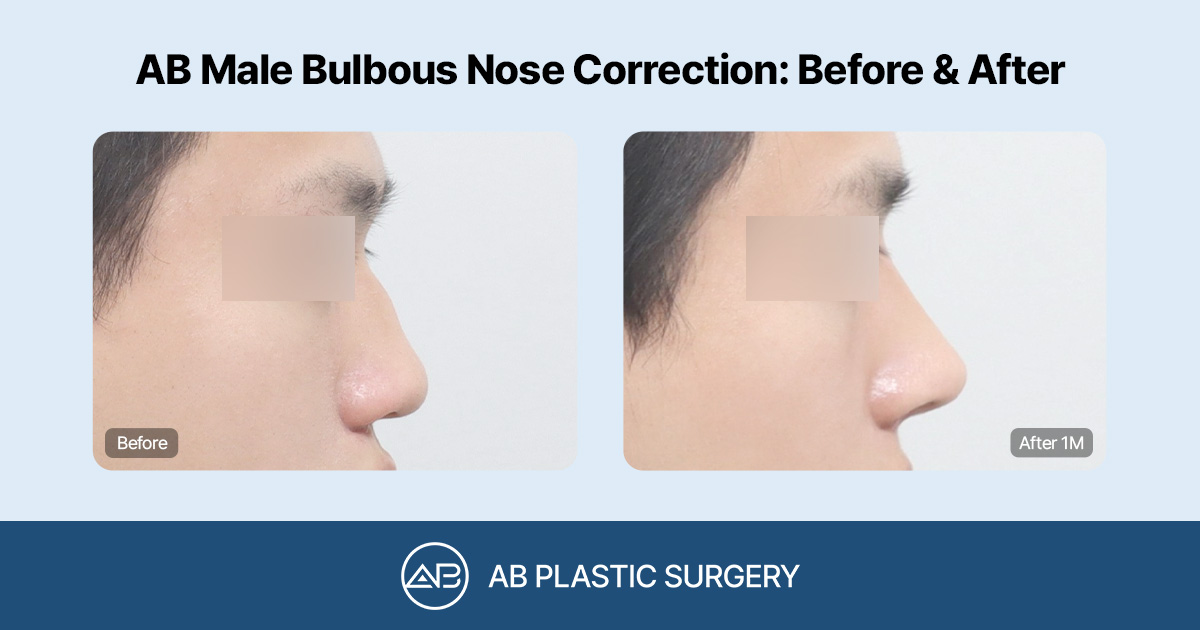
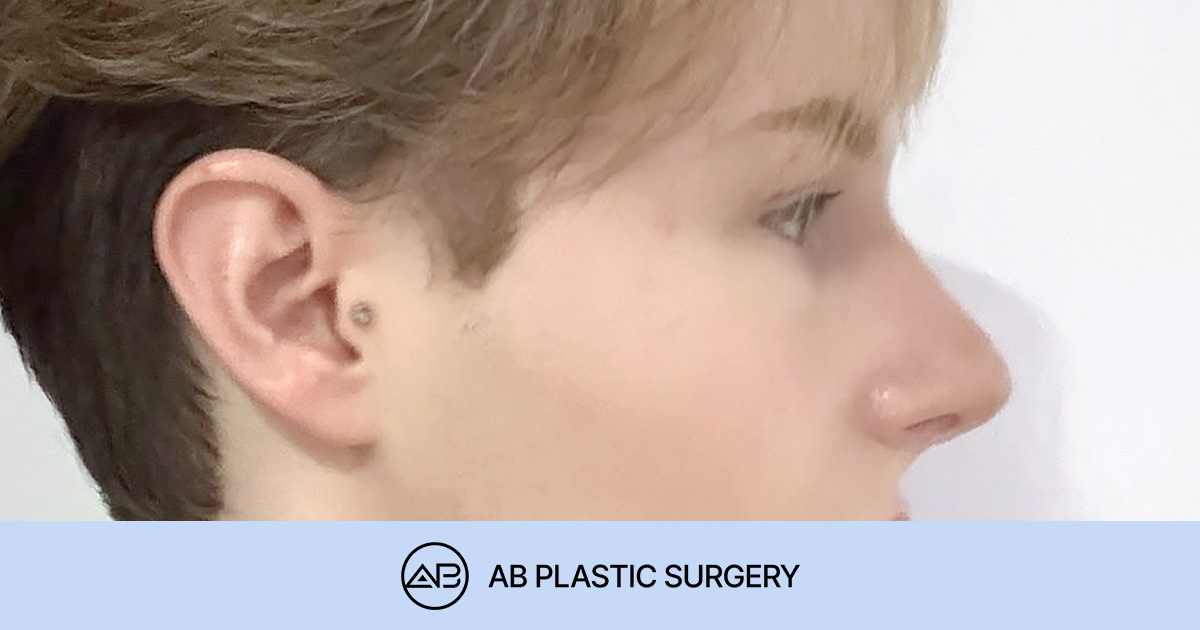
From the side, the previously blunt nasal tip appears naturally elevated, and a straight, uninterrupted line has been established from the nasal bridge to the nasal tip, creating a more refined yet masculine nasal profile.
In particular, this case demonstrates a change that is not simply the result of "raising the nasal bridge," but rather of naturally refining the nasal line.
The changes in the nasal cartilage structure are reflected in the external appearance, resulting in a nose that appears less broad and heavy while maintaining a masculine look. These improvements can be observed in the male rhinoplasty before and after photographs.
Male rhinoplasty is not simply a procedure to narrow the nose or increase the height of the nasal bridge.
It is a surgical procedure that requires comprehensive consideration of skin thickness, subcutaneous fat, cartilage structure, and overall facial proportions to achieve a natural yet masculine nasal line.
In particular, because male rhinoplasty requires a comprehensive approach that considers both the internal cartilage structure and the external appearance, the surgeon's experience and expertise are essential.
If you are considering male rhinoplasty at AB Plastic Surgery, our dedicated medical staff will personally guide you through the consultation process, surgical planning, and postoperative care. We maintain a comprehensive system of care in which the attending specialist directly supervises each stage, from consultation and surgery to postoperative follow-up, to ensure consistent and responsible medical care.
For further information or consultation regarding male rhinoplasty, please contact AB Plastic Surgery on WhatsApp at +82 10 4393 1298 for a detailed consultation.

|
Writer, Dr. Ma Sung-hwan, AB Plastic Surgery |