Title
Lowering the Hairline: Forehead Reduction Surgery in Korea ExplainedDate
2024-06-17Views
17453
AB Blog
Forehead Reduction Surgery in Korea: A Comprehensive Guide
Forehead reduction surgery, also called hairline lowering surgery, reduces forehead height by moving the hair-bearing scalp forward. For patients considering treatment in Korea, the important questions are whether the scalp can be advanced safely, how the incision may heal, what the quote includes, and how follow-up care will be arranged.
What to know before deciding
-
Suitability: A stable hairline, scalp mobility, hair density, medical history, and realistic expectations all matter.
-
Trade-off: Hairline advancement changes forehead height but leaves an incision-line scar and carries surgical risks.
-
Recovery: Returning to work, restarting exercise, scar maturation, and clearance to fly are separate milestones.
-
Planning: Ask for an individualized surgical assessment, an itemized quote, and a written follow-up plan before booking travel.
What is Forehead Reduction Surgery?
Forehead reduction surgery removes a planned strip of forehead skin and advances the hair-bearing scalp to a lower position. The aim is to reduce the distance between the eyebrows and hairline while creating a hairline that suits the patient's facial proportions. It does not reduce the size of the skull.
Forehead Reduction vs Hairline Lowering: What’s the Difference?
In the context of scalp advancement, forehead reduction and hairline lowering surgery generally describe the same procedure. The first describes the intended change in forehead height; the second describes the movement of the hairline. During consultation, confirm which operation is being proposed, particularly when discussing a brow lift or forehead contouring, which address different concerns.
The achievable change depends on scalp mobility, hairline shape, previous surgery, and the tension needed to close the incision. A surgeon should explain the proposed reduction and its limits rather than promise the same measurement for every patient.
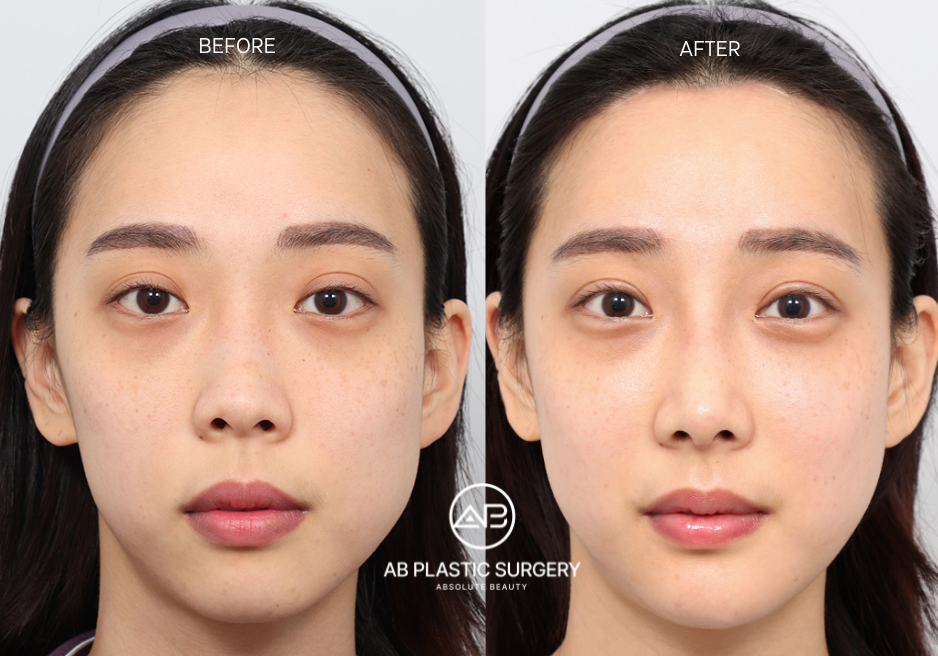
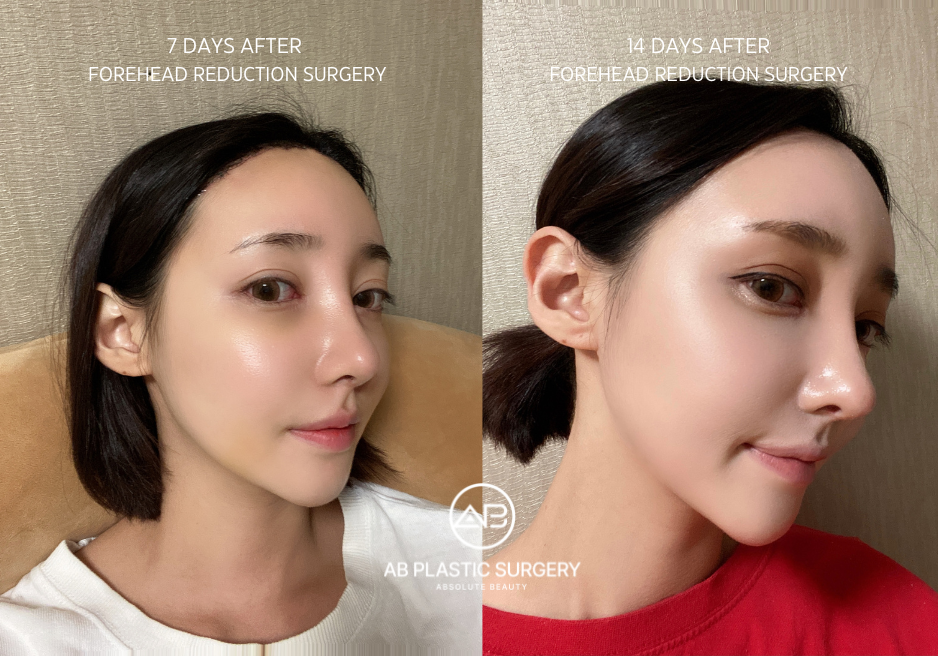
Want to understand what a change in hairline position could look like? Explore AB’s before-and-after gallery and ask the team for forehead reduction cases relevant to your concerns. When comparing images, check the procedure performed, follow-up interval, and whether other operations were involved. Individual results vary.
3 Reasons Why You Should Choose Korea for Forehead Reduction Surgery
Choosing treatment in Korea should begin with the credentials of the clinic and the proposed care plan. Country-level reputation alone cannot tell you whether a particular procedure or surgeon is right for you. At AB Plastic Surgery Korea, the following information provides a starting point for checking institutional credentials, medical expertise, and safety arrangements.
1. Check Institutional Credentials and International Patient Services
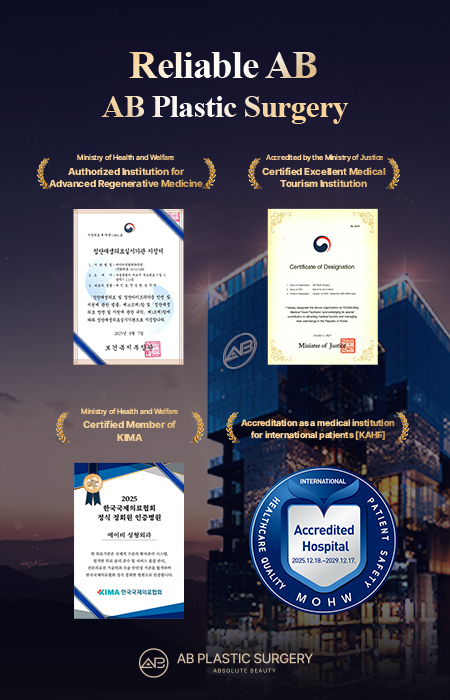
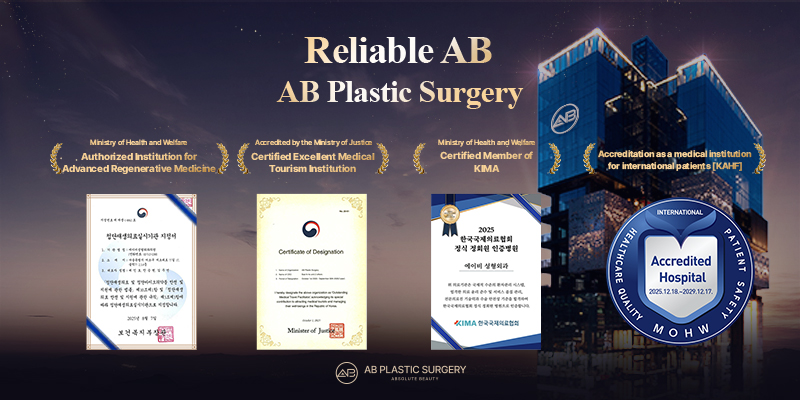
KAHF accreditation: Medical Korea’s accredited-hospital directory lists AB Plastic Surgery with accreditation as a medical institution for international patients for 2025–2029. KIMA membership: AB is also listed in the Korea International Medical Association’s member directory; Medical Korea’s provider profile identifies full membership.
These institutional credentials concern the clinic and its international patient services. They do not guarantee an individual surgical result.
Check AB’s KAHF accreditation listing on Medical Korea and view the KIMA member profile.
Before choosing a clinic, understand who will look after you. Explore AB’s clinic introduction and patient care information, then discuss the arrangements that apply to your own treatment and travel plans.
2. Review Medical Qualifications and Academic Activity
AB’s medical staff directory lists board-certified plastic surgeons and specialist anesthesiologists. When arranging a consultation, ask who will assess your hairline, perform the operation, and manage your follow-up care.
AB’s published academic archive reports IFAAS educational activities in facial contouring and facelift surgery, as well as a neck lift presentation at APS KOREA 2026. These are examples of broader academic participation, not evidence of forehead reduction outcomes or certification of this particular procedure.
Choose your surgeon with the same care as your procedure. Meet AB’s medical team and review their profiles. You can also read AB’s published academic activity reports for the context of its educational work.
3. Understand the Safety System and Your Complete Treatment Plan
AB’s published safety information describes on-site anesthesiology specialists, preoperative screening, and real-time monitoring during anesthesia. Its clinic introduction also describes operating-room CCTV, and the Medical Korea provider profile lists emergency-response protocols.
Before surgery, confirm your anesthesia plan, who will monitor you, the preoperative tests required, and how concerns will be managed during recovery. Ask about CCTV consent and recording arrangements, as well as the process for emergency assessment or transfer when needed. These systems support clinical care; they do not eliminate surgical risk.
Know the safety arrangements before making a decision. Review AB’s published surgical safety information and bring any questions to your consultation.
Finally, compare the scope of the quote and follow-up care, rather than the headline price alone. Travel, accommodation, time away from work, and any additional treatment can affect the overall cost of having surgery abroad.
How Is Forehead Reduction Surgery Done?
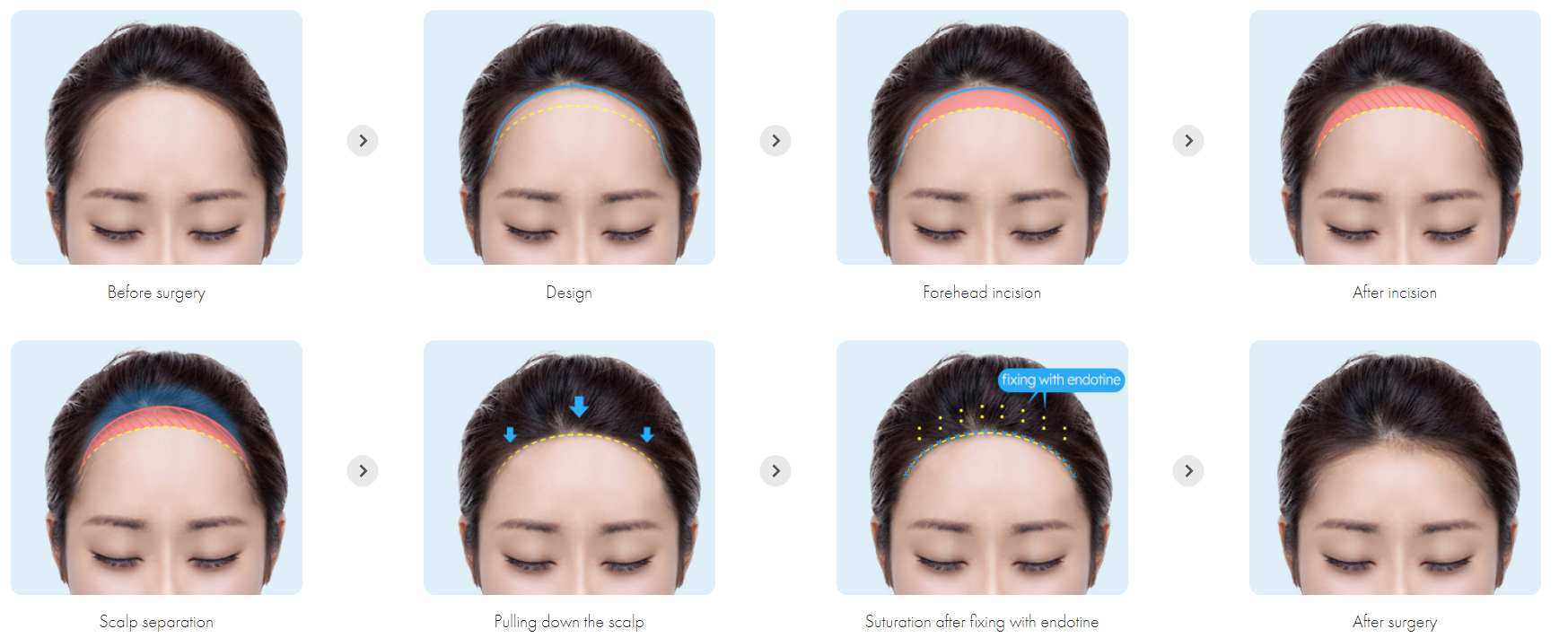
The operation is planned around the patient's hairline, scalp mobility, and medical assessment. The outline below explains the main stages; the exact technique and anesthesia plan must be confirmed with the treating team.
-
Consultation and design: The surgeon reviews your medical history, hair loss history, scalp mobility, hair density, facial proportions, and expectations. Previous surgery and scar history should be discussed.
-
Anesthesia planning: The team selects an appropriate anesthesia approach after assessment and explains preparation, monitoring, and recovery arrangements.
-
Incision and skin removal: An incision is planned along the hairline, and a measured strip of forehead skin is removed.
-
Scalp advancement: The hair-bearing scalp is moved forward to the planned position. The amount of movement must account for tissue tension and blood supply.
-
Closure and postoperative observation: The incision is closed, and the team provides wound-care instructions and a follow-up schedule.
Will There Be Visible Scarring After Surgery?
Forehead reduction surgery leaves a scar along the incision line. Its visibility depends on incision design, closure tension, hair coverage, healing characteristics, and subsequent changes in the hairline. Surrounding hair may help conceal it, but an invisible scar cannot be promised.
Redness, firmness, and sensitivity may change as the incision heals. Discuss your history of raised scars, previous scalp procedures, and any ongoing hair loss before surgery. Ask when the team recommends wound care, sun protection, or scar treatment; products should not be applied to a healing incision without clinical advice.
Concerned about the incision? Ask to see relevant healed cases and discuss what the scar could look like with your current hairstyle and possible future hairline changes.
Ideal Candidates for Forehead Reduction Surgery
A consultation is needed to determine suitability. Having a high forehead alone does not establish that scalp advancement is the best option.
Who Is a Good Candidate for Forehead Reduction?
-
A naturally high, stable hairline: A long-standing high hairline should be distinguished from ongoing recession or progressive thinning.
-
Sufficient scalp mobility: The scalp must allow a useful amount of advancement without excessive closure tension.
-
Suitable hair coverage: Hair density and hairline shape affect planning and how the incision may be covered.
-
Appropriate general health: Medical conditions, medication use, nicotine exposure, and healing history need assessment.
-
Realistic expectations: Patients should understand the limits of reduction, the scar, recovery requirements, and possible complications.
Who May Need a Different Approach?
Active hair loss, limited scalp mobility, previous scalp surgery, or an unfavorable scar history may change the recommendation. The surgeon may suggest further assessment, a different treatment, or no surgery. Hair transplantation also requires assessment of hair loss stability and donor supply; it should not automatically be presented as the solution for everyone who is unsuitable for scalp advancement.
Prepare for a more useful consultation. Bring clear photographs, details of previous procedures, your hair loss history, and a list of medications. Ask what makes you suitable or unsuitable and what alternatives were considered.
What Not to Do After Forehead Reduction Surgery
Follow the written instructions from your surgical team. Aftercare should reflect the operation performed, your healing progress, and your medical history.
-
Do not restart strenuous exercise or heavy lifting without clearance. Ask separately about light activity, exercise, and work that involves physical effort.
-
Do not rub, scratch, or place unnecessary tension on the incision. Confirm when you can wash your hair and resume hair products, coloring, or tight hairstyles.
-
Do not change prescribed medication on your own. Discuss pain relief, regular medication, and supplements with the team.
-
Do not ignore nicotine and alcohol instructions. Follow the clinician's advice about stopping and restarting, rather than assuming a fixed interval applies to everyone.
-
Do not apply unapproved products to the wound. Ask when cleansing, sunscreen, and scar-care products are appropriate.
-
Do not miss follow-up appointments. Keep the clinic's contact details and instructions for urgent concerns available.
Forehead Reduction Recovery Timeline
Early wound healing, return to work, and the final appearance of a scar are different milestones. The table below is a planning guide rather than an individual recovery schedule.
|
Stage |
What to plan for |
What to confirm |
|---|---|---|
|
Immediately after surgery |
Observation, incision protection, and instructions for home care. |
Medication, wound care, sleeping position, and how to contact the team. |
|
Early recovery, often the first 1–2 weeks |
Swelling, discomfort, and visible signs of surgery may affect social and work plans. |
Follow-up visits, the planned timing of suture removal, and readiness for your type of work. |
|
Following weeks |
Gradual reassessment of activity and ongoing incision care. |
Exercise, hair care, and any persistent swelling, sensitivity, or changes in sensation. |
|
Following months |
The scar and sensory changes may continue to evolve. |
Scar assessment, hair growth near the incision, and when to review the longer-term result. |
Planning Your Stay in Korea
Do not use an estimated return-to-work date as clearance to fly. Before booking a return flight, confirm the examination schedule, suture-removal plan, and the treating clinician's assessment of fitness to travel. Ask who will provide advice after you return home and how photographs or concerns will be reviewed.
Worsening pain, increasing redness, discharge, fever, or other unexpected symptoms should prompt contact with the treating team. For severe or rapidly worsening symptoms, seek urgent medical assessment rather than waiting for an online reply.
Have questions about anesthesia or postoperative care? Explore AB’s medical columns for additional background, then ask your treating clinician which advice applies to your operation.
Forehead Reduction vs Hair Transplant: Which Is Right for You?
Both approaches can change the appearance of a high hairline, but they do so in different ways. Neither is suitable for every patient.
|
Consideration |
Forehead reduction / scalp advancement |
Hair transplantation |
|---|---|---|
|
How it works |
Removes forehead skin and moves the existing hair-bearing scalp forward. |
Places hair follicles into a planned area to establish or reshape hair coverage. |
|
Assessment |
Scalp mobility, stable hairline, tissue tension, and scar considerations. |
Hair loss pattern and stability, donor supply, and the proposed density and design. |
|
Timing of visible change |
Hairline position changes during surgery, while swelling and the scar require time to settle. |
Visible growth and density develop over time rather than immediately. |
|
Main trade-offs |
A hairline incision, potential sensory changes, and possible hair loss near the incision. |
Donor-site effects, variable graft growth, and possible need for additional sessions. |
|
Choosing a plan |
A clinician should assess which approach, combination, or non-surgical course is appropriate for the individual. |
|
Still comparing your options? Browse AB’s patient guides to prepare your questions, then discuss your own scalp, hairline, and goals during consultation.
Frequently Asked Questions About Forehead Reduction Surgery
1. Forehead Reduction Surgery Cost in Korea
Forehead reduction surgery at AB Plastic Surgery Korea starts from KRW 6,500,000 (approximately US$4,420). This is a starting price based on AB’s procedure price list. The final cost may vary from person to person depending on individual anatomy, the extent and complexity of surgery, the technique used, and any additional procedures. The US dollar equivalent may vary with exchange rates.
Please confirm the exact surgical cost through a consultation. The team can assess your individual needs, explain your proposed treatment plan, and provide a personalized quote with details of the services included.
-
Ask whether the quote includes anesthesia, preoperative tests, medication, and scheduled postoperative visits.
-
Confirm any separate fees for additional procedures or care, and the currency and applicable taxes.
-
Check whether interpretation, transport, or accommodation assistance is included or charged separately.
-
Ask how long the estimate remains valid and what may change after an in-person assessment.
Plan around a quote that explains the whole treatment. Request a personalized forehead reduction cost consultation and ask which surgical fees, follow-up visits, and international patient services are included in your proposed plan.
2. Forehead Reduction Surgery Recovery Time in Korea
Recovery varies with the operation and the individual. Discuss early wound healing, return to your type of work, exercise, and travel separately. The recovery planning table above outlines the decisions to review with your team.
3. Forehead Reduction Surgery Success Rates in Korea
There is no single success rate that describes every clinic, technique, and patient. A useful discussion should define the intended result, how it is measured, the follow-up period, and the complications recorded. Ask your surgeon about relevant experience and documented outcomes; general satisfaction statements do not predict your individual result.
4. Is Forehead Reduction Surgery and Hairline Lowering Surgery the Same?
When referring to scalp advancement, the terms generally describe the same operation. Confirm the exact procedure in your treatment plan, particularly if a brow lift, forehead contouring, or hair transplantation is also discussed.
5. Forehead Reduction Surgery Risks and Complications
Possible complications include bleeding or hematoma, infection, delayed healing, a visible or widened scar, altered sensation, asymmetry, and temporary or persistent hair loss near the incision. Some problems may require further treatment or revision. Your surgeon should explain which risks are relevant to your medical and hair loss history.
Clinic accreditation, monitoring, and safety protocols do not make surgery risk-free. Before proceeding, ask how the team identifies complications, who to contact, and where to seek urgent care after you leave Korea.
6. Forehead Reduction Surgery Downtime
Time away from usual activities depends on your symptoms, wound healing, and the physical demands of your work. Allow flexibility in your schedule and obtain clearance for activities rather than relying on a universal downtime estimate.
7. How Long Do the Results of Forehead Reduction Surgery Last?
The operation changes the position of the hair-bearing scalp, but aging, future hair loss, and changes in scar visibility can affect the appearance over time. Long-term planning should include hairline stability and the possibility of later treatment.
This guide provides general information. An individual surgical recommendation, recovery schedule, and travel plan require assessment by the treating medical team.

Written by
AB Medical Editorial Team
Medically reviewed by
Updated on
October 27, 2026
This article is for informational purposes only and does not replace a personal medical consultation.