Wide Nasal Bridge Explained: Causes, Assessment, and Surgical Options in Korea
Table of Contents
1. What Is a Wide Nasal Bridge? Where Nasal Width Actually Comes From
2. What Makes the Nose Look Broad? 4 Main Causes of a Wide-Looking Nasal Bridge
3. Wide or Just Low? The Optical Illusion Behind Many “Wide” Noses
4. How a Wide Nasal Bridge Is Assessed: Ratios, 3D CT, and Breathing Function
5. Wide Nasal Bridge Surgery: Which Rhinoplasty Technique Fits Which Cause?
6. Frequently Asked Questions About a Wide Nasal Bridge
7. Surgery Day, Recovery, and Cost of Wide Nasal Bridge Correction in Korea
8. Choosing Where to Have Wide Nasal Bridge Surgery: Credentials and Safety Systems That Protect Patients
A wide nasal bridge is one of the most common reasons people say their nose “looks broad” in photos. But the bridge is rarely the whole story. Two noses that look equally wide from the front can have completely different anatomy underneath: one may have nasal bones that genuinely sit far apart, while the other has a bridge so low and flat that light spreads across it and creates an illusion of width.
That difference matters, because the right correction for one nose can be exactly the wrong correction for the other. This guide explains what actually makes a nose look broad, how surgeons assess a wide nasal bridge using facial proportions, measurement ratios and 3D CT, and which rhinoplasty techniques match each cause. It is written for international patients who want to understand their own nose before a rhinoplasty consultation in Korea, with practical details on recovery, cost and the safety standards worth checking at AB Plastic Surgery Korea.
What Is a Wide Nasal Bridge? Where Nasal Width Actually Comes From
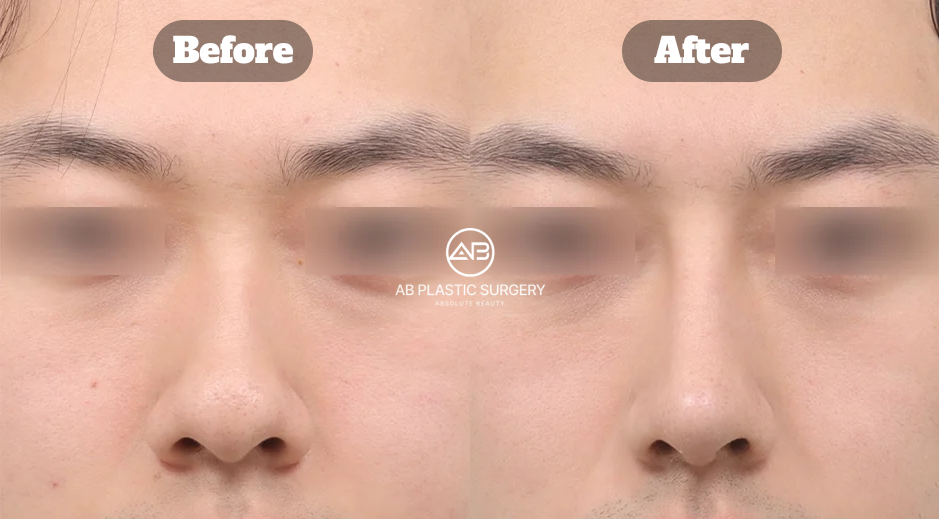
In short: A wide nasal bridge is a bridge that looks broader than expected in proportion to the rest of the face, judged from the front view. It usually refers to the upper, bony part of the nose, but overall nasal width can also come from the middle cartilage, the tip, or the nostril base.
In medical terminology, a wide nasal bridge (also called a broad nasal bridge or wide nose bridge) describes increased breadth of the bridge and nasal root between the eyes. Patients often use the term more loosely for any nose that looks wide from the front, so separating these meanings is the first step of a good assessment.
The Three Zones of the Nose
Surgeons divide the nose into three vertical zones, and width can come from any of them:
-
Upper third (bony vault): the paired nasal bones. This is the true “nasal bridge” and the zone narrowed by nasal osteotomy.
-
Middle third (cartilaginous vault): the upper lateral cartilages that continue the bridge downward. Width here often follows the bone above it.
-
Lower third (tip and alar base): the tip cartilages, the nostril walls (alae) and the point where the nostrils meet the cheeks.
Wide Bridge vs. Wide Nose vs. Bulbous Tip vs. Wide Nostrils
A wide bridge, a bulbous tip and wide nostrils are different problems, even though all three make a nose look broad. A wide bridge sits in the upper third, while a round tip and wide nostrils sit in the lower third, and each is corrected with a different technique. When several zones are wide at once, the nose is usually treated with a combined plan.
When a Broad Nasal Bridge Is a Medical Sign
In most adults, a broad nasal bridge is simply an inherited facial feature. In children, it can occasionally be one feature of a genetic syndrome, which should be evaluated by a pediatrician rather than a cosmetic surgeon. For deeper reading on nasal structure, explore AB Plastic Surgery Korea’s medical columns.
What Makes the Nose Look Broad? 4 Main Causes of a Wide-Looking Nasal Bridge
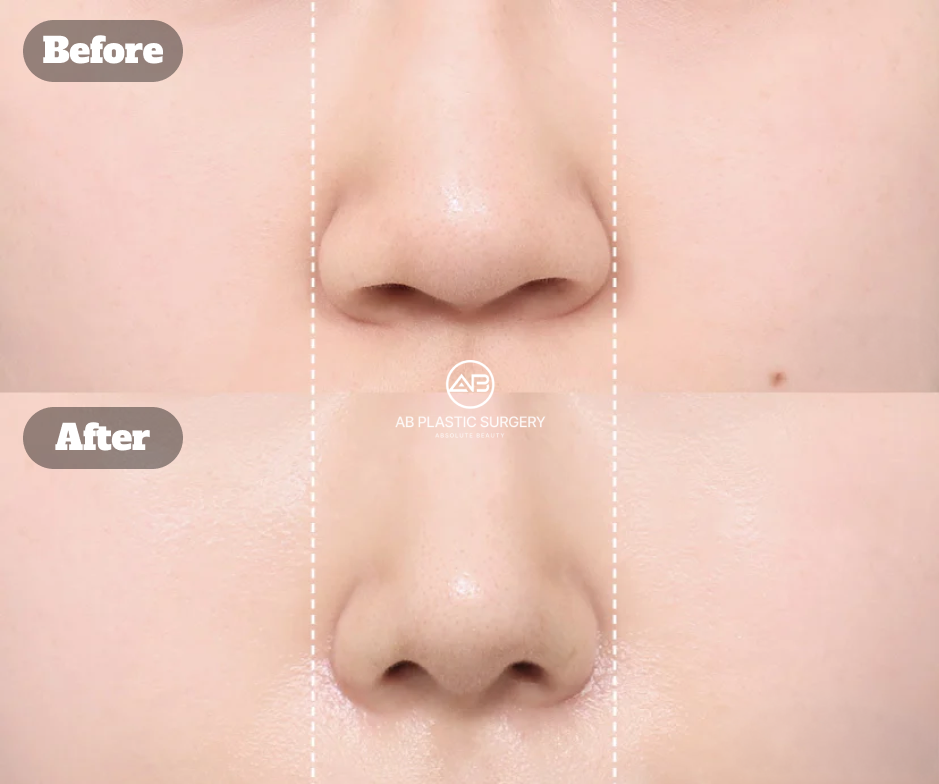
In short: A nasal bridge looks wide for four main reasons: the nasal bones are genuinely wide, the bridge is low or flat, features lower on the nose (thick skin, a round tip or wide nostrils) make the bridge look broader, or the bridge changed after previous surgery or injury. Most wide-looking bridges involve more than one.
Identifying the dominant cause is more useful than asking whether a nose is “too wide.” Each cause looks slightly different in the mirror and points to a different surgical plan.
1. Genuinely Wide Nasal Bones
Genuinely wide nasal bones are bones that sit farther apart than the face’s proportions call for. The upper bridge looks broad even when the bridge has reasonable height. This is the classic indication for narrowing the bony vault.
2. A Low or Flat Bridge
A low bridge makes the nose look wider than it is. When the bridge lacks height, the sidewalls slope gently instead of rising, so the front view shows a broad, flat surface instead of a defined line. This pattern is very common and is often mistaken for wide bones, as the next section explains.
3. Other Features That Make a Bridge Look Wide
Sometimes the bridge itself is not the problem, but features lower on the nose make it look wider than it is. Many people who search for a wide nasal bridge are actually noticing one of these:
-
Thick skin and soft tissue: thick, oily skin blurs the edges of the bridge and adds visual width, especially over the lower bridge and tip.
-
A bulbous tip: a round, heavy tip makes the whole nose read as broad, so the bridge above it looks wider too. Rhinoplasty literature also notes that a low bridge can make the tip appear larger.
-
A wide nostril base: nostrils that sit wide or flare when smiling widen the lower nose and change how the bridge is perceived.
These features are corrected differently from the bridge, which is why identifying them before surgery matters.
4. Changes After Previous Surgery or Injury
A bridge can become wider after a nasal fracture or a previous rhinoplasty. A healed fracture may leave the bones displaced. After a hump is removed, the top of the bony vault can be left flat and open (an “open roof”), which looks broad if it is not closed. An implant that is too wide or has shifted can also widen the bridge over time.
The matrix below brings these causes together. It is not a diagnosis, but it helps you describe your concern clearly during a consultation.
|
Cause |
How it looks |
What a surgeon checks |
|---|---|---|
|
Wide nasal bones |
Broad upper bridge with normal height |
Bony base width vs. intercanthal distance; bone thickness on 3D CT |
|
Low or flat bridge |
Flat, wide-looking bridge without a clear line |
Bridge height and starting point (radix); dorsal aesthetic lines |
|
Thick skin |
Soft edges, little definition |
Skin thickness and oiliness by touch and imaging |
|
Bulbous tip |
Round, heavy tip from the front |
Tip cartilage shape, tip projection, supratip area |
|
Wide alar base |
Nostrils extending outward; flare when smiling |
Alar base width vs. intercanthal distance; base view |
|
Previous surgery or injury |
Asymmetry, open roof, implant outline |
Implant position, scar tissue, bone alignment on CT |
Some of these causes have their own dedicated guides. If your concern sounds more like the tip or nostrils, you can browse more patient guides on the AB Plastic Surgery Korea blog.
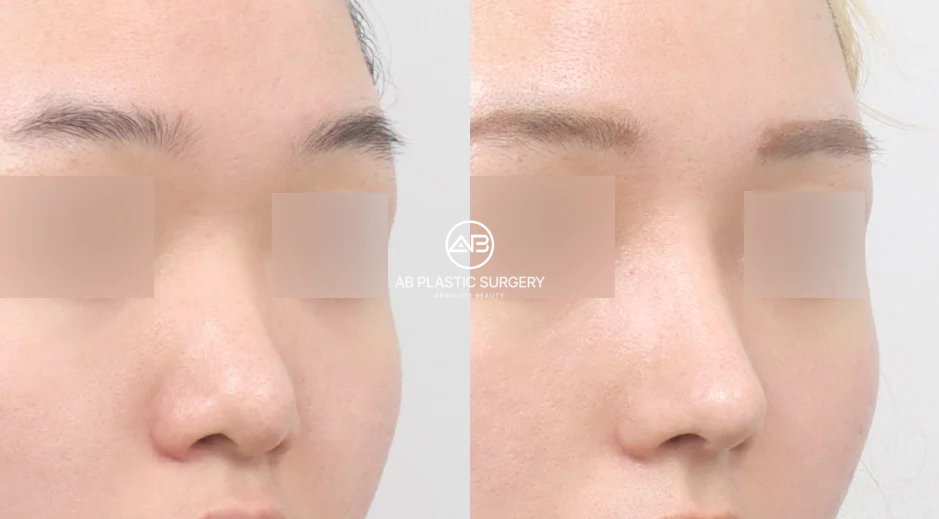
Wide or Just Low? The Optical Illusion Behind Many “Wide” Noses
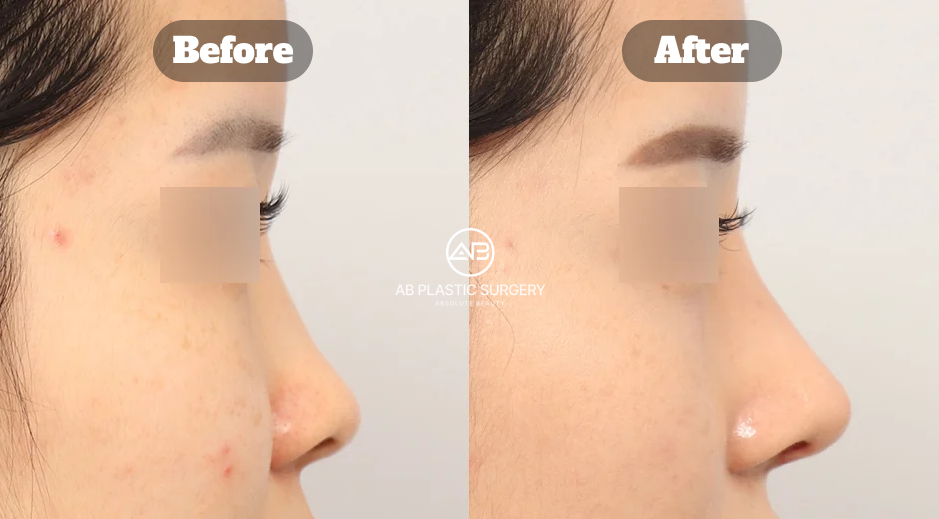
In short: Many noses that look wide are actually low. A low, flat bridge spreads light across a broad surface, so the nose appears wider than its bones really are. In these cases, raising the bridge narrows the nose visually, while narrowing the bones may not help at all.
This is the single most important distinction in wide nasal bridge assessment.
Myth: “If my nose looks wide, my nasal bones must be wide, so I need them narrowed.”
Reality: A nose can look wide because the bones are wide, because the bridge is low, or both. These need opposite strategies: narrowing the bones in the first case, and adding height in the second. Choosing the wrong one can leave the nose looking just as broad, or flatter.
How Dorsal Aesthetic Lines and Light Reflection Shape Perceived Width
The eye judges nasal width mostly by light and shadow, not by bone measurements. When the bridge has enough height, light catches a narrow strip along its top and the sidewalls fall into shadow, so the bridge reads as slim. When the bridge is low, light spreads across a wide surface, the dorsal aesthetic lines (from brow to tip) drift apart, and the nose reads as broad.
Why Narrowing a Low Bridge Can Be the Wrong Approach
Narrowing a bridge that is low rather than wide treats the wrong problem. If the bones are moved inward but the bridge stays flat, the nose may become slightly narrower in measurement while still lacking definition, and the patient often feels little has changed. For a low-bridge illusion, dorsal augmentation that restores a defined ridge is usually the more effective way to reduce apparent width. Many patients have a mix of both, which is why the assessment in the next section matters.
How a Wide Nasal Bridge Is Assessed: Ratios, 3D CT, and Breathing Function
In short: Surgeons assess a wide nasal bridge by comparing bony bridge width with the distance between the inner eye corners and with the nostril base, then confirming bone width, thickness and breathing structures on 3D CT. Photos alone cannot measure bone or skin thickness.
A structured assessment answers three questions: is the bridge genuinely wide, is it low, and does any internal problem affect breathing? Each answer changes the surgical plan.
Facial Proportions and the Intercanthal Distance
Nasal width is always judged relative to the face. A common starting point divides the face into vertical fifths, each roughly one eye-width across; the nose belongs in the central fifth. The key reference is the intercanthal distance, the space between the inner corners of the eyes. Because it does not change with surgery, it serves as a fixed ruler for judging both the bony bridge and the nostril base.
Bony Base Width vs. Alar Base Width
The most widely cited measurement standard compares the width of the bony base of the bridge with the width of the nostril base. The reference values below are from published rhinoplasty literature and are starting points for discussion, not targets to copy.
|
Measurement |
Reference |
What can change the ideal |
|---|---|---|
|
Bony base width |
70–80% of alar base width, typically about equal to the intercanthal distance |
Face width, nasal length, tip definition and skin thickness; a slightly wider bony base can still look balanced on a broader face |
|
Dorsal aesthetic lines |
Gently curving lines from brow to tip, roughly matching tip-defining width |
Bridge height: a low bridge makes these lines look farther apart |
|
Alar base width |
Compared with the intercanthal distance on the front view |
Assessed together with tip projection, since raising the tip changes base appearance |
Surgeons also review front, profile and base views, and assess skin thickness by touch, because it determines how much of any structural change will show.
What 3D CT Reveals That Photos Cannot
3D CT shows what photos cannot: the actual width and thickness of the nasal bones, the position of any previous implant, and the septal cartilage available for grafting. At AB Plastic Surgery Korea, 3D CT before rhinoplasty is treated as essential, and the clinic states it is also used to check a deviated septum, enlarged turbinates and nasal valve narrowing, because narrowing the bony vault changes the inside of the nose as well as the outside.
Pre-Surgery Examination at AB Plastic Surgery Korea
Before any rhinoplasty, AB Plastic Surgery Korea runs an in-house examination system in which on-site clinical pathologists conduct comprehensive preoperative tests. A pre-anesthesia evaluation then shapes an individual anesthesia plan. If results show that a patient is not suitable for anesthesia or surgery, the surgery does not go ahead. Every procedure is supported by a board-certified anesthesiologist on site, who stays with the patient through the operation and early recovery.
Wide Nasal Bridge Surgery: Which Rhinoplasty Technique Fits Which Cause?
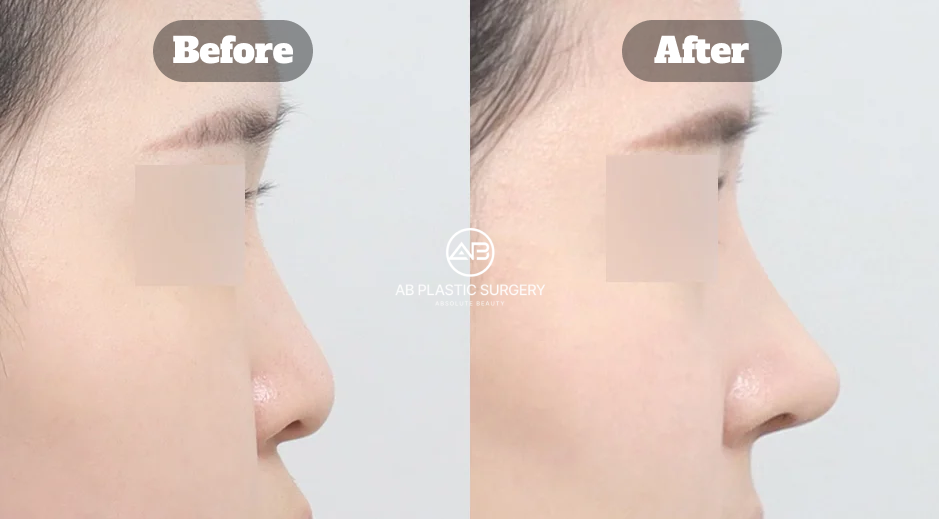
In short: Wide nasal bridge surgery matches the technique to the cause: osteotomy or nasal bone trimming for genuinely wide nasal bones, dorsal augmentation for a low bridge, and revision rhinoplasty for a bridge widened by previous surgery. Tip or nostril correction is added when those features make the bridge look wider.
Below is a patient-level explanation of each technique: what it does, who it suits, and what its limits are. The exact plan is always decided after examination.
Nasal Osteotomy: Narrowing Genuinely Wide Nasal Bones
Nasal osteotomy narrows a wide bony bridge by making controlled cuts in the nasal bones and moving them inward. It is the standard technique when the bones themselves are too far apart, and it is also used to close an open roof after hump removal or straighten a deviated bridge.
Lateral vs. Medial Osteotomy
A lateral osteotomy releases the bone along the side of the nose, near where it meets the cheek, so the sidewall can move inward. A medial osteotomy releases it along the midline. Surgeons choose the pattern according to how wide, how thick and how asymmetric the bones are, and plan the cut lines to preserve support at the base so that the airway is not narrowed.
Medial Nasal Bone Trimming: A Less Invasive Option for Some Noses
For some patients, trimming the inner edge of the nasal bones can narrow the bridge with less disruption than a full osteotomy. This approach can be useful when the nasal bones are short or thick, which can make some osteotomy patterns harder to perform, and when the goal is mild narrowing or improved symmetry rather than a large change in width.
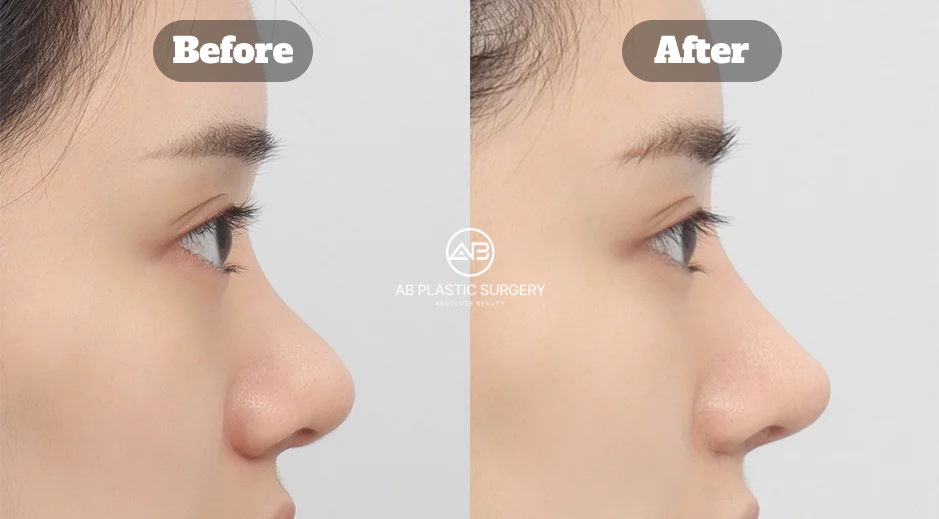
Dorsal Augmentation: Raising a Low Bridge to Reduce Apparent Width
Dorsal augmentation adds height to a low bridge so that it forms a clear ridge, which makes the nose look narrower without touching the bones. Its height and starting point must suit the forehead, midface and cheeks, or the result can look artificial. Learn more about flat nose rhinoplasty at AB Plastic Surgery Korea.
Implant vs. Autologous Tissue
Bridge augmentation can use implants or the patient’s own tissue. The clinic states that materials are chosen according to nasal structure and skin condition, including certified medical silicone, Gore-Tex, AlloDerm, or ear, septal and rib cartilage.
Tip Refinement and Alar Reduction: When the Width Sits Lower on the Nose
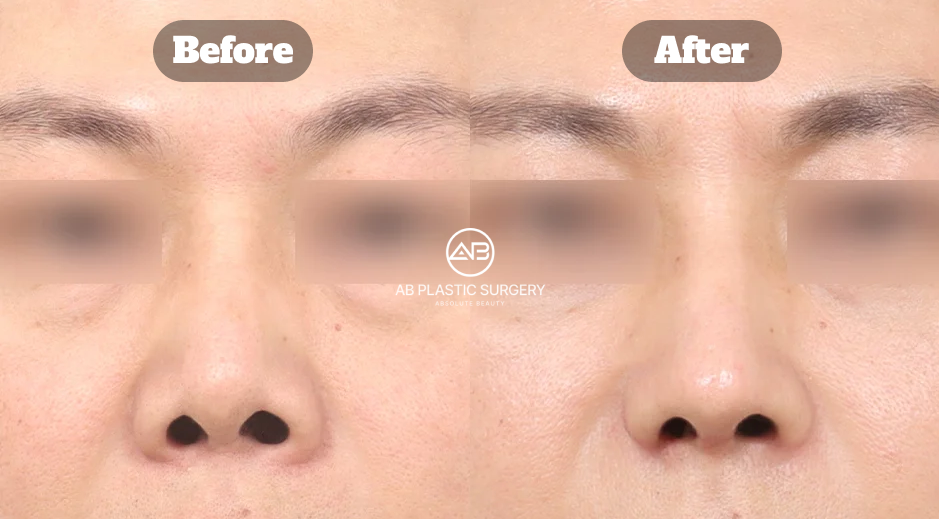
When a round tip or wide nostrils make the bridge look broad, correcting them can reduce overall width without any bone work. Tip refinement reshapes and supports the tip cartilages; for this concern, see AB Plastic Surgery Korea’s bulbous nose rhinoplasty. Alar reduction narrows the nostril base, but it will not narrow a wide bridge on its own. Learn how alar reduction is planned at AB Plastic Surgery Korea.
Combined Rhinoplasty: Why Most Wide Noses Need More Than One Technique
Most wide-looking bridges involve more than one factor, such as a bridge that is slightly wide and low with a soft tip, so a combined plan usually gives the most natural result. To see how bridge height and starting point are designed around facial proportion, explore AB Plastic Surgery Korea’s rhinoplasty approach.
Revision Rhinoplasty for a Bridge That Widened After Previous Surgery
Revision rhinoplasty corrects width caused by an earlier operation, such as an open roof, a shifted or oversized implant, or bones that healed out of position. Revision is more complex than primary surgery because of scar tissue and changed anatomy, so CT review of the existing implant and bone position is especially important. Patients in this situation can read more about revision rhinoplasty at AB Plastic Surgery Korea.
|
Cause |
Main surgical technique |
Often combined with |
|---|---|---|
|
Wide nasal bones |
Osteotomy or medial nasal bone trimming |
Dorsal augmentation if the bridge is also low |
|
Low or flat bridge |
Dorsal augmentation |
Tip refinement |
|
Thick skin / bulbous tip |
Tip refinement with strong tip support |
Bridge augmentation |
|
Wide alar base |
Alar reduction |
Tip and bridge surgery |
|
Previous surgery or injury |
Revision rhinoplasty (implant correction, osteotomy) |
Autologous cartilage grafting |
Seeing how similar noses changed after surgery is one of the best ways to set realistic expectations. Compare real outcomes in AB Plastic Surgery Korea’s before-and-after gallery.
Frequently Asked Questions About a Wide Nasal Bridge
Is a wide nasal bridge genetic?
Usually, yes. Bridge width, bridge height, cartilage shape and skin thickness are mostly inherited, although a bridge can also widen after a nasal fracture or previous surgery.
Can filler or makeup make a wide bridge look narrower?
They can change how wide the bridge looks, but not how wide it is. Contour makeup creates shadow lines that imitate a slimmer bridge. Filler can add height to a low bridge, which may reduce apparent width for a low-bridge illusion. Neither moves the nasal bones, so they do not correct genuinely wide bones, and filler in the nose should only be performed by an experienced physician because of the area’s blood supply.
Does nasal osteotomy affect breathing?
It can if it is not planned carefully, which is why the airway is assessed before surgery. Moving the bones inward also narrows the inside of the nose, and rhinoplasty literature notes that poorly performed osteotomy can lead to a stuffy nose, particularly when the bones are short or thick. Surgeons reduce this risk by checking the septum, turbinates and nasal valve on CT and by preserving support at the base of the bones. Existing breathing problems can often be treated in the same operation.
Is nasal bone narrowing painful?
The procedure itself is performed under anesthesia, so patients do not feel it during surgery. Afterward, most people describe pressure, stuffiness and swelling rather than sharp pain, and discomfort is managed with prescribed medication. Bruising around the eyes is more common when osteotomy is included. At AB Plastic Surgery Korea, anesthesia is planned through a pre-anesthesia evaluation and managed by a board-certified anesthesiologist on site.
Are the results of wide nasal bridge surgery permanent?
Structural changes such as repositioned bones are intended to be long-lasting once healing is complete. The final shape becomes clear only after swelling settles, which can take up to around six months, and the nose continues to change slowly with natural aging. Results from augmentation depend on the material used and on protecting the nose during recovery.
Can an AI face-analysis app tell me if my bridge is too wide?
It can estimate proportions from a photo, but it cannot diagnose the cause. Apps measure surface landmarks under whatever lighting and lens distortion the photo has; they cannot see bone width, bone thickness, skin thickness or the airway. They also compare you with algorithmic ideals that may not reflect your own facial features. Treat an app result as a conversation starter, and rely on an in-person examination with 3D CT for decisions.

Surgery Day, Recovery, and Cost of Wide Nasal Bridge Correction in Korea
In short: Wide nasal bridge correction in Korea follows a set sequence of consultation, examination, anesthesia, surgery and monitoring. Severe swelling usually settles within one to two weeks, the shape starts to look natural at about one month, and full stabilization can take up to six months. Rhinoplasty at AB Plastic Surgery Korea starts from $3,400, with the final cost set after assessment.
Knowing what each stage involves helps international patients plan their stay and set realistic expectations.
What Happens on Surgery Day
Surgery day follows the same order for every patient: a final 1:1 consultation with the assigned surgeon, completion of preoperative tests and 3D CT, anesthesia by a board-certified anesthesiologist, the operation itself, and real-time monitoring before discharge. Under AB Plastic Surgery Korea’s surgery real-name policy, the same surgeon is responsible from consultation to aftercare.
Recovery Timeline
Recovery from rhinoplasty is gradual, and the bridge often looks wider than the final result during the first weeks. The timeline below follows AB Plastic Surgery Korea’s published rhinoplasty guidance; individual recovery varies.
|
Period |
What to expect |
|---|---|
|
Week 1–2 |
Severe swelling and any bruising gradually subside; most people can return to normal daily activities after about one week |
|
About 1 month |
The nose generally begins to look more natural; temporary left-right differences in swelling continue to even out |
|
Up to 6 months |
Remaining swelling resolves and tissues stabilize into the final shape |
Aftercare Rules
Following aftercare instructions protects the new bridge while bones and tissues settle. According to AB Plastic Surgery Korea’s general guidance:
-
Avoid touching or pressing the nose for the first four weeks.
-
Avoid wearing glasses for at least one to two weeks, and follow your surgeon’s advice after that.
-
Avoid alcohol and smoking for at least two weeks, ideally about four weeks.
-
Postpone intense exercise, swimming and saunas until about one month after surgery.
How Long International Patients Should Stay in Korea
Plan to stay until post-operative checks and stitch removal are complete, commonly about one to two weeks for rhinoplasty and longer for combined or revision surgery. Confirm your schedule during consultation before booking flights.
Wide Nasal Bridge Surgery Cost in Korea
The cost of wide nasal bridge correction depends on which techniques your assessment calls for. The figures below come from AB Plastic Surgery Korea’s official price list in USD.
|
Procedure |
Starting price (USD) |
|---|---|
|
Rhinoplasty (nose bridge + nose tip) |
$3,400~ |
|
Rhinoplasty by a Specialist with 6,000+ Procedures for Natural Harmony |
$7,600 |
|
Alar Reduction |
$1,360~ |
|
Autologous Dermis |
$2,240~ |
|
Rib Cartilage |
$2,240~ |
|
Alloderm |
$600~ |
|
Revision Rhinoplasty |
$4,080~ |
|
Nasal osteotomy / nasal bone narrowing |
Quoted at consultation |
Prices are starting figures converted from KRW and may differ with exchange rates. Your final quote reflects the techniques, materials and level of difficulty identified in your own assessment, including whether bone work is needed, so two patients with a “wide nose” can receive very different estimates.
Because your plan depends on what the examination finds, the most accurate figure comes from a personal review. Share your photos and goals to request a personalized rhinoplasty cost estimate.
Choosing Where to Have Wide Nasal Bridge Surgery: Credentials and Safety Systems That Protect Patients
In short: When choosing where to have wide nasal bridge surgery, look beyond technique to verifiable systems: national accreditation for treating international patients, an anesthesiologist on site, operating room CCTV, a named responsible surgeon and emergency readiness. These are what protect you if something does not go as planned.
For an international patient, the biggest risks are often language gaps, unclear responsibility and limited follow-up once home. Each credential below answers one of those risks with an outside standard.
National Credentials, Explained From the Patient’s Side
KAHF accreditation (Ministry of Health and Welfare)
Your risk: as a foreign patient, unclear explanations, weak aftercare and nowhere to turn if a problem occurs.
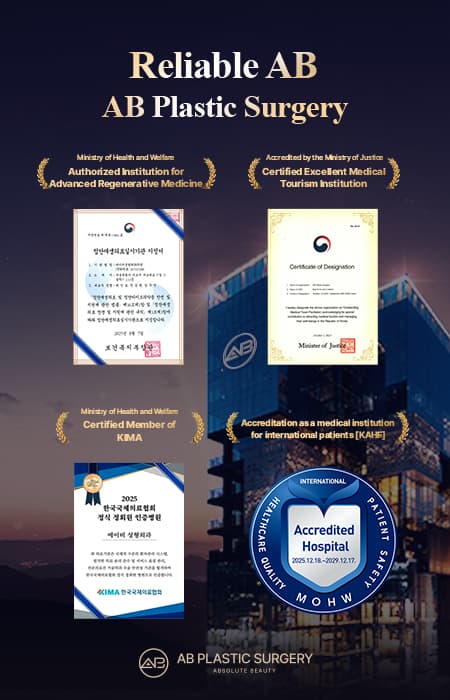
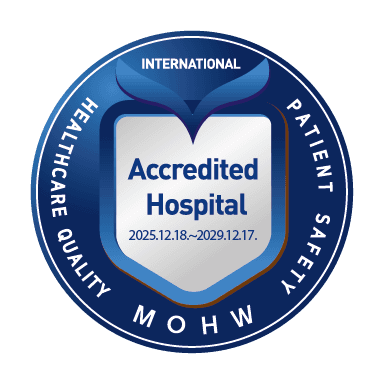
The standard: KAHF is Korea’s official accreditation for medical institutions treating international patients, evaluating patient safety, infection prevention, staff training and emergency response. AB Plastic Surgery Korea holds this accreditation, valid from December 2025 to December 2029.
What it means for you: the clinic was judged safe to accept international patients against a national standard, not simply because it treats many of them.
KIMA full membership
Your risk: inconsistent service quality and ethics at clinics marketing to foreigners.
The standard: AB Plastic Surgery Korea became a full member hospital of the Korea International Medical Association, which reviews international patient systems, medical ethics, infection control and surgical safety.
What it means for you: the clinic’s international care system has been reviewed by an industry body working under the Ministry of Health and Welfare.
Excellent Medical Tourism Institution 2025 (Ministry of Justice)
Your risk: slow or complicated visa processing for medical travel.
The standard: the Ministry of Justice selected AB Plastic Surgery Korea as an excellent medical tourism institution after reviewing records such as illegal-stay and visa refusal rates.
What it means for you: eligible patients can use a simplified electronic medical visa (e-visa) process.
Advanced Regenerative Medicine designation and Medical Korea
AB Plastic Surgery Korea’s stem cell center was designated an Advanced Regenerative Medicine Institution by the Ministry of Health and Welfare in 2025, and the clinic presented its credentials at Medical Korea 2026.
A clinic that passes the standard set for international patients is held to one of the strictest standards in Korean outpatient care. Learn more about how AB Plastic Surgery Korea built its accredited safety system.
Academic Activity: Surgeons Who Teach the Technique
Academic lectures show whether surgeons are recognized by their peers, not just by patients. AB Plastic Surgery Korea’s surgeons have taken part in leading Korean and international meetings:
-
APS KOREA 2025: Dr. Cho Kyu Sang chaired an international rhinoplasty session, while AB surgeons lectured on endoscopic brow lift and facial rejuvenation.
-
APS KOREA 2026: AB surgeons lectured on imaging-based assessment of neck anatomy and neck lift planning.
-
PRS KOREA 2025: an AB surgeon presented on combining facelift and lower blepharoplasty safely.
-
IFAAS: AB Plastic Surgery Korea hosts live surgery and lecture programs for overseas doctors, so its surgeons teach their techniques rather than only learning them.
-
University hospital ties: an educational cooperation agreement with Seoul National University Bundang Hospital and a clinical cooperation agreement with Hallym University Dongtan Sacred Heart Hospital.
Meet the AB Plastic Surgery Korea surgeons who lecture at APS KOREA and train doctors through IFAAS.
Safety Systems That Matter During Surgery
Rhinoplasty is elective, so safety systems should be in place before they are ever needed. AB Plastic Surgery Korea states that it operates the following:
-
Board-certified anesthesiologists on site: 47.1% of AB’s medical staff are anesthesiology specialists (internal figure, May 2025), compared with 23.1% at general institutions with operating rooms (Korean Society of Anesthesiologists, 2011).
-
Operating room CCTV: installed in all operating rooms for transparency and rapid response.
-
Surgery real-name policy: the assigned surgeon is responsible from consultation to aftercare, preventing proxy surgery.
-
Real-time monitoring and emergency readiness: central monitoring during and after surgery, emergency medication including dantrolene, in-house blood crossmatching, and a 24-hour emergency line.
-
Safety record: the clinic states it has had zero reported medical accident cases since opening in September 2020.
Medical Review & Sources
This article was prepared by AB Plastic Surgery Korea for patient education and reviewed by a board-certified plastic surgeon. It is not a substitute for an in-person examination. Clinic-specific figures and safety records are as stated by AB Plastic Surgery Korea. Measurement references are drawn from the following publications:
-
Brito ÍM, Avashia Y, Rohrich RJ. Evidence-based Nasal Analysis for Rhinoplasty: The 10-7-5 Method. Plastic and Reconstructive Surgery Global Open. 2020.
-
Korean Academic Association of Rhinoplasty Surgeons. Correction of bony deviation in rhinoplasty. Archives of Plastic Surgery. 2020.
-
Nasal anatomy and nasal analysis for rhinoplasty. PubMed Central (PMC4656173).
-
Management of the bulbous nose. PubMed (PMID 11007409).
-
Human Phenotype Ontology. Wide nasal bridge (HP:0000431).
A wide nasal bridge is not one problem but several that look alike. The most important step is not choosing a procedure, but finding out which cause you have.