Title
Bulbous Nose Rhinoplasty: Methods, Costs, and Recovery TimeDate
2024-07-17Views
9063
AB Blog
Bulbous Nose Rhinoplasty in Korea: Causes, Treatment Options, Cost Factors, and Recovery
Table of Contents
1. What Causes a Bulbous Nose?
2. Bulbous Nose vs. Wide Nostrils: Are They the Same Problem?
3. How to Fix a Bulbous Nose: Surgical and Non-Surgical Options
4. What Surgeons Assess Before Bulbous Tip Rhinoplasty
5. Cost and Recovery Time
6. Safety Standards at AB Plastic Surgery Korea
7. Preparing for Your Bulbous Nose Consultation
The bulbous nose, characterized by a round, wide, and sometimes swollen-looking nasal tip, is a common concern for many seeking a more refined facial appearance. Understanding the causes and available treatments for a bulbous nose can help you decide the best path toward achieving your aesthetic goals. This guide explains why a nasal tip looks bulbous, which treatments address which cause, what changes the cost of bulbous nose rhinoplasty in Korea, and how recovery unfolds over time.
In short: A bulbous nose usually comes from a combination of tip cartilage shape, weak tip support, and thick skin. Injections do not make a structurally wide tip smaller; reshaping the tip cartilage through rhinoplasty is the main way to change it, while thick skin limits how much definition can show through. Rhinophyma, a rosacea-related skin condition, needs a separate diagnosis. Swelling settles in stages, and the final tip contour can take up to about a year.

What Causes a Bulbous Nose?
A bulbous nose can result from various factors, often combining genetics, skin thickness, and cartilage structure. Here are some common causes:
-
Genetics: Many individuals inherit the shape of their nose, including a bulbous tip, from their family. This genetic predisposition can result in a naturally wider, rounder nasal tip.
-
Thick Skin: Excessively thick skin at the tip of the nose can contribute to a bulbous appearance. Thick skin tends to obscure the underlying cartilage, making the nose appear larger and rounder.
-
Weak Cartilage: When the cartilage in the tip of the nose is not strong enough, it can fail to provide adequate support and structure. This lack of support can cause the nasal tip to appear round and enlarged, resulting in a bulbous shape.
-
Rosacea: This chronic skin condition causes redness and swelling, often affecting the nose. Severe cases of rosacea, known as rhinophyma, can lead to a significantly bulbous and misshapen nasal tip due to tissue overgrowth.
-
Ethnic Background: Nasal tip shape, skin thickness, and cartilage strength vary across every ancestry, so a rounder tip can appear in any population. Treatment is planned around the individual nose rather than ethnicity.
These causes often overlap, and they do not respond to the same treatment. Wide or convex tip cartilage can be reshaped, weak support needs reinforcement, and thick skin changes how much of that reshaping shows on the surface. Rhinophyma is different again: it is an overgrowth of skin tissue rather than a cartilage problem, so it is evaluated as a skin condition first.
|
Main cause |
What it typically looks like |
What usually addresses it |
|---|---|---|
|
Wide or convex tip cartilage |
Broad, boxy, or round tip even with average skin |
Cartilage reshaping (cephalic trim, suture techniques) |
|
Weak tip support |
Soft, poorly defined tip that may droop |
Structural support with cartilage grafts |
|
Thick skin |
Heavy, rounded tip where cartilage outlines are hard to see |
Supportive cartilage work plus realistic expectations about definition |
|
Rhinophyma (rosacea-related) |
Thickened, uneven, often red skin on the tip |
Dermatologic diagnosis and inflammation control; advanced tissue overgrowth may need procedural removal |
Bulbous Nose vs. Wide Nostrils: Are They the Same Problem?
In short: No. A bulbous nose is about the shape of the tip, while wide nostrils are about the width of the nostril base. Some people have both, and each is corrected differently.
A bulbous tip is the rounded area at the end of the nose, formed mainly by the lower lateral cartilages and the skin over them. Wide nostrils, or a wide alar base, describe how far the nostril wings spread at the bottom of the nose where they meet the cheeks. Looking at the nose from the front and from below helps tell the two apart: a bulbous tip looks round at the very end, while a wide base looks broad along the lower edge.
This distinction matters because tip refinement does not narrow the nostril base, and nostril reduction does not reshape a round tip. If your concern is mainly the width at the bottom of the nose, read our guide to alar base reduction to see whether that procedure fits your goals.
How to Fix a Bulbous Nose: Surgical and Non-Surgical Options
Addressing a bulbous nose involves both surgical and non-surgical methods, depending on the severity and underlying causes.
In short: Non-surgical options can treat specific issues such as muscle movement, contour balance, or skin inflammation, but they do not reduce tip cartilage. Structural change to a bulbous tip is made through rhinoplasty.
Non-Surgical Treatments
-
Botox Injections: Botox does not shrink the cartilage or skin that make a tip bulbous. Published research on nasal botulinum toxin mainly describes specific muscle-related issues, such as a tip that drops when smiling or nostrils that flare, so any change is limited to those movements and lasts only a few months.
-
Fillers: Dermal fillers add volume rather than reduce it, so they cannot make a bulbous tip smaller. Placed along the bridge or above the tip, they may make a round tip look better balanced. The nose has a dense network of blood vessels, and the U.S. FDA lists rare but serious filler risks, including vascular occlusion, skin necrosis, and vision impairment. Approved uses differ by country, including between the United States and Korea.
-
Topical Treatments: For redness and swelling caused by rosacea, topical treatments can help manage inflammation. Medications such as metronidazole or azelaic acid are commonly used. They do not change cartilage shape, and according to the British Association of Dermatologists, advanced rhinophyma tissue overgrowth often does not improve enough with medication alone.
To understand what injections can and cannot change in nasal shape, see our guide to non-surgical nose reshaping options.
Surgical Treatments
-
Rhinoplasty: Also known as a "nose job," rhinoplasty is the most effective surgical option for correcting a bulbous nose over the long term, although results still vary with skin thickness and healing. There are two primary types:
-
Open Rhinoplasty: This approach involves making an incision across the columella (the tissue between the nostrils), allowing the surgeon to lift the skin and precisely reshape the underlying cartilage and bone. This method is ideal for significant reshaping.
-
Closed Rhinoplasty: In this approach, all incisions are made inside the nostrils, so there is no incision on the columella. Whether it suits a bulbous tip depends on how much cartilage work is needed, and recovery depends more on the extent of correction and individual healing than on the approach alone.
-
Cephalic Trim: This technique involves trimming the upper portion of the lower lateral cartilages, reducing the nasal tip's width and creating a more refined shape.
-
Cartilage Grafting: For individuals with weak or insufficient cartilage, cartilage grafts can be used to build a more defined nasal tip. This method involves taking cartilage from the septum, ear, or rib and grafting it onto the nasal tip to create the desired shape.
-
Suture Techniques: Surgeons can use sutures to reshape the cartilage, bringing the domal segments closer together to achieve a narrower and more defined tip.
How the Techniques Work Together
Most bulbous tip corrections combine techniques rather than relying on one. Which combination is chosen depends on which cause dominates: a tip that is wide because of cartilage shape needs a different balance of reduction and support than a tip that is round because the skin is thick or the cartilage is soft.
|
Technique |
Role in tip refinement |
Limitation to discuss |
|---|---|---|
|
Cephalic trim |
Reduces excess width of the tip cartilage |
Removing more cartilage leaves less to hold the tip shape |
|
Suture techniques |
Narrow and shape the domes for a defined tip |
Effect is limited when the cartilage itself is weak |
|
Cartilage grafting |
Adds structural support and projection |
Requires a donor site (septum, ear, or rib) |
|
Open vs. closed approach |
Determines access and visibility during surgery |
Chosen by the extent of correction, not by recovery speed alone |

What Surgeons Assess Before Bulbous Tip Rhinoplasty
In short: The treatment plan depends on skin thickness, tip support, previous filler or surgery, and how the tip looks from several angles, so the same "bulbous nose" can lead to different plans.
At AB Plastic Surgery Korea, board-certified plastic surgeons review the following points before recommending a bulbous nose rhinoplasty plan:
-
Skin thickness: Thicker skin hides cartilage detail and tends to stay swollen longer, which shapes how much refinement is realistic.
-
Tip support: The strength of the existing cartilage decides whether the tip can simply be reshaped or also needs grafts for support.
-
Previous filler or surgery: Residual filler, scar tissue, or earlier cartilage removal changes the plan. If you have had nose surgery before, see how a revision rhinoplasty assessment differs from a first operation.
-
Front, side, and base views: A tip can look round from the front but acceptable from below, or the reverse, so all angles are reviewed together.
-
General health and anesthesia safety: Pre-operative tests and an anesthesia evaluation are completed before surgery, and AB Plastic Surgery Korea states that an anesthesiology specialist monitors patients on-site during the procedure.
When reviewing bulbous tip cases, check whether a base view is included, because tip width and nostril width are easiest to separate from below. Our article on how to interpret rhinoplasty before-and-after photos explains what to check by nose type.
Cost and Recovery Time
In short: Bulbous nose rhinoplasty is quoted after the nose is examined, because the cost depends on the extent of tip work, cartilage source, and revision history. Most patients return to daily life in about two weeks, but the final tip contour takes much longer to settle.
Bulbous Nose Rhinoplasty Cost in Korea
The cost of bulbous nose treatments in Korea varies depending on the complexity of the nasal tip correction, cartilage support techniques, and whether surgical or non-surgical methods are used. Patients with thick skin, weak cartilage, or previous nose surgery may require more advanced rhinoplasty techniques, which can affect the overall price.
Because bulbous tip correction is not a single fixed procedure, AB Plastic Surgery Korea keeps current starting prices on its official price page rather than in this article. The factors below explain why two patients asking about the same concern can receive different quotes.
|
Cost factor |
Why it changes the quote |
|---|---|
|
Extent of tip work |
Suture refinement alone differs from combined trimming, suturing, and grafting |
|
Cartilage source |
Septal, ear, or rib cartilage involves different harvesting steps |
|
Skin thickness and support |
Thick skin or weak cartilage often needs more structural work |
|
Revision or prior filler |
Scar tissue and missing cartilage increase complexity |
|
Combined procedures |
Adding bridge work or alar base reduction changes the scope |
For a bulbous tip in particular, ask whether the quote already assumes cartilage grafting and from which donor site, because a plan that starts as suture refinement can change if the tip cartilage proves too weak during surgery. Then confirm which items are included, such as anesthesia, tests, medication, follow-up visits, and taxes.
The final treatment cost can vary based on your nasal structure, skin thickness, revision history, and surgical goals. A personalized consultation is recommended for an accurate diagnosis and customized treatment plan.
Check Personalized Nose Surgery Costs & Recovery Planning
Recovery Time
Recovery time also varies based on the chosen treatment:
-
Non-Surgical Treatments: Recovery from Botox or fillers is typically minimal, with most patients resuming normal activities immediately. Mild swelling or bruising may occur but usually subsides within a few days.
-
Surgical Treatments: Rhinoplasty recovery generally involves a downtime of about two weeks. Patients may experience swelling, bruising, and discomfort, which can be managed with medication. The final results of the surgery may not be fully visible for up to a year as the swelling gradually subsides.
A two-week downtime means returning to daily routines, not seeing the final tip. It helps to separate surgical recovery into three stages:
|
Stage |
Typical timing |
What to expect |
|---|---|---|
|
Initial swelling and bruising |
First one to two weeks |
Most visible swelling and bruising; splint and stitch care follow your surgeon's schedule |
|
Return to daily life and work |
Around two weeks for many patients |
Swelling is less noticeable to others, though the tip still feels firm |
|
Tip contour settling |
Several months, up to about a year |
The tip gradually becomes more defined; thick skin may take longer |
The American Society of Plastic Surgeons similarly notes that initial swelling subsides within weeks, while the final nasal contour can take up to a year to refine.
The best approach to treating a bulbous nose depends on the individual's specific anatomy, the underlying cause of the bulbous appearance, and their aesthetic goals. A consultation with an experienced and board-certified plastic surgeon is crucial to determine the most suitable treatment plan.
Safety Standards at AB Plastic Surgery Korea
In short: For international patients, the key question is not only how surgery is performed, but how the clinic prevents and responds to problems. The safeguards below are described as AB Plastic Surgery Korea states them.
|
Patient concern |
What AB Plastic Surgery Korea has in place |
|---|---|
|
Who actually performs the surgery |
A surgeon-name disclosure system and CCTV recording in operating rooms |
|
Anesthesia safety |
On-site anesthesiology specialists who monitor patients from anesthesia through the recovery room; the clinic reports an anesthesiologist staffing rate of 47.1%, compared with the 23.1% average it cites for hospital-level institutions |
|
Emergencies during or after surgery |
Emergency response protocols, in-house blood crossmatching with results in about two hours, and a 24-hour emergency line for patients after discharge |
|
Track record |
The clinic states it has had zero reported medical accidents since opening in September 2020 |
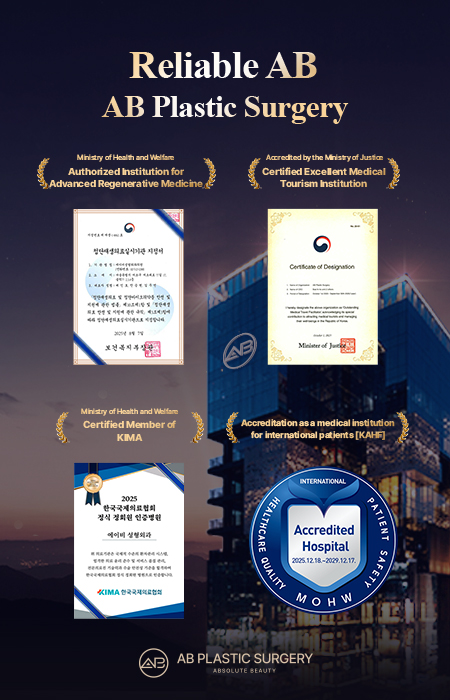
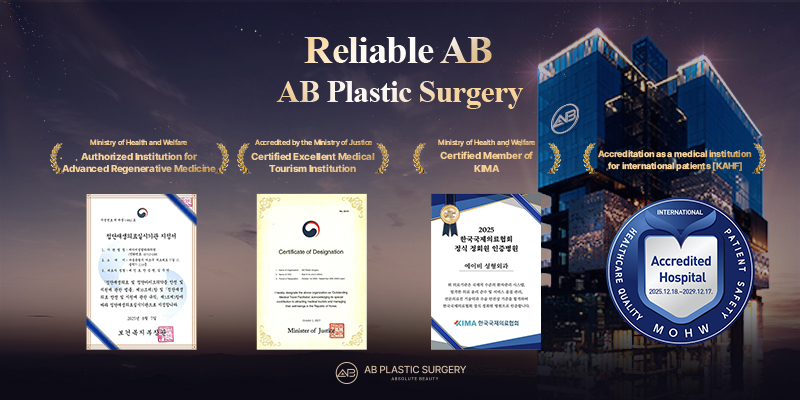
These systems are also reviewed externally. AB Plastic Surgery Korea holds the Ministry of Health and Welfare's accreditation as a medical institution for international patients (KAHF), received at Medical Korea 2026, which means its safety, infection control, and emergency processes were checked against a national standard rather than self-reported. For how the evaluation works, see our explanation of KAHF accreditation for rhinoplasty hospitals. The clinic is also a full member of the Korea International Medical Association (KIMA), a 2025 excellent medical tourism institution designated by the Ministry of Justice, and a Ministry of Health and Welfare-designated advanced regenerative medicine institution.
Academic activity adds another layer of peer review. At APS KOREA 2025, an AB Plastic Surgery Korea surgeon chaired the international rhinoplasty session, and the clinic's surgeons have lectured at PRS KOREA 2025 and APS KOREA 2026. Through IFAAS programs, AB surgeons have also held lectures and live surgery demonstrations for visiting overseas surgeons, teaching techniques to other specialists rather than only attending as learners. Learn more on the AB Plastic Surgery Korea introduction page.
Preparing for Your Bulbous Nose Consultation
In short: Clear photos, your medical and procedure history, and a few specific questions make an online consultation far more accurate.
At AB Plastic Surgery Korea, our skilled surgeons specialize in both non-surgical and surgical treatments for bulbous noses. We offer personalized consultations to help you understand the benefits and risks of each option and to set realistic expectations for your results.
For a bulbous tip, a few specific details help the surgeon judge the cause before you travel:
-
A base view taken from below, showing the tip and both nostrils, plus front and side views in natural light without filters.
-
A close-up of the tip without makeup, so skin thickness, oiliness, and any redness can be seen.
-
A front view while smiling, if your tip seems to drop or widen when you smile.
-
Any history of rosacea treatment, nasal filler, or previous tip surgery.
-
Questions to ask: Is my tip bulbous mainly because of cartilage, support, or skin? Will I likely need a cartilage graft, and from where? How defined can my tip realistically become with my skin thickness?
To see how tip refinement looks in real cases, browse the rhinoplasty before-and-after gallery. Schedule a free online or offline consultation with our experts at AB Plastic Surgery Korea. Send your photos, and our team will explain which option fits your nose and why.
Sources referenced: American Society of Plastic Surgeons (rhinoplasty recovery information); U.S. Food and Drug Administration (dermal filler safety information); British Association of Dermatologists (rosacea and rhinophyma patient information); published systematic reviews on botulinum toxin for nasal tip and alar movement. AB Plastic Surgery Korea safety and institutional data are as stated by the clinic.

This article is for informational purposes only and does not replace a personal medical consultation.