Title
Implant-Free Rhinoplasty in Korea: Options & Recovery | ABDate
2024-07-04Views
32566
AB Blog
Implant-Free Rhinoplasty in Korea: Cost, Options and Recovery
Table of Contents
1. What Does Implant-Free Rhinoplasty Mean?
2. What Can Change—and What Are the Limits?
3. Which Cartilage May Be Used?
4. How Much Does Implant-Free Rhinoplasty Cost in Korea?
5. Recovery and Risks: What Should You Plan For?
6. Frequently Asked Questions About Implant-Free Rhinoplasty in Korea
7. What Should You Check Before Your Consultation?
Implant-free rhinoplasty in Korea is rhinoplasty without implants: it reshapes the nose without silicone or other synthetic materials. Depending on your anatomy and goals, surgery may use your existing nasal structures and cartilage from your septum, ear, or rib. The key questions are how much change is possible, which tissue is needed, and what recovery and cost your individual plan involves.
Rhinoplasty, commonly referred to as a nose job, is one of the most sought-after cosmetic procedures worldwide. Among the various rhinoplasty options available, implant-free rhinoplasty has gained significant attention from patients seeking natural-looking results without a synthetic implant. This guide explains what the term covers, where its limits lie, which cartilage may be used, what affects the cost at AB Plastic Surgery Korea, and how to plan recovery.
In short
-
At AB Plastic Surgery Korea, rhinoplasty starts at $3,400 (bridge + tip); revision rhinoplasty starts at $4,080, and rib cartilage adds from $2,240 if required.
-
Implant-free means no synthetic implant—it is still a surgical procedure with incisions.
-
Septal, ear, or rib cartilage may be used, depending on how much support and volume your nose needs.
-
A lack of septal cartilage does not automatically mean an implant is required; rib cartilage is another option.
-
Cost depends on the surgical scope, the cartilage source, and whether it is a primary or revision surgery.
-
Early swelling settles over weeks, while the final shape can take a year or longer to refine.
What Does Implant-Free Rhinoplasty Mean?
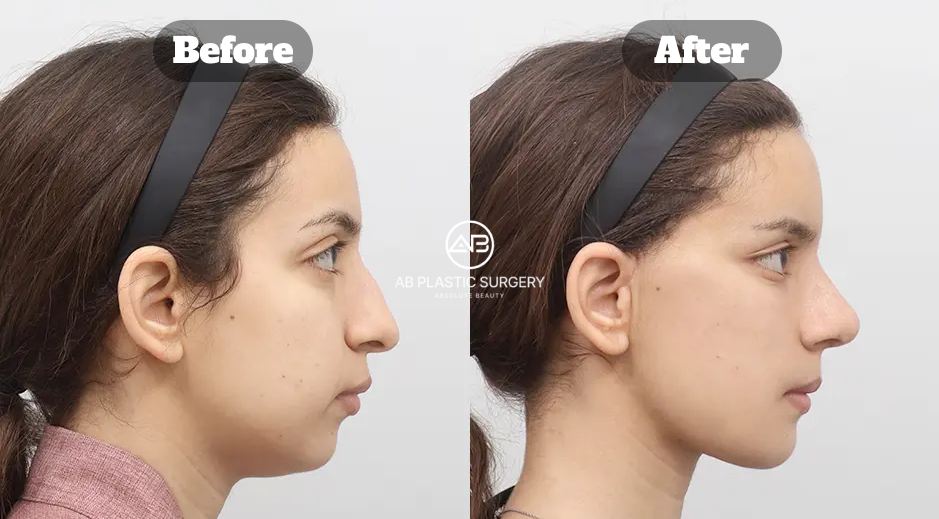
Implant-free rhinoplasty, also known as autologous tissue rhinoplasty, utilizes the patient’s own tissues, such as ear cartilage, septal cartilage, and rib cartilage, to reshape and enhance the nose. No silicone or other synthetic implant is placed. The surgery itself is still performed: incisions are made, cartilage is shaped, and in many cases tissue is harvested from a second site.
Some clinics also use the term for plans that include processed donor tissue, such as donor dermis. Because the meaning can differ, ask your surgeon to list every material in your plan—your own cartilage, your own dermis, or donor tissue—before you compare options or quotes.
Why Patients Choose It—and the Conditions That Apply
-
Natural appearance: Autologous tissues blend with the nasal structure and can provide a natural look and feel. How natural the result looks still depends on the design, the amount of change, and how the graft heals.
-
No implant-specific risks: Using the patient’s own tissues avoids problems specifically linked to a synthetic implant, such as implant visibility, shifting, or implant exposure. It does not remove surgical risks; it changes which risks you need to plan for.
-
A consideration for thin skin: In patients with thin nasal skin, an implant edge may become visible or palpable. Cartilage can be a suitable alternative, but thin skin can also show the contour of a cartilage graft, so careful shaping and camouflage matter.
What Can Change—and What Are the Limits?
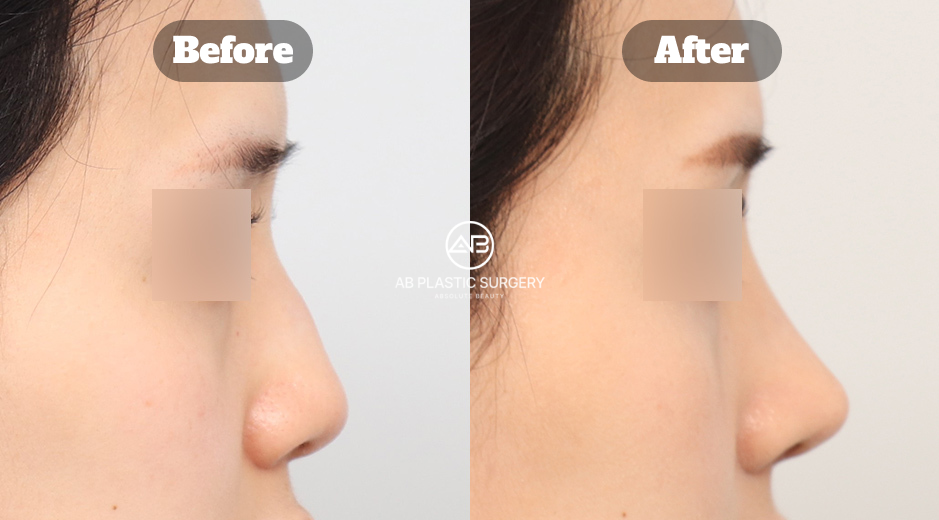
Implant-free rhinoplasty can refine the nasal tip, adjust tip projection and rotation, straighten or support the bridge, and add moderate height. How far the shape can change depends on your skin thickness, your existing nasal structure, and how much usable cartilage is available.
Earlier guidance often stated that a synthetic implant becomes necessary in the following situations. A more accurate view is that each situation changes the cartilage plan, not that an implant is automatically required:
-
Insufficient autologous tissue: When septal or ear cartilage is not enough to achieve the desired result, rib cartilage may provide additional material. Whether an implant is a better choice is a decision for your surgeon after examination.
-
Significant augmentation needed: When a substantial change in bridge height or tip support is required, rib cartilage can provide more volume and strength than septal or ear cartilage.
-
Complex revisions: In revision surgeries where septal cartilage has already been used or damaged, rib cartilage is commonly used to rebuild structural support.
Questions That Clarify Whether It Suits You
-
Do you want to keep your current bridge and change only the tip?
-
Do the bridge height and tip support both need to change?
-
Has previous surgery limited the septal cartilage available?
-
Are you prepared for recovery at a second site, such as the ear or chest?
If you have had nose surgery before, the condition of the remaining cartilage and scar tissue shapes the entire plan. Read how previous nose surgery affects revision planning before your consultation.
Results differ from person to person because skin thickness, cartilage strength, and the starting shape are never the same. To understand why, see how nose structure affects before-and-after results, or browse AB Plastic Surgery Korea’s before-and-after gallery and ask your surgeon which cases used cartilage only.
Which Cartilage May Be Used?
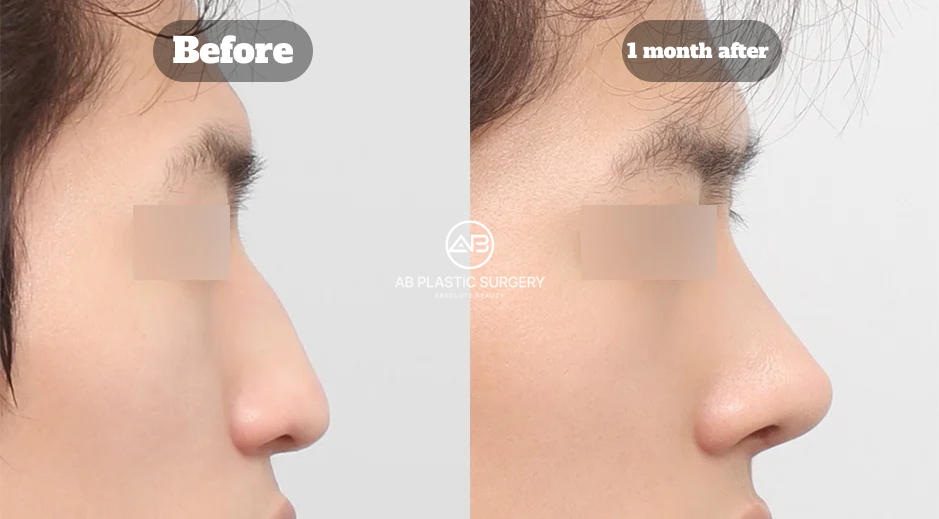
Implant-free rhinoplasty in Korea employs different cartilage sources depending on the role the graft must play. The table below summarizes how each source is commonly used and what to consider.
|
Cartilage source |
Common role |
What to consider |
|---|---|---|
|
Septal cartilage |
Commonly used for structural support and reshaping. It is harvested from the nasal septum itself, so no second surgical site is needed. |
The amount is limited and may be reduced after previous septal or nose surgery. |
|
Ear cartilage |
Often used for nasal tip refinement and, in some plans, bridge support. Its flexibility helps shape the tip accurately. |
Softer and naturally curved, so it offers less structural strength. Requires a small incision at the ear. |
|
Rib cartilage |
Used in more complex cases or revision surgeries where additional structural support or volume is needed. |
Provides the most material, but involves a chest incision and carries a risk of graft warping over time. |
Your own dermis may also be used to soften contours under thin skin. Because each source adds a different recovery site and a different risk profile, the cartilage choice should be explained during your consultation rather than chosen in advance.
To see how these techniques are applied, see AB Plastic Surgery Korea’s implant-free rhinoplasty methods and cases.
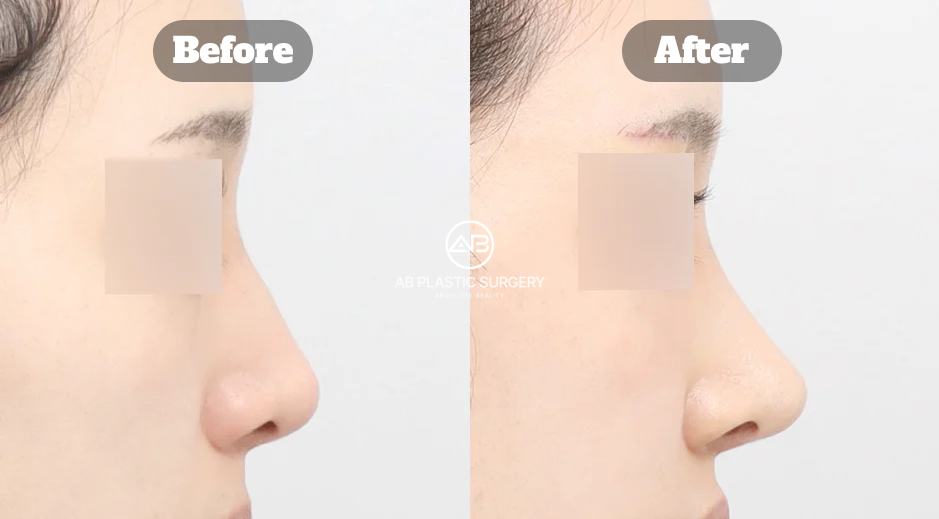
How Much Does Implant-Free Rhinoplasty Cost in Korea?
At AB Plastic Surgery Korea, rhinoplasty (nose bridge + nose tip) starts at $3,400, revision rhinoplasty starts at $4,080, and rib cartilage, if required, adds from $2,240. Implant-free rhinoplasty cost in Korea varies depending on the surgical method, the cartilage source, the nasal structure, and whether the case is a primary or revision surgery. Because implant-free rhinoplasty often uses the patient’s own tissue, the total may increase depending on how much tissue is needed and how complex the plan is.
AB Plastic Surgery Korea Price Reference (USD)
The figures below are starting prices from AB Plastic Surgery Korea’s official price list, which is set in Korean won and converted at approximately KRW 1,470 = USD 1. They are reference items for rhinoplasty in general, not a total price for implant-free rhinoplasty.
|
Item |
Starting price (USD) |
When it applies |
|---|---|---|
|
Rhinoplasty (nose bridge + nose tip) |
$3,400+ |
Base primary surgery |
|
Rhinoplasty by a specialist with 6,000+ procedures |
$7,600 |
Listed program price |
|
Revision rhinoplasty |
$4,080+ |
Previous nose surgery |
|
Rib cartilage |
$2,240+ |
If extra structural support is required |
|
Autologous dermis |
$2,240+ |
If contour softening is required |
|
Additional cost per surgical plan |
$560+ |
Depends on the plan |
|
Alar reduction |
$1,360+ |
If combined |
Important: Do not add these items together to estimate your own total. Which items apply, and how many, is decided only after examination. The final cost can vary depending on individual anatomy, surgical goals, revision history, cartilage condition, and the surgeon’s medical assessment.
What to Confirm in Your Quote
-
Which cartilage or tissue source is included
-
Whether any additional procedure, such as alar reduction, is combined
-
Which pre-operative tests and follow-up visits in Korea are included
-
Whether the quote is for a primary or revision surgery
→ Review AB Plastic Surgery Korea’s rhinoplasty price items and plan your schedule
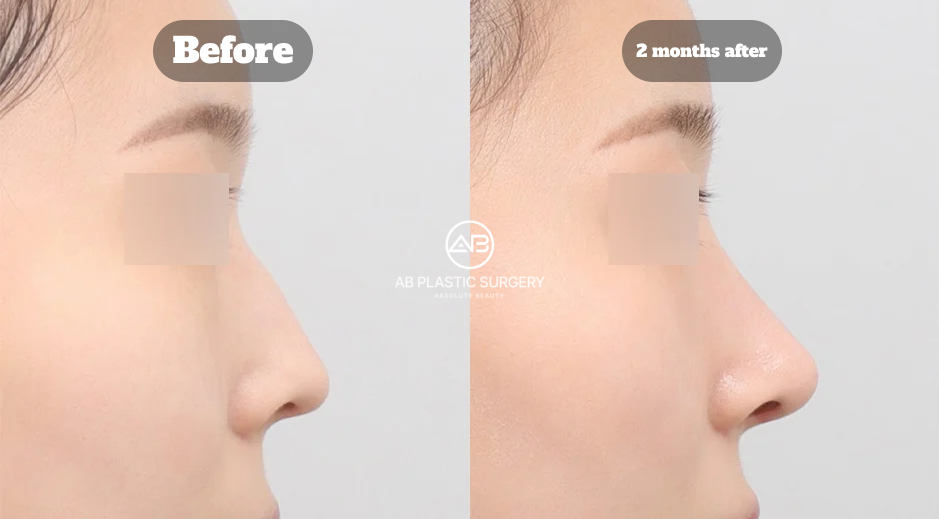
Recovery and Risks: What Should You Plan For?
Recovery from implant-free rhinoplasty involves several stages. Planning your stay in Korea and planning full recovery are two different things, so it helps to separate them.
|
Stage |
What typically happens |
What to plan |
|---|---|---|
|
Initial healing |
Swelling and bruising are common but gradually subside. Follow-up appointments are scheduled during this period. |
Many patients plan to stay in Korea for about 7–10 days. Confirm your return date with your surgeon. |
|
Ongoing care |
Visible swelling decreases and daily activities resume. The cartilage harvest site, if any, also heals. |
Avoid strenuous activities and follow specific aftercare instructions to ensure proper healing. |
|
Final results |
Residual swelling, especially at the tip, fully subsides and the contour settles. |
Judge the final shape only after this period, not in the first weeks. |
The 7–10 day window is a common planning reference, not a fixed rule for every patient or a guarantee of when you can fly. Your surgeon should confirm when travel is appropriate based on how your recovery is progressing.
Safety and Possible Complications
Using your own cartilage avoids risks specifically associated with a synthetic implant, but surgery still carries risks. Patient guidance from the American Society of Plastic Surgeons (ASPS) and published reviews of rib cartilage rhinoplasty describe the following:
-
Absorption of grafts: Autologous tissues may undergo partial absorption over time, which can slightly alter the initial results.
-
Graft warping: Rib cartilage in particular can bend after surgery, which may affect the bridge line.
-
Infection and breathing changes: As with any rhinoplasty, infection or changes in nasal airflow can occur.
-
Harvest-site problems: Pain, scarring, or other issues may occur at the ear or chest where cartilage was taken.
-
Possibility of revision: Some patients may need further surgery to refine the result.
The success of implant-free rhinoplasty heavily depends on the surgeon’s skill and experience with cartilage shaping, and on the safety systems around the surgery. AB Plastic Surgery Korea states that a board-certified anesthesiologist is on-site for every procedure, monitoring the patient throughout surgery and early recovery. For more physician-written explanations of procedures and safety, visit AB Plastic Surgery Korea’s medical column.
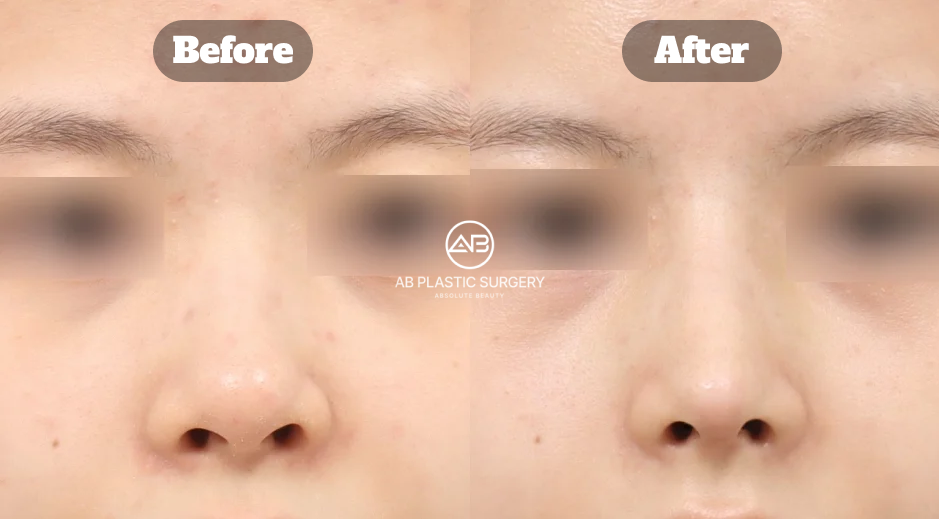
Frequently Asked Questions About Implant-Free Rhinoplasty in Korea
How much is a nose job in Korea at AB Plastic Surgery Korea?
At AB Plastic Surgery Korea, rhinoplasty (nose bridge + nose tip) starts at $3,400, and revision rhinoplasty starts at $4,080. If rib cartilage is needed for an implant-free plan, it adds from $2,240. These are starting prices; the final quote is confirmed only after your nasal structure has been examined.
Is rhinoplasty without implants permanent?
Cartilage grafts become part of your nasal structure, so the result is intended to be long-lasting. However, autologous tissue may partially absorb over time, and rib cartilage can warp, which may slightly change the initial shape. The final contour settles over about 12–18 months.
Is implant-free rhinoplasty better than rhinoplasty with an implant?
Neither is better for everyone. Implant-free rhinoplasty avoids risks specific to synthetic implants but adds a cartilage harvest site if septal cartilage is not enough. The right choice depends on your skin thickness, how much change you want, and how much usable cartilage you have.
Will I need rib cartilage for implant-free rhinoplasty?
Not always. Septal or ear cartilage is often enough for tip refinement. Rib cartilage is more likely to be considered when significant bridge height or strong tip support is needed, or when septal cartilage was used in a previous surgery.
How long should I stay in Korea after implant-free rhinoplasty?
Many patients plan to stay about 7–10 days for initial healing and follow-up appointments. This is a planning reference, not a fixed rule. Your surgeon should confirm when you can fly home based on your recovery.
What support does AB Plastic Surgery Korea provide for international patients?
Depending on the procedure and its price range, AB Plastic Surgery Korea offers the following services free of charge:
-
Medical interpreter service
-
CT scan, health check, and swelling-relief laser treatment
-
Airport pick-up
-
Hotel accommodation for up to 5 nights
-
Aftercare kit
These services apply once you decide to proceed with surgery, and they cannot be used to pre-select a specific surgeon.
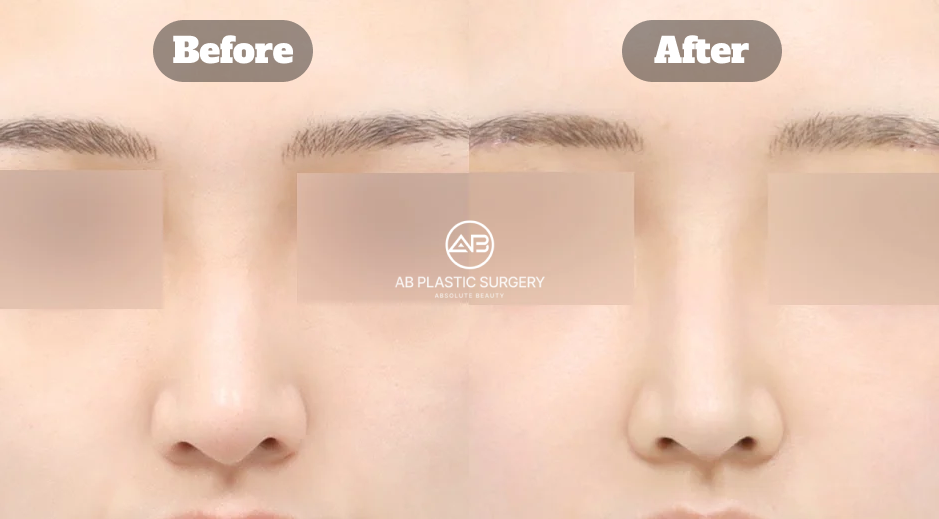
What Should You Check Before Your Consultation?
Choosing the right clinic for implant-free rhinoplasty is crucial for achieving the desired results. Instead of relying on advertising claims, check criteria that can be verified.
-
Surgeon expertise: Look for surgeons who specialize in rhinoplasty and have experience with autologous cartilage, including rib cartilage. You can review the profiles of AB Plastic Surgery Korea’s plastic surgeons before booking.
-
Academic activity: Surgeons who present and teach at medical conferences have their techniques reviewed by peers. At APS KOREA 2025, hosted by the Korean Society for Aesthetic Plastic Surgery, an AB Plastic Surgery Korea surgeon chaired the international rhinoplasty session. AB Plastic Surgery Korea also hosts IFAAS training programs, where its surgeons teach techniques to visiting overseas surgeons.
-
Comprehensive care: A good clinic should provide thorough pre-operative consultations, detailed post-operative instructions, and follow-up appointments to monitor healing.
-
Accreditation and certification: Ensure that the clinic is accredited by relevant authorities and that the surgeons are board-certified.
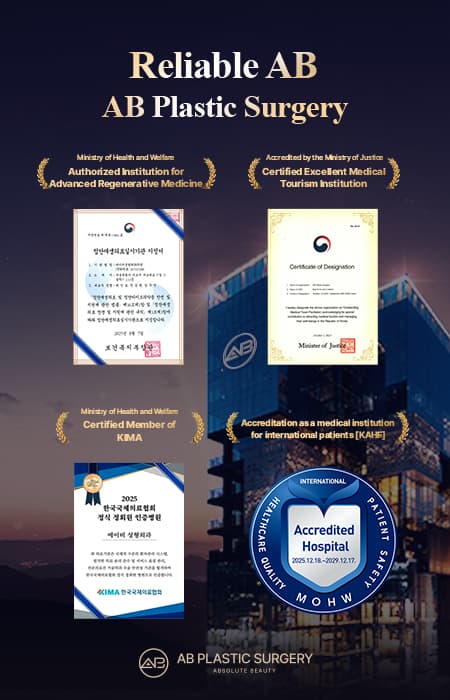
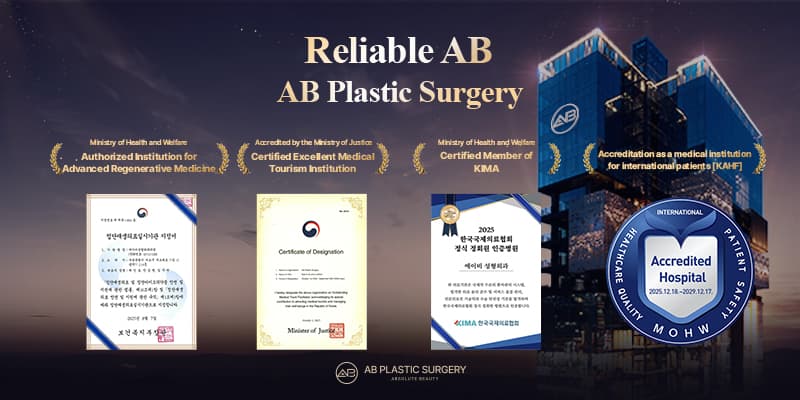
What AB Plastic Surgery Korea’s Credentials Mean for You
An accreditation only matters if it tells you something about your own safety. The table below explains what each of AB Plastic Surgery Korea’s credentials covers from a patient’s point of view.
|
Credential |
What it means for an international patient |
|---|---|
|
KAHF accreditation |
For international patients, how a problem is handled after surgery matters as much as the surgery itself. This accreditation means patient safety management, operating-room infection prevention, staff training and emergency response, and hospital hygiene were evaluated against national standards. |
|
KIMA full membership |
The clinic’s international patient care system, medical ethics, infection control, and surgical safety passed the association’s review. |
|
Excellent Medical Tourism Institution |
The clinic met screening criteria for visa compliance and patient records, which allows eligible patients to use the medical e-visa process. |
|
Advanced Regenerative Medicine Institution |
The clinic’s facilities, equipment, and staff met the government requirements for regenerative medicine research. |
|
University hospital cooperation |
Designated as an education cooperation hospital of Seoul National University Bundang Hospital (2023) and in a cooperation agreement with Hallym University Dongtan Sacred Heart Hospital (2024). |
Safety Systems Around Your Surgery
According to AB Plastic Surgery Korea, the following systems are in place for every surgery:
-
On-site anesthesiology specialists: AB Plastic Surgery Korea states that anesthesiologists make up 47.1% of its medical staff, compared with a reported average of 23.1% at hospital-level medical institutions in Korea.
-
Operating-room CCTV and surgeon identification: Surgeries are recorded, and the operating surgeon is identified so patients can confirm who performed their procedure.
-
Emergency response: In-house blood cross-matching with results within about 2 hours, university hospital-grade emergency equipment, and a 24-hour emergency line after discharge.
-
Medical accident record: AB Plastic Surgery Korea states that it has had zero reported medical accidents since opening in September 2020.
To compare these criteria with other clinics, read what to check when choosing a rhinoplasty hospital in Korea, or learn more about AB Plastic Surgery Korea.
Four Questions to Ask at Your Consultation
-
Which part of my nose should change, and by how much?
-
How does my history of nose surgery or filler affect the plan?
-
Which tissue will be used, and where will it be harvested?
-
What does the quote include, and which follow-up visits do I need before flying home?
Implant-free rhinoplasty in Korea offers an option for patients who want to reshape the nose without a synthetic implant. Its success depends on choosing the right cartilage for your anatomy, understanding the limits, and planning recovery realistically. Thorough research and a consultation with a verifiable clinic can help you make that decision with confidence.
At AB Plastic Surgery Korea, every plan starts with an examination of your nasal structure, and surgery is performed with an anesthesiologist on-site and CCTV in the operating room. Bring your questions, photos, and any previous surgery records to your consultation.
Sources referenced: American Society of Plastic Surgeons (ASPS) patient guidance on rhinoplasty safety and recovery; published meta-analyses on complications of autologous rib cartilage rhinoplasty; AB Plastic Surgery Korea official price list and announcements on accreditation and safety systems. Prices and recovery periods are general references and do not replace an individual medical assessment.

This article is for informational purposes only and does not replace a personal medical consultation.