Title
Double Eyelid Crease Types: In-Line to Outline | ABDate
2024-06-18Views
28978
AB Blog
Understanding the 4 Types of Double Eyelid Creases in Korea
Table of Contents
Quick Comparison: 4 Crease Types
1. In-Line Double Eyelids
2. In-Outline Double Eyelids
3. Semi-Outline Double Eyelids
4. Outline Double Eyelids
5. Cost of Double Eyelid Surgery in Korea
6. Double Eyelid Surgery FAQs: Types, Cost & Recovery
7. What to Know Before Getting Double Eyelid Surgery
Double eyelid crease types describe how the upper eyelid fold begins near the inner corner and how visibly it extends across the eyelid. The four commonly discussed designs are in-line, in-outline, semi-outline, and outline. They differ in crease visibility and the relationship between the fold and inner eye corner. The most suitable design depends on individual eyelid anatomy, not simply a preference for a higher crease.
You can also browse AB Plastic Surgery Korea’s before-and-after photo gallery to see examples of surgical outcomes. Photographs are illustrative; results vary by patient and procedure.
Double eyelid surgery can create or refine an upper eyelid crease using an incisional or non-incisional approach. The crease design and surgical method are separate decisions: not every crease type requires a particular technique.
For a broader explanation of the operation itself, read our double eyelid surgery decision guide. This article focuses specifically on how the four crease shapes compare.
What Are the 4 Types of Double Eyelid Creases?
The key difference is where the crease begins and how prominently it appears toward the outer eyelid. This quick comparison summarizes the four designs before the individual examples below.
|
Crease type |
Typical appearance |
Design consideration |
|---|---|---|
|
In-Line |
Low, subtle crease near the inner lash line |
Often considered for an understated fold |
|
In-Outline |
Inner crease starts subtly and becomes more visible outward |
Balances a soft inner corner with more definition |
|
Semi-Outline |
More visible, moderately elevated fold |
Requires assessment of skin thickness and crease height |
|
Outline |
Clearly separated, prominent fold near the inner corner |
A higher fold may not suit every eyelid structure |
Important: These labels describe crease designs, not four distinct surgical operations. A surgeon determines whether an incisional or non-incisional technique is appropriate after examining eyelid anatomy, skin, and function.
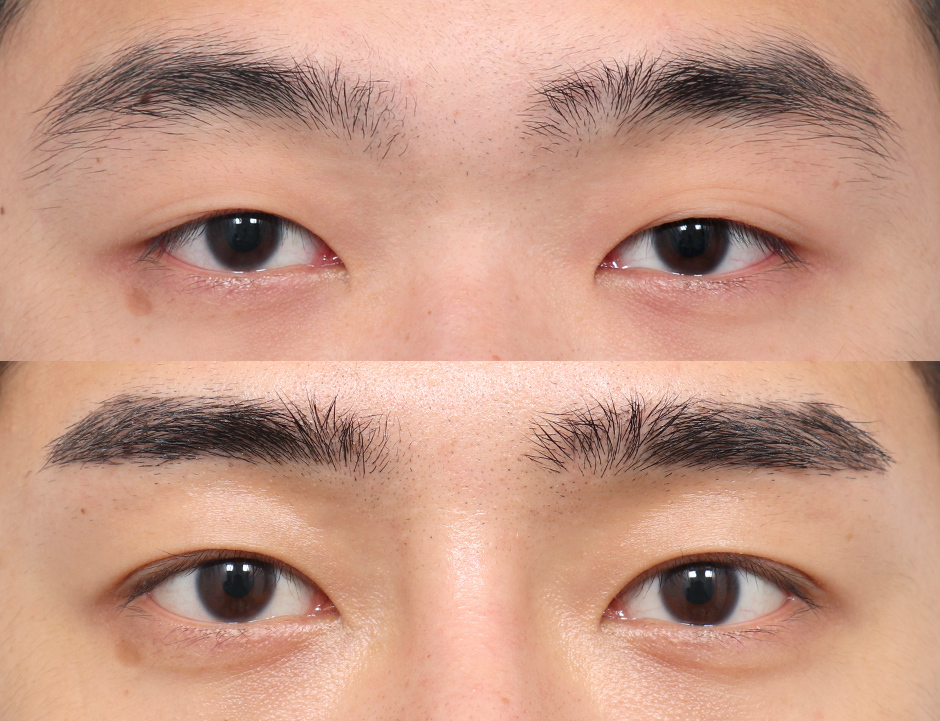
In-Line Double Eyelids
In-line double eyelids feature a crease that is positioned very close to the lash line. This results in a subtle, natural-looking fold that is not too prominent.
When comparing subtle folds with more defined eye shapes, see our guide to natural versus defined Korean eye surgery looks. The final appearance depends on individual anatomy rather than a crease label alone.
In-Line Double Eyelid Surgery Is Recommended For
In-line double eyelid surgery is ideal for individuals seeking a natural and understated look. It is particularly recommended for those with thin eyelids and minimal eyelid fat, providing a subtle enhancement that complements their natural eye shape.
In-Line Double Eyelid Surgery Procedure
An in-line crease may be planned with an incisional or non-incisional approach, depending on eyelid skin, tissue characteristics, and the desired fold. The technique and recovery plan are determined during consultation; a low crease does not automatically mean a shorter recovery.

In-Outline Double Eyelids
In-outline double eyelids have a crease that is slightly higher than the in-line type but still close to the lash line, providing a more noticeable fold while maintaining a natural appearance.
For additional context on eye-corner procedures, see what to know about canthoplasty. Canthoplasty changes eye-corner anatomy and should not be confused with choosing an outline crease.
If the inner eye corner also affects the preferred crease design, our epicanthoplasty guide explains a separate procedure that may be discussed during an eye surgery consultation. It is not automatically required for an in-outline crease.
In-Outline Double Eyelids Is Recommended For
In-outline double eyelid surgery is ideal for individuals looking for a balance between subtlety and definition. This procedure is suitable for those with moderate eyelid fat, offering a more noticeable yet still natural-looking enhancement.
In-Outline Double Eyelid Surgery Procedure
An in-outline crease can be designed using different surgical approaches. The choice depends on eyelid anatomy, skin laxity, and whether additional correction is needed. Recovery is influenced more by the surgical technique and individual healing than by the crease label alone.
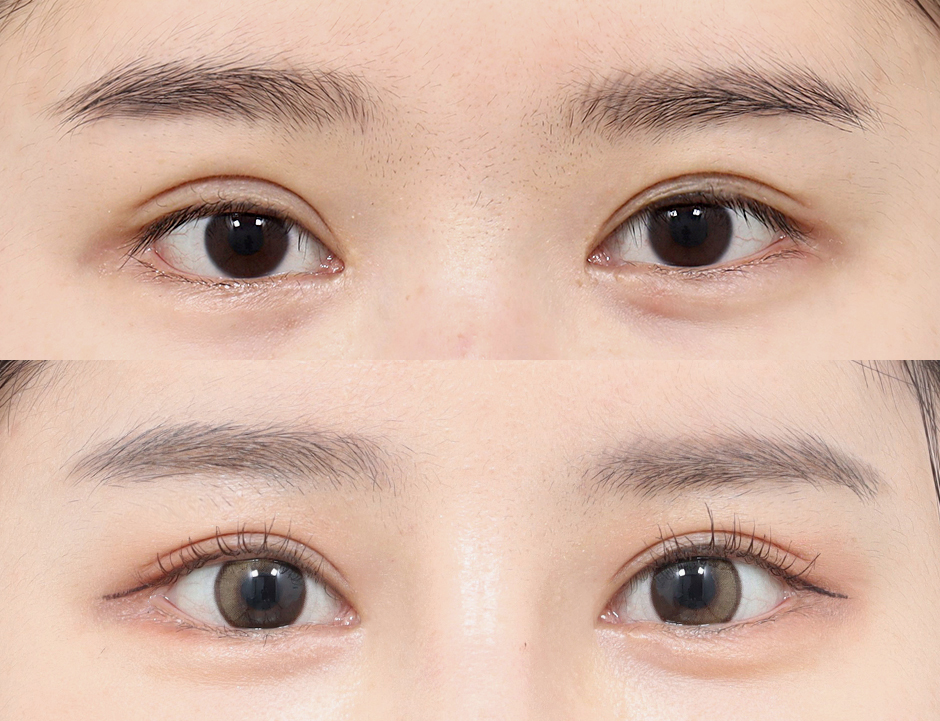
Semi-Outline Double Eyelids
Semi-outline double eyelids feature a crease that is higher and more pronounced than in-outline, offering a clearly defined fold.
Semi-Outline Double Eyelid Surgery Is Recommended For
Semi-outline designs may appeal to people seeking a more visible fold. Eyelid thickness, skin laxity, and natural crease position must be evaluated before deciding whether this design is appropriate.
Semi-Outline Double Eyelid Surgery Procedure
Semi-outline crease design requires careful evaluation of crease height, eyelid thickness, and how the fold will look when the eyes are open. An incisional or non-incisional method may be considered depending on clinical findings.
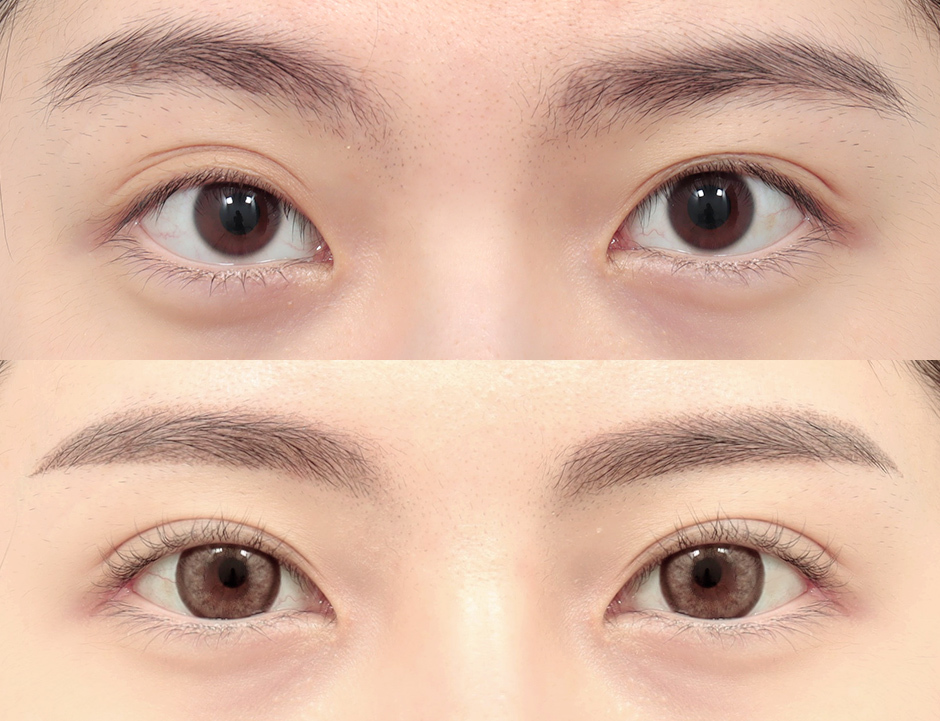
Outline Double Eyelids
Outline double eyelids have the crease positioned significantly higher above the lash line, resulting in a very prominent and dramatic fold.
Outline Double Eyelid Surgery Is Recommended For
Outline crease designs may appeal to people who prefer a more prominent fold. However, eyelid thickness or puffiness alone does not determine suitability; the surgeon must assess skin, tissue, and inner-corner anatomy.
Outline Double Eyelid Surgery Procedure
An outline crease is designed to remain visibly separated from the inner eyelid margin. Achieving this appearance requires assessment of the inner corner, skin tension, and eyelid anatomy. A higher crease is not necessarily appropriate for every patient, and recovery depends on the chosen procedure.
Cost of Double Eyelid Surgery in Korea
Typical Price Range for Double Eyelid Procedures
The cost of double eyelid surgery in Korea varies depending on the surgical method, eyelid condition, and desired outcome. Below is a general price range based on commonly performed procedures.
|
Procedure |
Starting Price (USD) |
|---|---|
|
Non-Incisional Double Eyelid Surgery |
$1,700 |
|
Incisional Double Eyelid Surgery |
$2,380 |
|
Upper Blepharoplasty with Ptosis Correction |
$2,930 |
|
Lower Blepharoplasty |
$1,870 |
|
Epicanthoplasty (Inner Corner) |
$750 |
|
Canthoplasty (Outer / Lower) |
$1,360 |
Please note: The final cost may vary depending on your eyelid structure, surgical complexity, and whether additional procedures such as ptosis correction or revision surgery are required. A personalized consultation is essential to determine the most accurate treatment plan and cost.
Check detailed plastic surgery costs in Korea and explore personalized treatment plans tailored to your needs.
Double Eyelid Surgery FAQs: Types, Cost & Recovery
How much does double eyelid surgery cost in Korea?
The cost of double eyelid surgery in Korea typically starts from around $1,700 and can go up to $3,000 or more depending on the surgical method and individual condition.
-
Non-incisional method: from $1,700
-
Incisional method: from $2,380
-
Ptosis correction combined surgery: from $2,930
The final cost may vary depending on your eyelid structure, surgical complexity, and whether additional procedures are required. A personalized consultation is recommended to determine the most accurate treatment plan and cost.
Which type of double eyelid surgery is best?
There is no single best crease type for everyone. In-line is generally more subtle, while in-outline, semi-outline, and outline designs create progressively more visible folds. Eyelid thickness, skin laxity, existing anatomy, and personal preferences should be assessed before choosing a design.
Is double eyelid surgery permanent?
Both incisional and non-incisional double eyelid creases can last for years, but no technique guarantees a permanent result. A non-incisional crease may loosen, while an incisional crease may also change with healing, aging, or tissue characteristics.
How long is recovery after double eyelid surgery?
Bruising and swelling are common during the first one to two weeks, although recovery varies by technique and individual healing. Incisional procedures may require suture removal as instructed by the surgeon, and crease definition can continue changing over several months. Follow your surgeon’s specific aftercare and travel guidance.
What is the difference between in-line and in-outline double eyelids?
An in-line crease begins very close to the inner lash line and tends to look subtle. An in-outline crease becomes more visible as it extends outward, creating a slightly more defined fold. The exact appearance depends on the inner eyelid anatomy and crease height.
Which double eyelid crease type looks the most natural?
An in-line crease is often chosen for a subtle appearance, but a natural-looking result depends on how the crease suits the individual eye shape, eyelid skin, and facial proportions. An in-outline design may also look natural for some patients.
Related Guides and Next Steps
For practical recovery planning, read our double eyelid surgery aftercare guide. If you are researching a previous crease that needs reassessment, see revision double eyelid surgery guide.
For more context about eyelid opening and muscle function, see ptosis correction guide. You can also explore more AB blog articles or browse the AB medical columns.
For procedure-specific pricing questions, use the plastic surgery cost inquiry page. The final estimate depends on the examination and recommended surgical plan.
What to Know Before Getting Double Eyelid Surgery
-
Consultation: A thorough consultation with a qualified plastic surgeon is essential to determine the best type of double eyelid surgery for your eye shape and personal preferences.
-
Recovery: Understand the recovery times for each procedure, ranging from a few days to several weeks, depending on the method used.
-
Scarring: While scarring is minimal, it varies with each type. Non-incisional methods have the least visible scarring.
-
Longevity: Consider the permanence of the results. Incisional methods generally offer longer-lasting outcomes compared to non-incisional techniques.
-
Personal Goals: Align the chosen procedure with your aesthetic goals, whether you prefer a subtle, natural enhancement or a bold, dramatic change.
Choosing the right type of double eyelid surgery involves understanding the nuances of each method and how they align with your aesthetic goals. Consulting with a skilled surgeon at AB Plastic Surgery Korea is crucial to ensure you achieve the desired results. Our surgeons’ expertise will guide you through the important aspects of recovery and long-term effects, helping you make an informed decision that best suits your individual needs and preferences.

This article is for informational purposes only and does not replace a personal medical consultation.