Title
How to Reduce a Widened Alar Base After Rhinoplasty | AB Plastic SurgeryDate
2026-01-12Views
2599
Medical Column
How to Reduce a Widened Alar Base After Rhinoplasty

Some patients decide not to undergo alar base reduction during their first rhinoplasty after being told it can be performed later. However, once postoperative swelling subsides, many realize that they wish the procedure had been done at the same time.
In other cases, patients notice that their alar base appears wider after rhinoplasty, even though no change was made to that area directly.
In this article, we explain why the alar base may look wider after rhinoplasty, how it can be reduced, and the optimal timing for alar base reduction, based on clinical experience at AB Plastic Surgery in Gangnam, Seoul.
Q. Why does the alar base appear wider after rhinoplasty, and how can it be reduced?
When rhinoplasty is performed using implants, cartilage grafts, or osteotomy, the nasal bridge and tip often become slimmer and more elevated. As a result, the existing alar base may appear relatively wider after rhinoplasty.
Additionally, in cases where alar base reduction is indicated but not performed during the initial rhinoplasty, the nostrils may appear more prominent after recovery.
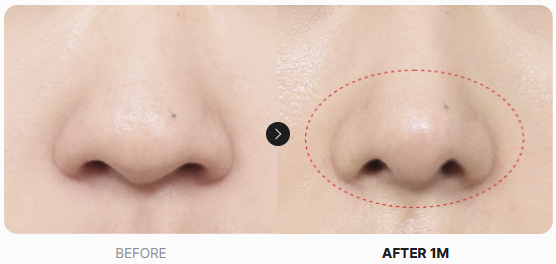
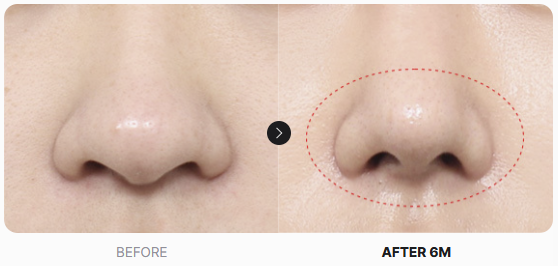
In these situations, the most effective way to address a widened alar base after rhinoplasty is to consider alar base reduction surgery, which focuses on reducing nostril width while maintaining natural facial balance.
Q. I regret not having alar base reduction during my first rhinoplasty. When can alar base reduction be performed after surgery?
Alar base reduction can usually be performed under local anesthesia alone. The incision is made on the inner or outer base of the nostrils and does not overlap with the original rhinoplasty incision. Therefore, it is technically possible to perform alar base reduction at any time after rhinoplasty.
However, because additional procedures may slightly shorten nasal length or alter the established nasal line, AB Plastic Surgery generally recommends waiting at least one month, once major swelling has subsided, to achieve optimal overall harmony.
Q. If I did not undergo osteotomy or other additional procedures initially, would later alar base reduction be considered revision rhinoplasty?
If alar base reduction or osteotomy is performed later without altering the existing nasal bridge or implant, it is not classified as revision rhinoplasty.
However, patients should be aware that even minor additional procedures may result in subtle changes to the previously established nasal line.
|
|
For patients considering secondary alar base reduction after rhinoplasty, consulting the surgeon who performed the initial surgery is strongly recommended. The original surgeon has the most comprehensive understanding of the nasal anatomy, surgical history, and intended nasal design, which is essential for achieving safe and balanced results.
For additional inquiries regarding severe ptosis or the frontalis sling procedure, please contact AB Plastic Surgery on WhatsApp at +82 10 4393 1298 for a detailed consultation.

|
Writer Dr. Seo Chan-Eol, AB Plastic Surgery |