Title
Sagging Breast Surgery (Breast Lift): How the Degree of Ptosis Determines the Surgical ApproachDate
2026-01-19Views
1527
Medical Column
Sagging Breast Surgery (Breast Lift): How the Degree of Ptosis Determines the Surgical Approach
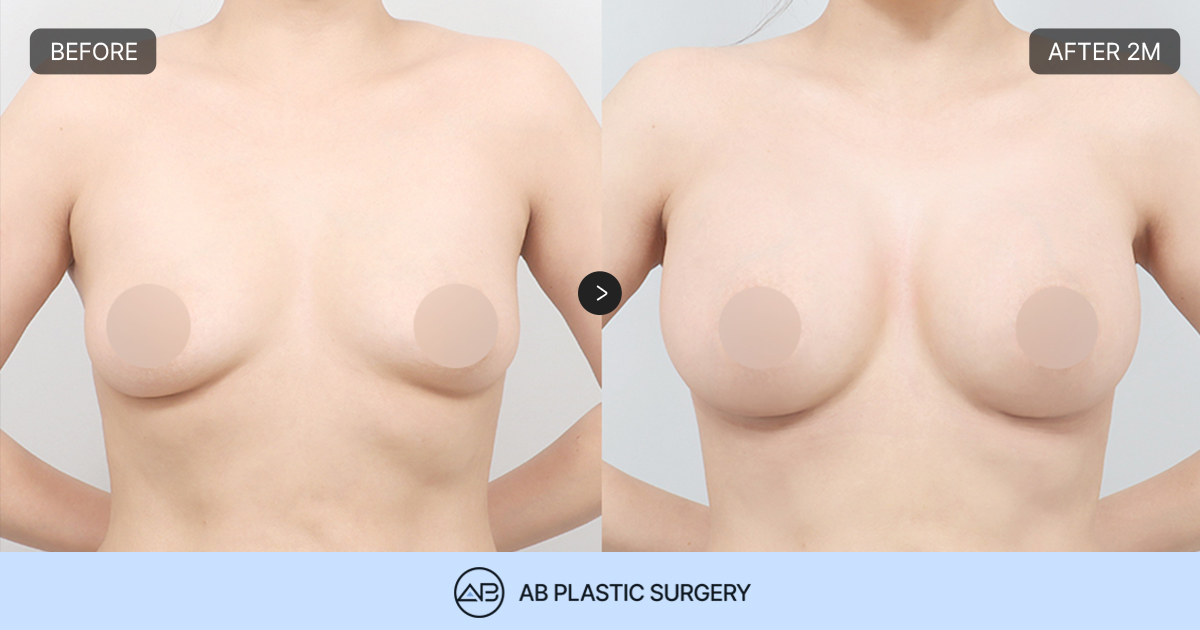
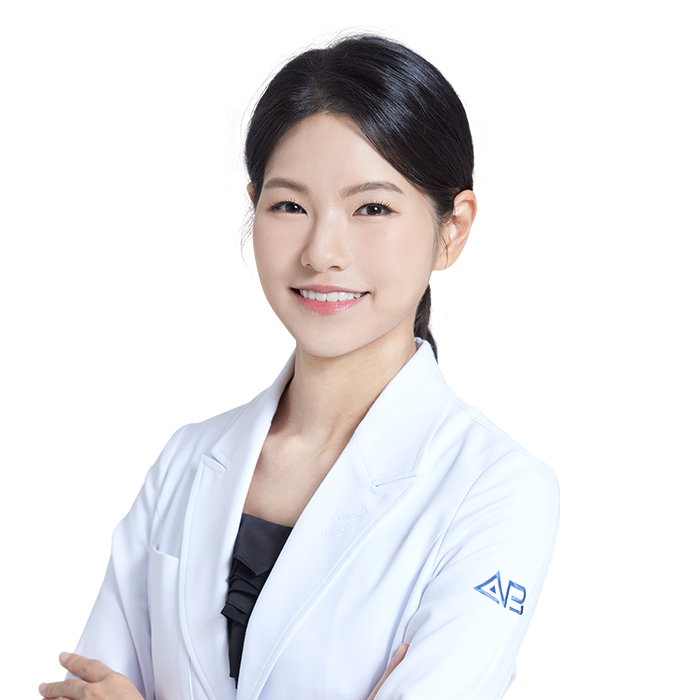
Hello, I am Dr. Kim Soo-Jeong, of AB Plastic Surgery.
Breast sagging, medically known as breast ptosis, is one of the most common concerns among women seeking aesthetic breast surgery. At AB Plastic Surgery in Gangnam, we frequently consult patients who say, “My breasts look saggy, but I’m not sure why.”
Understanding the cause, severity, and proper treatment of sagging breasts is essential for achieving natural and long-lasting surgical results. In this article, we explain what causes sagging breasts, how breast ptosis is classified, and how different surgical techniques are chosen depending on severity, with a focus on breast lift surgery.
Q. What causes sagging breasts?
The most common cause of sagging breasts is volume fluctuation. Women who originally have fuller breasts may experience sagging after pregnancy, childbirth, and breastfeeding, as the breasts enlarge and later lose volume.
Other common causes include:
-
Rapid weight loss, leading to fat loss and reduced skin elasticity
-
Aging, which naturally weakens skin and connective tissue
-
Gravity and genetics, which affect breast shape over time
When breast skin stretches but the glandular tissue and fat decrease, excess skin remains. As elasticity declines, the nipple begins to point downward, creating the appearance of sagging breasts.
Q. How Is Breast Sagging Diagnosed?
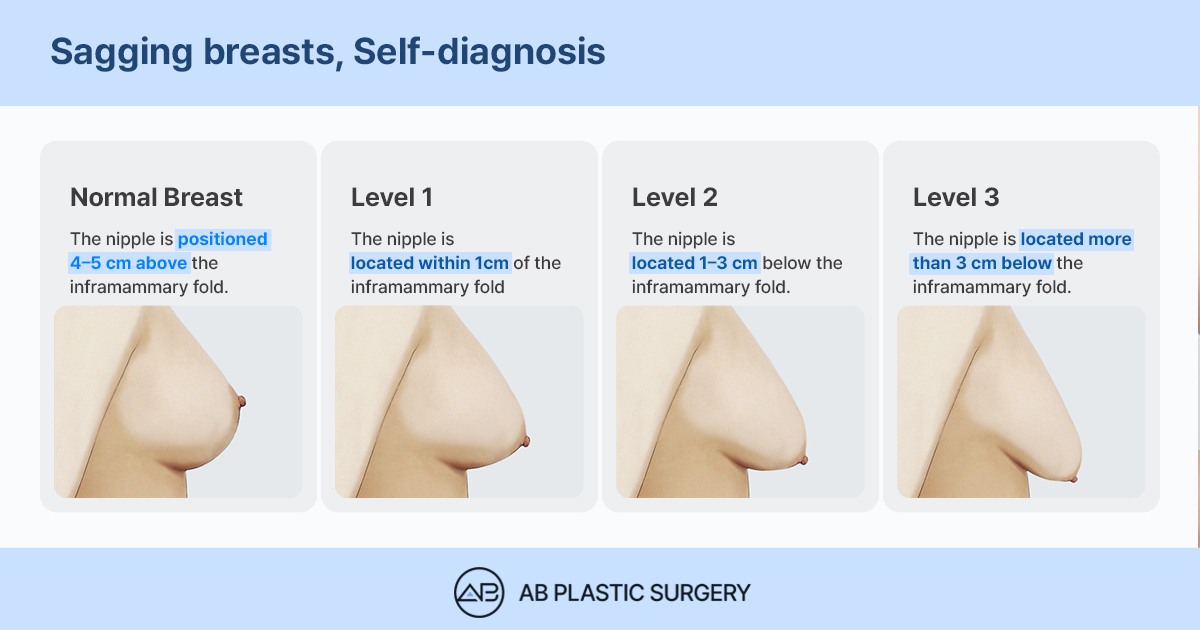
Breast sagging is evaluated based on the position of the nipple relative to the inframammary fold (the crease under the breast).
-
Normal breasts: The nipple sits 3–5 cm above the inframammary fold
-
Mild breast ptosis: Nipple is at the same level or within 1 cm of the fold
-
Moderate breast ptosis: Nipple is 1–3 cm below the fold
-
Severe breast ptosis: Nipple is more than 3 cm below the fold
If the nipple is positioned below the fold when viewed from the side, the condition is medically classified as sagging breasts (true ptosis).
Q. When Breasts Look Saggy but Are Not Truly Sagging
Not all breasts that appear saggy meet the criteria for true ptosis.
Pseudoptosis (False Sagging)
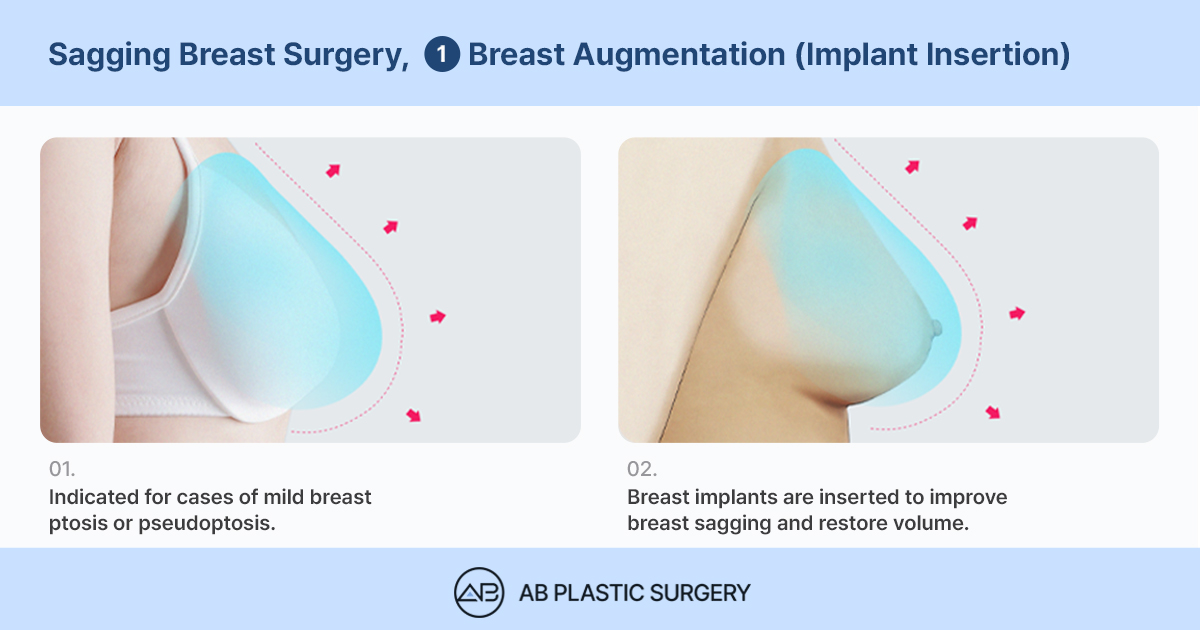
In some cases, the nipple remains above the inframammary fold, but breast volume is concentrated in the lower pole, making the breasts appear sagged. This condition is known as pseudoptosis and may be corrected with breast implants rather than a full breast lift.
Upper Pole Deficiency
When the upper breast lacks volume, breasts may look droopy despite normal nipple position. This is often seen in constricted breasts or tubular breast deformities, where implant-based surgery can restore balance and projection.
Q. Does the Surgical Method Depend on the Degree of Sagging?
Mild Sagging
For patients with mild sagging, breast augmentation with implants alone may provide a lifting effect by restoring volume and upper pole fullness.
Moderate to Severe Sagging
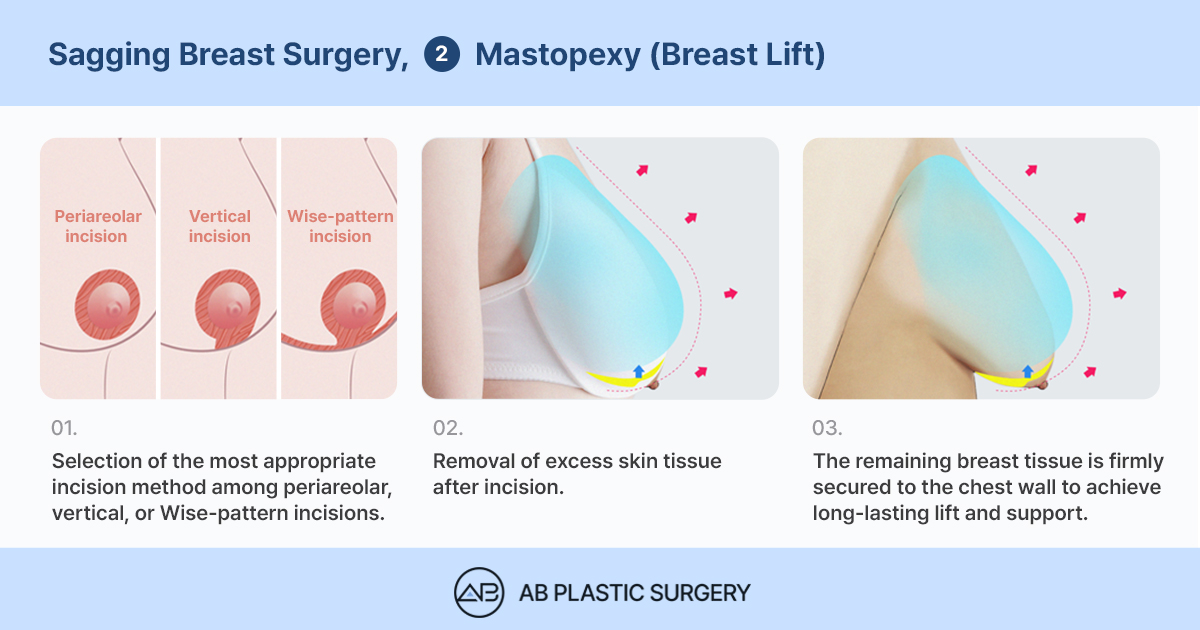
When sagging is more pronounced, implants alone are not sufficient. A breast lift is required to:
-
Remove excess skin
-
Reposition the nipple to a higher, more youthful position
-
Improve breast shape, firmness, and symmetry
Types of Breast Lift Surgery
-
Periareolar (Donut) Breast Lift - Used when the nipple needs to be lifted up to 2–3 cm
-
Vertical Breast Lift (Lollipop Lift) - Required for moderate sagging with greater elevation needs
-
Anchor (Inverted-T) Breast Lift - Used for severe sagging with significant skin excess
In younger patients with excessively large breasts causing sagging, a breast reduction combined with a breast lift may be the most effective solution.
Sagging breast surgery is not a one-size-fits-all procedure. Accurate diagnosis and a customized surgical plan are essential for achieving natural and safe results.
At AB Plastic Surgery Clinic in Gangnam, all breast lift surgeries are performed by a board-certified plastic surgeon with extensive experience in breast aesthetics. Through detailed consultation, we determine whether breast augmentation, breast lift, or a combined approach is most appropriate for each patient.
For additional inquiries regarding severe ptosis or the frontalis sling procedure, please contact AB Plastic Surgery at +82-10-9674-1298 or reach out via WhatsApp using the same number to receive a detailed consultation.
|
Writer Dr. Kim Soo-Jeong, AB Plastic Surgery
|