Title
Plastic Surgery’s Safety System Proven by Zero Medical Accident CasesDate
2026-02-13Views
312
Medical Column
Plastic Surgery’s Safety System Proven by Zero Medical Accident Cases
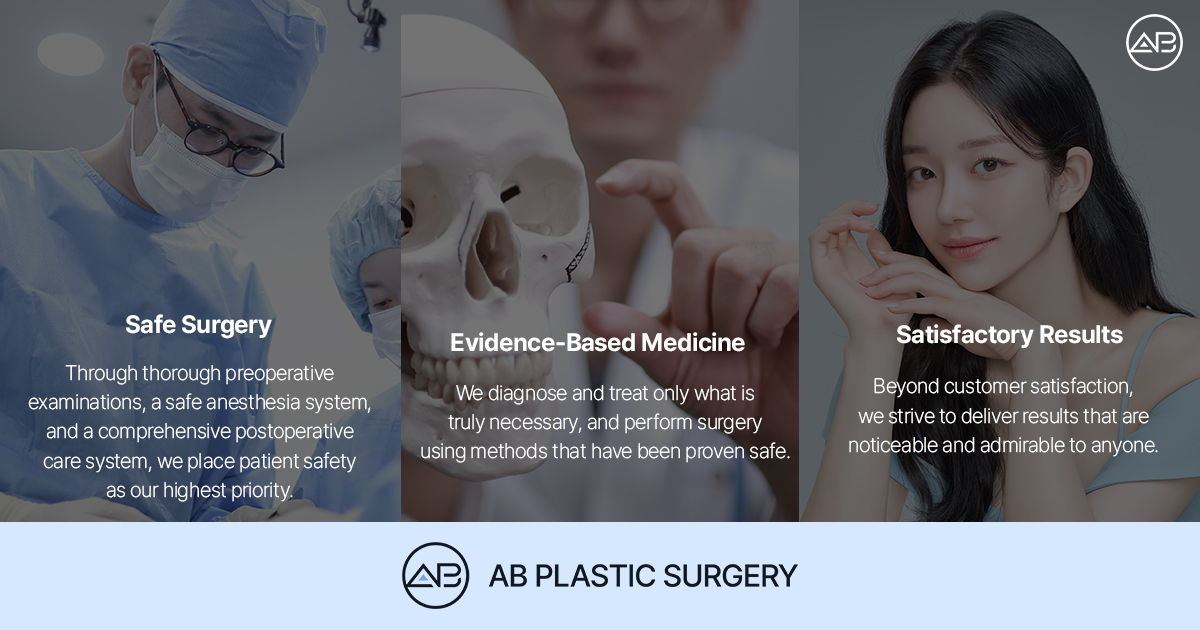
Hello, I am Dr. Kim Joo-youn of AB Plastic Surgery.
As demand for cosmetic surgery continues to rise, concerns about operating room safety and medical malpractice have also increased. With repeated media reports of medical accidents in plastic surgery, patients are now placing greater importance not only on whether a clinic is skilled, but also on whether it is safe.
In this environment, AB Plastic Surgery has maintained a record of zero medical accident cases despite performing a large number of procedures. This is neither coincidental nor temporary. It is the result of a medical system designed with safety as the top priority at every stage—from preoperative diagnosis to surgery and postoperative recovery management.
Today, I would like to explain, step by step, the systems that have enabled AB Plastic Surgery to maintain its reputation as a hospital without medical accidents.
Thorough Preoperative Safety Screening System
In cosmetic surgery, safety begins not in the operating room, but during the preoperative evaluation stage. AB Plastic Surgery conducts comprehensive examinations to assess each patient’s overall surgical suitability, including general health status, underlying medical conditions, and blood test results. Through this process, potential risk factors that may arise during surgery are anticipated in advance.
A full-time in-house clinical laboratory scientist systematically evaluates each patient’s health status and medical history prior to surgery. Test results are analyzed immediately to determine surgical eligibility with greater accuracy and to prepare for potential intraoperative emergencies.
All examinations are conducted independently within the clinic, without outsourcing to external institutions. Dedicated facilities—including an X-ray room and an electrocardiogram (ECG) examination room—help ensure both accuracy and stability throughout the diagnostic process.
In addition, a 3D-CT–based precision diagnostic system allows for three-dimensional analysis of anatomical structures that are not visible externally, such as bone shape and thickness, and the location of muscles and nerves. Based on these findings, individualized surgical plans are established to minimize unnecessary tissue resection and avoid overly aggressive procedures.
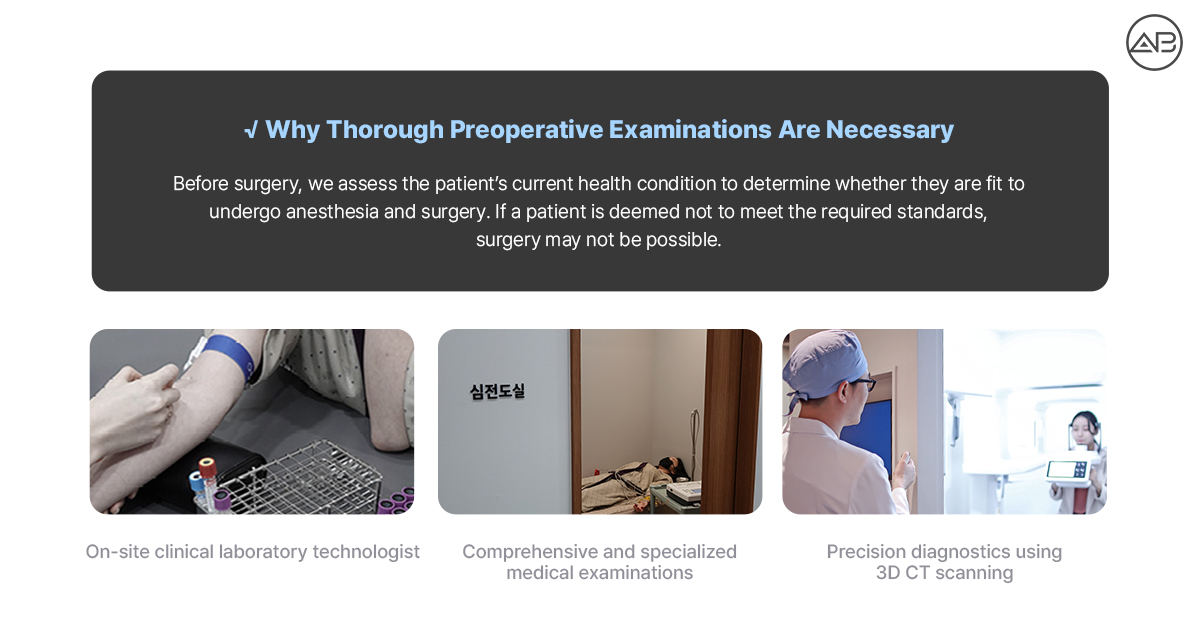
This systematic preoperative screening and precision diagnostic process is a core safety management system that identifies risk factors in advance and minimizes intraoperative variables. AB Plastic Surgery prioritizes safety above all else, building a stable surgical environment before focusing on outcomes
On-Site Board-Certified Anesthesiologists and a Multi-Layered Safety Management System
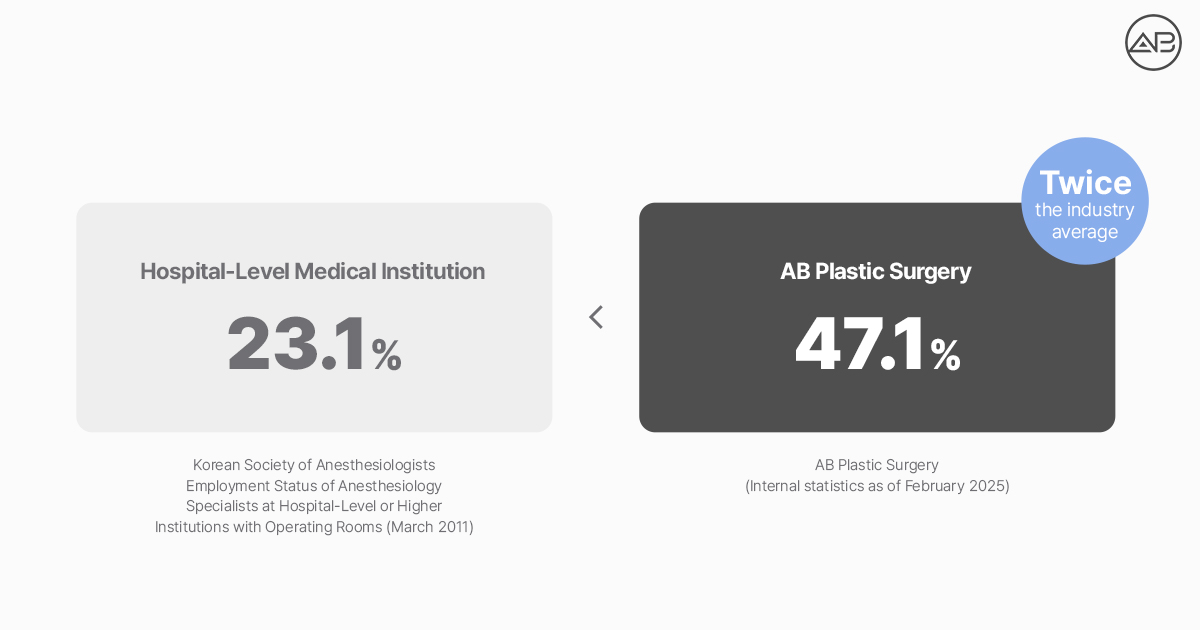
Anesthesia is one of the most critical safety components in cosmetic surgery. AB Plastic Surgery operates an anesthesia safety system with a 47.1% on-site anesthesiologist staffing rate—approximately twice the average of hospital-level medical institutions.
Before surgery, an individualized anesthesia plan is established based on the patient’s health condition and medical history. During surgery, a dedicated board-certified anesthesiologist remains on-site, continuously monitoring vital signs such as blood pressure, heart rate, body temperature, and oxygen saturation in real time. Even subtle changes during anesthesia are detected immediately, allowing for proactive intervention.
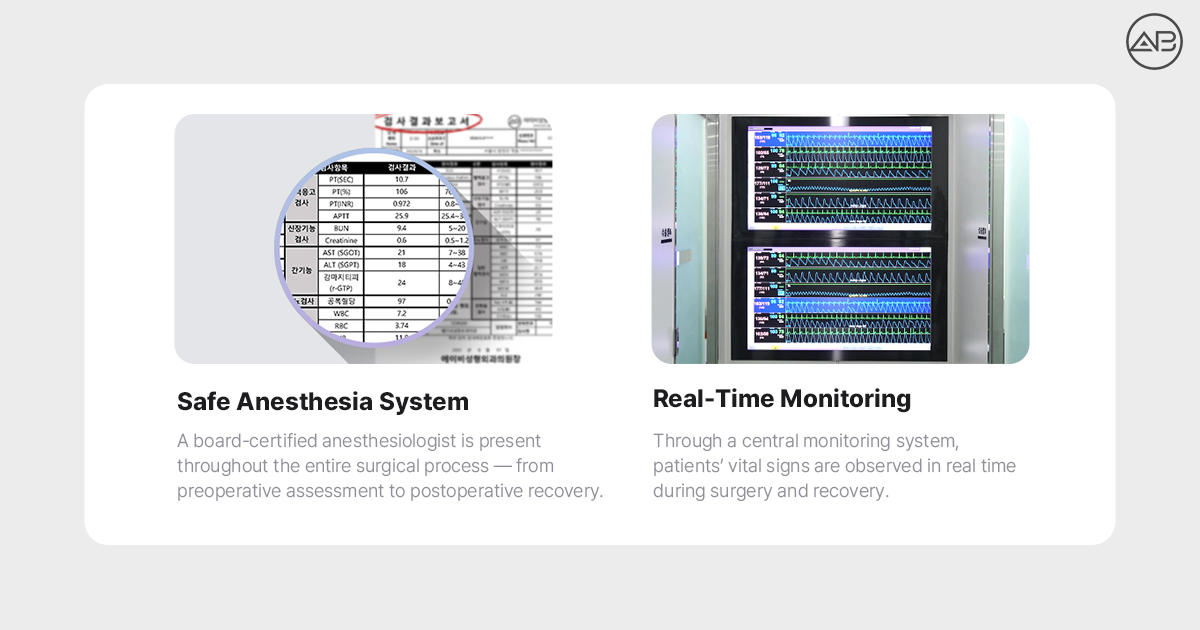
The clinic also implements a named anesthesiologist identification system, clearly recording and managing the identity of the medical professional responsible for anesthesia. This enhances transparency, clarifies accountability, and helps prevent risks associated with proxy or unlicensed anesthesia administration.
In the recovery room, anesthesiologists remain available for immediate intervention. Potential emergencies—such as respiratory depression, blood pressure fluctuations, or delayed recovery of consciousness—are addressed promptly to prevent serious complications.
Additionally, a cross-matching blood test system verifies compatibility between the patient’s blood and donor blood in preparation for unexpected bleeding, ensuring safe transfusion and rapid response in emergency situations.
Through one-on-one anesthesiologist oversight and an emergency response system including blood cross-matching, AB Plastic Surgery maintains continuous safety management before, during, and after surgery.
Full Operating Room CCTV Coverage for Transparent Surgical Practice
AB Plastic Surgery maintains transparency throughout the entire surgical process. CCTV cameras are installed in all areas of the operating room, with continuous recording in place to prevent concerns related to proxy surgery, illegal medical practices, or operating room incidents.
Operating room CCTV is not merely for record-keeping; it serves as a safety management system that ensures all medical procedures are performed honestly, responsibly, and in accordance with established standards and protocols. This transparent surgical environment enhances overall trust and has played a significant role in maintaining zero reported medical accident cases.
Systematic Postoperative Care Extending Beyond Surgery
Safety management does not end when the surgery is completed. AB Plastic Surgery provides a structured postoperative care system that monitors the patient’s recovery process in stages.
During the early recovery phase, swelling, bleeding, and scar changes are carefully assessed according to each patient’s condition and recovery speed. When necessary, appropriate recovery and regenerative programs are applied in a step-by-step manner. This personalized management aims to shorten recovery time safely while preventing unforeseen complications.
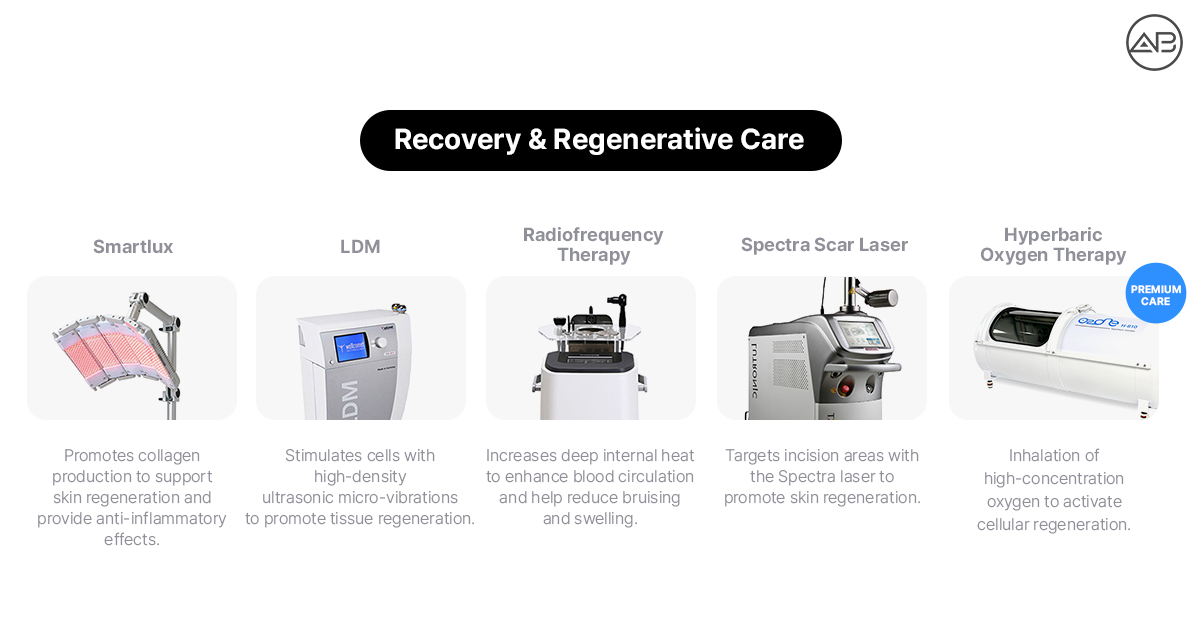
Follow-up monitoring continues for a designated period, taking into account changes that may appear over time. Postoperative care functions as the final safety measure, continuously assessing and responding to potential risks after surgery, and plays a crucial role in maintaining zero medical accident cases.
Government-Certified Safety System – AB Plastic Surgery
The reason AB Plastic Surgery has maintained zero medical accident cases is clear. Precision-based surgical planning, on-site board-certified anesthesiologists with real-time monitoring, full operating room CCTV coverage, and comprehensive postoperative care are interconnected within an integrated safety-focused medical system.
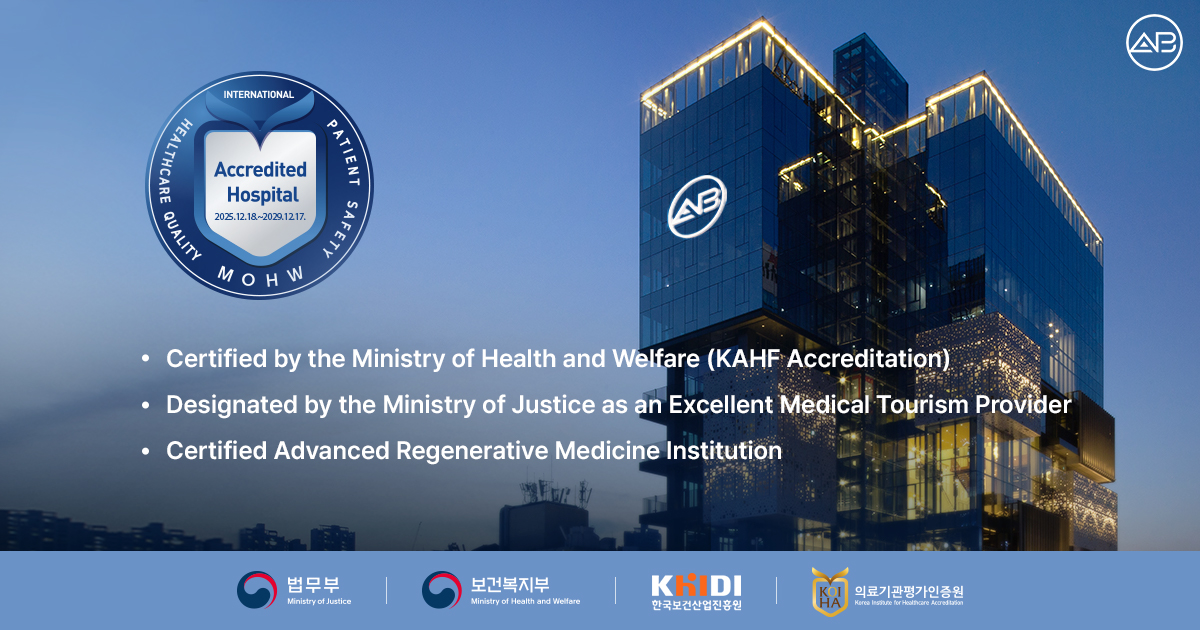
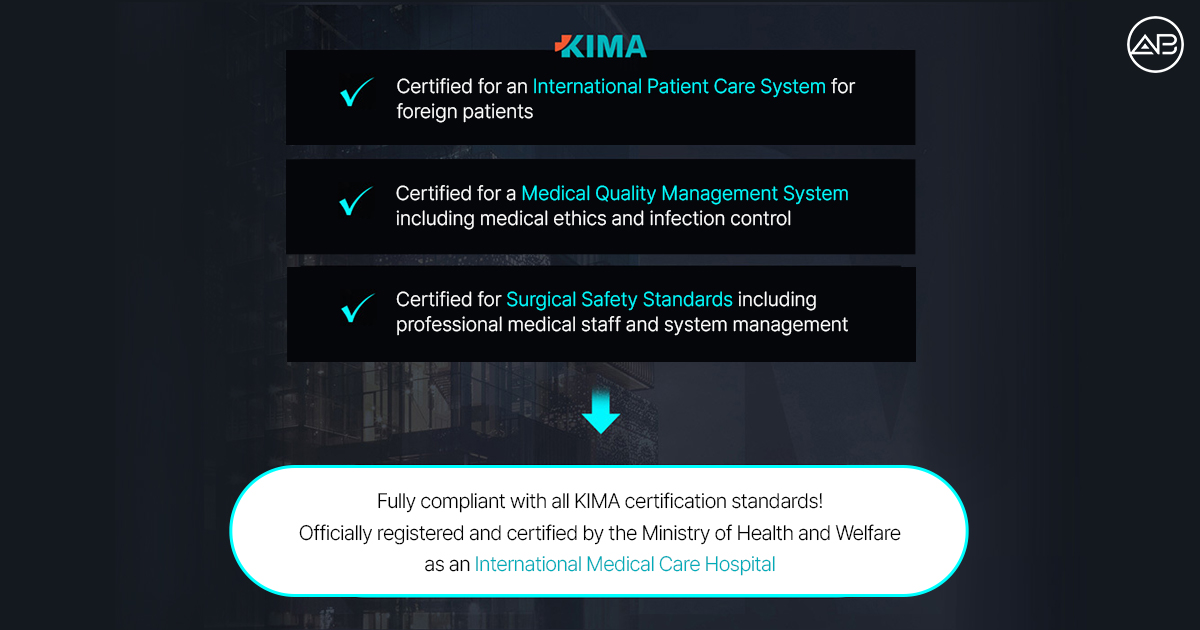
This safety-centered system has not only been established internally but has also undergone objective external verification. AB Plastic Surgery has obtained certification from the Ministry of Health and Welfare’s KAHF (Korea Accreditation Program for Healthcare Facilities) and is a full member hospital of the Korea International Medical Association (KIMA). These certifications indicate that the institution meets rigorous national standards in medical service quality, safety management systems, professional expertise, and ethical practice.
When selecting a plastic surgery clinic, surgical skill is fundamental. More importantly, however, is how safely that skill is implemented within a structured medical system. AB Plastic Surgery emphasizes not only outcomes but also the safety of every process that leads to those outcomes.
With these principles and systems in place, AB Plastic Surgery continues to uphold its reputation as a trusted institution where both domestic and international patients can confidently receive care in a safe surgical environment.

|
Writer Dr. Kim Joo-youn, AB Plastic Surgery |