Title
Top 10 Plastic Surgery in Korea for Foreigners (2026) | AB Plastic SurgeryDate
2024-05-29Views
29806
AB Blog
10 Plastic Surgery and Aesthetic Treatment Options in Korea for International Patients
Table of Contents
1. 10 Procedure Options International Patients Compare in Korea
2. Plastic Surgery Cost in Korea by Procedure (2026 Starting Prices)
3. How to Verify a Clinic: AB Plastic Surgery Korea's Accreditations and Safety Systems
4. Frequently Asked Questions About Choosing a Procedure in Korea
5. Before You Book: What International Patients Should Confirm
6. Next Steps: Plan Your Procedure with AB Plastic Surgery Korea
Korea attracts international patients every year for its surgical techniques, experienced surgeons, and wide range of procedures, but that range can make the first decision feel complicated. This guide compares 10 plastic surgery and aesthetic treatment options that international patients often ask about when planning a procedure in Korea, including both surgical and non-surgical choices.
The numbers in this list are for easy navigation only and are not a popularity ranking. For each option, you will find what it is designed to do, how it differs from similar choices, and what to confirm during your consultation. Where you need more detail on methods, recovery, or costs, each section links to a dedicated guide.

10 Procedure Options International Patients Compare in Korea
1. Double Eyelid Surgery (Blepharoplasty)
Double eyelid surgery creates a natural-looking crease in the upper eyelid, making the eyes appear larger and more defined. It is a common starting point for patients from Asian countries, and many patients from Western countries also ask about it for subtle enhancement.
Key difference: Creating a double eyelid crease and correcting ptosis are not the same procedure. A crease changes the eyelid fold, while ptosis correction adjusts the muscle that lifts the eyelid when the eyes look tired or partly covered. Some patients need one, some need both, and the choice between incisional and non-incisional methods depends on skin thickness, fat, and eyelid muscle strength.
Ask at consultation: Is my concern the crease itself, weak eyelid lifting, or excess skin, and which method fits my eyelid?
→ Not sure whether an incisional or non-incisional method is right for you? Read the double eyelid surgery guide on choosing a method and clinic in Korea
2. Rhinoplasty
Rhinoplasty, or nose reshaping surgery, is another frequent choice among international patients. Korean surgeons are known for designing balanced, natural-looking noses that fit the rest of the face. Whether the goal is to refine the tip, straighten the bridge, or reduce the size, rhinoplasty can improve facial harmony.
Key difference: A first rhinoplasty and a revision rhinoplasty are planned differently. Revision cases may involve an existing implant, scar tissue, or limited cartilage, which can require autologous tissue such as rib cartilage or dermis. Cosmetic goals and breathing problems, such as a deviated septum, should also be assessed separately because they change the scope of surgery.
Ask at consultation: Share any previous nose surgery records and mention breathing difficulty, even if your main goal is cosmetic.
3. Jawline Contouring
Jawline contouring, also known as V-line surgery, reshapes the jaw to create a more slender lower face. The procedure reduces the jawbone and chin to achieve a V-shaped outline, a look closely associated with Korean beauty standards.
Key difference: A wide lower face is not always caused by bone. Prominent jaw angles, a large masseter muscle, facial fat, and sagging skin can look similar in photos but need different approaches: bone contouring, muscle-relaxing injections, liposuction, or lifting. Bone surgery is usually planned with CT imaging so the surgeon can see the bone shape and nerve position.
Ask at consultation: What is causing the width in my case, and is CT-based planning part of the process?
→ Comparing square jaw reduction, V-line, and combined contouring? See the facial contouring guide to methods and recovery in Korea
4. Facelift
Korean facelifts are known for their focus on natural-looking results. Using methods such as the SMAS facelift, surgeons reposition the deeper muscle and fascia layer and remove excess skin, resulting in a more youthful and rejuvenated appearance.
Key difference: A facelift is surgery, not a non-invasive treatment. Incisions are usually placed around the ear and hairline, so there is a scar, although it is designed to be hidden. The scope also varies, from neck lift and midface lift to full facelift and deep plane techniques. Swelling and bruising commonly last around two weeks, final settling takes longer, and possible risks include bleeding under the skin (hematoma), infection, nerve injury, and visible scarring.
At AB Plastic Surgery Korea, lifting surgeons have presented on combined facelift and lower blepharoplasty at PRS KOREA 2025 and on neck lift approaches for East Asian patients at APS KOREA 2026.
Ask at consultation: Which layer will be lifted, where will the incision be, and how many days should I stay in Korea before flying?
5. Liposuction
Liposuction in Korea is performed with modern equipment to remove stubborn fat deposits that do not respond to diet and exercise. Common areas include the abdomen, thighs, arms, and back. The procedure helps patients achieve a more contoured and sculpted body.
Key difference: Liposuction is a body contouring procedure, not a weight-loss treatment. It works best for people near a stable weight who have localized fat. If loose skin is the main concern, liposuction alone may leave the area uneven, and a skin excision procedure such as a tummy tuck may be discussed instead.
Ask at consultation: How much fat can be removed safely in one session, and how will compression garments and swelling affect my travel plans?
6. Breast Augmentation
Breast augmentation is a common choice for patients who want to enhance bust size and shape. Korean surgeons use techniques including silicone implants and fat grafting to achieve natural-looking, proportionate results.
Key difference: Size is only one part of the plan. Implant type, placement, incision location, existing breast tissue, and the degree of sagging all affect the result. AB Plastic Surgery Korea offers Motiva and Mentor implant options, including Motiva implants with a UDI microchip for device traceability. Because implants are medical devices, long-term follow-up checks are recommended.
Ask at consultation: Which implant suits my tissue, and how will follow-up checks continue after I return home?
7. Tummy Tuck (Abdominoplasty)
A tummy tuck, or abdominoplasty, removes excess skin and fat from the abdominal area and can tighten the abdominal wall. It is often considered by people who have experienced significant weight loss or post-pregnancy changes. The result is a flatter and firmer abdomen.
Key difference: Compared with liposuction, a tummy tuck removes skin, not only fat. This leaves a longer scar, usually placed low across the lower abdomen, and requires a longer recovery. It is generally better suited to loose skin or separated abdominal muscles than to fat alone.
Ask at consultation: Where will the scar sit, will liposuction be combined, and how long should I wait before a long-haul flight?
8. Fat Grafting
Fat grafting transfers fat from one part of the body to another to restore volume and improve contour. Common areas include the face, breasts, and buttocks. It provides a natural option for volume enhancement using the patient's own tissue.
Key difference: Not all transferred fat survives. The amount that settles permanently varies by area and by individual, so final volume is usually judged after several months, and some patients need an additional session. Facial fat grafting and body fat grafting also differ in the volume used and in recovery.
Ask at consultation: How much fat retention should I expect in my target area, and might a second session be needed?
→ Want to understand graft survival and realistic results? Read the complete guide to fat grafting and natural volume restoration
9. Calf Reduction Surgery
Calf reduction surgery is considered by patients who want slimmer, more defined lower legs. Techniques such as muscle resection and selective nerve blocking can be used to reduce the size and change the shape of the calves.
Key difference: Calf size can come from muscle, fat, or bone structure, and each needs a different approach. Muscle-relaxing injections, liposuction, and surgical options differ greatly in recovery and risk, and surgical methods can affect walking comfort for a period after surgery.
Ask at consultation: Confirm whether calf reduction is offered for your case and which method is suitable, as not every option is appropriate for every patient.
10. Skin Rejuvenation Treatments (Non-Surgical)
Korea also offers a range of non-surgical skin rejuvenation treatments. These target skin quality and mild laxity with little downtime, but they do not replace surgery for structural changes. Common options include:
-
Rejuran: A skin rejuvenation treatment that injects polynucleotides (PN) into the skin to support repair, elasticity, and hydration. Results build gradually, and a series of sessions is usually recommended.
-
Ultherapy and Shurink: Non-invasive treatments that use ultrasound energy to lift and tighten the skin. Ultherapy targets deeper layers to stimulate collagen production for a gradual lifting effect. Shurink works on a similar principle with settings that can be adjusted for different areas of the face and body. Downtime is minimal, but the effect is milder than surgical lifting and usually needs maintenance.
-
Exosome Therapy: An emerging treatment that uses extracellular vesicles with the aim of supporting skin regeneration, texture, and elasticity. Research is still developing and products differ, so ask which product is used, how it is applied, and what results are realistic for your skin.
Ask at consultation: Is my concern skin quality, such as texture, pores, and hydration, or structural sagging that may need surgery?
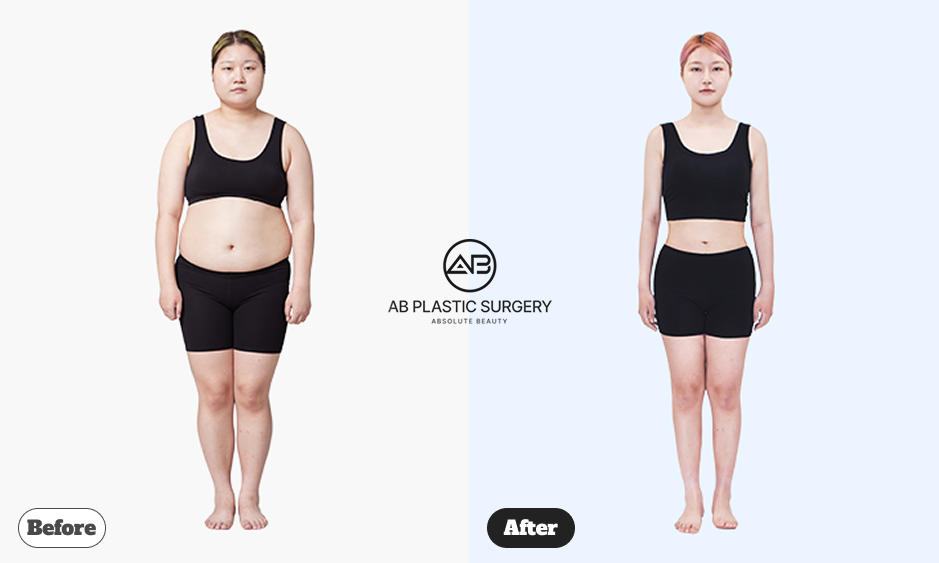
Results differ by anatomy and procedure. To see how outcomes look on real patients, browse AB Plastic Surgery Korea's before-and-after gallery by procedure.

Plastic Surgery Cost in Korea by Procedure (2026 Starting Prices)
The cost of plastic surgery in Korea varies depending on the procedure type, surgical complexity, materials, and individual condition. The table below shows starting prices from AB Plastic Surgery Korea's English price guide, not averages for all clinics in Korea.
Price basis: AB Plastic Surgery Korea prices as of April 1, 2026, converted at KRW 1,470 = USD 1.
|
Procedure |
Starting price (USD) |
What can change the price |
|---|---|---|
|
Epicanthoplasty |
$750 |
Eye structure and opening range |
|
Non-incisional ptosis correction |
$1,700 |
Eyelid muscle condition and correction range |
|
Rhinoplasty (bridge + tip) |
$3,400 |
Nose shape, materials, surgical scope |
|
Revision rhinoplasty |
$4,080 |
Existing implant, scarring, inflammation |
|
V-line facial contouring |
$3,740 |
Bone anatomy and number of areas |
|
Neck lifting |
$2,990 |
Surgical scope and technique |
|
Semi full facelift |
$5,240 |
Surgical scope and technique |
|
Abdomen liposuction |
$4,490 |
Fat volume and number of areas |
|
Breast augmentation (Mentor Smooth) |
$9,180 |
Implant type, placement, body design |
|
Abdominoplasty (tummy tuck) |
$10,200 |
Skin excess and surgical scope |
|
Full face fat grafting (1st session) |
$1,700 |
Areas treated and added PRP |
Important: The listed prices are general guidelines only. Final costs may differ depending on surgical methods, materials used, and individual anatomy. A detailed consultation is required to determine an exact treatment plan and cost. Skin treatment pricing is confirmed during consultation.
When you receive a quote, check these points before paying a deposit:
-
Whether anesthesia, pre-operative tests, and medication are included
-
How many follow-up visits and which aftercare treatments are covered
-
Whether the price applies to a first surgery or a revision
-
Whether tax is included and which currency the final payment uses
→ Prices and included items are updated on the official page. Check the latest AB Plastic Surgery Korea price guide and request a personalized quote
→ Want to know why the same procedure can be priced differently? Read the 2026 guide to plastic surgery cost in Korea by procedure
How to Verify a Clinic: AB Plastic Surgery Korea's Accreditations and Safety Systems
Choosing a procedure is only half of the decision. The other half is whether the clinic can be checked against an independent standard. Advertising claims are easy to make, so international patients benefit from credentials that can be confirmed by name. The following accreditations and systems are publicly announced by AB Plastic Surgery Korea.
Government Accreditations and Designations
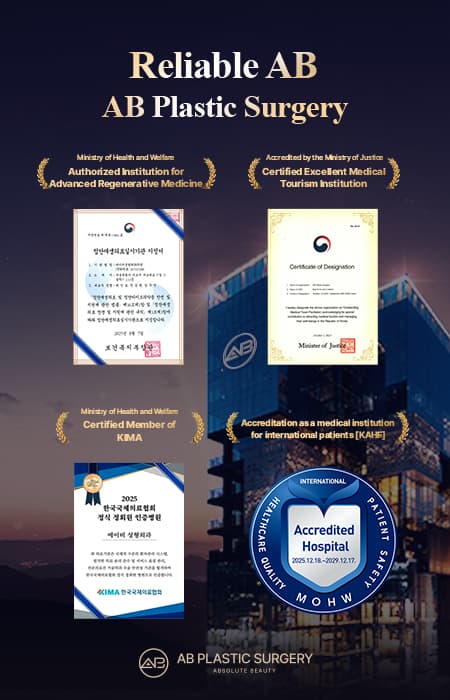
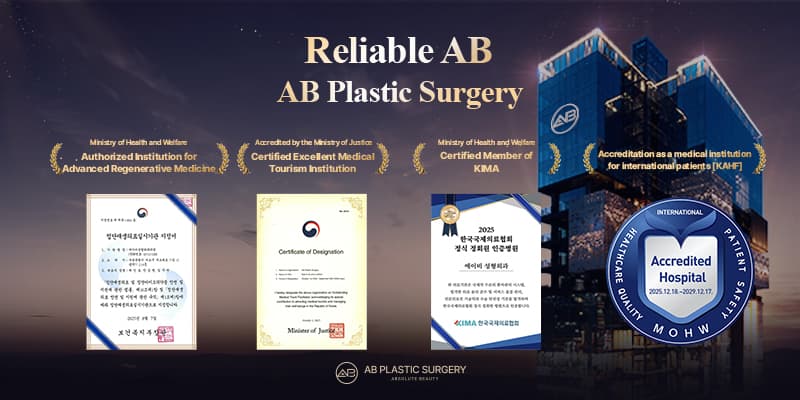
KAHF accreditation does not grade how skillful a surgeon is. It evaluates how a clinic manages the risks international patients face, such as communication, aftercare, emergency response, and how the clinic responds if a problem occurs, against national standards. A clinic that meets the standard for international patients applies the same systems to every patient.
|
Credential |
Issued by |
What it means for patients |
|---|---|---|
|
KAHF accreditation (Accreditation as a medical institution for international patients) |
Ministry of Health and Welfare; valid Dec 18, 2025 to Dec 17, 2029 |
Patient safety management, surgical infection prevention, staff training, emergency response, and hygiene and facility management were reviewed against national standards. |
|
KIMA full membership |
Korea International Medical Association, 2025 |
Passed review of international patient care systems, medical ethics, infection control, and surgical safety. |
|
Excellent Medical Tourism Attraction Institution |
Ministry of Justice, 2025 |
Designated after review of patient records and visa compliance; eligible patients can use a simplified medical e-visa process. |
|
Advanced Regenerative Medicine Institution |
Ministry of Health and Welfare, 2025 |
AB's stem cell center met the facility, equipment, and staffing requirements for regenerative medicine clinical research. |
Patient Safety Systems Before, During, and After Surgery
-
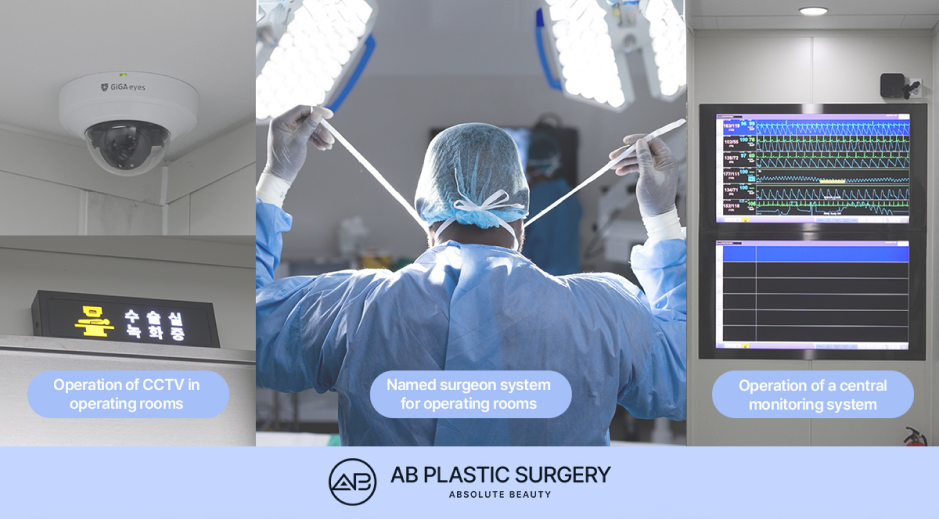
On-site anesthesiology specialists: 47.1% of AB Plastic Surgery Korea's specialists are board-certified anesthesiologists (as of January 2026), and patients are monitored from anesthesia through recovery.
-
CCTV in operating rooms and surgeon name confirmation: Operating rooms are monitored by CCTV, and a surgery name system lets patients confirm who performs their operation.
-
In-house pre-operative testing: Clinical pathologists run blood tests on site, including crossmatching that can return results within about two hours, and 3D-CT is used for bone surgery planning.
-
Emergency response systems: Emergency equipment and a defined response protocol are in place, and a 24-hour emergency line is available after discharge.
-
Zero reported medical accidents: AB Plastic Surgery Korea reports zero medical accident cases since opening in September 2020.
→ Want to understand how each safety step works? Read AB Plastic Surgery Korea's medical column written by its surgeons
Academic Activities and International Conference Presentations
|
Conference / program |
Year |
AB Plastic Surgery Korea's role |
|---|---|---|
|
APS KOREA (Aesthetic Plastic Surgery Korea) |
2026 |
Lectures on imaging-based neck anatomy evaluation and neck lift for East Asian patients |
|
APS KOREA |
2025 |
Rhinoplasty session chair; speaker and chair on facial rejuvenation and endoscopic forehead lift |
|
PRS KOREA |
2025 |
Lecture on combined facelift and lower blepharoplasty |
|
Korean Association of Plastic Surgeons Fall Course |
2025 |
Lecture comparing endoscopic forehead lift fixation methods |
|
IFAAS fellowship for overseas surgeons |
2024–2026 |
Facial contouring lectures and live surgery for three consecutive years; breast surgery program |
AB Plastic Surgery Korea also serves as an educational cooperation hospital of Seoul National University Bundang Hospital, holds collaboration agreements with Hallym University Dongtan Sacred Heart Hospital and Kwangdong Hospital, and has been named a top 5 Endotine user in Korea for three consecutive years.
→ Want to know who would perform your procedure? Meet the AB Plastic Surgery Korea surgeons and their specialties

Frequently Asked Questions About Choosing a Procedure in Korea
How do I know which of these 10 options fits my concern?
Start from your concern rather than a procedure name. Concerns that look alike, such as a wide lower face, tired-looking eyes, or loss of volume, can come from bone, muscle, fat, or skin, and each points to a different option. Sending clear front and side photos and any previous surgery records before your consultation helps the surgeon narrow the options. The final plan is confirmed in person after examination and, where needed, imaging such as CT.
Can I combine more than one procedure in a single trip?
Often yes, but it depends on total operating time, anesthesia safety, overlapping recovery, and how long you can stay in Korea. Some combinations, such as facelift with lower blepharoplasty, are commonly planned together, while others are safer when staged. The surgeon and anesthesiologist decide based on your pre-operative test results.
Are non-surgical skin treatments an alternative to surgery?
For skin quality and mild laxity, they can be. For structural concerns such as jaw width, significant sagging, or excess skin, treatments like Ultherapy or Rejuran may improve the skin but will not produce the same change as surgery. Many patients use non-surgical treatments to maintain results after surgery.
How can I check whether a Korean clinic is accredited for international patients?
Ask for credentials you can verify by name, such as KAHF accreditation from the Ministry of Health and Welfare, Korea International Medical Association (KIMA) membership, and Ministry of Justice designations. AB Plastic Surgery Korea holds KAHF accreditation valid until December 2029, KIMA full membership, and the 2025 Ministry of Justice Excellent Medical Tourism Attraction Institution designation.

Before You Book: What International Patients Should Confirm
Korean clinics often provide services tailored to international patients, including English-speaking staff, personalized care, and help with travel arrangements. Because the details differ by clinic, confirm the following before you book. The table shows how each point works at AB Plastic Surgery Korea.
|
What to confirm |
At AB Plastic Surgery Korea |
|---|---|
|
Photos and medical history |
Prepare front and side photos, current medications, allergies, and records of any previous surgery for online consultation. |
|
Interpretation |
A medical interpreter service is available. Ask which languages are covered and whether interpretation continues at post-operative checks. |
|
Included support |
International patients receive complimentary support that can include a medical interpreter, CT imaging, a health check, swelling-relief laser treatment, airport pickup, up to 5 hotel nights, and an aftercare kit. The services provided depend on the procedure and price range and apply once surgery is confirmed. |
|
Follow-up after returning home |
A dedicated coordinator handles recovery questions, and a 24-hour emergency line is available. Ask how online follow-up checks work for your procedure. |
|
Length of stay and flights |
Ask for the recommended stay and earliest flight date for your specific procedure before booking a return ticket. |
→ First time having surgery in Seoul? Read the first-timer's guide to the consultation and visit process in Seoul
Next Steps: Plan Your Procedure with AB Plastic Surgery Korea
The right option depends on what is causing your concern, how much recovery time you have, and whether the clinic's systems meet a verifiable standard. Once you have narrowed your options using this guide, a consultation turns them into a personal plan.
Are you ready to start your plastic surgery journey in Korea? Book a free online consultation with AB Plastic Surgery Korea, a KAHF-accredited clinic near Gangnam Station in Seoul. Our surgeons review your photos and goals, explain which options suit you, and provide a personalized treatment plan and quotation.
→ Want to know more about the clinic before you contact us? Learn about AB Plastic Surgery Korea's clinic and patient care
→ Looking for in-depth guides by procedure? Browse the AB Plastic Surgery Korea blog

This article is for informational purposes only and does not replace a personal medical consultation.