Title
Is Lateral Canthoplasty Always Associated with Complications? Recommended and Non-Recommended CandidatesDate
2026-10-20Views
16
Medical Column
Is Lateral Canthoplasty Always Associated with Complications? Recommended and Non-Recommended Candidates
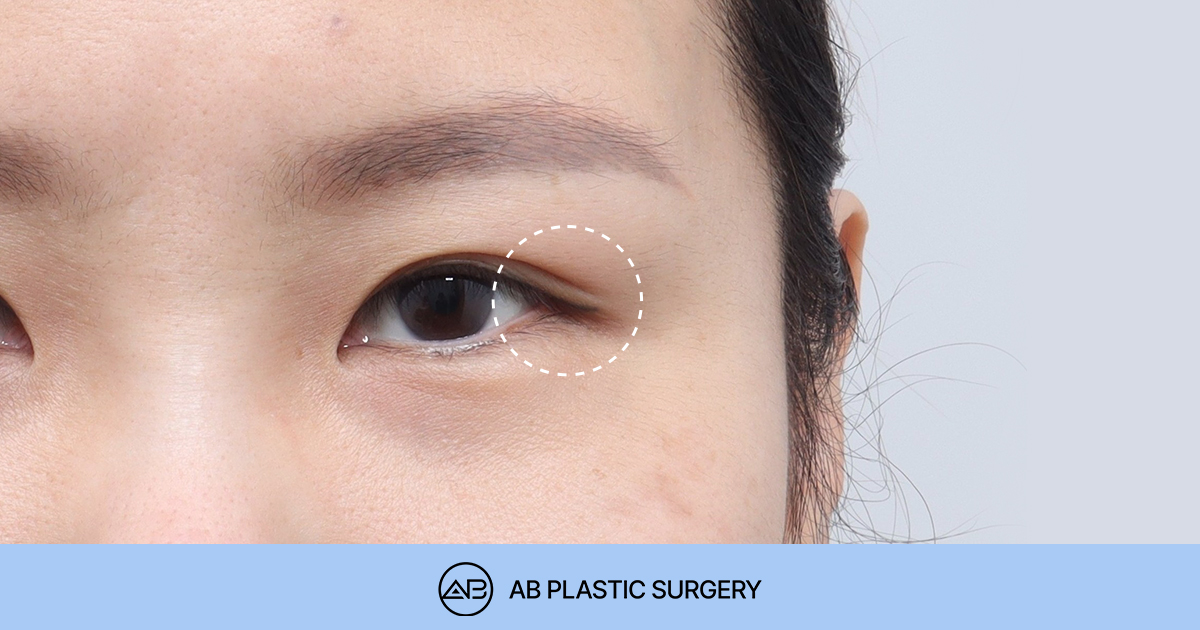
Hello, I’m Dr. Song Cheon Ho from AB Plastic Surgery.
Patients who visit us for lateral canthoplasty consultations often have one final question.
“Can I really undergo lateral canthoplasty?”
This is what they ask. So today, I would like to take some time to discuss who is a suitable candidate for lateral canthoplasty, who is not recommended to undergo the procedure, and the possible complications of lateral canthoplasty.
Q. What is Lateral Canthoplasty?
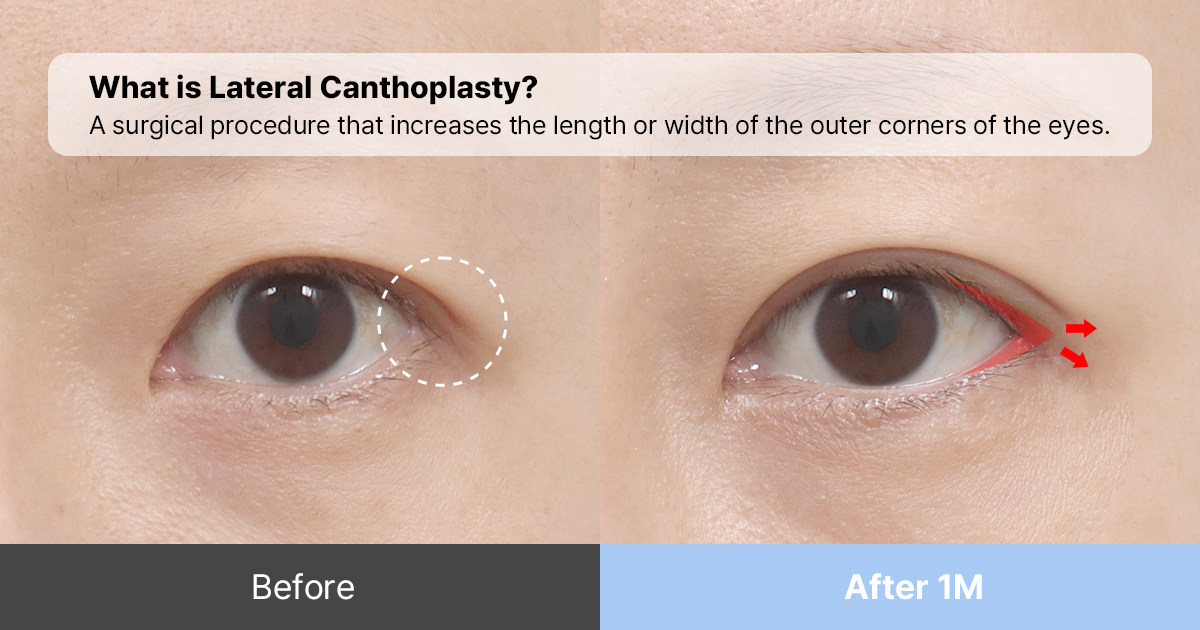
Some people find this term confusing during consultations. When discussing the outer corners of the eyes, the term refers to the lateral canthus, or the outer corner where the upper and lower eyelids meet.
Lateral canthoplasty is a surgical procedure that extends the length of the outer corners of the eyes or widens the space around them by separating and repositioning the lateral canthal area.
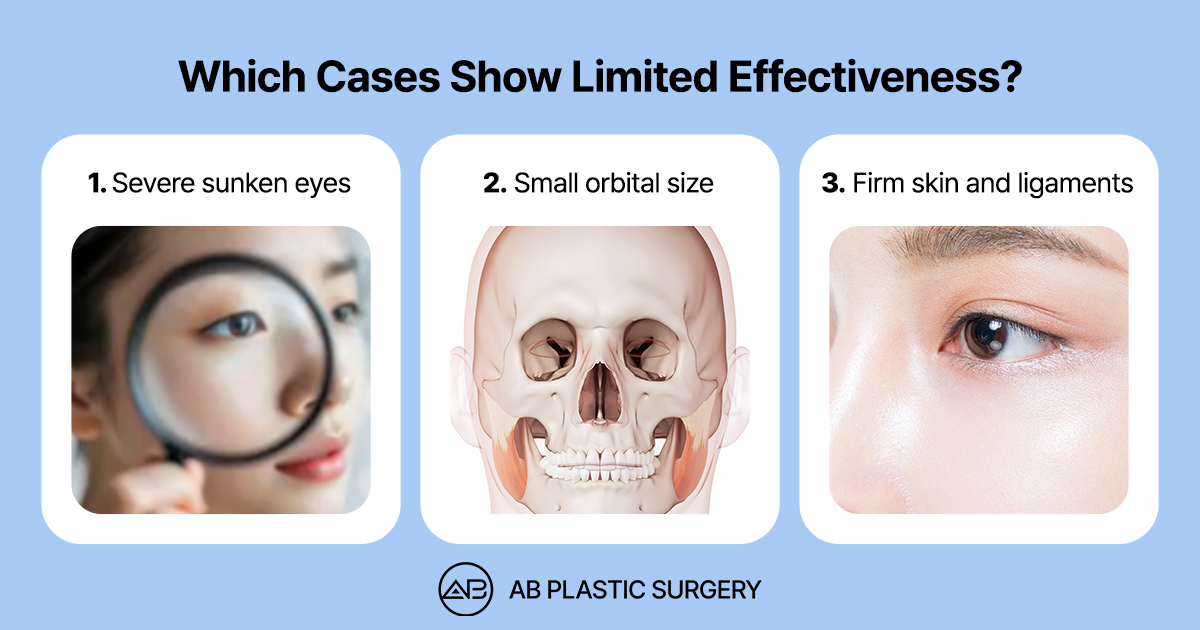
Q. Who May Experience Limited Results from Lateral Canthoplasty?
First, people with deeply recessed eyes.
In such cases, the eyeball itself is positioned farther back, so even if the space at the outer corners of the eyes is widened or their length is extended, the outer corners may not appear to open sufficiently.
Second, people with small eyes.
For patients with small eyes, even if the space is widened, the amount of available space is limited because the eyes themselves are small. As a result, the improvement may be relatively subtle.
Some patients describe this as having "limited space for lateral canthoplasty." For those with small eyes, the distance between the outer corner of the eye and the orbital rim can be assessed by touching the area.
This helps determine whether sufficient space is available for lateral canthoplasty.
Third, people with firm skin and strong ligaments.
In these cases, even after lateral canthoplasty, the operated area may stretch, pull, or adhere as it heals, potentially causing the eyes to appear smaller again.
For these patients, the outer corners of the eyes may return toward their original position, or the results of lateral canthoplasty may be less noticeable.
Q. Should Lateral Canthoplasty Always Be Performed Together with Lowering of the Outer Eye Corners?
In general, lateral canthoplasty and lowering of the outer eye corners are often performed together.
This is because lateral canthoplasty alone may make the eyes appear slightly more outwardly slanted, or in some cases, the outer corners may become narrower.
When the two procedures are performed together, the outer corners can be extended outward and slightly downward along a gentle curve, helping to maintain a natural eye shape.
However, lateral canthoplasty can also be performed on its own.
In particular, for patients with downturned outer eye corners or those who prefer a softer facial appearance, lowering the outer eye corners may not be necessary. Lateral canthoplasty alone may be sufficient to create the desired eye shape.
Q. What Are the Possible Complications of Lateral Canthoplasty?
One of the most common concerns regarding complications of lateral canthoplasty is scarring.
Although the surgical area may become red or develop scars during the healing process, I personally perform the procedure using a surgical approach that is less likely to leave noticeable scars.
In addition, early symptoms that may be considered complications of lateral canthoplasty include a sensation of pulling, tightness, and dry eye symptoms.
However, these symptoms are often temporary and occur as the tissues heal after lateral canthoplasty. In most cases, they gradually improve.
Q. I've Heard That Lateral Canthoplasty Can Cause the Outer Corners of the Eyes to Become Rounded...
Rounded outer eye corners are also considered a possible complication of lateral canthoplasty. This was a relatively common issue in the past, although it has become much less frequent in recent years.
There are surgical techniques designed to prevent the outer corners of the eyes from becoming rounded after lateral canthoplasty.
With older surgical techniques, these symptoms sometimes failed to improve naturally or without corrective treatment. In some cases, they worsened over time, making it necessary to perform surgery to restore and secure the outer corners of the eyes.
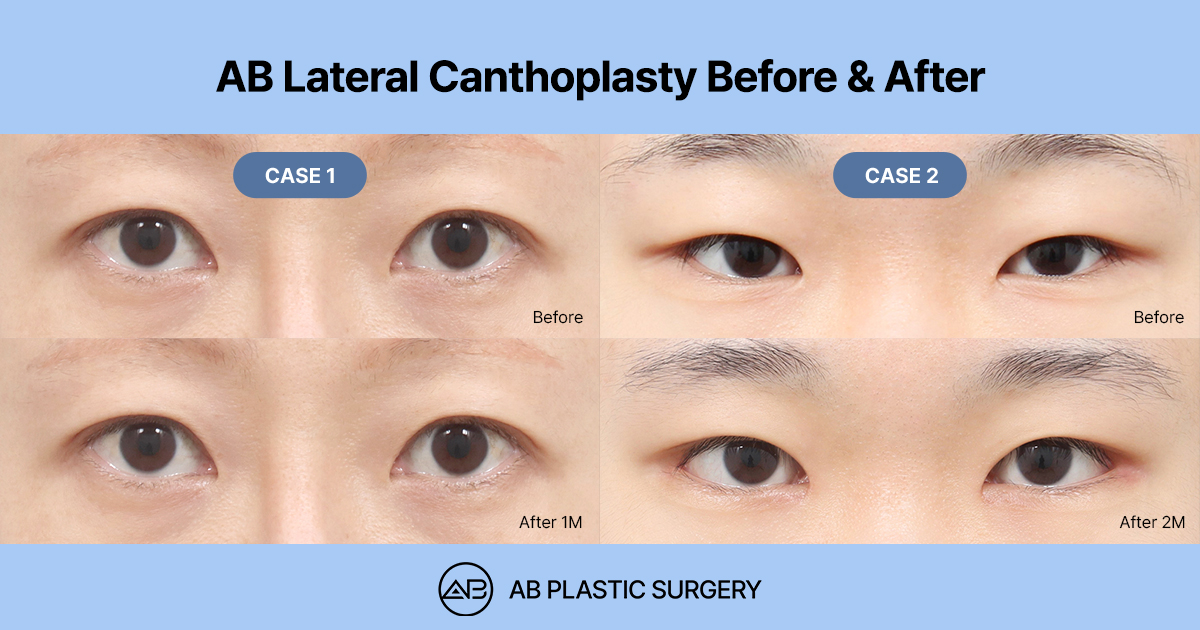
Today, we have discussed the basics of lateral canthoplasty, including recommended and non-recommended candidates, as well as possible complications.
If you are considering lateral canthoplasty or experiencing discomfort due to complications from a previous procedure, an accurate assessment of your current condition should always come first.
At AB Plastic Surgery, we aim to ensure safe and satisfactory results by carefully assessing each patient's eye condition and planning the most appropriate surgical approach.
If you have any further questions about AB Plastic Surgery or lateral canthoplasty, please contact AB Plastic Surgery on WhatsApp at +82 10 4393 1298 for a detailed consultation.

|
Writer, Dr. Song Cheon Ho, AB Plastic Surgery |