Title
Canthoplasty vs. Blepharoplasty: Which One Do You Need?Date
2024-07-15Views
8898
AB Blog
Canthoplasty or Blepharoplasty? Find the Best Option for Your Eyes
Table of Contents
1. What Is Canthoplasty?
2. What Is Blepharoplasty?
3. Canthoplasty vs. Blepharoplasty: A Complete Comparison
4. Canthoplasty and Blepharoplasty Recovery: Timeline and Aftercare
5. Deciding Which Procedure is Right for You
6. Frequently Asked Questions About Canthoplasty and Blepharoplasty in Korea
7. Safety Systems and Credentials Behind Eye Surgery at AB Plastic Surgery Korea
Canthoplasty and blepharoplasty treat different parts of the eye area. Canthoplasty mainly changes the position and support of the outer eye corner, while blepharoplasty addresses excess eyelid skin and, when appropriate, removes or repositions fat in the upper or lower eyelids. Some patients need only one of these procedures, and others benefit from both, depending on what is actually causing their concern.
This guide compares the two procedures side by side—purpose, ideal candidates, technique, recovery, risks, and cost in Korea—so you can arrive at your consultation with clearer questions. At AB Plastic Surgery Korea, eyelid surgery is planned with safety as the first priority: the clinic states that a board-certified anesthesiologist is on site for every surgery and that its operating rooms are monitored by CCTV.
|
Comparison |
Canthoplasty |
Blepharoplasty |
|---|---|---|
|
Main focus |
Outer eye-corner position and eyelid support |
Excess eyelid skin and selected fat-related concerns |
|
Area addressed |
Primarily the outer eye corner (lateral canthus) in this article |
Upper eyelids, lower eyelids, or both |
|
Typical concern |
Lower-lid laxity, eye-corner position, or a desired change in eye shape |
Hooding, excess skin, or under-eye bags |
|
Return to daily activities |
Visible bruising usually improves within about 2 weeks; the corner may take several weeks or longer to settle |
Often within about 1–2 weeks; scars continue to mature over months |
|
Important limitation |
Does not remove excess eyelid skin or under-eye bags |
Does not automatically correct weak eye-corner support or ptosis |
|
Combined treatment |
May accompany blepharoplasty when indicated |
May include additional eyelid-support steps such as canthopexy |
What Is Canthoplasty?
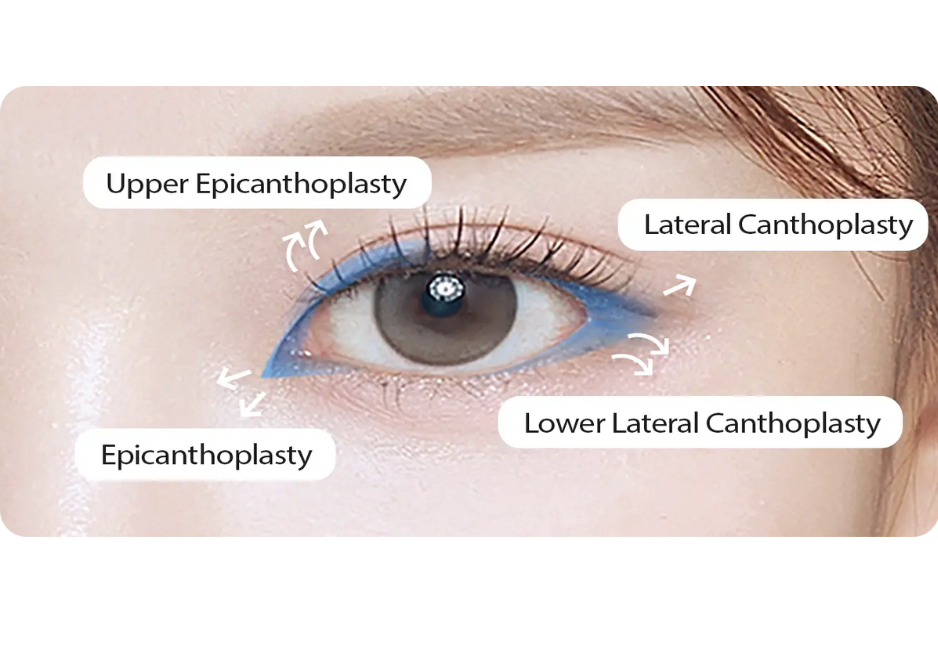
Canthoplasty, also known as eyelid reshaping surgery, is a procedure aimed at altering the outer corner of the eye, known as the canthus. It is typically performed to correct drooping or sagging of the lower eyelid, to strengthen eye-corner support, or to create a more almond-shaped eye. Canthoplasty is sought both for aesthetic reasons and to correct functional issues such as ectropion (an outward-turning eyelid) or entropion (an inward-turning eyelid).
This comparison focuses mainly on lateral canthoplasty, which involves the outer corner of the eye. In aesthetic eye surgery, lateral canthoplasty is often planned together with lower canthoplasty, which adjusts the outer part of the lower eyelid line. Epicanthoplasty, by contrast, addresses the skin fold near the inner corner of the eye and should be distinguished from procedures involving the outer corner.
Essential Insights into Canthoplasty
-
Aesthetic Enhancement: Canthoplasty can make the eyes appear more youthful and alert by lifting and reshaping the outer corners.
-
Functional Improvement: This procedure can correct eyelid malpositions that affect vision or cause discomfort.
-
Recovery: Most visible bruising and swelling subside within the first two weeks, but the outer corner can take several weeks or longer to look fully settled.
-
Limitation: Canthoplasty does not remove excess eyelid skin or under-eye bags. Those concerns are usually addressed with blepharoplasty.
What Is Blepharoplasty?
Blepharoplasty, commonly known as eyelid surgery, addresses excess eyelid skin and, when appropriate, removes or repositions fat in the upper or lower eyelids. The technique differs between upper- and lower-eyelid surgery and is selected according to the patient’s anatomy. It is commonly considered for hooded upper eyelids, under-eye bags, and excess skin that can impair vision, and it is often sought for its rejuvenating effect, making the eyes look more rested and youthful.
In upper-eyelid surgery, the incision is usually placed in the natural eyelid crease, which is why it is often planned together with crease design in upper eyelid (double eyelid) surgery. In lower-eyelid surgery, the surgeon may work through an incision just below the lash line or from inside the eyelid, depending on whether skin needs to be removed and how the fat should be handled. Whether under-eye fat is removed or repositioned can change the result considerably; our comparison of under-eye fat repositioning vs. fat removal explains when each approach tends to be considered.
Essential Insights into Blepharoplasty
-
Aesthetic Enhancement: Blepharoplasty can reduce visible signs of aging by removing excess skin and addressing the fat that causes puffiness, resulting in a smoother and more youthful eye area.
-
Functional Improvement: By removing excess upper-eyelid skin that may be obstructing vision, blepharoplasty can improve peripheral vision.
-
Recovery: Many patients return to normal daily activities within about 1–2 weeks, although some bruising, swelling, and scar maturation can continue for several months.
-
Limitation: Blepharoplasty does not automatically correct a loose outer eye corner, and a drooping upper eyelid caused by ptosis needs separate evaluation.
Canthoplasty vs. Blepharoplasty: A Complete Comparison
Canthoplasty and blepharoplasty can be performed separately or together. Combining them may address eye-corner position and eyelid skin or fat concerns in a single treatment plan, offering both aesthetic and functional improvements when the patient’s anatomy supports it.
Purpose and Focus
Canthoplasty primarily focuses on altering the shape, position, and support of the outer corners of the eyes.
Blepharoplasty focuses on excess eyelid skin and, when appropriate, eyelid fat, to improve the appearance and function of the upper or lower eyelids.
Ideal Candidate
Canthoplasty is suitable for individuals looking to correct sagging or drooping lower eyelids, to reinforce weak eye-corner support, or to achieve a more almond-shaped eye.
Blepharoplasty is ideal for individuals with hooded upper eyelids, bags under the eyes, or excess skin that affects vision.
Surgical Technique
Canthoplasty involves reshaping or reattaching the lateral canthal tendon to reposition and support the outer corner of the eye.
Blepharoplasty involves incisions placed in the natural upper-eyelid crease, just below the lower lash line, or inside the lower eyelid to remove or reposition tissue.
How Does Canthopexy Differ from Canthoplasty?
Canthopexy generally reinforces the existing outer-corner support, whereas canthoplasty involves more extensive reconstruction or repositioning of the corner. Either may accompany lower blepharoplasty when additional support is needed to keep the lower eyelid in position. The choice depends on eyelid laxity, eyelid position, and the planned correction.
Risks and Limitations to Discuss Before Surgery
Possible risks include dry eyes, difficulty fully closing the eyes, asymmetry, scarring, infection, and changes in eyelid position. After canthoplasty, the outer corner can partly return toward its original position, and revision surgery may sometimes be needed. The surgeon should explain the risks relevant to the planned procedure and to your eye health, including any existing dry-eye symptoms.
Safety systems around surgery also matter. AB Plastic Surgery Korea states that board-certified anesthesiologists remain on site to monitor patients throughout surgery and recovery, and that the clinic operates emergency response protocols together with a 24-hour emergency contact line for patients after discharge.
Canthoplasty and Blepharoplasty Cost in Korea
For international patients considering eye surgery in Korea, understanding the general price range of each procedure can help with treatment planning and medical travel preparation. The cost of canthoplasty and blepharoplasty in Korea may vary depending on surgical complexity, individual anatomy, revision status, and whether additional correction procedures are required. The table below separates single procedures, combined procedures, revisions, and surgeon-specific listings so they can be compared more easily.
|
Procedure |
Type |
Starting Price |
|---|---|---|
|
Epicanthoplasty |
Single procedure (inner corner) |
from approximately $750 |
|
Lateral + Lower Canthoplasty |
Outer corner and lower eyelid line |
from approximately $1,360 |
|
Lower Blepharoplasty |
Single procedure (lower eyelid) |
from approximately $1,870 |
|
Upper Blepharoplasty with Ptosis Correction |
Combined procedure |
from approximately $2,930 |
|
Canthoplasty Revision Surgery |
Revision |
from approximately $1,500 |
|
Blepharoplasty by Surgeon with 7,000+ Procedures |
Surgeon-specific listing (not a separate technique) |
approximately $1,640 |
Prices shown are starting reference prices in USD. The final cost of eye surgery in Korea may differ depending on individual eye structure, the degree of correction required, revision history, surgical technique, and personalized treatment planning. Items included in the quote, such as anesthesia, pre-operative tests, medication, and aftercare, are confirmed during consultation.
AB Plastic Surgery Korea states that certain complimentary services for international patients—such as medical interpretation, airport pickup, and hotel stay support—may be offered depending on the procedure type and price range, and apply once surgery is confirmed.
→ Check Your Personalized Eye Surgery Cost & Surgery Schedule in Korea
Canthoplasty and Blepharoplasty Recovery: Timeline and Aftercare
Recovery is one of the most practical differences between canthoplasty and blepharoplasty, especially for international patients who need to plan time away from work and a return flight. Returning to daily activities is not the same as full healing: bruising and swelling may remain after normal activities resume, and scars can continue to settle for months. The timeline below describes a general pattern only; your surgeon will adjust it to the procedure, any combined surgery, and your individual healing.
General Recovery Timeline
|
Period |
What Patients Commonly Notice |
|---|---|
|
First few days |
Swelling and bruising are usually most noticeable; eyes may feel tight, dry, or watery |
|
First week |
Stitches are typically removed at a follow-up visit; swelling starts to ease |
|
About 1–2 weeks |
Many patients return to normal daily activities; light bruising may still be covered with makeup once the surgeon allows it |
|
Several weeks |
Residual swelling continues to subside; the outer corner after canthoplasty gradually settles |
|
Several months |
Scars soften and fade, and the final eyelid shape becomes clearer |
How Canthoplasty and Blepharoplasty Recovery Differ
After canthoplasty, visible bruising and swelling usually improve over the first two weeks, while the outer corner may take several weeks or longer to settle into its final shape. Because the eye corner is supported in a new position, the surgeon may give specific instructions to avoid pulling or rubbing the area during early healing.
After blepharoplasty, many patients return to normal daily activities within about 1–2 weeks. Lower-eyelid surgery may feel different from upper-eyelid surgery depending on whether skin was removed and how fat was handled. For a closer look at under-eye surgery specifically, see our guide to lower blepharoplasty techniques and recovery in Korea.
Recovery When Both Procedures Are Combined
When canthoplasty and blepharoplasty are performed together, swelling may involve a wider area and the overall recovery period can be longer than for either procedure alone. Combining them can still reduce the total number of recovery periods compared with having the procedures separately, which some international patients find easier to plan around. Your surgeon will explain the expected recovery for your specific combination before surgery.
Aftercare Tips for a Smoother Recovery
Aftercare instructions vary by procedure, so always follow the plan your surgeon gives you. Common recommendations include:
-
Using cold compresses in the first days if advised, to help reduce swelling
-
Sleeping with the head slightly elevated during early recovery
-
Avoiding rubbing the eyes or pulling on the eyelids and eye corners
-
Postponing contact lenses and eye makeup until the surgeon confirms it is safe
-
Avoiding strenuous exercise, alcohol, and smoking for the period your surgeon recommends
-
Wearing sunglasses outdoors to protect healing eyelids from wind and sunlight
Contact your surgeon promptly if you notice worsening pain, changes in vision, bleeding that does not stop, swelling that suddenly increases on one side, or signs of infection such as fever or discharge. AB Plastic Surgery Korea states that patients can reach the clinic through a 24-hour emergency contact line after discharge.
Planning Recovery Around Your Trip to Korea
For international patients, it is helpful to plan your stay around stitch removal and the first follow-up check, which your surgeon will schedule during consultation. Leaving some buffer before your return flight allows the surgeon to confirm that early healing is on track. AB Plastic Surgery Korea states that, depending on the procedure type and price range, post-operative support such as swelling-relief laser care and an aftercare kit may be provided. If this will be your first surgery abroad, our guide to preparing for your first surgery in Korea covers travel and planning in more detail.
Deciding Which Procedure is Right for You
Choosing between canthoplasty and blepharoplasty depends on your specific needs and goals. If your primary concern is the shape, position, or support of the outer corners of your eyes, canthoplasty may be the better option. If you are looking to address excess eyelid skin, under-eye bags, or hooding, blepharoplasty might be the appropriate choice. When both concerns are present, a combined plan may be considered.
A drooping upper eyelid is not always caused by excess skin. True ptosis involves the eyelid’s lifting mechanism and may require a separate correction, with or without blepharoplasty. Heaviness caused by a descending brow may instead be addressed with a brow-lifting procedure; you can compare surgical and non-surgical options in our guide to Endotine brow lift vs. Botox brow lift. An examination helps identify the actual cause of the drooping.
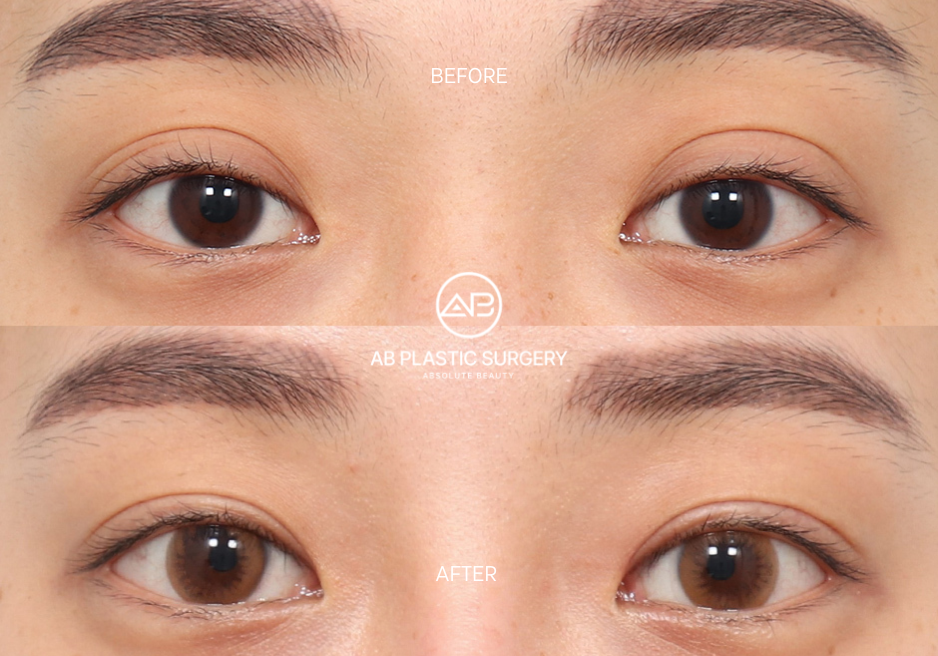
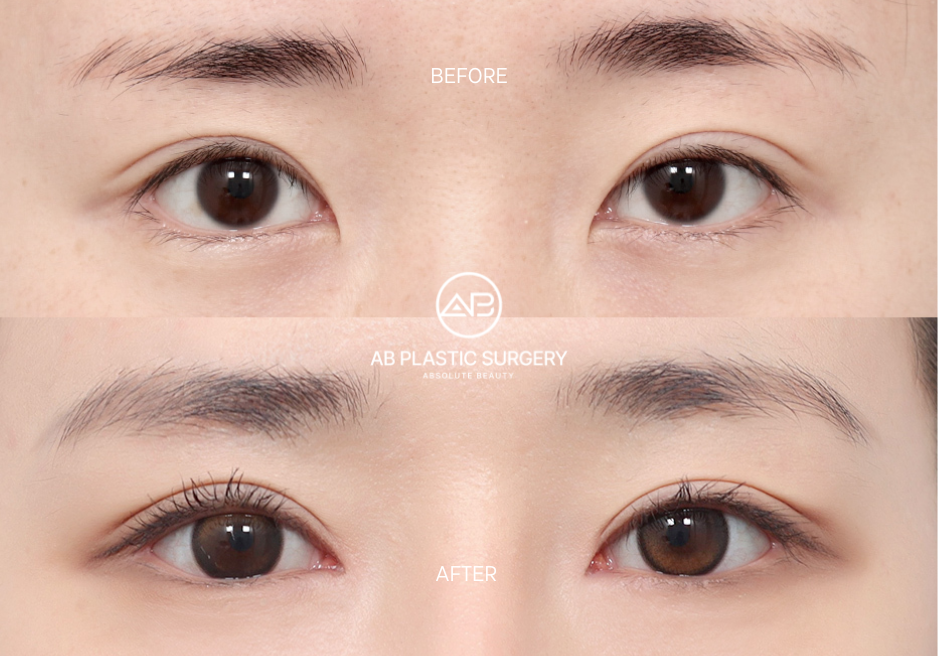
During evaluation, surgeons typically check how firm the lower eyelid and outer corner are, whether upper-eyelid drooping comes from skin or from the lifting muscle, how much fat is present around the eyes, and whether you have dry-eye symptoms. Reviewing real before-and-after eye surgery cases can also help you see which changes each procedure tends to produce.
Consulting with a board-certified plastic surgeon is crucial in determining the best procedure for you. A professional evaluation will help assess your individual anatomy, discuss your aesthetic goals, and develop a personalized surgical plan to achieve the desired outcome.
If you're considering canthoplasty or blepharoplasty, we invite you to schedule a free online or offline consultation with one of our surgeons at AB Plastic Surgery Korea. Contact us today to book your free consultation and take the first step toward enhancing your natural beauty.
Frequently Asked Questions About Canthoplasty and Blepharoplasty in Korea
What is the main difference between canthoplasty and blepharoplasty?
Canthoplasty mainly changes the position and support of the outer eye corner, often to correct a drooping lower eyelid or to create a more almond-shaped appearance. Blepharoplasty addresses excess eyelid skin and, when appropriate, removes or repositions fat in the upper or lower eyelids to improve hooding, puffiness, or tired-looking eyes. In short, canthoplasty works on eye-corner shape and support, while blepharoplasty works on eyelid skin and fat.
Will blepharoplasty change the outer corner of my eyes?
Not by itself. Blepharoplasty mainly addresses eyelid skin and fat, so it does not reposition the outer eye corner. If the corner is loose or you want to change the shape of the outer corner, your surgeon may discuss adding canthoplasty or canthopexy to the plan.
Do drooping eyelids always need blepharoplasty?
No. Drooping can come from different causes:
-
Excess upper-eyelid skin, which is usually addressed with blepharoplasty
-
Ptosis, a weakness of the eyelid’s lifting mechanism, which needs ptosis correction
-
A descending brow, which may be addressed with a brow-lifting procedure
An examination identifies which factor, or combination of factors, is involved before a procedure is chosen.
When might canthopexy be added to lower blepharoplasty?
Canthopexy may be added when the lower eyelid or outer corner is lax and needs extra support to stay in position after lower blepharoplasty. It reinforces the existing corner support rather than reconstructing it. Whether it is needed depends on eyelid laxity and position, which the surgeon assesses during the pre-operative examination.
Can canthoplasty and blepharoplasty be performed together?
Yes, canthoplasty and blepharoplasty can be performed together when a patient wants to improve both eye shape and eyelid concerns. Combining the procedures may help address outer eye-corner positioning, eyelid sagging, under-eye bags, or excess eyelid skin in a single treatment plan. However, whether combination surgery is appropriate should be determined through consultation based on the patient’s eye anatomy, goals, and recovery plan.
How much do canthoplasty and blepharoplasty cost in Korea?
At AB Plastic Surgery Korea, listed starting prices for these eye procedures range from approximately $750 to $2,930 USD, depending on whether the surgery is a single procedure, a combined procedure, or a revision. See the cost table in this article for each procedure. The final cost depends on eyelid anatomy, the degree of correction, revision history, and any additional procedures, and is confirmed during consultation.
Safety Systems and Credentials Behind Eye Surgery at AB Plastic Surgery Korea
For international patients, the most important question is often not only how surgery is performed, but how the clinic manages safety and responsibility if something unexpected happens. The following systems and credentials are what AB Plastic Surgery Korea relies on to answer that question.
Government Accreditation for International Patient Care
AB Plastic Surgery Korea holds the Ministry of Health and Welfare’s Accreditation as a medical institution for international patients (KAHF), which it received at Medical Korea 2026. For patients, this means more than a certificate on the wall: the accreditation evaluates how a clinic manages patient safety, infection prevention in the operating room, staff training, emergency response, and facility hygiene for patients traveling from abroad.
The clinic is also a full member of the Korea International Medical Association (KIMA), was designated a 2025 Excellent Medical Tourism Institution by the Ministry of Justice, and its stem cell center is designated an Advanced Regenerative Medicine Institution by the Ministry of Health and Welfare.
Surgical Safety Protocols
-
On-site anesthesiologists: The clinic states that a board-certified anesthesiologist is present for every surgery and monitors the patient until recovery.
-
Operating room CCTV: The clinic states that operating rooms are monitored by CCTV and that a surgeon name-disclosure system is used so patients know who performs their surgery.
-
Emergency response: The clinic states that it maintains university hospital-level emergency equipment and a 24-hour emergency contact line for patients after discharge.
-
Safety record: AB Plastic Surgery Korea states that it has had zero reported medical accidents since opening in September 2020.
Academic Activity in Eyelid and Facial Rejuvenation Surgery
AB Plastic Surgery Korea surgeons present at domestic and international meetings, sharing techniques with other surgeons rather than only attending as participants. At PRS KOREA 2025, an AB surgeon lectured on key considerations for combining facelift and lower blepharoplasty safely. The clinic’s surgeons have also lectured and chaired sessions at APS KOREA 2025 and APS KOREA 2026, and have served as IFAAS lecturers teaching surgical techniques to visiting overseas surgeons, including live surgery demonstrations.
The clinic also maintains academic and clinical cooperation with Seoul National University Bundang Hospital as an educational partner hospital and with Hallym University Dongtan Sacred Heart Hospital. You can learn more about the board-certified surgeons who plan and perform eyelid surgery at AB Plastic Surgery Korea before your consultation.



This article is for informational purposes only and does not replace a personal medical consultation.