Title
Korean Facelift Techniques That Celebrities Choose (And Why)Date
2025-07-10Views
5570
AB Blog
Korean Facelift Techniques: 5 Celebrity-Chosen Methods That Transform Your Look
Table of Contents
1. The Celebrity Facelift Phenomenon: Why Korea Rules
2. The Top 5 Korean Facelift Techniques That Celebrities Actually Choose
3. The Science Behind Celebrity-Preferred Techniques
4. Why Korean Techniques Dominate Celebrity Choices
5. Your Recovery Experience: What to Expect
6. The Future of Facelift Innovation
7. Your Path to Natural-Looking Results
A practical guide to understanding celebrity-inspired facelift results—and how to discuss them at your consultation
When K-drama stars maintain polished appearances well into their 40s and 50s, or when K-pop idols seem to age slowly on screen, many viewers start searching for Korean facelift techniques. Good genes, skincare, professional lighting, makeup, and in some cases aesthetic procedures can all contribute to that look—and from the outside, it is rarely possible to tell which.
That is why the most useful question is not "What did that celebrity have done?" but "Which part of that look suits my own face, and which technique can realistically achieve it?" A facelift repositions sagging skin and deeper tissue; it does not change bone structure or recreate another person's features. This guide keeps the five Korean facelift techniques covered in our original article and adds what international patients ask us most: how to judge a natural result, how to read before-and-after photos, and how to bring reference photos to a consultation.
In short: Celebrity faces can show you a direction—a cleaner jawline, a rested look, natural movement—but the right Korean facelift technique depends on your own degree of sagging, skin thickness, and facial proportions. A natural result is one that still looks like you.
 The Celebrity Facelift Phenomenon: Why Korea Rules
In short: The Korean Wave made a restrained, camera-ready look widely admired. What you can learn from celebrity faces is a direction for your own result—not a procedure list.
The Korean Wave (Hallyu) has influenced not only cultural trends but also beauty preferences around the world. Because Korean actors and idols are filmed in high definition and at close range, the look many people associate with them is restrained rather than dramatic: a defined jawline, smooth mid-face contours, and a face that still moves naturally when it speaks and smiles. That expectation of subtlety has shaped how facelift surgery is planned and performed in Korea.
The same priority now shows up in international data. In the American Academy of Facial Plastic and Reconstructive Surgery (AAFPRS) 2025 annual member survey, published in February 2026, surgeons reported that patients' main concern has shifted away from cost, downtime, and surgeon choice toward the fear of looking unnatural. That is the question this guide focuses on.
What Celebrity Results Can—and Cannot—Tell You
-
Photos are not anatomy: Professional lighting, makeup, retouching, and camera angles shape how a celebrity's face appears.
-
Procedures are rarely disclosed: Public figures seldom confirm what they have had done, so guessing from photos is unreliable and should not guide your surgical plan.
-
A direction is useful: The degree of lift, the shape of the jawline, and how much natural expression remains are all features you can describe to a surgeon.
-
Your face decides the technique: Bone structure, skin thickness, and how far tissue has descended determine which method fits—not the technique a celebrity is rumored to have chosen.
The Top 5 Korean Facelift Techniques That Celebrities Actually Choose
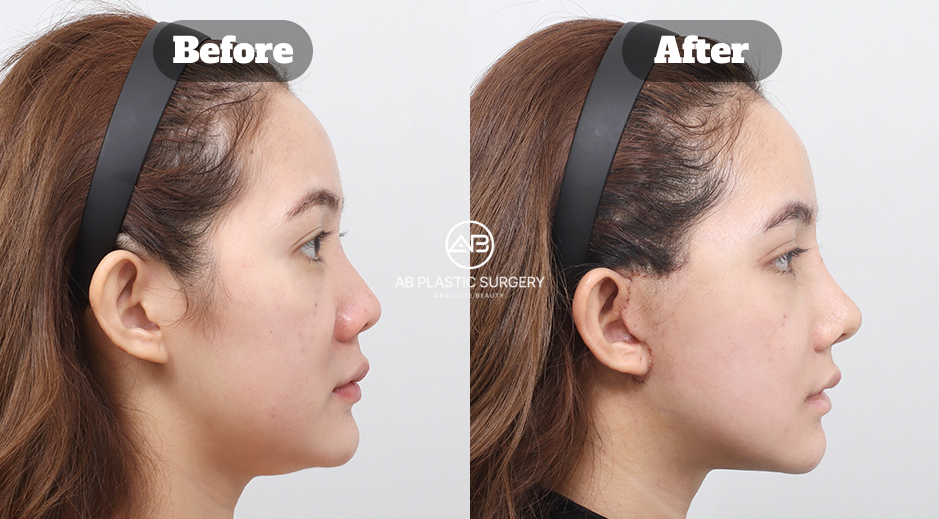
In short: Korean facelift techniques range from a mini lift for early sagging to full SMAS lifting for advanced laxity. Each one below includes a "natural-look consideration"—the point to discuss with your surgeon if looking like yourself is the priority.
1. Mini Lifting - The Celebrity Schedule-Friendly Option
What it is: AB Plastic Surgery Korea's mini lifting uses minimal incision and dissection with elastic band threads for quick recovery and targeted results.
Why patients with busy schedules choose it:
-
Quick recovery: Visible swelling typically settles over about 1–2 weeks, which can fit around work schedules
-
Minimal scarring: Smaller incisions reduce concerns about visible marks
-
Targeted results: Addresses specific areas of early aging
-
Prevention-focused: Suited to early sagging rather than advanced laxity
Natural-look consideration: Because the change is modest, a mini lift tends to read as "well rested" rather than "operated on." If sagging is already advanced, however, it may under-deliver—ask whether your degree of laxity is within its range.
2. Deep Plane Facelift - The Gold Standard for Natural Results
What it is: A deep plane facelift lifts the skin and SMAS layer together, and is recommended for patients with thinner skin and SMAS layers who need comprehensive rejuvenation.
Why patients choose it:
-
Long-lasting results: Generally more durable than less extensive methods, although the face continues to age naturally afterward
-
Natural movement: Aims to preserve the facial expressions that matter on camera and in daily conversation
-
Comprehensive lifting: Addresses multiple signs of aging at once
-
Proven technique: Established method with predictable planning
Natural-look consideration: Surgeons analyze facial anatomy and movement patterns before surgery so that the result looks natural in daylight and under high-definition cameras. If you want the anatomical detail behind the method, read how a deep plane facelift differs from a traditional facelift.
3. Dual Plane Facelift - Advanced Customization
What it is: Separate dissection of skin and SMAS layers, ideal for patients with thicker tissue layers who need more precise control over lifting.
Why patients choose it:
-
Precision control: Allows exact adjustment of lifting tension
-
Customizable results: Tailored to individual facial structure
-
Layer-by-layer planning: Each layer can be handled individually in more complex cases
-
Profile balance: Tension can be planned with front, oblique, and side views in mind
Natural-look consideration: Because skin and SMAS are adjusted separately, the surgeon can avoid placing tension on the skin alone—a common cause of a flat or "pulled" appearance. Ask how the lifting direction will be set for your cheeks and jawline.
4. Semi Full Face Lifting - The Balanced Approach
What it is: Sufficient SMAS dissection focusing on mid and lower face sagging without neck involvement, suited to targeted rejuvenation.
Why patients choose it:
-
Balanced results: Addresses key aging areas without over-treatment
-
Faster recovery: Less extensive than a full facelift
-
Narrower scope: AB Plastic Surgery Korea's published starting price is USD 5,240 for a semi full facelift, compared with USD 7,480 for full face lifting
-
Maintenance-friendly: Can be combined with other treatments
Natural-look consideration: Because the neck is not included, a strongly lifted face above an unchanged neck can look inconsistent. Which extent suits your age and sagging pattern is covered in our guide to facelift surgery by age.
5. Full SMAS Lifting - The Complete Transformation
What it is: Maximal SMAS dissection for comprehensive lifting of severely sagging skin and tissue, covering the entire face and neck.
Why patients choose it:
-
Maximum coverage: Addresses all signs of facial aging
-
Visible improvement: Suited to advanced sagging that smaller procedures cannot correct
-
Long-term investment: Designed for durable correction rather than short-term refreshment
-
Complete rejuvenation: Simultaneous improvement of multiple areas
Natural-look consideration: The more tissue is lifted, the more the lift direction and tension decide whether the face looks refreshed or overcorrected. Ask to see cases with similar starting sagging, photographed at rest and smiling.
|
Technique |
Typically considered for |
Natural-look point to discuss |
|---|---|---|
|
Mini Lifting |
Early, localized sagging |
Whether your laxity is mild enough |
|
Deep Plane Facelift |
Thinner skin and SMAS, comprehensive aging |
How expression and movement are preserved |
|
Dual Plane Facelift |
Thicker tissue needing precise control |
Lift direction for cheeks and jawline |
|
Semi Full Face Lifting |
Mid and lower face sagging, no neck |
Balance between face and neck |
|
Full SMAS Lifting |
Advanced sagging of face and neck |
Avoiding a "pulled" appearance |
Prices are starting prices published by AB Plastic Surgery Korea in USD; the final quote is confirmed after an in-person assessment. For a full overview by procedure, see plastic surgery costs in Korea for 2026.
The Science Behind Celebrity-Preferred Techniques
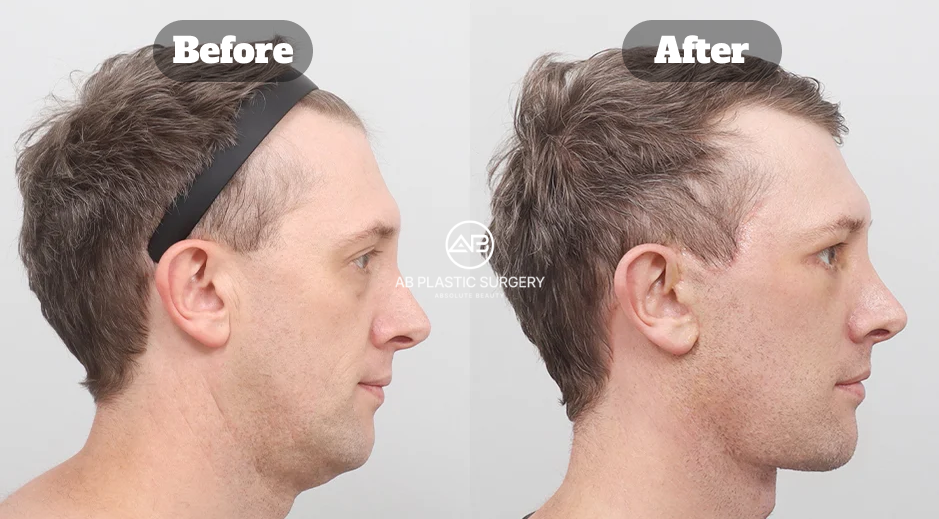
In short: Natural results come from assessment before surgery and safety during it. At consultation, ask specifically about your proportions, the features you want to keep, and how your expression will look.
AB Plastic Surgery Korea's Specialized Approach
AB Plastic Surgery Korea uses a structured analysis process before any facelift is planned:
Customized Assessment Process:
-
Skin texture and elasticity analysis: Detailed evaluation of skin quality
-
Facial anatomy mapping: Understanding individual bone structure and muscle patterns
-
Aging pattern prediction: Anticipating how the face will change over time
-
Recovery planning: Tailored healing protocols for work and travel schedules
Advanced Surgical Techniques:
-
Precise dissection methods: Wide-area, meticulous dissection for strong lifting effects
-
Nerve preservation: Avoiding facial nerves while releasing retaining ligaments
-
Directional lifting: Different pulling strengths for each facial area
-
Incision design: 45-degree diagonal incisions intended to minimize visible scarring and hair loss
Questions to Ask About Proportion, Existing Features, and Expression
"Natural" means different things to different people. These questions turn it into something your surgeon can plan around:
|
Topic |
Questions to ask |
|---|---|
|
Facial proportion |
Where is my sagging greatest—mid-face, jawline, or neck? How will the lift change the balance between my upper, middle, and lower face? |
|
Existing features |
Which of my current features should stay the same? Will my cheek volume, earlobe shape, sideburns, or hairline change? |
|
Expression |
How will my smile and resting expression look at three and six months? Can I see cases with similar anatomy photographed smiling as well as at rest? |
Explanations of facial anatomy and procedures written by AB Plastic Surgery Korea's surgeons are collected in our medical column, which can help you prepare these questions in advance.
Patient Safety Protocols at AB Plastic Surgery Korea
A natural-looking result also depends on a safe operation. The clinic describes the following standards:
-
On-site anesthesiologists: Board-certified anesthesiologists monitor patients in real time during every procedure. The clinic states that anesthesiologists make up 47.1% of its medical staff, compared with a 23.1% average at hospital-level institutions.
-
Central monitoring systems: Double and triple safety checks of vital signs
-
Operating room CCTV: Surgery is recorded under a transparent operating environment, alongside a surgery record system confirming the operating surgeon
-
In-house crossmatching: The clinic states it can run blood crossmatching on site, with results available within about two hours if an emergency transfusion is needed
-
Comprehensive pre-operative exams: Blood tests, X-ray, and electrocardiogram reviewed before surgery
-
24-hour emergency line: Available to patients after discharge
AB Plastic Surgery Korea states that it has recorded no medical accident cases since opening in September 2020.
Why Korean Techniques Dominate Celebrity Choices
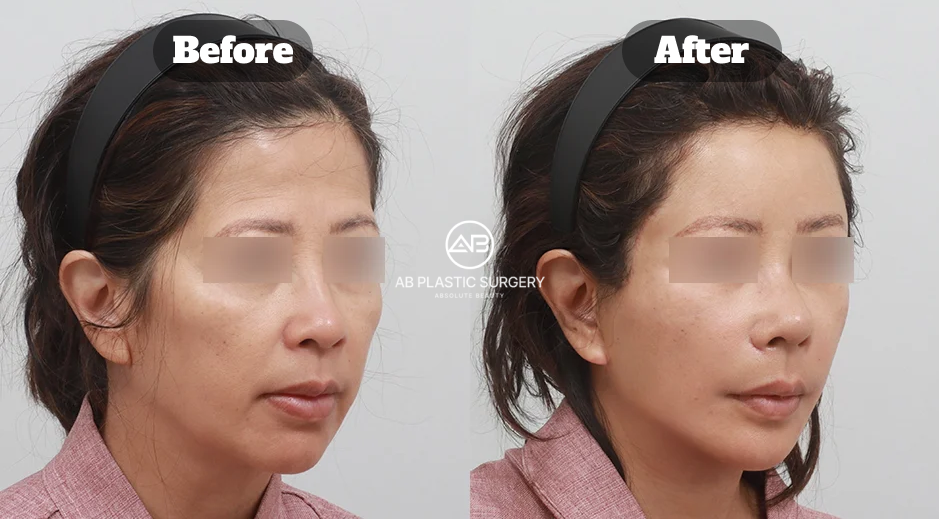
In short: Korean facelift practice favors subtle, individualized change. The most reliable signs of quality are verifiable ones—accreditation, academic activity, and before-and-after photos taken under consistent conditions.
Cultural Understanding of Beauty Standards
Korean surgeons work within a beauty culture that values refinement over transformation:
-
Restraint over change: Results aim to look refreshed rather than visibly operated on
-
Design starts from the individual: Plans follow each patient's own anatomy, whatever their background
-
Age-appropriate enhancement: Keeping patients looking naturally youthful rather than younger than their features allow
-
Gender-specific approaches: Different planning for male and female facial structure
Innovation-Driven Industry
Innovation is easiest to verify through academic work and official accreditation. AB Plastic Surgery Korea's recent activity includes:
-
PRS KOREA 2025 (November 2025): A lecture on combining a face lift with lower blepharoplasty safely and effectively
-
APS KOREA 2026 (April 2026): Lectures on imaging-based evaluation of neck anatomy and anatomical considerations in neck lift surgery
-
Korean Association of Plastic Surgeons fall course (October 2025): A lecture comparing fixation methods in endoscopic forehead lifting
-
IFAAS training program: AB Plastic Surgery Korea's surgeons teach visiting international surgeons through lectures and live surgery—a role of teaching the technique, not only learning it
-
Endotine use: The clinic states it has been named among Korea's top five Endotine users for three consecutive years, a fixation device used in forehead and brow lifting
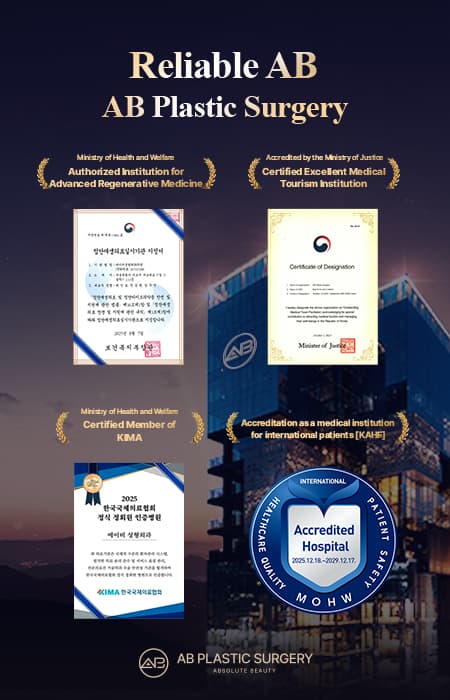
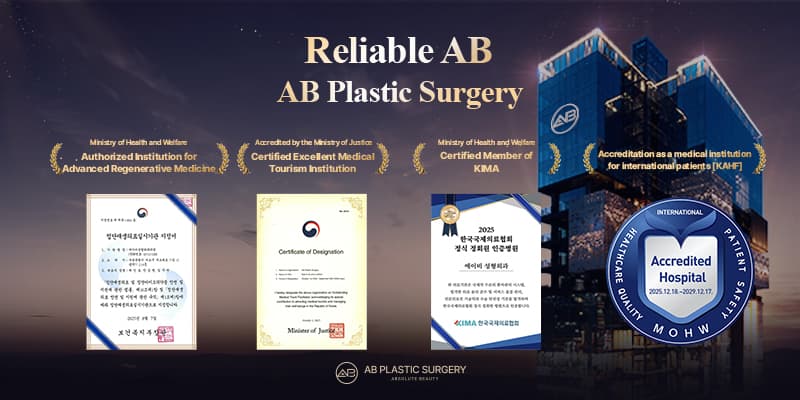
Its institutional credentials include KAHF accreditation from Korea's Ministry of Health and Welfare (accreditation period December 2025 to December 2029, awarded at Medical Korea 2026), full membership of KIMA (Korea International Medical Association), designation as a 2025 Excellent Medical Tourism Attraction Institution by the Ministry of Justice, and designation of its stem cell center as an Advanced Regenerative Medicine institution by the Ministry of Health and Welfare. For an international patient, KAHF matters for a practical reason: the risks of surgery abroad are often explanation gaps, aftercare, and accountability if something goes wrong, and this accreditation reviews how a clinic manages those areas against national standards. You can read more in AB Plastic Surgery Korea's accreditations and history.
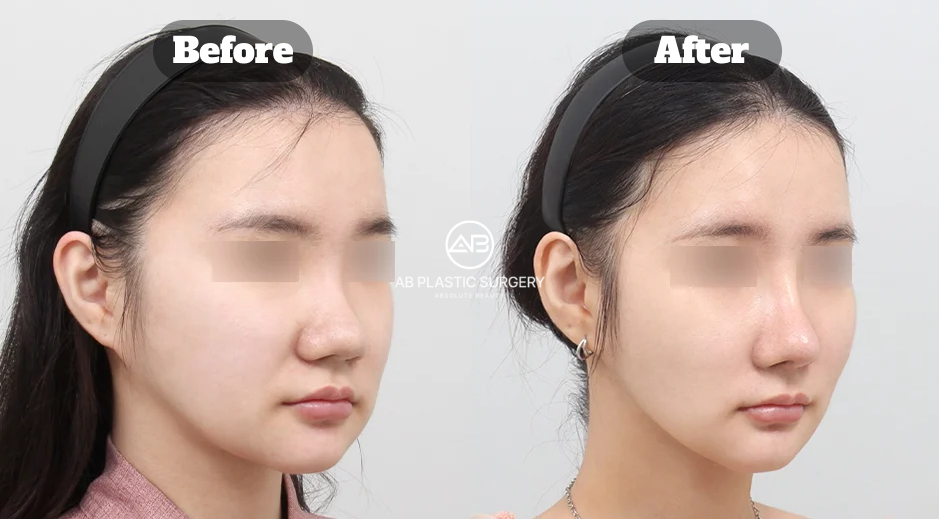
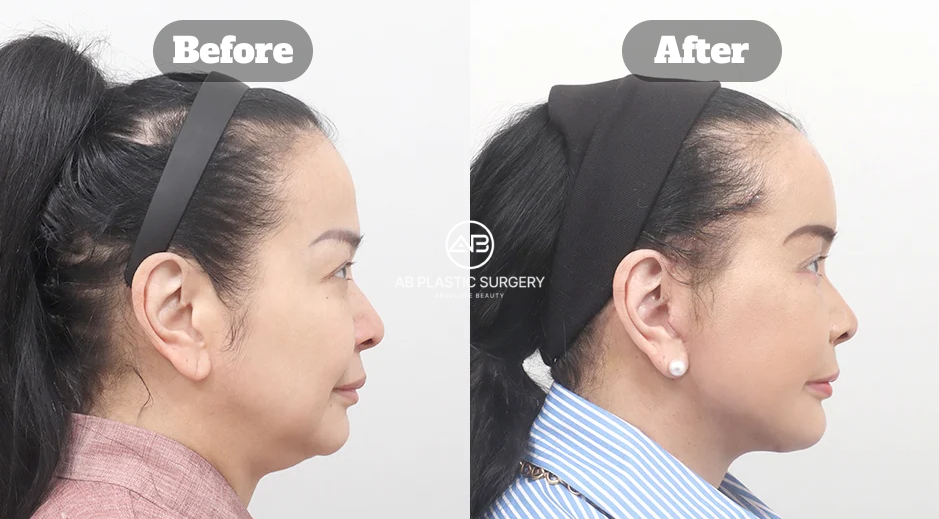
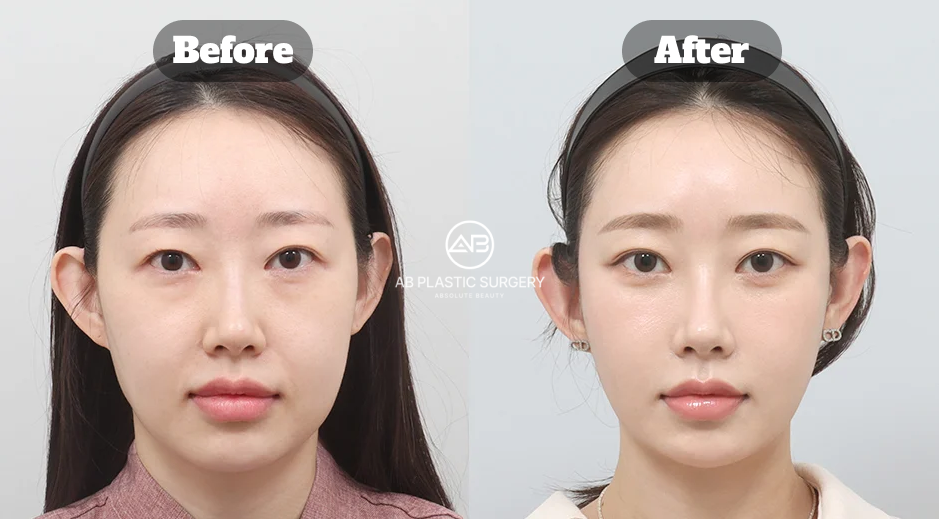
How to Read Before-and-After Photos Without Guesswork
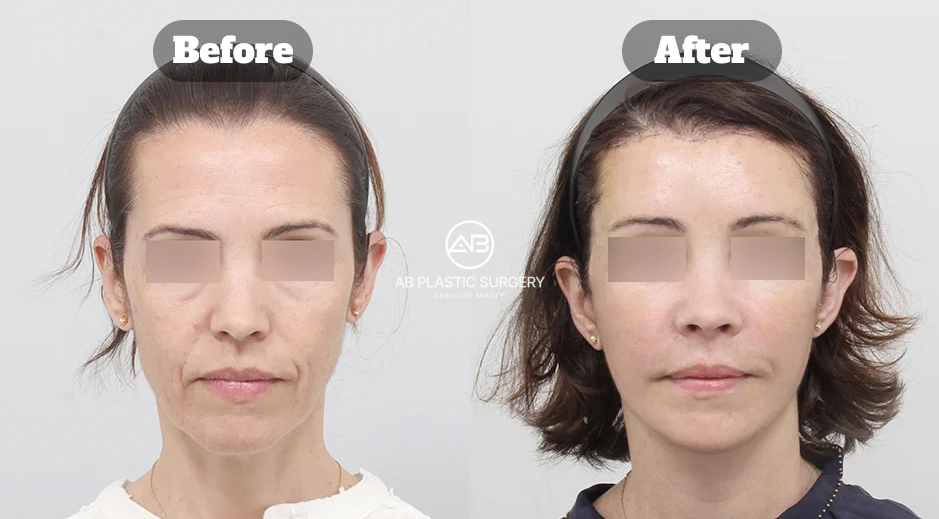
Before-and-after photos are the closest thing to evidence of a natural result, but only when they are compared fairly. Check the following before drawing conclusions:
|
What to check |
Why it matters |
|---|---|
|
Lighting |
Overhead or flat lighting can hide or exaggerate jowls and folds. Both photos should use the same light. |
|
Angle |
A slightly raised chin tightens the jawline by itself. Compare front, 45-degree, and side views taken at the same head position. |
|
Expression |
A resting face shows the lift; a smile shows whether movement looks natural. Look for both. |
|
Timing |
Photos within the first weeks may still show swelling. A stated time point, such as three or six months, makes the result easier to judge. |
|
Combined procedures |
Eyelid surgery, fat grafting, or skin treatments may have been performed at the same time. Ask what was done. |
|
Makeup and hair |
Makeup, hair placement, and editing change the impression. Clinical photos should keep these consistent. |
The same caution applies to celebrities: comparing their photos across years cannot reliably show whether, or how, they had surgery. Use clinical cases instead—browse AB Plastic Surgery Korea's before-and-after cases with the checklist above.
Your Recovery Experience: What to Expect
In short: Returning to daily life and being ready for cameras or public events are two different milestones. If you have a wedding, photoshoot, or presentation coming up, plan around the second one.
AB Plastic Surgery Korea's Comprehensive Recovery System
AB Plastic Surgery Korea offers structured post-operative care. Recovery monitoring begins in the operating room, where an anesthesiologist stays with each patient through to the recovery room.
Comprehensive Aftercare Program:
-
Stem cell therapy: An optional regenerative program that may support tissue recovery; suitability is assessed individually
-
Dermatology collaboration: Skin treatment during recovery to support results
-
Hyperbaric oxygen therapy: Used to support circulation and swelling management
-
Customized recovery protocols: Tailored care based on your healing pattern and lifestyle
Patient-Centered Support:
-
Flexible scheduling: Follow-up appointments that work with your schedule
-
Comfortable facilities: Private recovery areas designed for comfort and privacy
-
Comprehensive support: Interpretation services and personal assistance throughout your stay
-
Progress monitoring: Regular check-ups to confirm healing and address concerns
Recovery Timeline Expectations:
-
Week 1-2: Initial healing with gradual reduction in swelling and bruising
-
Week 3-4: Return to most normal activities with continued improvement
-
Month 2-3: Results become clearer as tissues settle
-
Month 6+: Incisions continue to mature and the final result stabilizes
The timeline differs by technique: a mini lift generally recovers faster than full SMAS lifting.
Everyday Life vs. Camera-Ready: Two Recovery Milestones
|
Milestone |
What it usually means |
What can still show |
|---|---|---|
|
Return to daily life |
Walking, light work, errands, video calls with hair worn down |
Mild swelling, tightness around the ears and jaw, bruising covered by makeup |
|
Camera-ready or public events |
Close-up photos, filming, weddings, presentations under bright light |
Residual swelling in high resolution, incision redness near the ear, a smile that still feels slightly stiff |
Tell your surgeon the date of any important event at the first consultation, so the technique and surgery date can be planned backward from it. For practical planning of your stay and flights, see our medical tourism guide for your first surgery in Korea.
The Future of Facelift Innovation
In short: In 2026, facelift patients are getting younger, more people are seeking care after rapid weight loss, and natural-looking results have become the top priority. Planning is moving toward full-face assessment combined with volume restoration.
Emerging Trends in Korean Techniques
Several 2026 trends are shaping anti-aging surgery in Korea and internationally. The figures below come from the AAFPRS 2025 annual member survey, published in February 2026:
|
2026 trend |
What the data shows |
What it means for your consultation |
|---|---|---|
|
Natural results first |
Looking unnatural has replaced cost and downtime as patients' main concern |
Ask how expression and existing features will be preserved |
|
Younger facelift patients |
Surgeons expect the average age of facelift patients to keep falling; most patients are still 56 or older |
Earlier sagging may suit a less extensive technique |
|
Sagging after rapid weight loss |
67% of surgeons saw more patients seeking treatment related to rapid weight loss, including GLP-1 medications |
Lifting alone may not restore lost volume |
|
Volume restoration with lifting |
Fat grafting grew 50% for a second consecutive year |
Ask whether fat grafting should be combined with your lift |
Rapid weight loss can leave the face both hollow and loose, so a lift that only repositions tissue can look tight but thin. If this applies to you, see our guide to treatment options for Ozempic face.
Other developments continue alongside these trends:
-
Full-face planning: Brows, eyes, cheeks, jawline, and neck assessed together rather than one feature at a time
-
Imaging-assisted planning: Ultrasound and X-ray analysis used to plan lifting more precisely
-
Advanced materials: Improved thread and fixation technologies
-
Combination therapies: Integrating surgical lifting with skin and regenerative treatments
-
Personalized medicine: Research into individual factors that affect healing
Increasing Accessibility
Advanced techniques are becoming more accessible through:
-
Training programs: More surgeons learning Korean methods worldwide
-
Technology sharing: Equipment becoming more widely available
-
Medical tourism support: Interpretation, airport pickup, and accommodation support for international patients, depending on the procedure
-
Telemedicine: Remote consultations for initial assessments and follow-up care
Your Path to Natural-Looking Results
In short: Bring reference photos, but point to specific features, add photos of yourself, and say what you do not want. Your surgeon can then tell you what is realistic for your face.
The facelift techniques associated with Korean celebrities are available to international patients, but the goal is not to copy a famous face. It is to choose the technique that suits your own anatomy and to plan a result that still looks like you.
How to Use Reference Photos at Your Consultation
-
Choose two or three photos that show the look you like, rather than a whole folder.
-
Point to specific features—for example, "a sharper jawline," "less heaviness beside the mouth," or "a smoother neck"—instead of "I want to look like this person."
-
Add photos of yourself from five to ten years ago. They show your surgeon how your own face looked before sagging progressed.
-
Send current photos from the front, 45 degrees, and the side, both at rest and smiling, in even daylight.
-
Say what you do not want, such as a tight or flat look, visible scars, or a changed smile.
-
Ask what is realistic for your bone structure and skin, and which technique would achieve it.
Your photos are reviewed by AB Plastic Surgery Korea's board-certified surgeons, who combine anatomical assessment with aesthetic judgment to plan results that enhance your own features.
Can I bring a celebrity's photo to my facelift consultation?
Yes. A celebrity photo is a helpful way to show the direction you like. It is most useful when you name the specific features you want—such as jawline definition or a smoother mid-face—and add photos of your own face at a younger age. Your surgeon will explain which elements are achievable with your anatomy and which technique fits.
How can I tell from photos whether a facelift result looks natural?
Compare before-and-after photos taken with the same lighting, angle, and head position, at a stated time point of at least three months. Look at both resting and smiling views: a natural result keeps the person's features and expression while reducing sagging, without a flat or pulled appearance. Also ask whether other procedures were performed at the same time.
Can a facelift make me look like a specific celebrity?
No. A facelift lifts and repositions your own skin and deeper tissue; it does not change bone structure or recreate another person's features. It can restore a firmer, more rested version of your own face, which is why the most natural results are planned from your anatomy rather than from someone else's.
When can I be photographed or on camera after a Korean facelift?
Many patients return to daily activities within a few weeks, but close-up photos and filming usually call for more time, because residual swelling and incision redness can show in high resolution. The timing depends on the technique, so share the date of any event with your surgeon at consultation.
Ready to take the next step?
AB Plastic Surgery Korea offers the same structured assessment, on-site anesthesiologist monitoring, and aftercare described in this guide to every facelift patient. The clinic states it has recorded no medical accident cases since opening in September 2020, with operating room CCTV and a 24-hour emergency line in place.
Request your personalized facelift quote and send your reference photos for a surgeon's review before you travel.
Prices quoted in this article are starting prices from AB Plastic Surgery Korea's published price list and may change. Your final cost depends on the technique, the extent of surgery, and your anatomy, and is confirmed after an in-person assessment.
A natural facelift result begins with an honest conversation about your own face. We look forward to planning yours.

This article is for informational purposes only and does not replace a personal medical consultation.